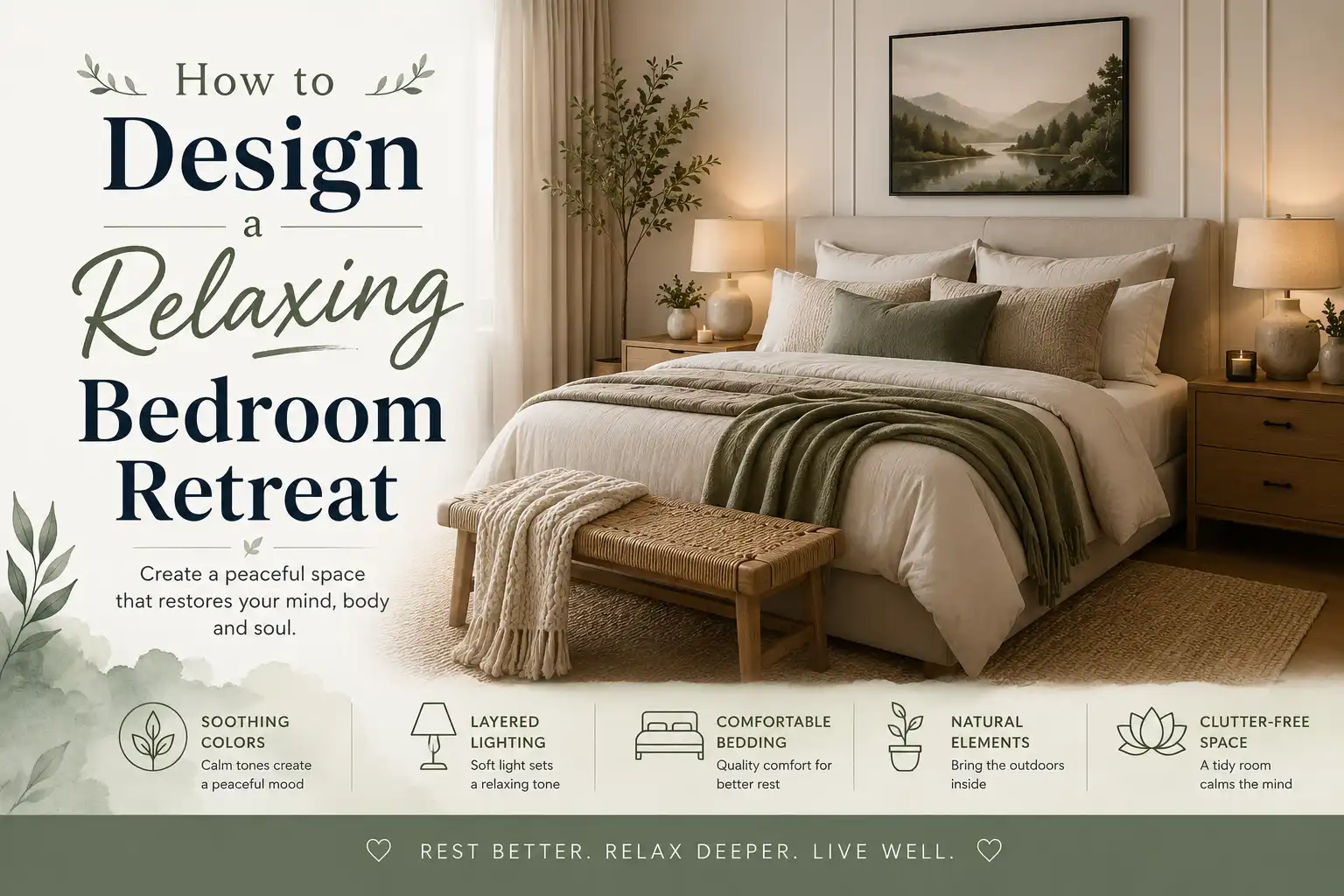
After a long day, your bedroom should feel like an exhale. But for many people, the bedroom has become a catch-all space for laundry piles, work bags, and the glow of a phone screen at midnight. Instead of a retreat, it becomes another source of low-level stress.
Designing a relaxing bedroom isn’t about expensive renovations. It’s about making intentional choices around color, lighting, layout, and what you allow into the space. A well-designed bedroom can genuinely improve sleep quality, lower stress, and make mornings feel less rushed.
In this guide, you’ll learn how to choose calming colors, set up lighting that supports rest, arrange furniture for better flow, and eliminate the small habits that quietly turn a bedroom into a stressful space. Each tip is practical and can be applied without a full remodel.
Start With Color
Color has a measurable effect on mood, and bedrooms benefit from tones that feel grounding rather than stimulating.
Best Colors for Relaxation
- Soft blues: Associated with calm and lower heart rate.
- Warm neutrals: Beige, taupe, and soft gray create a cozy, understated backdrop.
- Muted greens: Evoke nature and work well in rooms with natural light.
Colors to Use Sparingly
Bright reds, oranges, and high-contrast patterns can be energizing in a living room but tend to feel overstimulating in a space meant for winding down. If you love bold color, consider using it in a single accent wall or textile rather than across the whole room.
Layer Your Lighting
Bright overhead lighting works against relaxation. Aim for layered, warm-toned light instead.
Use Warm Bulbs
Choose bulbs around 2700K for bedside lamps and any secondary lighting. This warmer tone supports your body’s natural wind-down process in the evening.
Add a Dimmer
A dimmer switch on the main light allows you to shift from bright morning light to a soft evening glow without needing multiple fixtures.
Keep Screens Out of the Equation
Television and phone screens emit blue light that can interfere with the body’s production of melatonin. If possible, keep screens out of the bedroom or use a “do not disturb” mode after a set time each evening.
Choose a Calming Layout
The arrangement of furniture affects how restful a room feels, not just how it looks.
Position the Bed Thoughtfully
Where possible, place the bed against a solid wall, away from the door, and with a clear view of the entrance. This positioning is rooted in both feng shui tradition and practical comfort, as it reduces the subconscious feeling of being exposed.
Leave Breathing Room
Avoid pushing furniture into every available corner. Leaving open floor space, even in a small bedroom, makes the room feel less cramped and easier to move through.
Create a Reading or Wind-Down Corner
If space allows, a small chair with a lamp and a side table gives you a dedicated spot to unwind before bed, separate from the bed itself.
Reduce Visual Clutter
A relaxing bedroom is rarely a busy one. Clutter, even tidy clutter, keeps the brain subtly alert.
Apply the One-Surface Rule
Limit nightstands and dressers to a few meaningful items rather than letting them collect everyday clutter. A lamp, a small plant, and one personal item is often enough.
Use Closed Storage
Baskets, drawers, and closed cabinets keep necessary items accessible without leaving them visible. Open shelving can look great in photos but often becomes a magnet for clutter in daily life.
Limit Wall Decor
A few well-chosen pieces of art create more calm than a wall covered in frames, shelves, and mixed decor styles.
Bring in Natural Texture
Soft, natural materials make a bedroom feel more grounded and less sterile.
- Layer a wool or cotton throw over the bed for texture without visual noise.
- Add a soft area rug if the floor is hardwood or tile, which also helps with temperature comfort.
- Choose breathable cotton or linen bedding over synthetic fabrics for better comfort during sleep.
Common Mistakes That Undermine a Relaxing Bedroom
- Using the bedroom as a home office. Mixing work and rest in the same visual space can make it harder for the brain to switch off at night.
- Overdecorating. A bedroom with too many patterns, colors, and accessories can feel busy rather than calm.
- Skipping window treatments. Without blackout curtains or blinds, streetlights and early sunrise can disrupt sleep.
- Keeping the thermostat too warm. A room that’s too warm at night is one of the most common, and most overlooked, causes of restless sleep.
- Ignoring scent. A musty or stale-smelling room undercuts an otherwise well-designed space.
Quick Bedroom Retreat Checklist
| Element | Relaxing Choice | Avoid |
|---|---|---|
| Color | Soft blues, warm neutrals | Bright reds, high-contrast patterns |
| Lighting | Warm, dimmable lamps | Single bright overhead light |
| Layout | Open floor space, bed against solid wall | Overcrowded furniture |
| Storage | Closed baskets and drawers | Visible clutter on every surface |
| Textiles | Cotton, linen, wool textures | Synthetic, scratchy fabrics |
Frequently Asked Questions
What is the most calming color for a bedroom?
Soft blue is consistently cited as one of the most calming bedroom colors due to its association with lower heart rate and reduced stress, though muted greens and warm neutrals are close alternatives.
Should I keep a TV in my bedroom?
If your goal is a relaxing retreat, it’s worth reconsidering a TV in the bedroom, since screen use before bed is linked to disrupted sleep patterns. If you do keep one, consider a cabinet or cover to keep it out of sight when not in use.
How can I make a small bedroom feel like a retreat?
Focus on decluttering, soft layered lighting, and a simple color palette. A small room with too many colors, patterns, or furniture pieces will feel cramped no matter how nice each individual item is.
What temperature is best for sleep?
Most sleep experts recommend keeping bedrooms between 60 and 67 degrees Fahrenheit for optimal rest.
Do plants help a bedroom feel more relaxing?
Yes, low-maintenance plants like snake plants or pothos can add a calming, natural element to a bedroom without requiring much upkeep.
How often should I update my bedroom decor?
There’s no fixed timeline, but revisiting your bedroom setup every year or two to remove clutter and refresh textiles can keep the space feeling intentional rather than stagnant.
Is white noise helpful in a relaxing bedroom?
A white noise machine or fan can help mask disruptive outside sounds and is a simple, low-cost addition to a calming sleep environment.
Conclusion
A relaxing bedroom retreat doesn’t require a full renovation. Small, intentional changes to color, lighting, layout, and clutter can shift a bedroom from a stressful catch-all space into a genuine place of rest. Start with one area, whether that’s decluttering your nightstand or adding a warmer lamp, and build from there. Over time, these small adjustments add up to a space that actually supports relaxation.
Related Articles You May Enjoy
- Best Lighting Ideas for Every Room
- Common Home Design Mistakes to Avoid
- Open Concept vs Traditional Layouts
- How to Make a Small Apartment Look Bigger
- How to Arrange Kids’ Bedroom Furniture for Play and Sleep
 Designing a kid’s bedroom that handles both active play and restful sleep is one of the trickiest… Read more: How to Arrange Kids’ Bedroom Furniture for Play and Sleep
- How to Layout a Pantry for Maximum Storage and Visibility
 Your pantry might be one of the hardest-working rooms in your home, yet it often ends up… Read more: How to Layout a Pantry for Maximum Storage and Visibility
- Space Planning for Pet Owners: Best Layouts for Four-Legged Friends
 Living with pets is a joy—until you trip over a water bowl in the hallway or find… Read more: Space Planning for Pet Owners: Best Layouts for Four-Legged Friends
- How to Layout a Walk-In Pantry and Coffee Bar Combo
 Imagine walking into your pantry, grabbing a bag of freshly roasted beans, brewing your morning espresso, and… Read more: How to Layout a Walk-In Pantry and Coffee Bar Combo
- Space Planning Hacks for Maximizing Vertical Wall Space
 When square footage is tight, the only way to go is up. That’s where space planning hacks… Read more: Space Planning Hacks for Maximizing Vertical Wall Space
- How to Layout a Dream Makeup Vanity and Dressing Area
 Creating a dream makeup vanity and dressing area is about blending function with personal style. Whether you… Read more: How to Layout a Dream Makeup Vanity and Dressing Area
- How to Arrange a Conservatory or Sunroom Layout
 Your conservatory or sunroom has the potential to be the most beloved spot in your home. But… Read more: How to Arrange a Conservatory or Sunroom Layout
- Space Planning for Shared Kids’ Bedrooms That Reduce Bickering
 Sharing a bedroom can be a wonderful lesson in compromise and bonding—or it can be a daily… Read more: Space Planning for Shared Kids’ Bedrooms That Reduce Bickering
- The Secret to Creating Functional Zones in Studio Spaces
 Living in a studio apartment can feel like a constant compromise between style and function. You love… Read more: The Secret to Creating Functional Zones in Studio Spaces
- How to Arrange Furniture in Rooms with Too Many Doors and Windows
 If your living room feels more like a busy hallway than a cozy retreat, you’re not alone.… Read more: How to Arrange Furniture in Rooms with Too Many Doors and Windows
- How to Create a Relaxing Oasis in Your Master Bedroom
 Your master bedroom should be more than just a place to sleep—it should be a personal sanctuary… Read more: How to Create a Relaxing Oasis in Your Master Bedroom
- Sustainable Home Design: Eco-Friendly Materials for Modern Interiors
 Sustainable home design is no longer a niche trend—it’s a responsible lifestyle choice. As we become more… Read more: Sustainable Home Design: Eco-Friendly Materials for Modern Interiors