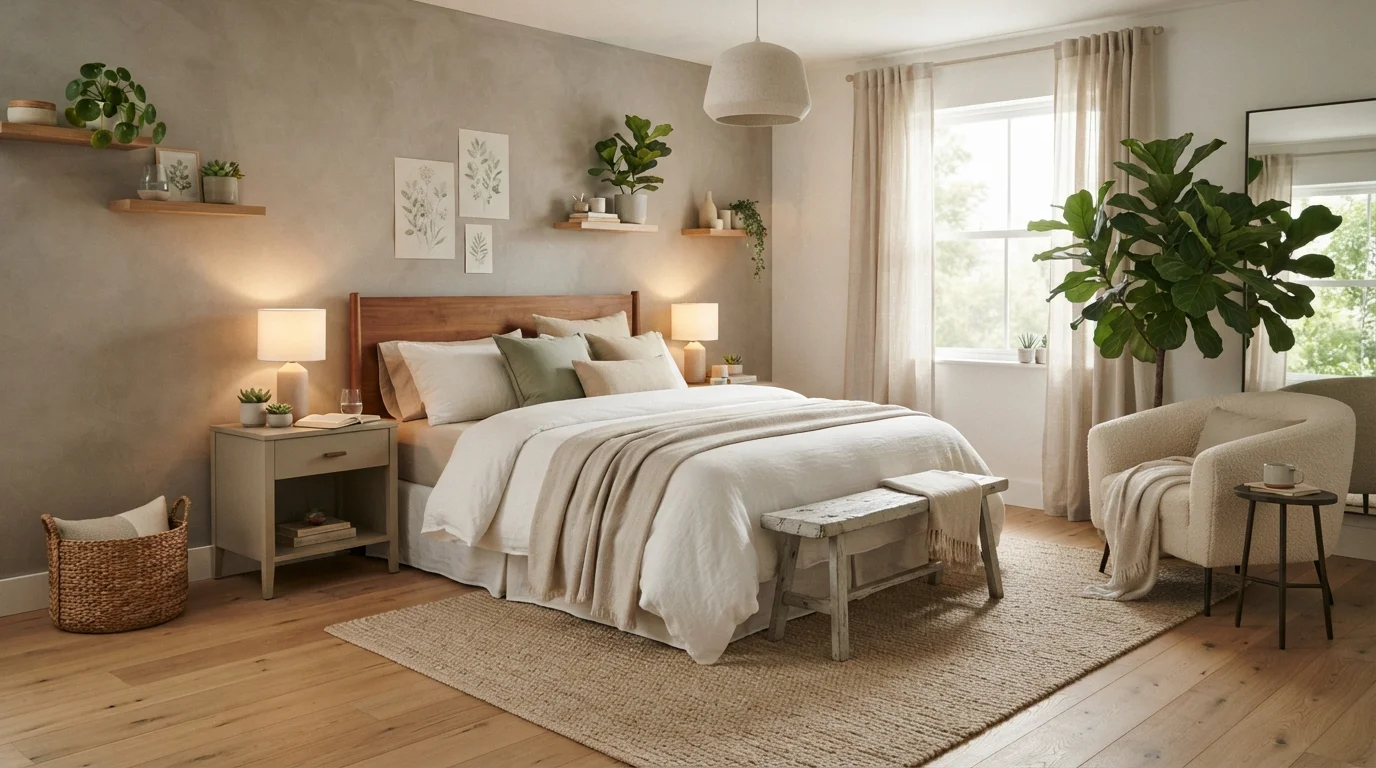
Your master bedroom should be more than just a place to sleep—it should be a personal sanctuary where stress melts away. After years of helping homeowners turn chaotic bedrooms into peaceful retreats, I’ve learned that creating a relaxing oasis doesn’t require a complete renovation. With a few intentional changes, you can transform your space into a calm, restorative environment. Let’s walk through the essential steps to design your own master bedroom haven.
Start with a Calming Color Palette
Color is the foundation of any relaxing room. Soft, muted tones like sage green, dusty blue, warm beige, and lavender naturally lower heart rate and promote tranquility. Avoid bright reds or intense yellows in the bedroom—they stimulate the mind when you need it to wind down.
For a cohesive look, choose two to three complementary shades and carry them through your walls, bedding, and accessories. If you love pattern, keep it subtle: think organic stripes or gentle florals rather than bold geometric prints. A neutral base with one accent color (like a soft terracotta throw) often works best.
Need guidance on broader home color schemes? Check out our home design category for more inspiration on cohesive palettes.
Prioritize Layered Lighting
One overhead light is the enemy of relaxation. To create a true bedroom sanctuary, you need three layers of lighting: ambient, task, and accent. Ambient lighting (like a dimmable flush mount or recessed lights) provides overall illumination. Task lighting (bedside lamps or swing-arm sconces) lets you read without straining your eyes. Accent lighting (LED strips behind the headboard or a small picture light) adds warmth and depth.
Install dimmer switches on your main light source. Being able to lower the brightness from 100% to 20% in the evening signals your brain that it’s time to rest. Warm bulbs (2700K to 3000K) are non-negotiable—cool white light mimics daylight and disrupts melatonin production.
Invest in a Luxurious Bedding Layer
Your bed is the centerpiece of this relaxing master bedroom oasis, so make it irresistible. Start with a quality mattress topper if you can’t replace the mattress itself. Then build layers: a fitted sheet, a flat sheet, a lightweight blanket, a duvet or comforter, and a coverlet at the foot.
Textures matter as much as materials. Combine crisp cotton sateen sheets with a chunky knit throw and velvet pillows. This variety invites touch and creates a hotel-like sense of comfort. For a quick refresh, swap your pillowcases to bamboo or silk—they’re naturally cooling and gentle on skin.
Remember to wash your bedding weekly. A fresh scent and smooth fabric dramatically improve how your brain perceives the space as clean and restful.
Declutter and Simplify Surfaces
Clutter is the silent killer of calm. When your nightstand is piled with books, phone chargers, water glasses, and mail, your mind stays in “task mode.” Clear every surface except for two or three intentional items: a book, a small plant, and perhaps a candle. Store everything else in drawers or baskets.
If you share the room, each person should have their own clear zone. Consider these simple storage solutions:
- A slim tray on the dresser to hold jewelry, watches, and keys
- Under-bed storage boxes for off-season clothing
- A wall-mounted shelf for photos instead of crowding the nightstand
- A small lidded basket for remote controls and reading glasses
For more ideas on efficient layouts, explore our space planning category to maximize every square foot without sacrificing style.
Bring Nature Indoors with Plants and Natural Materials
Biophilic design—connecting your indoor space with nature—is scientifically proven to lower stress. Add two or three low-maintenance plants to your bedroom. Snake plants, pothos, and ZZ plants thrive in low light and improve air quality. A small peace lily on your dresser adds a graceful, calming silhouette.
Complement the greenery with natural materials: a jute rug, linen curtains, a wooden headboard, or stone coasters. These textures ground the room and prevent it from feeling cold or sterile. Even a single driftwood sculpture or a bowl of river stones can make a difference.
For outdoor enthusiasts, you can carry this natural theme beyond the bedroom. Visit our garden design category to see how indoor and outdoor spaces can flow together harmoniously.
Manage Sound and Scent for Sensory Peace
A relaxing master bedroom oasis engages all senses. Sound matters enormously. If you live on a busy street or have thin walls, invest in a white noise machine (or use a free app) to mask disruptive noises. A small tabletop fountain adds gentle, soothing water sounds that many people find deeply calming.
Scent is equally powerful. Lavender, chamomile, and vanilla are classic sleep aids. Use an essential oil diffuser, a candle (always blow it out before sleep), or dried lavender sachets tucked inside your pillowcase. Avoid synthetic air fresheners—they often contain chemicals that can cause headaches or irritation.
A recent study on environmental psychology highlights how small sensory adjustments significantly improve sleep quality and relaxation. You can explore a comprehensive guide on home wellness solutions for more advanced techniques and product recommendations.
Create a Tech-Free Zone (or a Very Limited One)
Nothing sabotages a serene bedroom faster than a glowing phone screen at midnight. Blue light suppresses melatonin and keeps your brain alert. Ideally, keep all screens—TVs, tablets, phones—out of the bedroom entirely. If that’s impossible, create a designated charging station inside a drawer or cabinet so devices are out of sight.
Set a ritual: plug in your phone outside the bedroom at least 30 minutes before you intend to sleep. Replace that scrolling time with a calming activity: reading a physical book, journaling for five minutes, or gentle stretching. Your brain will begin associating the bedroom strictly with rest and intimacy, not with work emails or social media.
For families, this habit also models healthy sleep boundaries for children. If you want to extend this mindful living approach to other areas of your home, don’t miss our blog for more practical lifestyle tips.
| Element | Do This | Avoid This |
|---|---|---|
| Color | Soft blues, greens, warm neutrals | Bright reds, neon colors, dark chocolate |
| Lighting | Dimmable warm bulbs, layered sources | Single overhead cool white light |
| Bedding | Natural fibers, varied textures | Synthetic sheets, too many throw pillows |
| Clutter | Minimal surfaces, hidden storage | Piles of books, visible electronics |
| Scent | Lavender, chamomile, unscented for allergy-prone | Strong synthetic candles, plug-in air fresheners |
Add Personal, Calming Decor
Your sanctuary should reflect your personality, but choose decor that promotes peace rather than stimulation. A single large piece of nature-themed art (a forest path, ocean waves, or a soft abstract in earth tones) works better than a gallery wall full of busy frames. Frame photos of happy memories in simple, uniform frames to avoid visual chaos.
Aromatherapy diffusers, small sculptures, and a cozy armchair in a corner can all enhance the room’s purpose. Just remember the rule of three: every surface should have no more than three objects on it. This prevents the room from feeling like a storage unit disguised as a bedroom.
Frequently Asked Questions
How long does it take to create a relaxing master bedroom oasis?
You can make noticeable changes in one weekend. Painting walls takes two days, but changing bedding, lighting, and decluttering can be done in an afternoon. Full transformations usually take one to two weeks as you source new items.
What is the most important element of a relaxing bedroom?
Lighting. Even the most beautiful room feels uninviting under harsh, cool light. Dimmable warm lighting is the single most impactful change you can make.
Can I create a relaxing oasis in a small bedroom?
Absolutely. In small spaces, focus even more on decluttering and use vertical storage. A light color palette and a single mirror will make the room feel larger and airier.
What plants are best for a bedroom with little natural light?
Snake plants, ZZ plants, pothos, and peace lilies all tolerate low light well. They also improve indoor air quality, which supports better sleep.
Should I put a TV in my master bedroom?
If you want optimal relaxation, avoid it. If you must have one, hide it inside an armoire with closed doors, and never watch stimulating content right before sleep.
How often should I update my bedroom decor?
Small refreshes (changing throw pillows or adding a new plant) can happen seasonally. Major overhauls are generally only needed every five to seven years, or when your personal style evolves.
What scent is best for promoting deep sleep?
Lavender has the strongest scientific backing for reducing anxiety and improving sleep quality. Cedarwood and bergamot are excellent alternatives if you dislike floral scents.
Conclusion
Creating a relaxing master bedroom oasis is about intentional choices, not a massive budget. Start with the elements that affect your senses most: color, lighting, and scent. Then remove visual noise and add natural textures that ground the space. Small, consistent changes—like dimming the lights an hour before bed or swapping synthetic sheets for cotton—compound into a dramatically more restorative room.
Your bedroom should feel like a gentle exhale at the end of every day. With these strategies, you’ll finally have a space that truly helps you recharge. Remember, the goal isn’t perfection; it’s peace. Start with one change tonight and build from there.