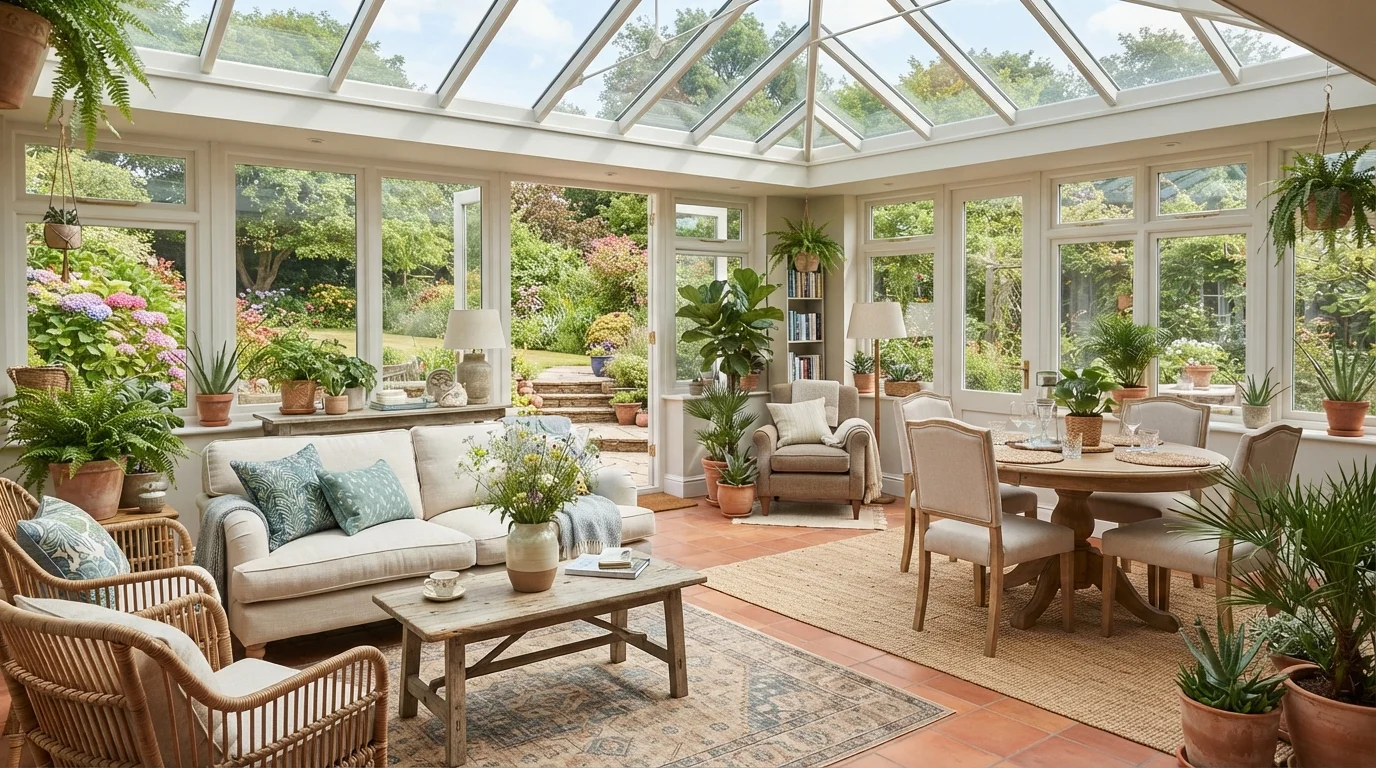
Your conservatory or sunroom has the potential to be the most beloved spot in your home. But without a plan, it can easily become a cluttered catch-all for discarded furniture and dusty plants. The secret is intentional design. Mastering the art of conservatory or sunroom layout transforms this glass-walled room into a functional, inviting retreat that flows naturally with the rest of your home.
Whether you’re working with a tiny solarium or a sprawling garden room, this guide walks you through every step of the process. From identifying the room’s core purpose to selecting the perfect furniture scale, you’ll learn how to make every square inch count. Let’s turn that sun-drenched space into your favorite room in the house.
Define the Room’s Primary Purpose First
Before you move a single chair, ask yourself: “What do I want to feel in this room?” A sunroom can serve many roles, but trying to do everything at once leads to visual chaos. The most successful sunroom furniture arrangement starts with a clear function.
Are you dreaming of a quiet reading nook bathed in morning light? Or do you envision a lively space for weekend brunches with friends? Maybe you need a home office that doesn’t feel like a closet. Pick one primary purpose—dining, lounging, working, or gardening—and let that decision guide everything else.
Once you’ve chosen your focus, everything from the rug size to the side table placement becomes obvious. For more ideas on how to connect this space with the rest of your home, check out our home design inspiration for seamless indoor-outdoor transitions.
Create Distinct Zones in an Open Layout
An open sunroom can feel like a blank canvas—exciting, but also overwhelming. The trick is to break the floor plan into clear, functional zones without building actual walls. Use area rugs to anchor each zone and define different activities.
For example, place a large jute rug under a seating cluster for conversation, and a smaller wool rug under a desk for the work zone. Even in a small room, this visual separation helps the space feel organized and intentional. This approach is a cornerstone of effective conservatory space planning.
What if your sunroom is long and narrow? Position the seating zone near the middle of the room and the dining area closer to the door that leads to the kitchen. This natural traffic flow prevents bottlenecks and keeps the room feeling spacious.
Choose Furniture That Fits the Scale
One of the biggest mistakes people make is cramming oversized sofas into a sunroom. Too much furniture blocks the very thing you came for—the light and the view. Stick to low-profile pieces that don’t compete with the windows.
Think streamlined armchairs, a slim console table, or a bistro set instead of a heavy dining table. Wicker, rattan, and light-colored woods work beautifully because they reflect sunlight rather than absorb it. For seating, consider upholstery in performance fabrics that can handle UV rays and occasional moisture.
Here’s a quick guide to choosing the right furniture based on your sunroom’s square footage:
| Room Size | Best Furniture Pieces | Avoid |
|---|---|---|
| Under 100 sq ft | 2 accent chairs, small side table, floor lamp | Sectional sofas, bulky ottomans |
| 100–200 sq ft | Love seat, coffee table, 1 lounge chair, plant stand | Large dining tables, multiple bookcases |
| Over 200 sq ft | Modular sofa, dining set for 4–6, reading nook | Overstuffed recliners, excess decor |
Layer Lighting for Day and Evening
During the day, natural light is your best friend. But once the sun goes down, you need a warm, layered lighting plan to keep the room inviting. Relying on a single overhead fixture creates harsh shadows and a flat atmosphere.
Mix three types of lighting: ambient (overhead or ceiling lights), task (reading lamps or desk lights), and accent (track lighting on art or plants). This combination gives you total control over the mood. Dimmers are a game-changer here—they let you transition from bright morning coffee to soft evening wine with a simple twist.
Looking for more ways to enhance your sunroom’s flow? Our space planning category is full of practical layouts for tricky rooms.
Incorporate Biophilic Design with Plants
A sunroom without plants is like a beach without waves. It just feels incomplete. The abundance of natural light makes a conservatory the perfect indoor jungle. Choose plants that thrive in bright, indirect light, such as fiddle-leaf figs, snake plants, and monstera.
Arrange them in clusters at different heights—tall floor plants in corners, trailing varieties on shelves, and small pots on side tables. This layering adds depth and texture while improving air quality. For a truly immersive experience, create a “green wall” using a simple trellis system.
If you’re unsure which species will survive your local climate, check out our garden design tips for plant recommendations that love humidity and warmth.
Anchor the Room with the Right Flooring
Flooring sets the tone for the entire sunroom. Since this space endures more temperature swings than interior rooms, choose materials that can handle heat, cold, and occasional moisture. Porcelain tile, luxury vinyl plank, and sealed concrete are all durable, stylish options.
Add warmth and comfort underfoot with layered rugs. A large natural-fiber rug (like sisal or seagrass) provides texture, while a smaller, softer rug defines the seating area. Stay away from wall-to-wall carpet—it traps moisture and fades quickly in direct sunlight.
For high-traffic sunrooms that connect to an outdoor patio, consider seamless transitions. Our outdoor living section has flooring ideas that blend indoor comfort with outdoor durability.
Accessorize Without Cluttering
Accessories bring personality to a sunroom, but restraint is key. Because the room is already visually busy with windows, plants, and natural patterns outside, keep decor minimal and intentional. A few well-chosen pillows, a throw blanket, and a ceramic vase are often enough.
Here are three rules for sunroom accessories:
- Use natural materials: Linen, cotton, bamboo, and stone reinforce the organic feel.
- Stick to a light color palette: Whites, creams, soft greens, and pale blues keep the room airy.
- Edit mercilessly: If an item doesn’t serve a purpose or spark joy, donate it.
For more sunroom décor ideas, browse our blog for seasonal styling tips and before-and-after transformations that show the power of editing.
Consider Multi-Functional Pieces for Small Sunrooms
If your sunroom doubles as a guest room or home office, invest in furniture that works overtime. A daybed with storage drawers underneath serves as both a sofa and a spare bed. A drop-leaf table can function as a desk during the day and a dining table at night.
Storage benches are another smart pick—they offer seating while hiding gardening tools, blankets, or board games. This flexibility is the essence of a multi-functional sunroom that adapts to your changing needs without sacrificing style.
When space is tight, avoid corner sofas and instead use two loveseats facing each other. This creates a conversation area while leaving the center of the room open for movement. Smart planning makes even a compact room feel generous.
Frequently Asked Questions
What is the best layout for a small sunroom?
Use a linear or L-shaped layout with low-profile furniture. Place seating along one wall and keep the center empty to avoid a cramped feel. A round pedestal table is ideal because it doesn’t block traffic.
How do I arrange furniture around a sloped ceiling?
Position seating and low tables under the lower parts of the slope. Use tall plants or floor lamps in the highest points to draw the eye upward. This creates balance and makes the ceiling feel intentional.
Can I use dark furniture in a sunroom?
Yes, but sparingly. Dark furniture absorbs heat and can make the space feel heavy. If you love dark tones, use them on accent pieces like a side table or picture frame, and keep large items white, beige, or light wood.
What flooring is best for a sunroom with direct sunlight?
Porcelain tile and luxury vinyl plank are both UV-resistant and easy to maintain. Avoid hardwood, which can warp, and dark tiles, which retain heat. Light-colored flooring keeps the room cooler and brighter.
How do I make my sunroom feel like an extension of the garden?
Use a neutral color palette that mirrors nature, add plenty of greenery, and choose sheer or bamboo window treatments. Sliding glass doors or French doors also help blur the boundary between indoors and out.
Should I put a TV in my sunroom?
You can, but consider glare from sunlight. If you want a TV, place it perpendicular to windows or invest in an anti-glare screen. Better yet, opt for a projector system that works well in shaded conditions.
What are the best plants for a sunroom?
Low-maintenance options include snake plants, pothos, spider plants, and aloe vera. For a tropical vibe, try a bird of paradise or rubber tree. All thrive in the bright, indirect light typical of most sunrooms.
Conclusion
A thoughtfully arranged conservatory or sunroom doesn’t just look good—it changes how you live in your home. By defining your purpose, zoning the space, and choosing the right scale of furniture, you create a room that invites relaxation, connection, and daily joy.
Remember to layer your lighting, embrace plants, and keep accessories simple. Small tweaks like swapping a bulky sofa for two slim armchairs can completely transform the flow. For deeper insights into making every room work harder, explore expert sunroom furniture arrangement guides and conservatory space planning resources on our site.
If you’re ready to dive deeper into optimizing your entire property, check out this comprehensive home and garden resource for advanced design strategies that professionals use.
Your sunroom is waiting. Grab a cup of coffee, walk into that sunlit space, and start rearranging. You’ll be surprised how quickly it becomes your favorite room in the house.