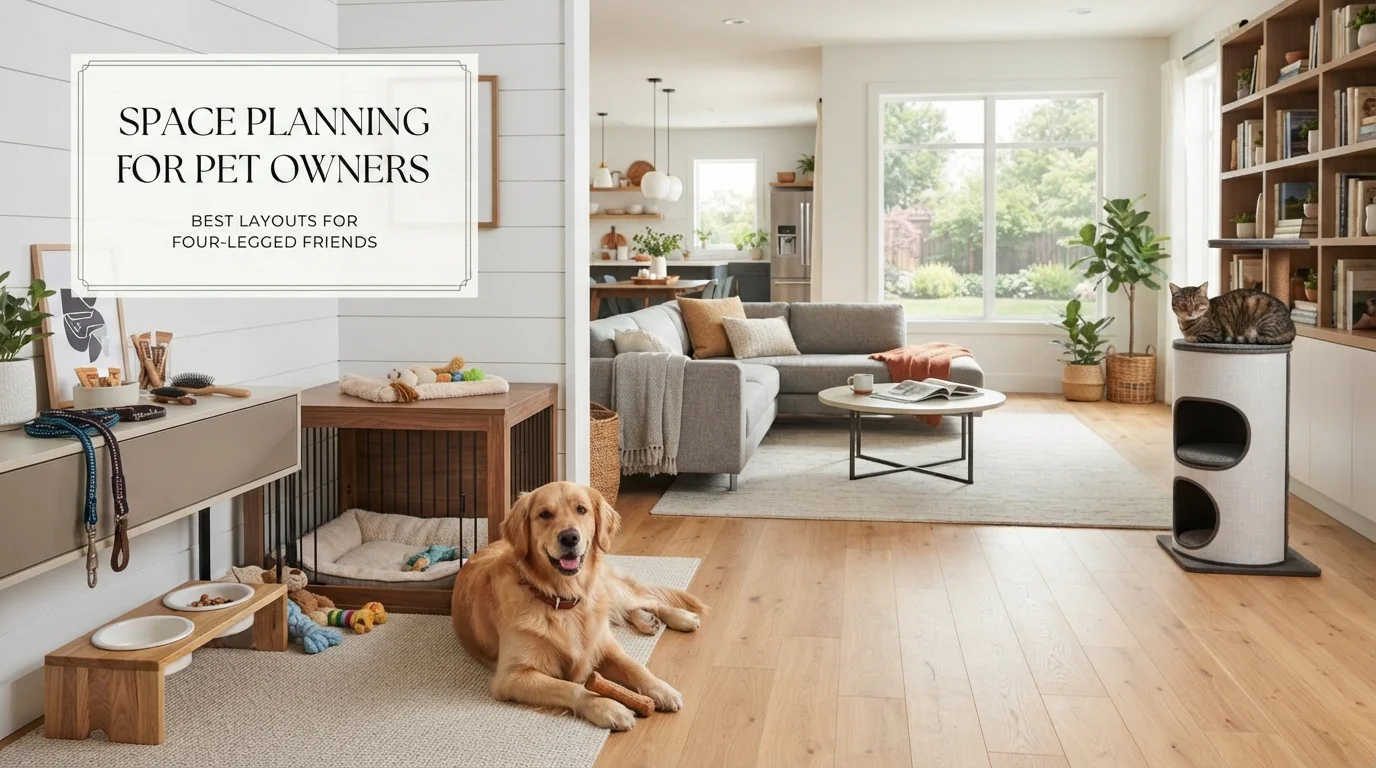
Living with pets is a joy—until you trip over a water bowl in the hallway or find fur tumbleweeds rolling under the sofa. The good news? A smart layout can solve most of these frustrations without sacrificing your style. Smart space planning for pet owners means designing your home to serve every member of the household, including the ones with four legs.
Whether you have a clumsy golden retriever or a territorial cat, the way you arrange furniture, choose materials, and zone your rooms directly impacts your daily comfort. Let’s explore practical layouts that keep your space beautiful, functional, and truly pet-friendly.
1. Create Dedicated Pet Zones
Every pet needs their own territory. A dedicated zone reduces anxiety and prevents them from claiming your entire couch. Start with a feeding station in the kitchen or mudroom, away from heavy foot traffic.
Place your pet’s bed, crate, or mat in a quiet corner of the living room. This gives them a safe spot to retreat during gatherings or when they need rest. For cats, add vertical elements like wall shelves or a tall cat tree near a window.
Think about sightlines. Dogs often want to see you while relaxing, so position their bed where they can monitor the main activity. This simple adjustment in your home layout for dogs promotes calm behavior and less barking.
2. Choose Pet-Proof Flooring and Rugs
Flooring is the backbone of any pet-friendly home. Hard surfaces like luxury vinyl plank or tile resist scratches and accidents. Avoid soft wood or carpet in high-traffic pet areas—they trap odors and show wear fast.
Use washable rugs in key spots. Place one under the water bowl to catch splashes, and another near the door for muddy paws. Rubber-backed, indoor-outdoor rugs work best because they can be hosed off.
For a comprehensive guide on selecting materials, check out our home design section for more flooring ideas that blend durability with décor.
3. Design a Seamless Indoor-Outdoor Flow
Pets thrive on access to fresh air and sunlight. If you have a yard, position your pet door near a side entrance or mudroom. This creates a designated transition zone that keeps dirt and moisture contained.
Inside, open floor plans work well because pets can move freely between rooms without obstacles. Avoid narrow hallways with lots of furniture—pets with long tails or big paws need clear paths.
Your outdoor space matters too. A secure fence and a shaded resting area make the garden a true extension of your home. Learn more about this in our pet-friendly garden design tips.
4. Invest in Dual-Purpose Pet Furniture
Space is precious, especially in apartments or smaller homes. That’s why dual-purpose pet furniture is a game-changer. Look for ottomans that open to reveal pet beds, side tables with built-in feeding bowls, or console tables that double as cat hideaways.
Built-in solutions also work well. For example, a window seat with storage underneath can hold pet toys and linens. In the bedroom, a low bedside shelf can serve as a landing spot for your cat.
A single piece can serve humans and pets alike—saving square footage and money. This approach is central to effective pet-friendly home design.
5. Manage Fur, Mess, and Storage Smartly
Pet mess doesn’t have to take over your home. Plan storage for leashes, toys, grooming tools, and food near the entry or mudroom. Use baskets or bins with lids to keep things tidy and out of sight.
In the living room, choose furniture fabrics that release fur easily. Leather, microfiber, and performance velvet are top choices. Avoid loose-weave upholstery that traps fur and claw marks.
Here’s a quick reference for materials and their pet-friendliness:
| Material | Fur Resistance | Scratch Resistance | Cleanability |
|---|---|---|---|
| Leather | High | Medium | Easy (wipe clean) |
| Microfiber | High | High | Easy (machine washable covers) |
| Performance Velvet | Medium | Medium | Easy (spot clean) |
| Canvas | Low | Medium | Moderate (brush off) |
For more organizing ideas, visit our blog for pet-friendly home tips.
6. Zone Your Home with Pet-Safe Barriers
Not every room should be open to pets. Use stylish barriers like decorative gates, half-walls, or baby gates that match your décor. These keep pets out of home offices, nurseries, or dining areas when needed.
For cats, consider adding a catio—a screened-in outdoor enclosure attached to a window. It gives them fresh air while keeping them safe from traffic or predators. This is a growing trend in outdoor living spaces.
Indoors, use room dividers or tall plant stands to define spaces. Pets quickly learn boundaries when they are consistent and visually clear.
According to experts at HomeGarden resources, even small changes like adding a pet gate can significantly reduce household stress and improve pet behavior.
7. Safety First: Electrical, Plants, and Small Objects
Pets are curious. Secure loose cables with cord covers or hide them behind furniture. Keep toxic plants like lilies, pothos, or sago palms out of reach (e.g., on high shelves or in hanging planters).
Store small items—kids’ toys, coins, rubber bands—in closed containers. Dogs and cats can swallow these, leading to emergencies. Rethink low shelves: they invite exploration.
Lastly, install window treatments without long cords. Blinds with continuous-loop cords or motorized shades are safer options. These small precautions make your home truly pet-proof.
Frequently Asked Questions (FAQ)
1. What is the best flooring for dogs and cats?
Luxury vinyl plank or ceramic tile are top choices. They resist scratches, moisture, and are easy to clean. Avoid solid hardwood in high-traffic pet zones.
2. How do I create a pet zone in a small apartment?
Use vertical space. Install cat shelves, a window perch, or a wall-mounted pet bed. In a corner, place a small mat for feeding and a crate or basket for sleeping.
3. Can I have a stylish home with pets?
Absolutely. Choose performance fabrics, streamlined furniture, and neutral colors. Add washable throws and rugs. Style and pets can coexist beautifully with smart planning.
4. Where should I place my pet’s food and water bowls?
4. Where should I place my pet’s food and water bowls?
In a low-traffic area of the kitchen or mudroom. Use a spill-proof mat underneath. Keep bowls away from the litter box or crate to prevent cross-contamination.
5. What furniture materials resist pet hair?
Leather, microfiber, and performance velvet are excellent for repelling fur. Avoid velvet blends that are not stain-treated or loosely woven fabrics.
6. Should I allow my pet on the furniture?
That’s a personal choice. If you do, add washable covers and train your pet to stay on designated blankets or beds. This makes cleaning easier and protects upholstery.
7. How do I pet-proof an outdoor space?
Ensure fences are secure with no gaps. Add shade with a canopy or trees. Remove toxic plants like azaleas or lilies. Provide fresh water and a comfortable resting spot.
Conclusion
Great space planning for pet owners isn’t about sacrificing your design dreams—it’s about working smarter. By zoning your home, choosing durable materials, and investing in dual-purpose pieces, you create a space that feels good for everyone.
Your pet doesn’t need a mansion. They need a home where they feel safe, comfortable, and included. With a few intentional changes, you can deliver exactly that—without compromising your personal style.
Start with one room today. Your four-legged friend will thank you (with extra tail wags).