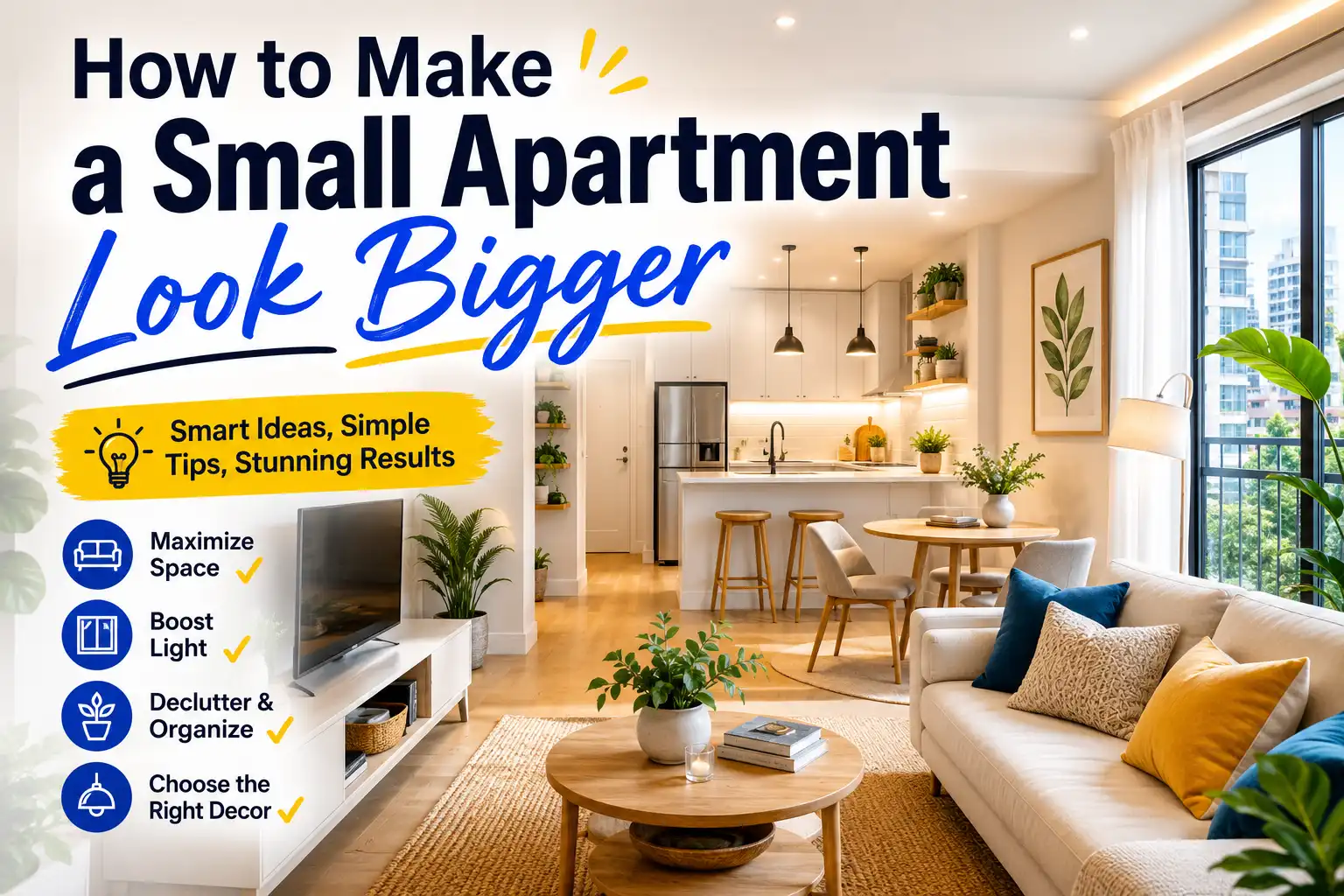
Square footage is fixed, but the way a space feels is not. Two apartments with identical floor plans can feel dramatically different depending on color choices, furniture scale, and how light moves through the room. A small apartment doesn’t have to feel small if it’s designed with a few key visual tricks in mind.
The good news is that most of these strategies are renter-friendly, affordable, and don’t require permanent changes. You don’t need to knock down walls or buy expensive furniture to make a noticeable difference in how spacious your apartment feels.
This guide covers practical, proven techniques for visually expanding a small space, including color choices, furniture selection, lighting, mirrors, and storage strategies. By the end, you’ll have a clear list of changes you can start making this week.
Choose Light, Cohesive Colors
Light Walls Create the Illusion of Space
Light, neutral wall colors reflect more light and create fewer visual boundaries than dark or saturated tones. Soft whites, light grays, and warm beiges tend to make rooms feel more open.
Keep Color Continuous Between Rooms
Using the same or very similar wall color throughout an open or connected space removes visual breaks that can make a small apartment feel chopped up and smaller than it is.
Use Color Sparingly for Accents
Bold color isn’t off-limits, but it works best in small doses, such as a single accent wall, a piece of art, or textiles, rather than across multiple large surfaces.
Maximize Natural Light
Keep Windows Unobstructed
Avoid placing furniture directly in front of windows, and choose sheer or light curtains instead of heavy, dark drapes that block incoming light.
Add Mirrors Strategically
Mirrors placed across from windows reflect natural light deeper into a room and can make a space feel nearly twice as open. A single large mirror often has more impact than several small ones scattered around the room.
Layer Artificial Lighting
Combine ambient and accent lighting rather than relying on one harsh ceiling fixture. Warm, layered light makes small spaces feel cozy rather than cramped.
Choose the Right Furniture Scale
Avoid Oversized Pieces
A large sectional or oversized dining table can dominate a small apartment and leave little room to move. Choose furniture sized appropriately for the room, even if it means a smaller-than-average piece.
Look for Furniture with Visible Legs
Furniture raised on legs, rather than sitting flush with the floor, allows light and sightlines to pass underneath, which makes a room feel more open.
Prioritize Multi-Functional Pieces
- A storage ottoman that doubles as a coffee table and extra seating
- A daybed that functions as both a sofa and a guest bed
- A drop-leaf or extendable dining table that can shrink when not in use
Use Vertical Space
Install Tall, Narrow Shelving
Floor-to-ceiling shelving draws the eye upward, which makes ceilings feel higher and the overall room feel larger, while also adding valuable storage.
Hang Curtains Higher Than the Window Frame
Mounting curtain rods closer to the ceiling rather than directly above the window frame creates the illusion of taller windows and higher ceilings.
Use Wall-Mounted Storage
Wall-mounted shelves, hooks, and racks keep items off the floor and out of the way, which keeps sightlines clear across the room.
Reduce Visual Clutter
Limit Decorative Items
A few intentional decor pieces will always look more spacious than many small items scattered across surfaces. Edit down to your favorites rather than displaying everything you own.
Use Closed Storage for Everyday Items
Baskets, drawers, and storage bins keep frequently used items accessible without leaving them visible, which keeps the room looking tidy and open.
Match Storage Containers
If open shelving is unavoidable, using matching baskets or containers creates a more cohesive, less chaotic look than a mismatched collection.
Create Zones Without Walls
In studio apartments or open layouts, defining separate zones, like a sleeping area, a workspace, and a living area, can make the space feel more organized and intentional, even without physical walls.
- Use a rug to visually separate a living area from a dining or work area
- Position a bookshelf or open shelving unit as a soft room divider
- Use distinct lighting in each zone to reinforce the separation
Common Small Apartment Mistakes
- Buying furniture that’s too large. Always measure before purchasing, especially for sofas, beds, and dining tables.
- Using heavy, dark curtains. These block natural light and visually shrink a room.
- Overcrowding surfaces with decor. Too many small items create visual noise that makes a small space feel busier and smaller.
- Skipping vertical storage. Failing to use wall space leaves valuable storage potential untapped.
- Choosing low furniture without legs. Furniture that sits flush with the floor blocks sightlines and makes a room feel more closed in.
Quick Reference Guide
| Strategy | Impact |
|---|---|
| Light, cohesive wall color | Reflects light, removes visual breaks |
| Large mirror across from window | Doubles perceived natural light |
| Furniture with visible legs | Keeps sightlines open under furniture |
| Vertical shelving | Draws eye upward, adds storage |
| Closed storage | Reduces visible clutter |
Frequently Asked Questions
What color makes a small apartment look bigger?
Light, neutral colors like soft white, light gray, and warm beige reflect more light and create fewer visual boundaries, making rooms feel larger.
Do mirrors really make a room look bigger?
Yes, mirrors placed across from windows reflect natural light deeper into a room and can create a strong illusion of additional space.
Should I avoid rugs in a small apartment?
No, rugs can actually help define zones in an open layout, but choose a properly sized rug so it doesn’t visually shrink the area it’s placed in.
Is it better to have less furniture in a small space?
Generally yes. Fewer, well-chosen, appropriately scaled pieces almost always make a small space feel more open than many smaller items crammed together.
What’s the best curtain height for small rooms?
Hanging curtains closer to the ceiling, rather than directly above the window frame, creates the illusion of taller windows and higher ceilings.
How can I add storage without making the room feel smaller?
Use vertical, wall-mounted, or under-furniture storage, which keeps items organized without taking up valuable floor space.
Are dark accent walls ever okay in a small apartment?
Yes, in small doses. A single dark accent wall can add depth and interest without overwhelming the space, as long as the rest of the room stays light.
Conclusion
Making a small apartment feel bigger comes down to a combination of light colors, appropriately scaled furniture, strategic mirrors, and reduced clutter. None of these changes require a major investment or a landlord’s permission, which makes them ideal for renters. Start with one or two changes, like adding a mirror across from your main window or decluttering visible surfaces, and build from there to gradually transform how spacious your apartment feels.
Related Articles You May Enjoy
- Best Lighting Ideas for Every Room
- How to Design a Relaxing Bedroom Retreat
- Common Home Design Mistakes to Avoid
- Open Concept vs Traditional Layouts
- How to Arrange Kids’ Bedroom Furniture for Play and Sleep
 Designing a kid’s bedroom that handles both active play and restful sleep is one of… Read more: How to Arrange Kids’ Bedroom Furniture for Play and Sleep
- How to Layout a Pantry for Maximum Storage and Visibility
 Your pantry might be one of the hardest-working rooms in your home, yet it often… Read more: How to Layout a Pantry for Maximum Storage and Visibility
- Space Planning for Pet Owners: Best Layouts for Four-Legged Friends
 Living with pets is a joy—until you trip over a water bowl in the hallway… Read more: Space Planning for Pet Owners: Best Layouts for Four-Legged Friends
- How to Layout a Walk-In Pantry and Coffee Bar Combo
 Imagine walking into your pantry, grabbing a bag of freshly roasted beans, brewing your morning… Read more: How to Layout a Walk-In Pantry and Coffee Bar Combo
- Space Planning Hacks for Maximizing Vertical Wall Space
 When square footage is tight, the only way to go is up. That’s where space… Read more: Space Planning Hacks for Maximizing Vertical Wall Space
- How to Layout a Dream Makeup Vanity and Dressing Area
 Creating a dream makeup vanity and dressing area is about blending function with personal style.… Read more: How to Layout a Dream Makeup Vanity and Dressing Area
- How to Arrange a Conservatory or Sunroom Layout
 Your conservatory or sunroom has the potential to be the most beloved spot in your… Read more: How to Arrange a Conservatory or Sunroom Layout
- Space Planning for Shared Kids’ Bedrooms That Reduce Bickering
 Sharing a bedroom can be a wonderful lesson in compromise and bonding—or it can be… Read more: Space Planning for Shared Kids’ Bedrooms That Reduce Bickering
- The Secret to Creating Functional Zones in Studio Spaces
 Living in a studio apartment can feel like a constant compromise between style and function.… Read more: The Secret to Creating Functional Zones in Studio Spaces
- How to Arrange Furniture in Rooms with Too Many Doors and Windows
 If your living room feels more like a busy hallway than a cozy retreat, you’re… Read more: How to Arrange Furniture in Rooms with Too Many Doors and Windows
- How to Create a Relaxing Oasis in Your Master Bedroom
 Your master bedroom should be more than just a place to sleep—it should be a… Read more: How to Create a Relaxing Oasis in Your Master Bedroom
- Sustainable Home Design: Eco-Friendly Materials for Modern Interiors
 Sustainable home design is no longer a niche trend—it’s a responsible lifestyle choice. As we… Read more: Sustainable Home Design: Eco-Friendly Materials for Modern Interiors