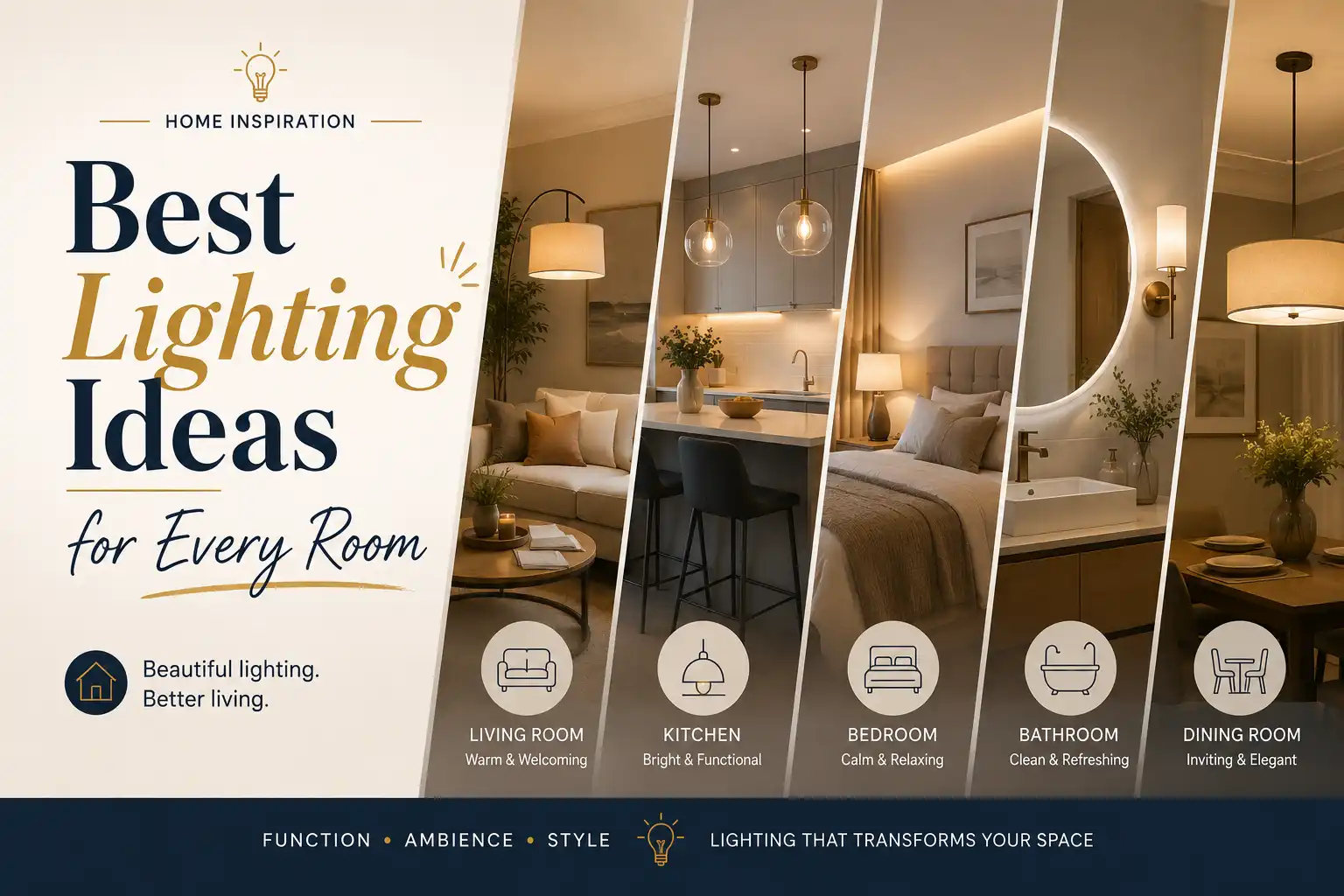
Lighting can make or break a room. Two spaces with identical furniture and paint colors can feel completely different depending on how they’re lit. Harsh overhead lighting can make a cozy living room feel like a waiting room, while warm, layered lighting can turn a small bedroom into a relaxing retreat. Yet lighting is often the last thing homeowners think about, treated as an afterthought once the furniture is already in place.
Good lighting design works on three levels: ambient light that fills the room, task light that helps you do specific activities, and accent light that adds depth and personality. When these three layers work together, a room feels balanced day and night. When they don’t, you end up with a single bright ceiling fixture and a lot of awkward shadows.
This guide walks through practical lighting strategies for the most common rooms in a home, along with mistakes to avoid and simple upgrades that make a noticeable difference. You’ll learn how to choose the right bulb temperature, where to place lamps for function and mood, and how to layer light sources so every room feels intentional rather than accidental.
The Three Layers of Lighting
Before diving into room-specific advice, it helps to understand the foundation every designer relies on.
- Ambient lighting: The general light that fills a room, usually from ceiling fixtures, recessed lights, or large overhead sources.
- Task lighting: Focused light for specific activities like reading, cooking, or applying makeup.
- Accent lighting: Decorative light used to highlight artwork, architecture, or create mood, such as wall sconces or LED strips.
A room that relies on only one of these layers will almost always feel either too flat or too dim in certain areas. The goal is to combine at least two layers in every room, ideally all three in larger spaces.
Living Room Lighting Ideas
The living room usually serves multiple purposes throughout the day, so its lighting needs to be flexible.
Layer with Floor and Table Lamps
Rather than relying solely on an overhead fixture, add two or three lamps at different heights around the room. This creates pools of light that make the space feel larger and more inviting in the evening.
Use Dimmers for Flexibility
A dimmer switch on the main ceiling light lets you shift from bright daytime functionality to a softer evening mood without changing bulbs or fixtures.
Add Accent Lighting Behind the TV or Shelving
LED strip lights behind a television or on bookshelves reduce eye strain during movie nights and add a subtle glow that makes the room feel more modern.
Kitchen Lighting Ideas
Kitchens demand strong task lighting because of the detailed, often dangerous work happening at counters and stovetops.
Under-Cabinet Lighting
Installing LED strips under upper cabinets eliminates shadows on countertops, which is especially helpful when chopping vegetables or reading recipes.
Pendant Lights Over Islands
Pendant lighting over an island or breakfast bar adds both function and style. Hang pendants about 30 to 36 inches above the counter for the best balance of light and headroom.
Bright, Neutral Bulbs for Work Areas
Choose bulbs in the 3000K to 4000K range for kitchens. This temperature is bright enough for cooking tasks without feeling clinical.
Bedroom Lighting Ideas
Bedrooms benefit from softer, warmer light that supports relaxation rather than alertness.
Bedside Lamps with Warm Bulbs
Choose bulbs around 2700K for bedside lamps. This warm tone signals to your body that it’s time to wind down, which can support better sleep quality.
Avoid a Single Overhead Light
A single bright ceiling fixture is the most common bedroom lighting mistake. Add lamps, sconces, or a dimmable overhead option so the room can adjust from bright morning light to relaxing evening ambiance.
Bathroom Lighting Ideas
Bathrooms need bright, even lighting for grooming tasks, but harsh lighting can be unflattering and uncomfortable.
Vertical Sconces Beside the Mirror
Vertical lights placed on either side of a mirror, rather than a single strip above it, reduce shadows on the face and provide more even illumination for shaving or makeup application.
Add a Night Light Option
A small, low-wattage night light or dimmable setting prevents the jarring experience of flipping on bright lights during a middle-of-the-night bathroom trip.
Home Office Lighting Ideas
Office lighting directly affects focus, eye strain, and video call quality.
Position Desk Lamps to Reduce Glare
Place a desk lamp to the side of your monitor rather than directly behind or in front of it. This reduces screen glare and eye fatigue during long work sessions.
Consider Daylight-Balanced Bulbs
Bulbs in the 5000K range mimic daylight and can help maintain alertness during work hours, which is especially useful in rooms without much natural light.
Common Lighting Mistakes to Avoid
- Relying on a single light source. One ceiling fixture rarely provides enough flexibility for a room’s different uses.
- Mixing bulb temperatures. Combining warm and cool bulbs in the same room can make the space feel mismatched and uneven.
- Ignoring dimmers. Fixed-brightness lighting limits how a room can adapt from daytime to nighttime use.
- Placing lamps purely for decoration. Lamps should support an activity, like reading or working, not just fill empty table space.
- Forgetting accent lighting. Skipping accent light is one of the easiest ways to leave a room feeling flat and uninspired.
Choosing the Right Bulb Temperature by Room
| Room | Recommended Temperature | Why |
|---|---|---|
| Living Room | 2700K–3000K | Warm and relaxing for evening use |
| Kitchen | 3000K–4000K | Bright enough for food prep tasks |
| Bedroom | 2700K | Supports winding down and sleep |
| Bathroom | 3000K–4000K | Even, accurate light for grooming |
| Home Office | 4000K–5000K | Mimics daylight to support focus |
Frequently Asked Questions
What is the best lighting layout for a small room?
In small rooms, combine one ambient source with a single well-placed lamp rather than several fixtures. Too many light sources in a tight space can create visual clutter and make the room feel busier than it is.
How many lumens do I need per room?
A general guideline is 10 to 20 lumens per square foot for living areas and bedrooms, and 30 to 40 lumens per square foot for task-heavy spaces like kitchens and bathrooms.
Should all the lights in my home match?
Fixtures don’t need to be identical, but keeping a consistent finish, such as brushed brass or matte black, throughout connected spaces creates a cohesive look.
Are smart bulbs worth the investment?
Smart bulbs are useful if you want to adjust brightness and color temperature without buying multiple bulbs. They’re especially helpful in rooms that serve multiple purposes, like a living room used for both relaxing and entertaining.
What’s the difference between warm and cool lighting?
Warm lighting (around 2700K) has a yellowish tone and feels cozy, while cool lighting (4000K and above) has a bluish-white tone and feels more energizing and alert.
Where should accent lighting be placed?
Accent lighting works best when highlighting a specific feature, such as artwork, a bookshelf, or architectural detail, rather than being spread evenly across a wall.
Can lighting really affect mood?
Yes. Lighting color temperature and brightness influence circadian rhythms and emotional state, which is why warm, dim lighting feels calming while bright, cool lighting feels more alert and active.
Conclusion
Lighting is one of the most cost-effective ways to transform a home, often requiring nothing more than a few lamps, the right bulbs, and a willingness to layer different light sources. Start with the room that bothers you most, identify which of the three lighting layers is missing, and add it. Over time, applying this approach room by room will make your entire home feel more comfortable, functional, and visually balanced.
Related Articles You May Enjoy
- How to Design a Relaxing Bedroom Retreat
- Common Home Design Mistakes to Avoid
- Open Concept vs Traditional Layouts
- How to Make a Small Apartment Look Bigger
- How to Arrange Kids’ Bedroom Furniture for Play and Sleep
 Designing a kid’s bedroom that handles both active play and restful sleep is one… Read more: How to Arrange Kids’ Bedroom Furniture for Play and Sleep
- How to Layout a Pantry for Maximum Storage and Visibility
 Your pantry might be one of the hardest-working rooms in your home, yet it… Read more: How to Layout a Pantry for Maximum Storage and Visibility
- Space Planning for Pet Owners: Best Layouts for Four-Legged Friends
 Living with pets is a joy—until you trip over a water bowl in the… Read more: Space Planning for Pet Owners: Best Layouts for Four-Legged Friends
- How to Layout a Walk-In Pantry and Coffee Bar Combo
 Imagine walking into your pantry, grabbing a bag of freshly roasted beans, brewing your… Read more: How to Layout a Walk-In Pantry and Coffee Bar Combo
- Space Planning Hacks for Maximizing Vertical Wall Space
 When square footage is tight, the only way to go is up. That’s where… Read more: Space Planning Hacks for Maximizing Vertical Wall Space
- How to Layout a Dream Makeup Vanity and Dressing Area
 Creating a dream makeup vanity and dressing area is about blending function with personal… Read more: How to Layout a Dream Makeup Vanity and Dressing Area
- How to Arrange a Conservatory or Sunroom Layout
 Your conservatory or sunroom has the potential to be the most beloved spot in… Read more: How to Arrange a Conservatory or Sunroom Layout
- Space Planning for Shared Kids’ Bedrooms That Reduce Bickering
 Sharing a bedroom can be a wonderful lesson in compromise and bonding—or it can… Read more: Space Planning for Shared Kids’ Bedrooms That Reduce Bickering
- The Secret to Creating Functional Zones in Studio Spaces
 Living in a studio apartment can feel like a constant compromise between style and… Read more: The Secret to Creating Functional Zones in Studio Spaces
- How to Arrange Furniture in Rooms with Too Many Doors and Windows
 If your living room feels more like a busy hallway than a cozy retreat,… Read more: How to Arrange Furniture in Rooms with Too Many Doors and Windows
- How to Create a Relaxing Oasis in Your Master Bedroom
 Your master bedroom should be more than just a place to sleep—it should be… Read more: How to Create a Relaxing Oasis in Your Master Bedroom
- Sustainable Home Design: Eco-Friendly Materials for Modern Interiors
 Sustainable home design is no longer a niche trend—it’s a responsible lifestyle choice. As… Read more: Sustainable Home Design: Eco-Friendly Materials for Modern Interiors