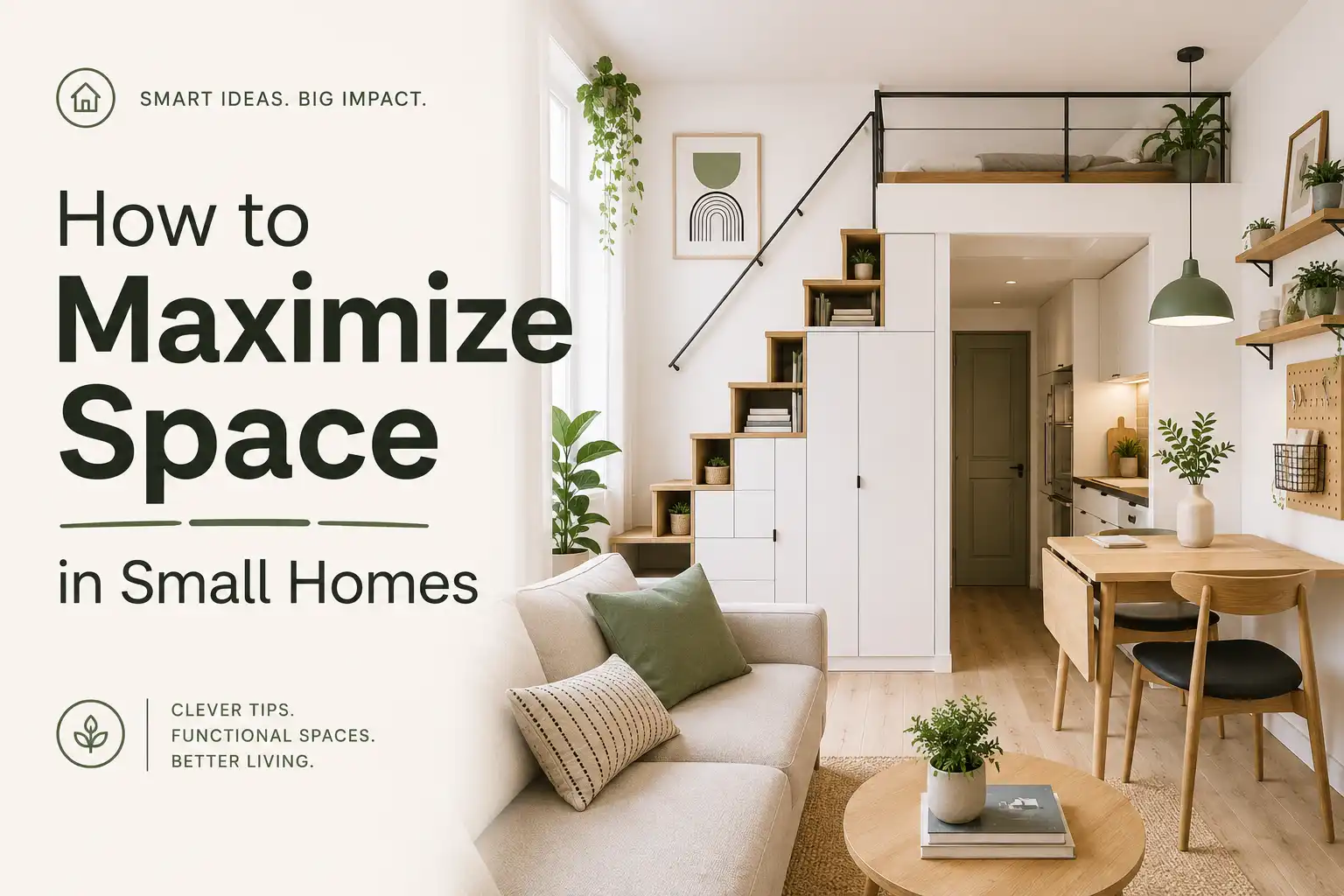
A small home can feel like a constant negotiation between what you own and where it goes. But square footage is only part of the story — how you use the space matters far more than how much of it you have. With the right approach, a 600-square-foot apartment can feel more open and functional than a poorly planned house twice its size.
This guide breaks down the practical strategies that interior designers and professional organizers actually use to maximize space in small homes. You’ll learn how to choose furniture that earns its place, how to use vertical space you’re probably ignoring, and how small layout adjustments can make a room feel significantly larger without any renovation.
By the end, you’ll have a clear, actionable plan for opening up your home — whether you’re working with a studio apartment, a small condo, or a cozy house that’s started to feel tight.
Start With an Honest Inventory
Before rearranging anything, take stock of what you actually use. Small-space living rewards intention. Walk through each room and ask whether every item earns its spot.
- Pull everything out of one closet or drawer at a time rather than tackling the whole home at once.
- Separate items into “use weekly,” “use seasonally,” and “rarely use.”
- Anything in the “rarely use” pile should be stored elsewhere, donated, or sold.
This step matters because no storage system fixes a volume problem. You can buy every bin on the market, but if you have more belongings than your home can reasonably hold, the clutter will resurface.
Choose Multi-Functional Furniture
In a small home, every piece of furniture should ideally do more than one job. This is one of the highest-impact changes you can make.
Furniture That Pulls Double Duty
- Storage ottomans work as seating, a coffee table, and hidden storage.
- Daybeds or sofa beds let a living room double as a guest room.
- Drop-leaf or extendable tables shrink when not in use and expand for guests.
- Bed frames with drawers turn unused under-bed space into real storage.
When shopping for new furniture, ask: “Could this item serve a second purpose?” If the answer is no, consider whether it’s worth the square footage it claims.
Use Vertical Space Aggressively
Most small homes have plenty of unused vertical space, even if the floor area is limited. Walls and ceilings are often the most underused real estate in a small home.
- Install shelving up to the ceiling, not just at eye level.
- Use wall-mounted hooks for coats, bags, and bikes instead of floor racks.
- Hang pots, pans, or utensils in the kitchen instead of storing them in cabinets.
- Add a tall, narrow bookshelf instead of a wide, low one.
This approach draws the eye upward, which also makes ceilings feel higher and rooms feel more spacious — a visual trick that works alongside the practical storage benefit.
Let Light Travel Through the Space
Visual openness matters as much as physical space. Furniture and decor that block sightlines make rooms feel boxed in, even if they’re not actually crowded.
- Choose furniture with visible legs rather than pieces that sit flush on the floor.
- Use sheer or light-colored window treatments that let natural light spread.
- Position large furniture against walls instead of floating it in the middle of small rooms.
- Add mirrors opposite windows to bounce light deeper into the room.
| Strategy | Best For | Effort Level |
|---|---|---|
| Multi-functional furniture | Living rooms, guest rooms | Medium |
| Vertical storage | Kitchens, closets, bathrooms | Low |
| Light and mirrors | Any room lacking natural light | Low |
| Decluttering | Whole home | High (time) |
Common Mistakes That Shrink a Small Home
Buying Furniture That’s Too Large
An oversized sofa or sectional can dominate a small living room, even if it looked reasonable in the store. Measure your space first, then shop with those dimensions in hand, not the other way around.
Treating Every Wall as Storage
It’s tempting to line every wall with shelving or cabinets, but a room with zero breathing room can feel more cluttered than one with slightly less storage and more open wall space. Balance is more comfortable than maximum capacity.
Ignoring Traffic Flow
If furniture blocks the natural path between doorways, a small room will feel smaller than it is. Always plan a clear walking path before deciding on final furniture placement.
Smart Storage Solutions Worth the Investment
- Over-the-door organizers for closets, pantries, and bathrooms.
- Stackable, labeled bins for closet shelves.
- Pegboards in kitchens, garages, or craft spaces.
- Floating shelves instead of bulky cabinets where appropriate.
These solutions share a common trait: they add storage without adding floor footprint, which is the core principle behind maximizing space in any small home.
Frequently Asked Questions
What is the single most effective way to maximize space in a small home?
Decluttering first, then choosing multi-functional furniture, tends to deliver the biggest improvement. Storage solutions work best once you’ve already reduced the volume of items competing for space.
Should I avoid large furniture entirely in a small home?
Not necessarily. One well-proportioned larger piece, like a single substantial sofa, often works better than several smaller items that clutter the floor. The goal is proportion, not just size reduction.
How can I make a small room feel bigger without renovating?
Lighter wall colors, strategic mirror placement, furniture with visible legs, and clear traffic paths can all make a room feel noticeably larger without any structural changes.
Is vertical storage really that effective?
Yes. Most homes only use the lower two-thirds of their wall height for storage. Extending shelving and cabinetry closer to the ceiling can significantly increase usable storage without changing the room’s footprint.
What’s a good first step if I feel overwhelmed by clutter?
Start with one drawer or one shelf, not the whole house. Small, completed wins build momentum and prevent the burnout that often stalls bigger organizing projects.
Do small homes need professional organizers?
Not always. Many of the strategies in this guide can be done independently. A professional organizer can help if you’re short on time or need an objective second opinion on what to keep.
How often should I reassess my storage system?
A seasonal check-in works well for most households. Belongings and needs shift over time, so what worked last year may need small adjustments now.
Conclusion
Maximizing space in a small home isn’t about squeezing in more — it’s about being intentional with what you keep and how you arrange it. Start by decluttering honestly, then prioritize multi-functional furniture and vertical storage before investing in anything new. Pay attention to light and traffic flow, since these visual factors influence how spacious a room feels just as much as the actual square footage does.
Pick one room to start with this week. Apply even three or four of the strategies above, and you’ll likely notice the difference immediately — both in how the space functions and how it feels to live in.
Related Articles You May Enjoy
- Space Planning Basics for Beginners
- Small Living Room Layout Ideas That Work
- Best Layouts for Studio Apartments
- Creating Functional Multi-Purpose Spaces
- How to Arrange Kids’ Bedroom Furniture for Play and Sleep
 Designing a kid’s bedroom that handles both active play and restful sleep is one of the trickiest… Read more: How to Arrange Kids’ Bedroom Furniture for Play and Sleep
- How to Layout a Pantry for Maximum Storage and Visibility
 Your pantry might be one of the hardest-working rooms in your home, yet it often ends up… Read more: How to Layout a Pantry for Maximum Storage and Visibility
- Space Planning for Pet Owners: Best Layouts for Four-Legged Friends
 Living with pets is a joy—until you trip over a water bowl in the hallway or find… Read more: Space Planning for Pet Owners: Best Layouts for Four-Legged Friends
- How to Layout a Walk-In Pantry and Coffee Bar Combo
 Imagine walking into your pantry, grabbing a bag of freshly roasted beans, brewing your morning espresso, and… Read more: How to Layout a Walk-In Pantry and Coffee Bar Combo
- Space Planning Hacks for Maximizing Vertical Wall Space
 When square footage is tight, the only way to go is up. That’s where space planning hacks… Read more: Space Planning Hacks for Maximizing Vertical Wall Space
- How to Layout a Dream Makeup Vanity and Dressing Area
 Creating a dream makeup vanity and dressing area is about blending function with personal style. Whether you… Read more: How to Layout a Dream Makeup Vanity and Dressing Area
- How to Arrange a Conservatory or Sunroom Layout
 Your conservatory or sunroom has the potential to be the most beloved spot in your home. But… Read more: How to Arrange a Conservatory or Sunroom Layout
- Space Planning for Shared Kids’ Bedrooms That Reduce Bickering
 Sharing a bedroom can be a wonderful lesson in compromise and bonding—or it can be a daily… Read more: Space Planning for Shared Kids’ Bedrooms That Reduce Bickering
- The Secret to Creating Functional Zones in Studio Spaces
 Living in a studio apartment can feel like a constant compromise between style and function. You love… Read more: The Secret to Creating Functional Zones in Studio Spaces
- How to Arrange Furniture in Rooms with Too Many Doors and Windows
 If your living room feels more like a busy hallway than a cozy retreat, you’re not alone.… Read more: How to Arrange Furniture in Rooms with Too Many Doors and Windows
- How to Create a Relaxing Oasis in Your Master Bedroom
 Your master bedroom should be more than just a place to sleep—it should be a personal sanctuary… Read more: How to Create a Relaxing Oasis in Your Master Bedroom
- Sustainable Home Design: Eco-Friendly Materials for Modern Interiors
 Sustainable home design is no longer a niche trend—it’s a responsible lifestyle choice. As we become more… Read more: Sustainable Home Design: Eco-Friendly Materials for Modern Interiors