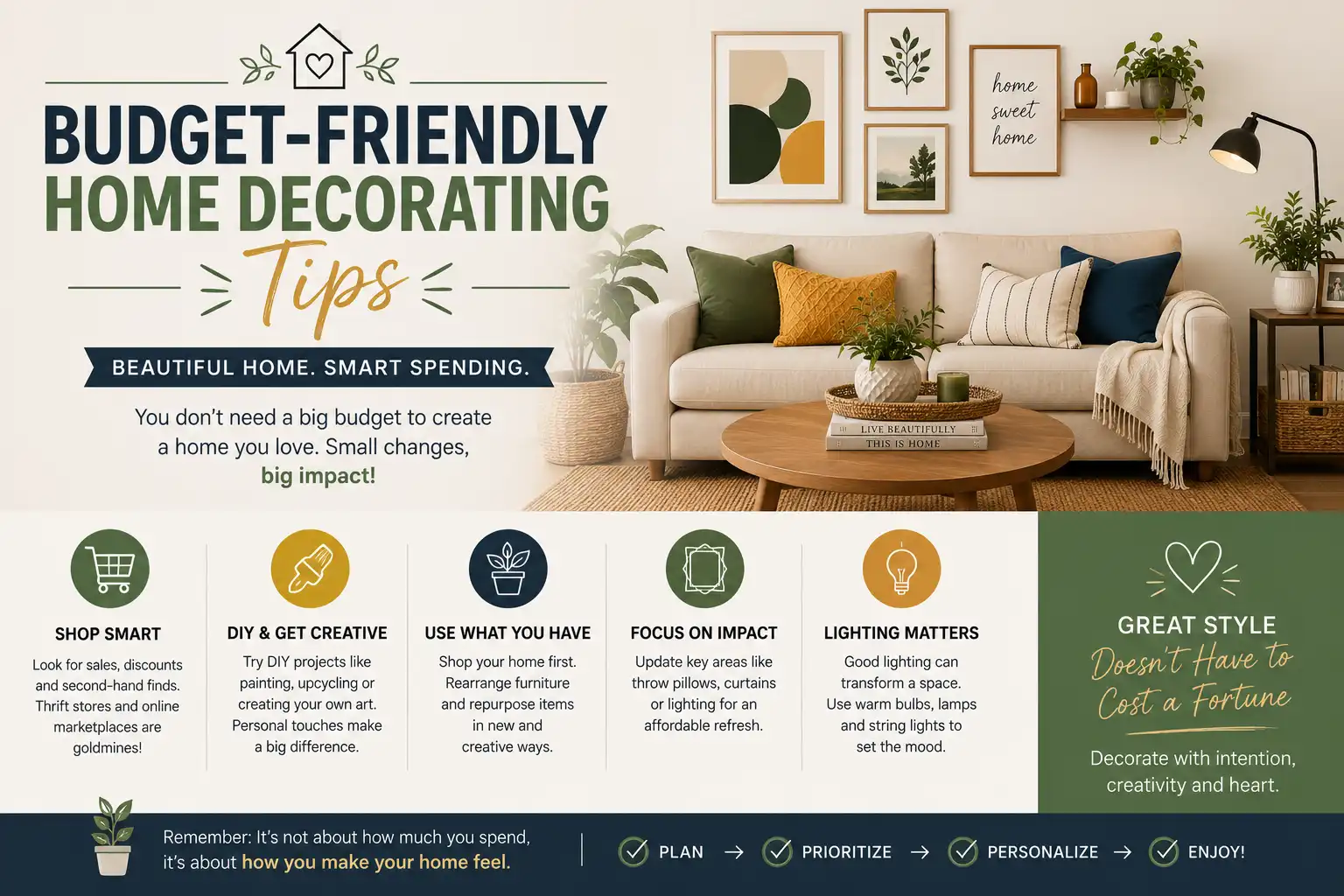
The idea that a beautiful home requires significant financial investment is one of the most persistent misconceptions in interior design. Walk through any design school graduate’s first apartment, browse the carefully decorated homes of experienced thrift shoppers, or look at how professional stagers transform vacant properties on minimal budgets, and it becomes clear that resourcefulness and taste matter far more than spending power.
The challenge with decorating on a budget isn’t finding cheap stuff — it’s making smart decisions about where to spend what you do have, where to save strategically, and how to find quality pieces at a fraction of their retail price. It’s about understanding which purchases genuinely improve a space and which ones simply fill it, and it’s about developing the patience to build a home slowly and intentionally rather than trying to finish it all at once.
This guide covers the practical, proven strategies that allow people to create genuinely beautiful, comfortable, and personal homes without going into debt or waiting until they can afford everything at full price. The approaches here are grounded in real-world decorating experience — the kind accumulated by people who have done a lot with a little and understand exactly why it works.
The Mindset Shift That Makes Budget Decorating Work
Before getting into specific strategies, the most important shift is in how you think about the process. Budget decorating that results in a home you love requires:
- Patience — the willingness to live with empty spaces rather than fill them with the wrong thing just to fill them
- Clarity about priorities — knowing which elements of a room matter most and spending there first
- Comfort with the secondhand market — understanding that used doesn’t mean low quality, and that many of the best pieces in any well-designed home were bought used
- An edit-first approach — recognizing that removing things you don’t love is often more transformative than adding new ones
People who decorate beautifully on a budget rarely do it by finding cheap new products. They do it by making better decisions, shopping more creatively, and being willing to wait for the right piece at the right price.
Where to Spend and Where to Save
The most important strategic question in budget decorating is knowing which purchases are worth investing in and which can be done cheaply without sacrificing the overall result.
Spend More On
- The sofa — the centerpiece of most living rooms, used daily, and very difficult to fake quality. A used or discounted high-quality sofa is worth far more than a new low-quality one.
- The bed and mattress — directly affects sleep quality and health. Never compromise on the mattress.
- Flooring — affects the entire feel of a room. If you’re in a position to choose or upgrade flooring, invest in solid hardwood or good-quality porcelain tile rather than cheap alternatives.
- Window treatments in main rooms — curtains that are too cheap look immediately thin and flimsy, which undermines everything around them. Budget more here.
- One statement piece per room — a single genuinely good piece elevates everything around it.
Save On
- Accent chairs and side tables — these are easy to find secondhand in excellent condition
- Decorative objects and accessories — easily sourced from thrift stores, markets, and estate sales
- Artwork — original artwork doesn’t need to be expensive; prints, student work, and photography can be exceptional and very affordable
- Storage furniture — bookshelves, sideboards, and dressers are among the most commonly donated and sold items and can frequently be found in excellent condition secondhand
- Bedding and throw pillows — quality varies less than price suggests in this category; sales and outlet options are abundant
- Lamps and light fixtures — huge range at every price point; the secondhand market is particularly rich here
The Highest-Impact Low-Cost Changes
Paint
Paint is consistently the highest-return investment in interior decorating. A gallon of quality paint costs between thirty and seventy dollars and can completely transform a room. No other single intervention — new furniture, new rugs, new curtains — has the same power to change the character and feel of a space at this price point.
For maximum impact on a minimal budget, prioritize painting the room you spend the most time in. Choose a color thoughtfully (test before committing), and don’t forget the trim and ceiling — painting these the right tone makes a significant difference to the finished effect.
Decluttering and Rearranging
Before spending anything, try removing things. Most rooms are improved dramatically by reducing what’s in them — clearing surfaces, editing decorative objects, removing furniture that doesn’t earn its place. This costs nothing and often reveals that what you have is better than you thought once it has room to breathe.
Also try rearranging before buying new furniture. Sometimes a sofa that’s been pushed against a wall for years looks completely different floated into the room. Furniture placement is free, and it has enormous impact on how a room feels.
Lighting Upgrades
Replacing overhead lighting and adding floor and table lamps is one of the most impactful and underappreciated budget decorating moves. A room lit exclusively by one overhead ceiling fixture almost always looks flat and uninviting. Adding two or three lamp sources — even inexpensive ones — changes the mood of a room entirely.
Switching to warm-toned bulbs (2700K) throughout a home costs very little and immediately creates a warmer, more welcoming atmosphere.
Updating Hardware
Cabinet hardware — drawer pulls and door knobs in kitchens, bathrooms, and dressers — is one of the smallest and most effective budget interventions. New hardware can completely change the look of a kitchen or bathroom without any structural work. A set of quality brass pulls on dated oak cabinets, for example, can bring them into the present with a minimal investment.
Where to Find Quality Pieces at Low Prices
Secondhand and Thrift Stores
Thrift stores, charity shops, and consignment stores are the most consistent source of quality home goods at reduced prices. Furniture, art, ceramics, lamps, and decorative objects cycle through these stores constantly, donated by households downsizing, moving, or updating their style. The key is consistency — visiting regularly rather than expecting to find everything in one visit.
What to look for in secondhand furniture:
- Solid wood frames rather than particleboard construction
- Upholstery that’s stained or worn but structurally sound (reupholstering a good frame is worth the investment)
- Classic, simple forms that will work in multiple contexts
- Quality materials — marble, brass, solid wood, iron — that are worth more than their secondhand price suggests
Estate Sales and Auctions
Estate sales are where the best secondhand furniture and decor are found. Unlike thrift stores, where donations are often lower-quality items people don’t want, estate sales include the entire contents of a home — including genuinely good pieces from households that have accumulated quality over decades. Prices are often negotiable, particularly toward the end of a sale.
Online auction platforms and local auction houses similarly offer access to quality pieces at market-driven prices, which are often well below retail for vintage and antique items.
Facebook Marketplace and Local Selling Apps
Online peer-to-peer selling platforms have become one of the richest sources of quality used home goods. People moving, redecorating, or downsizing list furniture and decor that would cost many times more new. Search regularly, act quickly when something good appears, and don’t hesitate to make reasonable offers — most sellers price with room to negotiate.
End-of-Season and Clearance Sales
Retailers mark down seasonal furniture and home decor significantly — sometimes 40 to 70 percent — at the end of each season. Buying summer outdoor furniture in September, holiday decor in January, and transitional-season textiles in clearance saves substantial amounts on items you’d buy at full price anyway. The patience to wait for these sales is one of the most valuable tools in a budget decorator’s approach.
Discount and Outlet Retailers
Several retailers specialize in quality home goods at reduced prices — including end-of-line products from premium brands, overstock items, and goods with minor cosmetic imperfections. Learning which retailers in your area or online offer these products and shopping them regularly can yield significant savings on items that would otherwise be beyond budget.
DIY Strategies That Actually Work
Not all DIY home decor is worth the effort, and some DIY attempts actually devalue good pieces. The most reliable and genuinely impactful DIY approaches for budget decorating:
Reupholstering
Reupholstering a good chair or sofa frame is one of the best value DIY projects in home decor. A structurally sound traditional armchair bought secondhand for thirty dollars plus forty dollars of fabric and a day’s work (or a modest upholstery quote) can produce a piece that looks like it cost several hundred dollars new. This is particularly effective for button-back chairs, simple dining chairs, and bench seats.
Refinishing Wood Furniture
Solid wood furniture — tables, dressers, sideboards — that’s been stained an outdated color can often be sanded back and refinished in a more current tone for very little cost. The labor is significant but the materials are inexpensive, and the result is a genuinely solid piece in a contemporary finish.
Framing Art and Prints
High-quality frames make inexpensive prints, photographs, or artwork look considerably better. A print from a museum store, a botanical illustration found in an old book, or a favorite personal photograph in a good frame looks deliberate and considered. Buying frames secondhand and repurposing them reduces the cost further.
Painting Furniture
Chalk paint and mineral paint have made furniture painting significantly more accessible — they require minimal surface preparation and bond well to most surfaces. A dated blonde wood dresser or an outdated side table in a deep, contemporary color can transform from visual noise into a statement piece. The key is choosing a color that works within your existing palette and using a quality finish coat to protect the result.
Budget Decorating Mistakes to Avoid
- Buying cheap to fill a space immediately — a room full of poor-quality, wrong-scale, or wrong-style pieces that were bought just to have something costs more in the long run than waiting for the right piece
- Spending on the wrong priorities — a beautiful lamp won’t save a room with bad bones; address the foundations first
- Underestimating shipping costs on online furniture — furniture shipping can cost as much as the piece itself; factor this into every online purchase calculation
- Buying new when secondhand is clearly better value — solid secondhand furniture almost always outperforms new furniture at the same price point
- Overcommitting to a style that’s currently trendy — trendy decor becomes dated quickly, which means buying it again; investment in timeless, neutral foundations saves money over time
- Ignoring scale — the wrong size rug, an undersized sofa, or an oversized piece of art are easy budget mistakes that are immediately visible and hard to fix without buying again
A Budget Decorating Priority Order
If you’re working with a limited overall budget and need to allocate it across a full room or home, this priority sequence produces the best results:
- Paint — the highest impact per dollar; do this first
- Lighting — add layered light sources; transform the mood immediately
- Flooring or area rug — anchors the entire room’s look and feel
- Primary seating — invest here; buy used if necessary to get quality
- Window treatments — height and quality matter; don’t cut too many corners
- Storage solutions — address this before adding more decor
- One statement piece — a piece of art, an antique, or a quality object that defines the room’s personality
- Accessories and soft furnishings — cushions, throws, plants, and smaller decor items layer in last
Frequently Asked Questions
What’s the most impactful thing I can do for my home on a very small budget?
Paint is the single highest-impact intervention available at any budget level. If even paint is out of reach, thorough decluttering and deep cleaning cost nothing and often reveal a better space than you thought you had. Rearranging furniture to improve layout and natural light is also free and can dramatically change how a room feels.
How do I make cheap furniture look more expensive?
The most effective approach is to mix inexpensive pieces with one genuinely good item — a quality rug, a real antique, a piece of original art — that elevates everything around it. Keeping surfaces clear reduces the visibility of lower-quality pieces. Good lighting is also critical; cheap furniture looks significantly better in warm, layered light than under harsh overhead lighting. Finally, painting or refinishing inexpensive wood furniture in a sophisticated color is very effective.
Is it worth buying secondhand upholstered furniture?
Yes, if you inspect it carefully. Solid wood frames with quality joinery are worth reupholstering even when the fabric is beyond saving. Check for structural integrity — no wobbles, no broken springs, no collapsed cushion support. Avoid upholstered pieces that smell musty or show signs of pest damage. If the frame is good, professional reupholstering adds years of use at a fraction of the cost of new furniture.
How can I make my living room look more pulled-together without spending much?
The fastest improvements to a scattered-looking living room are typically: editing down the number of objects on display, ensuring the rug is large enough to anchor all seating furniture, adding a floor lamp to a dark corner, and grouping decorative objects in odd numbers on surfaces. These adjustments cost nothing if you already have the pieces, or very little if a lamp or larger rug is the only new purchase.
Where is the best place to find budget-friendly art?
Art markets and local art fairs are excellent for original work at accessible prices. Art school degree shows are another underutilized source — graduating students sell original work at very reasonable prices. Museum shop prints, secondhand framed prints from thrift stores, personal photography printed at scale, and digital art prints are all affordable alternatives. Even pages torn from oversized art books or calendars, mounted and framed well, can look genuinely good.
Should I buy all my furniture at once or gradually?
Gradually is almost always the better approach, particularly on a limited budget. Buying gradually allows you to learn how a space actually works over time, shop more creatively for each piece, and avoid the regret of filling a room quickly with pieces you’ll want to replace. Living with an empty room for a while also helps clarify what it actually needs, which prevents wasted purchases.
How do I shop for rugs on a budget?
Rugs are among the most impactful and expensive single decor items, making budget sourcing especially important. Vintage and secondhand rugs are available at significantly reduced prices through estate sales, auction houses, and online platforms, and older handmade rugs often outlast and outlook new synthetic options at any price. Rug stores also commonly hold sample sales and end-of-line clearances where quality rugs are available at meaningful discounts.
What are the best plants for home decor on a budget?
Pothos, snake plants, philodendrons, and spider plants are among the most affordable, widely available, and low-maintenance houseplants for home decor. They propagate easily from cuttings — once you have one, you can fill your home with descendants at no additional cost. These plants also have genuine design value: a mature pothos trailing from a high shelf or a large snake plant in a textured pot makes a real visual statement in any room.
Conclusion
Budget-friendly decorating isn’t about compromise — it’s about clarity. Knowing what matters most in a room, investing there, and being creative and patient about everything else allows you to create a genuinely beautiful home at almost any budget level. The constraints of a limited budget, in fact, often produce more intentional and interesting spaces than unlimited spending, because every choice has to be justified.
The practical starting point is to edit first, identify the two or three highest-impact changes in your space, and address those before buying anything new. Learn the secondhand market in your area. Be willing to wait for the right piece rather than settling for a convenient one. And remember that the elements that make a home feel genuinely good to live in — warmth, light, order, a few meaningful objects — cost very little to achieve with the right approach.
Related Articles You May Enjoy
- Modern Home Design Trends That Actually Last
- The Psychology of Color in Interior Design
- Small Home Design Ideas That Feel Spacious
- How to Mix Modern and Traditional Decor
- How to Thrift Shop for Home Decor Like a Pro
- DIY Home Projects That Add Real Value to Your Space
- How to Arrange Kids’ Bedroom Furniture for Play and Sleep
 Designing a kid’s bedroom that handles both active play and restful sleep is one of the… Read more: How to Arrange Kids’ Bedroom Furniture for Play and Sleep
- How to Layout a Pantry for Maximum Storage and Visibility
 Your pantry might be one of the hardest-working rooms in your home, yet it often ends… Read more: How to Layout a Pantry for Maximum Storage and Visibility
- Space Planning for Pet Owners: Best Layouts for Four-Legged Friends
 Living with pets is a joy—until you trip over a water bowl in the hallway or… Read more: Space Planning for Pet Owners: Best Layouts for Four-Legged Friends
- How to Layout a Walk-In Pantry and Coffee Bar Combo
 Imagine walking into your pantry, grabbing a bag of freshly roasted beans, brewing your morning espresso,… Read more: How to Layout a Walk-In Pantry and Coffee Bar Combo
- Space Planning Hacks for Maximizing Vertical Wall Space
 When square footage is tight, the only way to go is up. That’s where space planning… Read more: Space Planning Hacks for Maximizing Vertical Wall Space
- How to Layout a Dream Makeup Vanity and Dressing Area
 Creating a dream makeup vanity and dressing area is about blending function with personal style. Whether… Read more: How to Layout a Dream Makeup Vanity and Dressing Area
- How to Arrange a Conservatory or Sunroom Layout
 Your conservatory or sunroom has the potential to be the most beloved spot in your home.… Read more: How to Arrange a Conservatory or Sunroom Layout
- Space Planning for Shared Kids’ Bedrooms That Reduce Bickering
 Sharing a bedroom can be a wonderful lesson in compromise and bonding—or it can be a… Read more: Space Planning for Shared Kids’ Bedrooms That Reduce Bickering
- The Secret to Creating Functional Zones in Studio Spaces
 Living in a studio apartment can feel like a constant compromise between style and function. You… Read more: The Secret to Creating Functional Zones in Studio Spaces
- How to Arrange Furniture in Rooms with Too Many Doors and Windows
 If your living room feels more like a busy hallway than a cozy retreat, you’re not… Read more: How to Arrange Furniture in Rooms with Too Many Doors and Windows
- How to Create a Relaxing Oasis in Your Master Bedroom
 Your master bedroom should be more than just a place to sleep—it should be a personal… Read more: How to Create a Relaxing Oasis in Your Master Bedroom
- Sustainable Home Design: Eco-Friendly Materials for Modern Interiors
 Sustainable home design is no longer a niche trend—it’s a responsible lifestyle choice. As we become… Read more: Sustainable Home Design: Eco-Friendly Materials for Modern Interiors