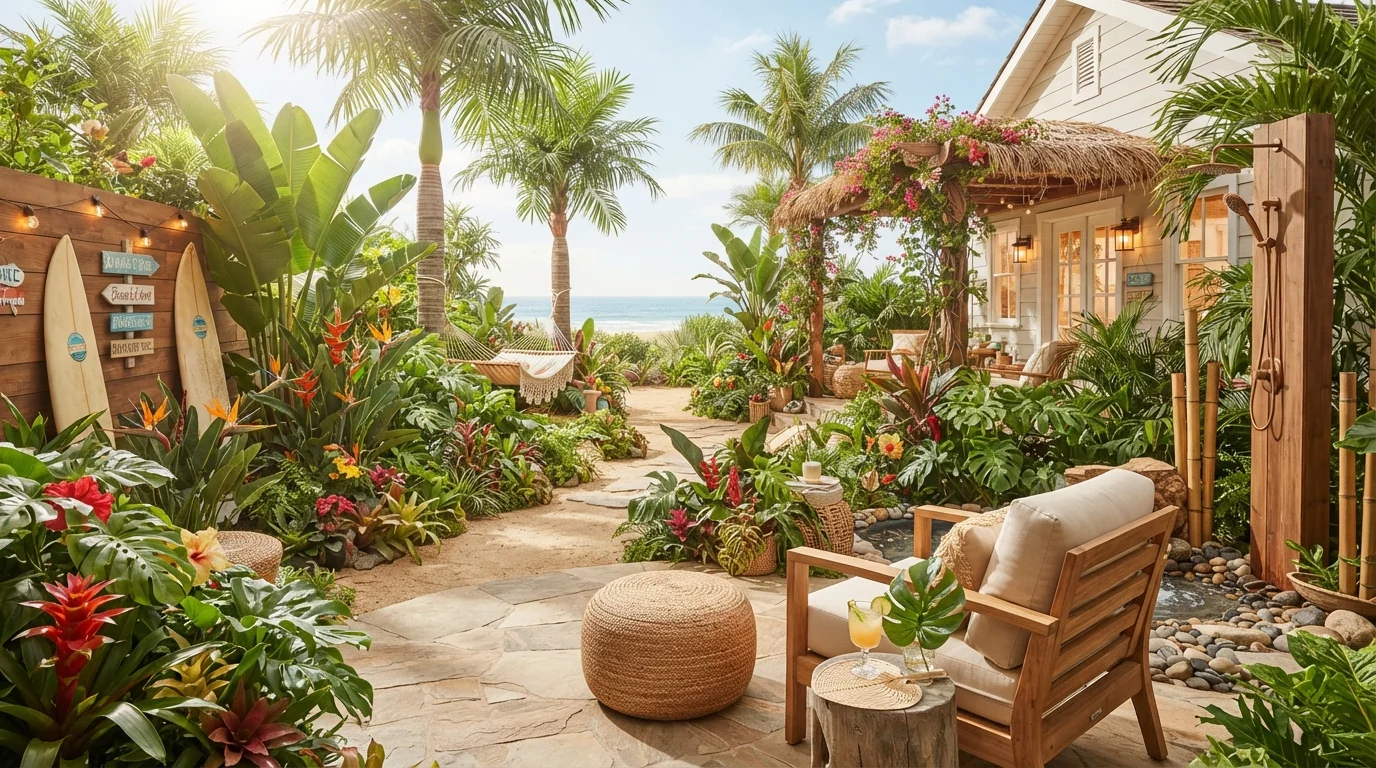
Imagine stepping into your backyard and feeling like you’ve just landed on a secluded beach in Bali. The rustle of palm fronds, the scent of plumeria, the soft crunch of sand underfoot — it’s not just a vacation dream. With the right approach, you can build a tropical garden that delivers that same sense of escape every single day. Whether you have a sprawling lawn or a compact patio, this guide walks you through how to bring beach vibes straight to your house.
1. Start with the Right Plant Palette
The heart of any tropical garden is its greenery. You want layers of texture, bold leaves, and pops of color that feel lush but not messy. Think large-leaf monsters, banana trees, and bird of paradise. These plants mimic the understory of a rainforest and instantly create that exotic canopy.
Don’t forget ground covers. Instead of traditional grass, use creeping jenny, mondo grass, or even artificial turf if your climate is dry. For flowering accents, add hibiscus, bougainvillea, and heliconia. They thrive in warm weather and reward you with nonstop color.
If you live in a cooler region, use large pots and bring plants indoors during winter. This way, your tropical garden stays vibrant year-round. For more ideas on arranging these plants, check out our garden design guides for layout inspiration.
2. Use Natural Materials for That Barefoot Feel
Beach vibes come from the ground up. Swap cold concrete for warm, natural surfaces. Gravel paths, decomposed granite, and large stone pavers feel great underfoot and drain water quickly. Wood decking — especially ipe or cedar — adds warmth and ages beautifully.
Consider a “sand zone” near your seating area. A shallow tray filled with white sand, surrounded by river rocks, creates a mini beach without the mess of full sand. It’s a clever trick used by tropical landscaping professionals.
Combine materials to define zones. Use wood for dining, stone for pathways, and pebbles for plant beds. This layered approach makes your outdoor living space feel intentional and resort-like.
3. Master the Art of Shade and Canopy
A true tropical garden is all about dappled light. Full sun can feel harsh, not relaxing. Create shade with pergolas, shade sails, or a simple bamboo tiki hut. Climbing plants like jasmine or passionfruit will weave through the structure and soften it.
Position seating under these shaded areas. A hammock between two palm trees is the ultimate beach vibe. If space is tight, use a large patio umbrella with a stand. The goal is to create cool pockets where you can sit and enjoy the breeze.
Don’t forget vertical shade. Tall hedges or a living wall of ferns and philodendrons block wind and add privacy, turning your yard into a secluded oasis.
4. Add Water Features for Sound and Movement
Nothing says “beach” like the sound of water. A small fountain, a recirculating waterfall, or even a simple birdbath with a bubbler introduces soothing white noise. It masks city sounds and attracts birds and butterflies.
For a bigger impact, install a pond or a small reflecting pool surrounded by aquatic plants like water lilies. The movement of water also helps cool the air around it, making your tropical garden more comfortable on hot days.
If a permanent feature isn’t possible, use a tabletop fountain or a rain chain. Every little bit counts toward that coastal atmosphere.
5. Choose Beach-Inspired Furniture and Decor
Furniture should be casual, durable, and low to the ground. Think teak loungers, rattan sofas, and floor cushions in natural tones like sand, driftwood, and sea foam. Stay away from heavy upholstery — use quick-dry foam and outdoor fabrics instead.
Accessorize with lanterns, shells, driftwood, and woven baskets. A few oversized floor pillows and a low wooden coffee table invite lounging. String lights or tiki torches add warmth after sunset.
Keep decor minimal. The star of the show is the greenery. Too many trinkets break the illusion of a natural paradise. Stick to a few statement pieces that feel found, not manufactured. For more tips on arranging your space, explore our outdoor living category.
6. Layer Lighting for Nighttime Magic
The party doesn’t stop when the sun goes down. Tropical gardens look stunning under soft, warm lighting. Use path lights to guide the way, uplights to highlight palm trunks, and fairy lights draped through branches to create a starry canopy.
Avoid white, harsh LEDs. Go for amber or warm yellow bulbs. Place candles in mason jars on tables, and hang paper lanterns from pergolas. This soft glow mimics moonlight and keeps the beach vibe alive.
Solar lights are a great low-maintenance option. They charge during the day and turn on automatically. You can find them in bamboo, rattan, or shell shapes to match your theme.
7. Plan for Low Maintenance from Day One
A breathtaking tropical garden stays beautiful only if you can keep up with it. Choose low-maintenance tropical plants like sago palm, cordyline, or foxtail fern. They require minimal pruning and tolerate drought once established.
Group plants with similar water needs together and install drip irrigation on a timer. Mulch heavily with bark or cocoa shells to retain moisture and suppress weeds. This cuts your weekend chores in half.
Use hardscaping to reduce lawn area. Less grass means less mowing, less watering, and more time relaxing in your resort-style retreat. If you’re redesigning from scratch, our space planning tips will help you optimize every square foot.
For a complete guide on transforming your home’s outdoor area, check out home design ideas that complement your garden. And if you’re looking for expert-approved resources on tropical landscaping and outdoor renovation, visit this comprehensive home and garden resource for additional inspiration.
Quick Comparison: Tropical Plants by Climate
| Climate Type | Best Tropical Plants | Winter Care |
|---|---|---|
| Warm (USDA 9-11) | Palm, hibiscus, plumeria, bird of paradise | None needed |
| Mild (USDA 7-8) | Banana, monstera, cordyline, philodendron | Mulch roots, cover sensitive plants |
| Cool (USDA 6 and below) | Dwarf palm, ferns, elephant ear, schefflera | Bring potted plants indoors, use frost cloth |
Use this table to choose the right plants for your area. A successful tropical garden starts with species that match your local conditions.
FAQ: Tropical Garden Basics
Can I create a tropical garden in a cold climate?
Yes. Use container plants that you move indoors during winter. Choose hardy tropicals like hardy banana, bamboo, and certain ferns. With planning, you can still achieve a lush look.
How much maintenance does a tropical garden need?
It depends on the plants you choose. Low-maintenance varieties like sago palm and cordyline need very little care. Using drip irrigation and mulch reduces work even further.
What are the best trees for a tropical garden?
Palm trees are iconic. For smaller spaces, try pygmy date palm or areca palm. For shade, use a royal palm or a traveler’s tree. They provide height and drama.
Do I need a lot of space for a tropical garden?
Not at all. Even a balcony can feel tropical with a few large pots, a vertical wall of ferns, and a small water feature. Scale the plants to match your space.
How do I make my garden feel like a beach resort?
Focus on natural materials, dappled shade, water sound, and casual seating. Add palm trees, sandy paths, and soft lighting. It’s more about the feeling than the size.
What colors should I use in a tropical garden?
Stick to greens, whites, yellows, and deep reds. Avoid bright synthetic colors. Let the natural foliage and flowers provide the palette.
Is a tropical garden expensive to build?
It can be done on any budget. Start with a few key plants and hardscape elements. Add pieces over time. Many tropical plants are affordable and grow quickly.
Conclusion
Creating a tropical garden is more than just planting palm trees — it’s about designing a feeling. By choosing the right plants, using natural materials, adding water and shade, and decorating with intention, you can bring beach vibes straight to your house. Start small, focus on what brings you joy, and let your garden grow into the vacation spot you deserve every day.