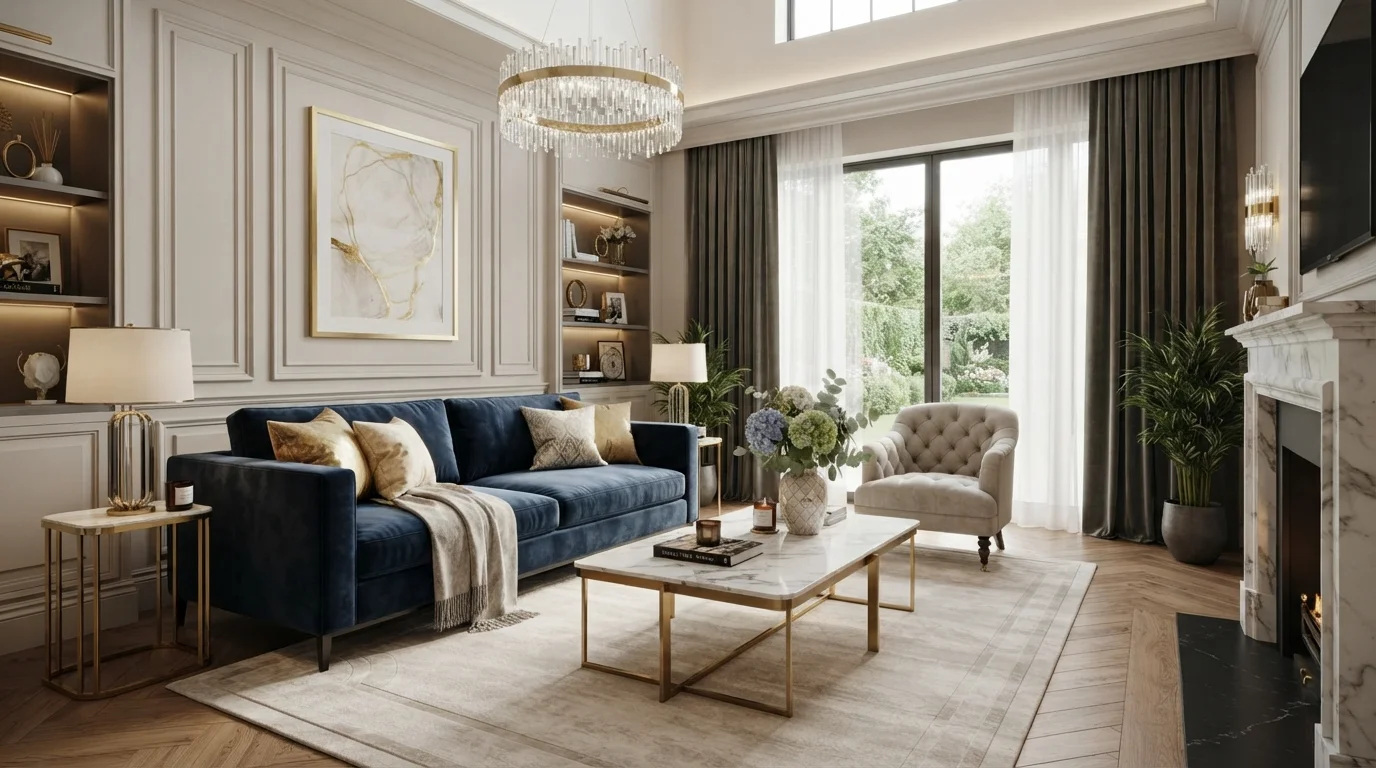
You don’t need a million-dollar budget to make your living room feel like a five-star hotel suite. The secret is in the details—curated textures, intentional layout, and a few strategic upgrades. As a home design specialist with 15 years in the industry, I’ve seen ordinary rooms turn extraordinary with just a handful of changes. Whether you’re staging a home or refreshing your own space, these five shifts will help you transform your living room into a luxury space without breaking the bank.
1. Upgrade Your Lighting Layers
Nothing screams “budget” like a single overhead light. Luxury living room design relies on layered lighting: ambient, task, and accent. Start with a statement chandelier or a sculptural pendant as your focal point. Then add floor lamps with dimmers for soft reading light, and place table lamps on consoles for warmth.
Pro tip: install dimmer switches on all lights. This allows you to control the mood instantly—from bright and energetic to intimate and cozy. For a real high-end feel, incorporate LED strips behind your TV or under shelves. The glow adds depth without clutter. And if you need layout inspiration, check out our space planning resources to see how lighting placement affects flow.
2. Embrace Texture Over Color
Many homeowners think luxury means bold colors or expensive art. In reality, texture is the unsung hero of high-end home decor. Mix materials like velvet, linen, leather, wool, and marble to create visual interest without overwhelming the eye. A velvet sofa paired with a chunky knit throw and a matte marble coffee table instantly reads as curated, not chaotic.
Stick to a neutral or monochromatic palette as your base, then add one or two metallic accents—brass or brushed nickel—for sophistication. This approach is also easier to update seasonally. Want to extend this aesthetic to your outdoor spaces? Our garden design tips show how to bring that same textural richness to your patio.
3. Invest in Statement Furniture
You don’t have to replace everything. Choose one or two hero pieces—a sculptural armchair, a custom sofa, or a dramatic console table—and let them anchor the room. The rest can be more modest. This trick makes a room look intentionally designed rather than pieced together.
For maximum impact, pick a sofa with clean lines and high-quality upholstery (like performance velvet or linen). Pair it with a bold coffee table—perhaps a live-edge wood slab or a smoked glass piece. If you’re unsure about scale, take a look at the home design category for curated examples of statement furniture in real spaces.
4. Create a Focal Wall (Without Paint)
A focal wall draws the eye and gives your room a sense of purpose. Skip the painted accent wall—luxury living room design leans toward architectural treatments. Consider adding wainscoting, shiplap, or floor-to-ceiling drapes. Another option is a large, unframed canvas or a gallery wall of black-and-white photographs arranged in a grid.
For a more modern approach, use a large mirror opposite a window. This bounces light around the room and makes the space feel twice as large. If you’re ready to take on this project, be sure to read our blog for a step-by-step guide on mounting and styling focal walls.
5. Accessorize with Intention
The final step is accessorizing, but restraint is key. A few high-quality objects work better than a shelf full of knick-knacks. Think oversized ceramic vases, a stack of hardcover coffee-table books, and a single sculptural lamp. Keep surfaces 70% empty to maintain a clean, airy feel.
A great resource for understanding how to balance accessories is a reference from the home and garden industry: this expert guide on luxury styling dives deeper into the psychology of minimalism and visual weight. It’s a fantastic starting point for anyone serious about curating their home.
Quick Checklist: 5 Changes at a Glance
- Layer lighting from three sources (ambient, task, accent)
- Mix at least three different textures in the room
- Invest in one or two statement furniture pieces
- Create a focal wall using architectural elements or mirrors
- Accessorize with minimal, intentional objects
Comparison: Budget vs. Luxury Approach
| Element | Budget Approach | Luxury Approach |
|---|---|---|
| Lighting | Single overhead fixture | Layered with dimmers and accent lights |
| Furniture | Matching sets from big-box stores | Curated mix of hero pieces |
| Walls | Bright painted accent wall | Wainscoting, paneling, or mirrors |
| Accessories | Cluttered shelves with small decor | Few large, curated objects |
| Textiles | Synthetic, one-texture fabrics | Mixed natural textures (wool, linen, velvet) |
Frequently Asked Questions
1. Can I achieve a luxury look on a tight budget?
Absolutely. Focus on lighting, texture, and decluttering. Even swapping out throw pillows and adding a dimmer can create a high-end feel without major spending.
2. What colors are best for a luxury living room?
Neutrals like warm beige, charcoal, cream, and soft taupe work best. They provide a timeless backdrop that allows textures and statement pieces to shine.
3. Do I need to hire an interior designer?
Not necessarily. With careful planning and resources like outdoor living guides, you can DIY many elements. But if you’re unsure about layout, a one-hour consultation can be affordable and worthwhile.
4. How many textures should I use in one room?
Aim for three to five distinct textures. For example, velvet (sofa), wood (coffee table), metal (lamp), and wool (rug). This creates depth without visual chaos.
5. Is open shelving too risky for a luxury look?
Open shelving can work if you style it sparingly. Stick to symmetrical, organized displays with a maximum of three items per shelf. Otherwise, opt for closed cabinetry for a cleaner line.
6. What’s the biggest mistake people make when trying to create a luxury space?
Over-accessorizing. Luxury lives in restraint. Too many small objects, pillows, or wall art pieces diluted the impact. Edit ruthlessly.
7. Can I combine modern and traditional styles?
Yes, this is a hallmark of luxury living room design. Pair a classic Chesterfield sofa with a sleek glass coffee table. The contrast feels intentional and sophisticated.
Conclusion
Transforming your living room into a luxury space doesn’t require a complete renovation. Start with one or two of these changes—lighting upgrades or a statement piece—and build from there. Remember, luxury is about feeling, not price tags. It’s the quiet confidence of a space that looks effortlessly put together. Ready to begin? Start by assessing your lighting and texture layers today.