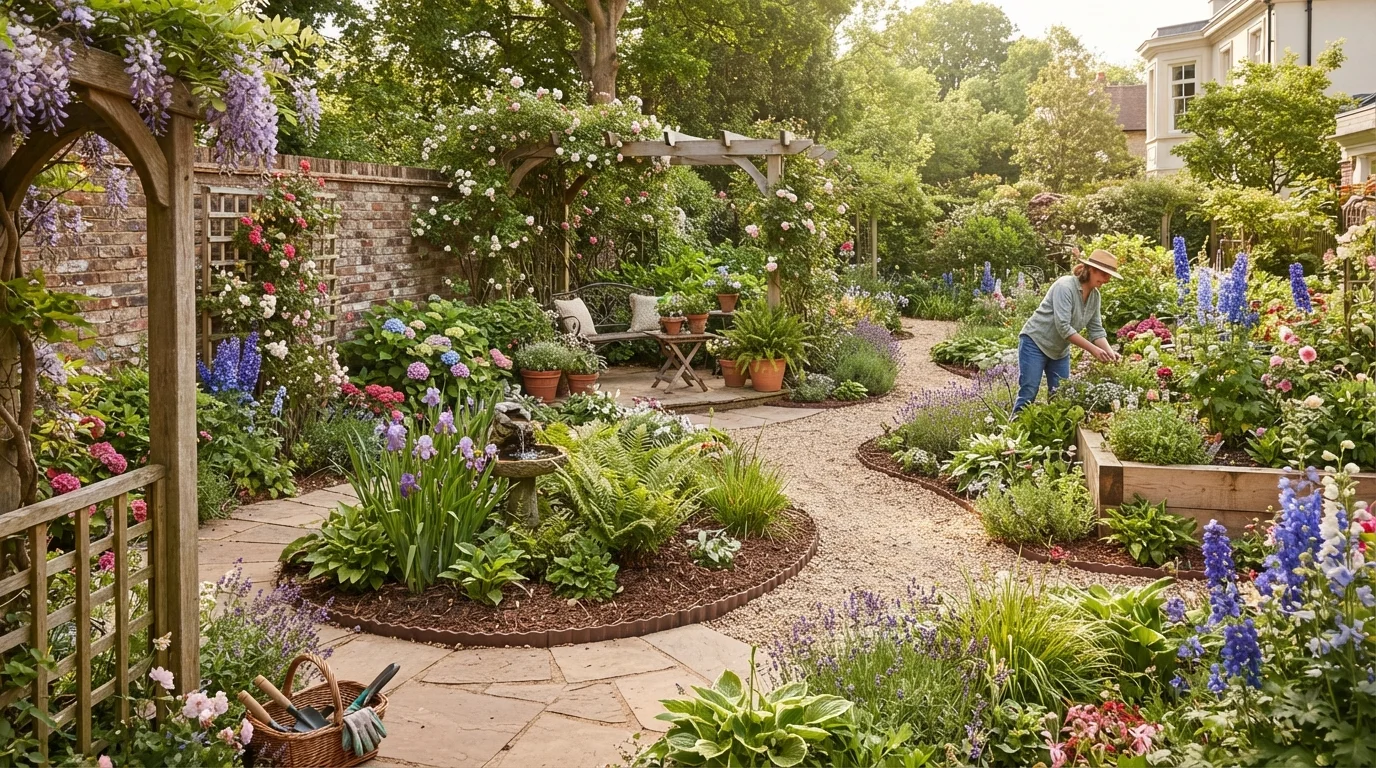
Standing in your empty backyard or bare front yard can feel overwhelming. That blank canvas holds so much potential, yet knowing where to start is often the hardest part. The good news? You don’t need a professional landscaper or a fortune to create a space that looks straight out of a shelter magazine.
With a few intentional strategies, you can turn that void into a lush, inviting extension of your home. Whether you’re working with a tiny urban patio or a sprawling suburban lot, these four tips will help you design a magazine-worthy garden design that feels personal, polished, and perfectly livable.
1. Start with a Strong Focal Point
Every unforgettable garden has something that immediately draws the eye. Without a focal point, an empty space feels disjointed and unfinished. Think of it as the anchor for your entire garden layout ideas.
Your focal point could be a dramatic specimen tree, a sculptural water feature, or even a bold painted bench. For smaller spaces, a vertical element like a trellis with climbing vines works wonders. Position your focal point slightly off-center for a more natural, editorial look rather than placing it dead in the middle.
I once helped a client turn a barren corner into a showstopper using a simple ceramic urn planted with trailing ivy and tall grasses. It cost under $100 but instantly gave the space structure and purpose.
2. Define Zones for Function and Flow
A great garden isn’t just about plants—it’s about how you use the space. Creating distinct zones is a hallmark of professional empty space garden transformation. Divide your area into at least three functional sections: a seating or dining zone, a planting zone, and a transitional pathway zone.
Use hardscaping elements like pavers, gravel, or decking to separate these areas visually. Even a simple change in texture—from grass to flagstone—signals a new zone. For inspiration on blending indoor comfort with outdoor function, check out our outdoor living space guides, which cover everything from furniture placement to weatherproof fabrics.
If you’re working with a long, narrow yard, place the seating area farthest from the house. This encourages guests to walk through the garden, creating a journey that makes the space feel larger and more intentional.
3. Layer Plants Like a Stylist
Magazine gardens never look flat. They have depth, texture, and rhythm. This comes from layering plants in three distinct heights: low ground covers, mid-height perennials, and tall structural plants or trees.
- Low layer (under 12 inches): Creeping thyme, mondo grass, or sedum for a carpet effect.
- Mid layer (1 to 3 feet): Lavender, echinacea, or ornamental grasses for color and movement.
- Tall layer (3 feet and above): Hydrangeas, boxwood hedges, or small ornamental trees like Japanese maples.
Repeat the same plant in groups of three or five rather than scattering singles. This mimics how plants grow in nature and creates visual harmony. Don’t forget to include evergreen shrubs for year-round structure, even in winter. For more structural strategies, browse our space planning articles that dive deeper into scaling and proportion for any lot size.
| Layer | Height Range | Suggested Plants | Purpose |
|---|---|---|---|
| Ground Cover | 0–12 in | Creeping thyme, sedum | Fill gaps, suppress weeds |
| Mid Layer | 1–3 ft | Lavender, echinacea | Color and texture |
| Tall Layer | 3+ ft | Hydrangea, boxwood | Structure and privacy |
This simple table can serve as your cheat sheet every time you visit the nursery. Stick to a limited color palette—think greens, whites, and one accent color—for that cohesive, editorial feel.
4. Light It Like a Living Room
Lighting is the secret weapon of magazine-worthy garden design. It extends the usability of your outdoor area into the evening and creates a cozy, intimate atmosphere. Good lighting also highlights your best features while hiding less photogenic corners.
Use a mix of three lighting types: ambient (soft overhead string lights or lanterns), task (pathway lights or a bright fixture near the grill), and accent (uplights aimed at trees or sculptures). Solar-powered options are budget-friendly and easy to install without an electrician.
For a luxurious touch, dimmable LED strips under bench seating or along stair risers add a modern glow. If you’re planning a full renovation, explore our garden design category for deeper dives into hardscape and lighting integration that professionals use.
As a general rule of thumb from the landscaping community, you can find excellent starter kits and design guides through trusted resources like this home and garden resource, which offers practical tools for DIY lighting installation. Even a few well-placed lights transform a flat space into a warm, layered retreat.
Bonus: Edit Ruthlessly
One mistake many DIY gardeners make is overcrowding. Magazine gardens look effortless because they’ve been edited. Leave at least 30% of your space as “breathing room”—open gravel, a patch of lawn, or a simple empty deck area.
Resist the urge to buy one of everything. Instead, repeat your favorite plants and let the negative space do the heavy lifting. This principle applies to decor too. A single ceramic stool or a cluster of three pots looks much more sophisticated than a crowded shelf of garden knick-knacks.
Real transformation happens when you hold back. For more real-life examples of minimal yet impactful yards, I recommend browsing our blog where we feature reader makeovers and before-and-after stories.
Frequently Asked Questions
1. What is the fastest way to transform an empty garden space?
Start with a focal point and add container plants. Large pots with fast-growing grasses or evergreens instantly create visual interest without digging. You can have a magazine-ready look in a single weekend.
2. How much does a magazine-worthy garden cost?
It varies widely, but you can achieve a high-end look for under $500 by focusing on hardscaping (gravel, mulch) and a few statement plants. Scale up with lighting and furniture as your budget allows.
3. Do I need to hire a landscape architect?
Not necessarily. For small to medium spaces, the four tips above are enough. If your yard has major grading issues or you want a complex water feature, a professional is worth the investment.
4. What plants are best for low-maintenance magazine style?
Ornamental grasses, lavender, boxwood, and sedum are all low-maintenance and look polished year-round. Choose native plants for even less watering and care.
5. How do I make a small garden look bigger?
Use vertical layers, keep the center open, and limit your color palette. Mirrors placed on fences can also trick the eye. Stick to a simple small garden design with clean lines.
6. What is the most common mistake in garden design?
Cramming too many plants. Leave empty space, and resist impulse buys at the nursery. A curated garden always outshines a crowded one.
7. Can I use indoor furniture outdoors?
Only if it’s specifically rated for outdoor use. Indoor materials like untreated wood or standard fabrics will warp, fade, or mold. Look for weather-resistant wicker, teak, or powder-coated metal.
8. How often should I update my garden design?
Do a seasonal refresh: swap annuals in spring and fall, add new lighting or cushions in summer, and focus on evergreens and hardscape in winter. Major redesigns can last 3 to 5 years.
Conclusion
Transforming an empty space into a magazine-worthy garden design is absolutely achievable with a clear plan. Start with a focal point, carve out functional zones, layer your plants thoughtfully, and finish with strategic lighting. Remember to edit, breathe, and give your garden time to grow into its beauty.
Your outdoor space is more than just dirt and grass—it’s an extension of your home and your personality. With these four tips, you’re ready to create something you’ll be proud to show off, whether for a backyard barbecue or a quiet morning coffee.
Now go grab your trowel and start designing. Your magazine cover is waiting.