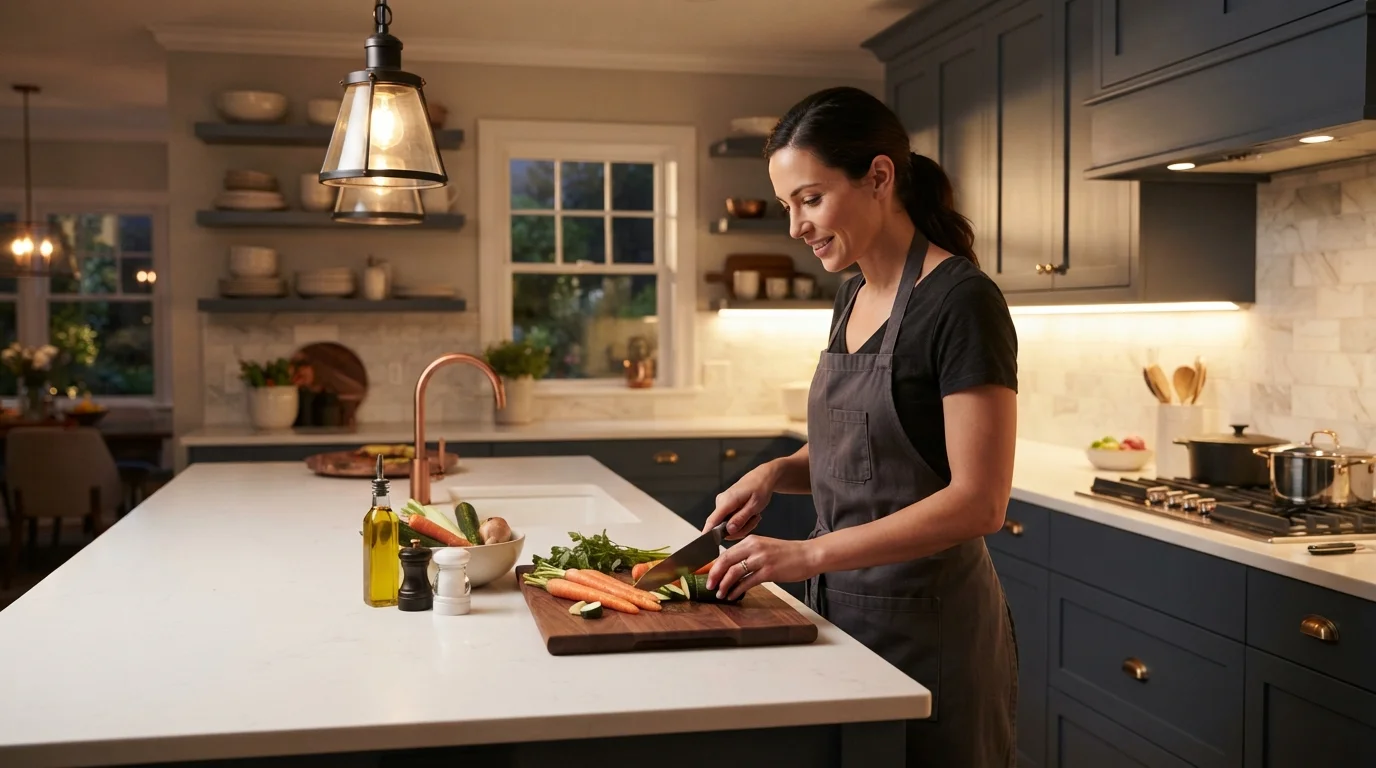
Your kitchen countertops are the heart of meal prep, morning coffee, and late-night snacks. But if the lighting is off, even the most beautiful quartz or butcher block can feel dull and uninviting. Getting your kitchen countertop lighting right isn’t just about aesthetics — it’s about functionality, safety, and creating a space that works for your daily routine.
Whether you’re a seasoned home cook or someone who just wants to see what they’re chopping, this guide will walk you through everything you need to know. We’ll cover fixture types, placement tips, and common mistakes — all with a conversational, no-nonsense tone.
Let’s shine a light on the subject.
Why Kitchen Countertop Lighting Matters More Than You Think
Good lighting transforms a countertop from a simple surface into a true workspace. Shadows from overhead ceiling lights often create dark spots right where you need clarity — like when dicing onions or reading a recipe. That’s why dedicated countertop illumination is a game-changer.
Beyond practicality, proper lighting adds depth and warmth to your kitchen design. It highlights textures, makes colors pop, and can even make a small kitchen feel larger. Plus, well-lit countertops reduce eye strain and the risk of accidents.
If you’re planning a full kitchen refresh, explore our home design category for more inspiration on blending style with function.
Types of Kitchen Countertop Lighting: What Are Your Options?
Not all lights are created equal when it comes to illuminating a countertop. Here are the most effective types to consider:
- Under-cabinet lighting: The gold standard for direct task lighting. Installed beneath upper cabinets, these fixtures shine downward exactly where you need it.
- Pendant lights: Great for islands or peninsulas. They add style and focused light, but need careful positioning to avoid casting shadows.
- Track lighting: Flexible and adjustable. You can direct individual heads toward specific countertop zones.
- Recessed can lights: Clean and minimalist. Best used in combination with other fixtures to reduce glare and shadows.
- LED strip lights: Thin, adhesive strips that fit under cabinets or along backsplashes. Perfect for accent and task lighting.
Each option has its strengths. Under-cabinet lights, for example, offer the most precise task lighting. For more tailored advice on arranging your kitchen layout, check our space planning resources.
How to Place Lighting for Maximum Countertop Coverage
Placement is everything. Even the best fixtures can fail if they’re in the wrong spot. Here are the key placement rules:
Under-cabinet placement: Install fixtures near the front edge of the upper cabinet, not the back. This prevents light from hitting the backsplash and instead illuminates the countertop surface. Keep them 2 to 3 inches from the cabinet face for even coverage.
Pendant lights over islands: Hang pendants 30 to 36 inches above the countertop. Space them evenly — if you have two pendants over a 6-foot island, place them about 24 inches from each end.
Avoid shadows: Your body and hands can block overhead light. Always combine ceiling fixtures with under-cabinet lighting to eliminate shadow zones where you work.
For a deeper dive into fixture specs, consider referring to trusted industry resources. A comprehensive home and garden reference guide can help you compare brightness levels and energy efficiency before you buy.
Choosing the Right Light Temperature and Brightness
The “color” of light matters as much as the fixture type. Light temperature is measured in Kelvins (K). For kitchen countertops, aim for a range between 2700K and 3500K — a warm to neutral white that feels natural and comfortable.
Cooler light (4000K and above) can look clinical and harsh. Warmer light (below 2700K) might feel cozy but can make food look unappetizing. A sweet spot around 3000K works beautifully in most kitchens.
Brightness is measured in lumens. For task lighting, you need at least 400 to 800 lumens per linear foot of countertop. Dimmer switches are a fantastic addition — they let you adjust intensity from bright prep mode to soft ambiance for entertaining.
Common Mistakes to Avoid with Kitchen Countertop Lighting
Even design-savvy homeowners make these slip-ups. Avoid them to get the best results:
- Relying solely on overhead lighting: A single ceiling fixture creates harsh shadows. Always layer with under-cabinet or accent lights.
- Installing fixtures too far back: Lights placed near the wall will only illuminate the backsplash, not the countertop.
- Ignoring glare: Shiny countertops like granite or quartz can reflect light into your eyes. Use fixtures with frosted lenses or diffusers.
- Forgetting about dimming: Without dimmers, your lighting is either “on” or “off” — no flexibility for different tasks or moods.
- Choosing style over function: A beautiful pendant fixture is useless if it doesn’t direct light where you need it.
Comparing Fixture Options: A Quick Reference Table
Not sure which light type fits your kitchen best? This table breaks down the key features:
| Fixture Type | Best For | Installation Effort | Cost Range |
|---|---|---|---|
| Under-cabinet LEDs | Direct task lighting | Moderate (hardwired or plug-in) | $$ – $$$ |
| Pendant lights | Islands and peninsulas | Moderate to high | $$$ – $$$$ |
| Track lighting | Flexible directional light | Moderate | $$ – $$$ |
| Recessed cans | General ambient light | High (ceiling cutouts) | $$$ |
| LED strip lights | Accent and under-cabinet | Easy (adhesive) | $ – $$ |
For more practical insights on your overall home environment, don’t forget to browse our outdoor living ideas — because great design doesn’t stop at the door.
Frequently Asked Questions About Kitchen Countertop Lighting
1. What is the best type of lighting for kitchen countertops?
Under-cabinet LED strip lights or puck lights are widely considered the best option. They provide direct, even light without casting shadows from your body or cabinets.
2. How many lumens do I need for countertop task lighting?
Aim for 400 to 800 lumens per linear foot of countertop. This ensures bright, clear illumination for chopping, reading, and other detailed tasks.
3. Should I use warm or cool light in my kitchen?
Warm to neutral white light (2700K to 3500K) is ideal. It balances comfort and clarity without making food look washed out or overly yellow.
4. Can I install under-cabinet lighting myself?
Yes, especially with plug-in or battery-operated LED strips. Hardwired options require basic electrical knowledge or a professional, but many DIY-friendly kits are available.
5. How far should pendant lights be from the countertop?
Standard height is 30 to 36 inches from the countertop surface to the bottom of the pendant. Adjust based on ceiling height and personal preference.
6. Do I need lighting over my entire countertop?
Focus on high-use zones like the main prep area, sink, and stove. Secondary counters can work with ambient light alone, but uniform under-cabinet coverage is always a plus.
7. What’s the difference between task lighting and ambient lighting?
Task lighting is bright and focused on a specific work area. Ambient lighting provides overall room illumination. A good kitchen uses both layers for balance.
Conclusion
Lighting your kitchen countertops properly is one of the smartest upgrades you can make for your home. It boosts functionality, enhances safety, and elevates the entire look and feel of your space. Start by choosing the right fixture type — under-cabinet LEDs are almost always a win — then focus on placement and light temperature.
Remember to avoid common pitfalls like relying only on overhead lights or ignoring glare. And if you’re still planning your layout, our home design section offers plenty of ideas to match your style.
Ready to brighten up your kitchen? Take it one fixture at a time, and you’ll love the results.