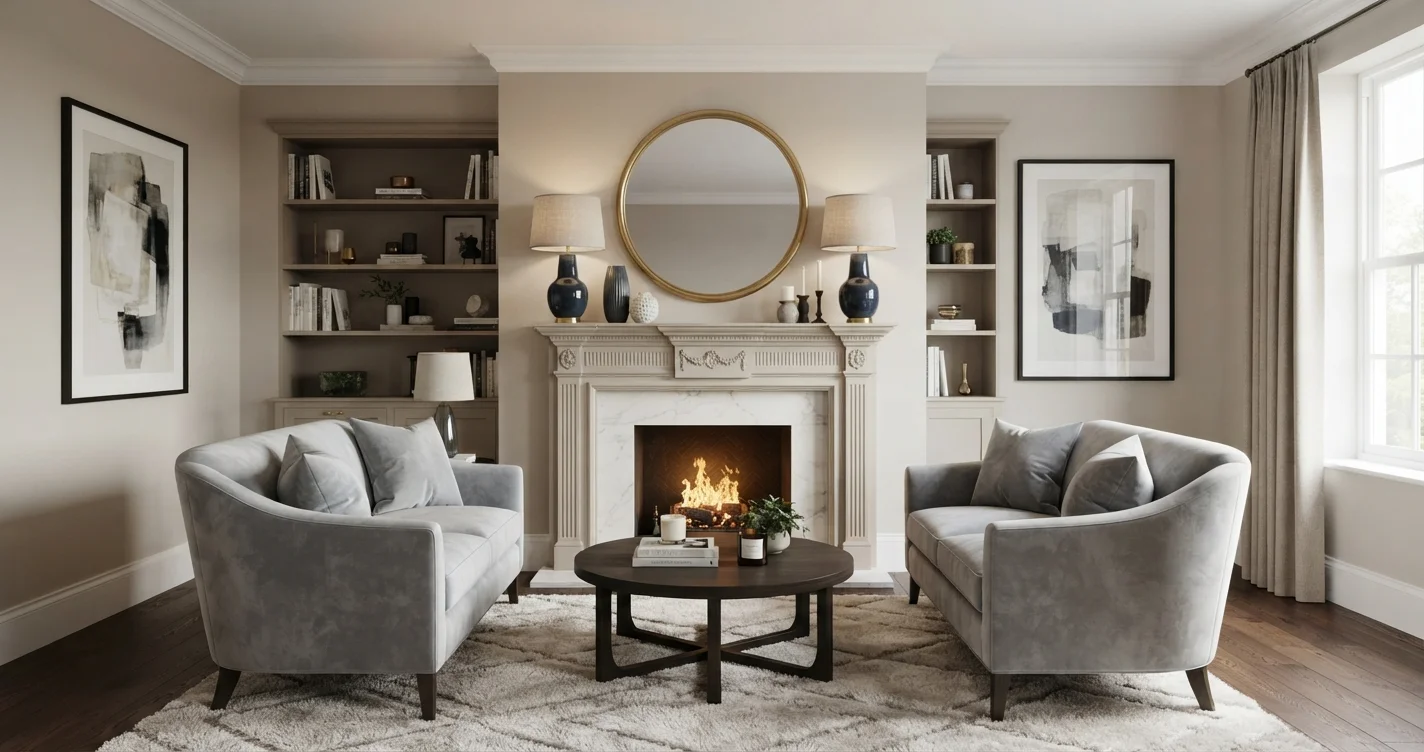
Have you ever walked into a room and felt instantly at ease, without knowing exactly why? Chances are, the space had great balance and symmetry in room design. It’s not magic — it’s a design principle that makes any interior feel more polished, calm, and intentional. And the best part? You don’t need a degree in architecture to get it right.
In this guide, I’ll walk you through practical ways to create that same sense of equilibrium in your own home. Whether you’re staging a living room or refreshing a bedroom, understanding how to balance visual weight will transform the way you decorate. Let’s dive into the balance and symmetry in room design.
Why Balance and Symmetry Matter in Interior Design
Balance is the visual stability that holds a room together. Without it, a space can feel chaotic, heavy on one side, or simply unfinished. Symmetry is one of the easiest ways to achieve that stability — think of matching lamps on either side of a sofa or identical nightstands flanking a bed.
These principles aren’t just about looks. When a room feels balanced, it lowers visual stress and helps your eye move naturally around the space. For many homeowners, mastering symmetrical room layout is the first step toward a professional-looking interior.
If you’re exploring broader concepts, our home design category has plenty of resources to complement this topic.
Three Types of Balance You Need to Know
Designers work with three main types of balance. Understanding them gives you more flexibility — not every room needs to be mirror-perfect.
- Symmetrical balance: Mirroring elements on each side of a central axis. Example: two identical armchairs facing a fireplace.
- Asymmetrical balance: Using different objects with equal visual weight. Example: a large sofa balanced by a tall plant on the opposite side.
- Radial balance: Elements arranged around a central point. Example: a circular dining table with chairs evenly spaced around it.
For many modern homes, a mix of symmetrical and asymmetrical creates the most dynamic yet stable feel. This is where visual balance in interior design really shines.
How to Create Symmetry in Living Rooms and Bedrooms
Start with a focal point — a fireplace, a large window, or a media console. Place identical furniture pieces on each side of that focal point. For a living room, that means two matching sofas facing each other or two identical floor lamps beside a couch.
In a bedroom, symmetry works wonders. Put the bed in the center of the main wall, then use matching nightstands and lamps on both sides. This creates a calm, hotel-like atmosphere that promotes rest.
If you’re working with a challenging layout, check out our space planning section for more tailored advice on arranging furniture.
Using Asymmetry for Modern and Eclectic Spaces
Not every room calls for strict symmetry. Asymmetrical balance is ideal if you love an organic, collected look. The trick is to distribute visual weight evenly. For example, pair a large, chunky sofa with a delicate side chair and a tall floor lamp — each piece carries a different weight, but together they feel stable.
Asymmetry works beautifully in open-concept layouts and when you want to add personality without clutter. It’s also a great way to highlight a unique piece, like a vintage armoire or an oversized piece of art.
When done right, asymmetrical balance tips help your home feel curated, not chaotic. For more inspiration, take a look at our blog, where we share real-life room transformations.
Proportion and Scale: The Unsung Heroes of Balance
Symmetry alone won’t work if the furniture is too big or too small for the room. That’s where proportion and scale come in. A massive sectional in a tiny den will never feel balanced, even if you mirror it perfectly.
Rule of thumb: leave at least 18 inches between furniture pieces for walkways, and keep coffee tables about 14 to 18 inches from the sofa. Use rugs to anchor seating areas — a rug that’s too small will throw off the entire visual equilibrium.
Getting the scale right is one of the most overlooked aspects of creating design harmony. It’s worth measuring your room and mapping out furniture placement before you shop.
Quick Reference: Symmetrical vs. Asymmetrical Balance
Here’s a simple breakdown to help you choose the best approach for each room.
| Aspect | Symmetrical Balance | Asymmetrical Balance |
|---|---|---|
| Vibe | Formal, calm, traditional | Relaxed, modern, dynamic |
| Best for | Bedrooms, formal living rooms | Family rooms, eclectic spaces |
| Furniture | Matching pairs | Different but equal visual weight |
| Color | Uniform on both sides | Use color blocks to balance weight |
| Example | Two identical chairs by a window | One sofa + one armchair + one plant |
Color, Light, and Texture: The Finishing Touches
Balance isn’t just about furniture — it’s also about color and light. Darker colors feel heavier, so use them sparingly on one side of a room unless you have an equally weighty element on the other side. Light colors expand and feel airy.
Texture plays a role, too. A smooth glass coffee table feels lighter than a chunky wood trunk. If you place a heavy, textured piece on one side, offset it with a lighter, reflective surface on the other. Layering these elements ensures your space doesn’t feel lopsided.
For outdoor spaces, you can apply the same logic. Our garden design resources offer tips on balancing plants and hardscaping for a seamless transition from indoors to outdoors.
Frequently Asked Questions (FAQ)
1. What is the difference between balance and symmetry in design?
Balance is the overall visual stability of a room. Symmetry is one method to achieve balance — by mirroring elements on either side of a central line. You can have balance without symmetry (asymmetrical balance).
2. Can I use symmetry in a small room?
Absolutely. In fact, symmetrical layouts can make small rooms feel more orderly and spacious. Just keep furniture proportional — avoid oversized pieces that overwhelm the space.
3. How do I balance a room with an off-center window or fireplace?
Work with the existing focal point. You can use asymmetrical balance by placing a larger piece of furniture on the lighter side to even out the visual weight. Curtains that extend past the window also help center the focus.
4. Is symmetrical design outdated?
Not at all. Symmetry is timeless, but it can feel traditional if overdone. You can modernize it by using symmetrical layouts with contemporary furniture or mixing in asymmetrical accents.
5. What’s the easiest way to start balancing a room?
Pick your focal point and anchor it. If it’s a bed, place it centered and add matching side tables. If it’s a sofa, flank it with identical lamps or end tables. Then let the rest of the room follow that lead.
6. Do I need to buy matching furniture for symmetry?
Not necessarily. You can achieve symmetry with matching colors, shapes, or even similar-sized pieces from different collections. The key is visual similarity, not exact duplicates.
7. Can I combine symmetrical and asymmetrical balance in one room?
Yes, and many designers do this on purpose. For instance, use symmetrical nightstands in the bedroom but an asymmetrical layout for the seating area in the same room. It creates interest without losing harmony.
Conclusion
Creating balance and symmetry in room design doesn’t require expensive renovations or a designer’s budget. Start by identifying your focal point, choose either symmetrical or asymmetrical balance, and pay attention to proportion, color, and texture.
Small adjustments — like moving a lamp or swapping a side table — can dramatically improve the feel of a room. If you want to explore more ways to enhance your space, check out a trusted resource like this comprehensive home and garden guide for additional insights and tools.
Take it one room at a time. Once you start seeing your home through the lens of balance, you’ll never decorate the same way again.