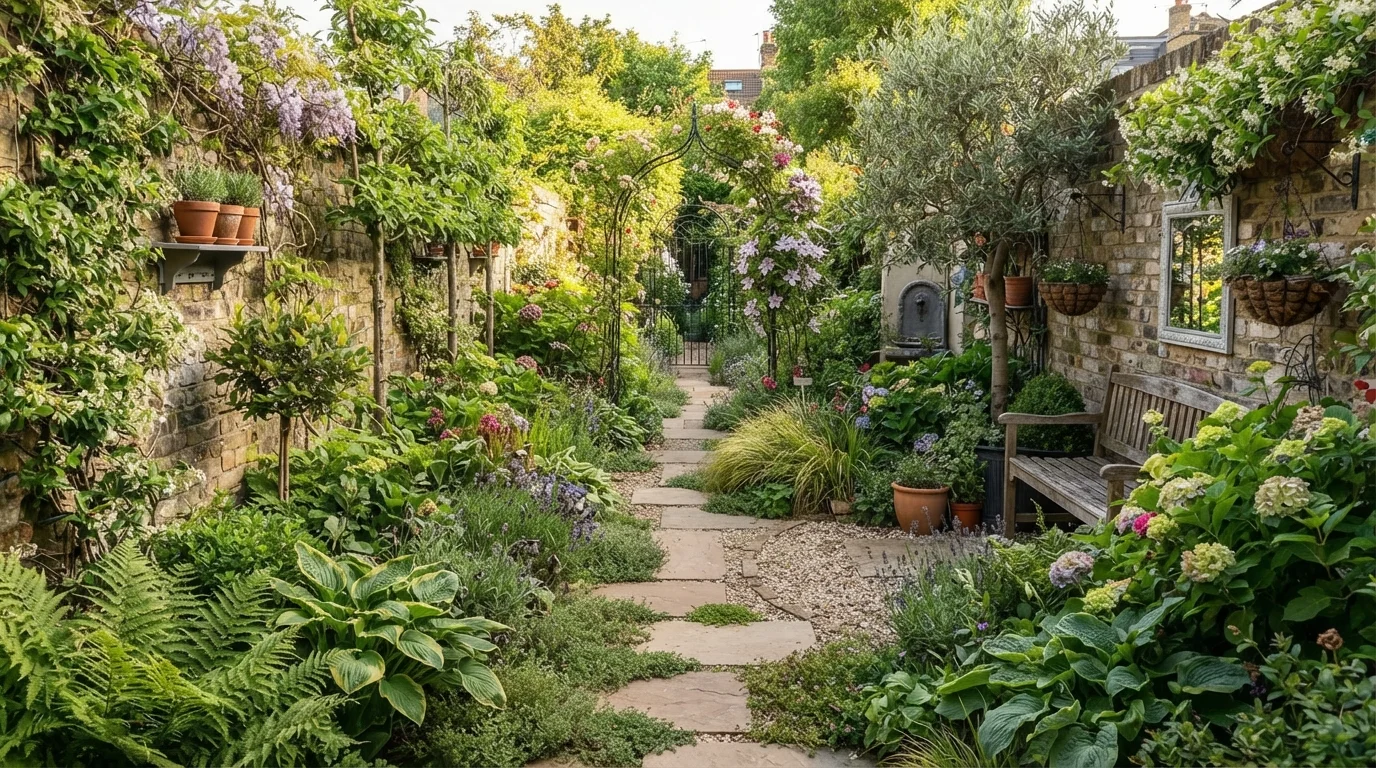
Let’s be honest: a narrow or small garden can feel like a design puzzle. You look at the space and wonder how to make it feel larger, more interesting, and less like a hallway. The good news? You don’t need a massive budget or a team of landscapers to pull it off. The secret to adding depth to narrow and small gardens lies in a few clever tricks that trick the eye and maximize every inch.
Whether you’re working with a petite city patio or a long, skinny backyard, the principles are the same. You want to create layers, draw the gaze forward, and make the space feel intentional. Ready to unlock that secret? Let’s walk through seven powerful strategies.
1. Create Strong Visual Lines That Lead the Eye
The quickest way to add depth is by controlling where the eye travels. In narrow gardens, linear elements are your best friends. Think of a long, straight pathway or a row of stepping stones that pulls you from the entrance to the far end.
Use materials like brick, gravel, or wood planks laid in a parallel direction to the garden’s length. This creates a natural vanishing point. Avoid horizontal stripes or wide patterns that will only make the space feel shorter and wider.
For a modern twist, try a herringbone pattern on a narrow path. It adds texture without sacrificing the elongating effect. Pair that with low-growing plants along the edges, and you’ll instantly create a sense of motion.
2. Layer Plants by Height and Texture
Depth is all about layers. When everything is flat, a small garden feels one-dimensional. Start with taller plants or a slim tree at the back or center, then work your way down to mid-height shrubs and finally low ground covers.
This tiered approach mimics how nature works in forests and meadows. For example, place a vertical columnar evergreen at the rear, then add lavender or salvia in the middle, and finish with creeping thyme or moss at the front. The contrast in heights tricks the brain into perceiving more space.
Don’t forget about leaf texture. Mix broad leaves (like hostas) with fine foliage (like ferns or grasses). That contrast adds visual interest and makes each layer stand out. For more ideas on structuring your layout, check out our space planning resources for compact gardens.
3. Use Mirrors and Reflective Surfaces
Mirrors aren’t just for interiors. A well-placed garden mirror can double the visual depth of a narrow space instantly. It reflects light and greenery, creating the illusion that the garden continues beyond the wall.
Choose an outdoor-rated mirror and position it at the end of a pathway or behind a seating area. Angle it slightly to capture the best view of your plants. If you’re worried about birds, use a mirror with a subtle frosted finish or place it behind a trellis.
Other reflective surfaces work too: polished metal planters, a small water feature with a dark reflective surface, or even glossy tiles on a garden wall. They all bounce light around and open up cramped corners.
4. Go Vertical with Walls and Trellises
When horizontal space is limited, the only way is up. Vertical gardening is a non-negotiable strategy for adding depth to narrow and small gardens. It draws the eye upward, making the area feel taller and more expansive.
Install a living wall on one side of the garden, or add a trellis with climbing roses, jasmine, or ivy. You can also hang pots on fences or use a tiered plant stand. This creates a backdrop that feels lush without taking up valuable floor space.
Another trick: paint the far wall a darker shade—like charcoal or deep green. This creates a sense of recession, as if the wall is further away. Lighter colors on the side walls keep things bright and airy. For more vertical strategies, see our outdoor living ideas for small footprints.
5. Break the Garden into “Rooms”
Instead of treating the whole narrow space as one long strip, divide it into smaller, distinct zones. This technique, known as “garden rooms,” adds depth by creating multiple focal points. Your eye moves from one area to the next, making the garden feel longer than it actually is.
Use a low hedge, a small arch, or a change in paving material to mark the transition between zones. For example:
- Zone 1: A cozy seating nook near the house with a bistro table and potted herbs.
- Zone 2: A curved path leading to a small water feature or birdbath.
- Zone 3: A hidden corner with tall grasses and a bench for reading.
Each “room” should have a purpose. This trick works especially well in long, narrow backyards. If you’re planning the layout from scratch, explore our garden design category for more structural approaches.
6. Play with Perspective and Scale
Interior designers use this trick all the time: placing smaller furniture near the back of a room makes it seem farther away. In the garden, you can do the same. Use smaller pots, finer-leaved plants, and narrower furniture at the far end of the space.
Conversely, keep larger elements—like a big urn or a broad-leafed shrub—closer to the entrance. This forced perspective makes the distant end appear further off. It’s a classic optical illusion used in formal French gardens, and it works beautifully on a micro scale.
Combine this with a tapered pathway: wider at the start, narrower at the end. This simple trick amplifies the sense of depth without spending a dime.
7. Use Color Strategically
Color can dramatically alter how we perceive distance. Warm colors (reds, oranges, yellows) feel like they are advancing toward you. Cool colors (blues, purples, silvers) seem to recede. In a narrow garden, use cool tones at the far end to push the boundary back.
Plant blue salvia, lavender, or silver artemisia toward the back. Keep vibrant reds and oranges in the foreground or around seating areas where you want energy. This natural gradient creates a soft focus effect that adds depth.
For pathways and hardscaping, use neutral or gray-toned materials. They blend into the background better than stark white or bright red bricks. If you’re unsure about color pairing, it helps to browse home design ideas that harmonize indoor and outdoor palettes.
As a general rule of thumb, here’s a quick reference table for color placement in a narrow garden:
| Garden Section | Recommended Colors | Effect |
|---|---|---|
| Foreground (entrance) | Warm tones (red, orange, yellow) | Creates a welcoming, energetic entry |
| Midground | Neutrals (green, white, soft pink) | Bridges the visual gap smoothly |
| Background (far end) | Cool tones (blue, purple, silver) | Pushes the boundary further away |
For more in-depth guidance on creating these illusions, refer to trusted resources like professional home and garden guides that offer step-by-step plans for small lots.
Frequently Asked Questions
1. What is the most effective way to make a narrow garden look wider?
Creating strong horizontal lines across the width—like using wide stepping stones or low hedges that span from side to side—can make a narrow garden feel wider. Pair this with a diagonal or curved path to add motion.
2. Can I use real mirrors in my garden?
Yes, but choose outdoor-rated mirrors with weatherproof backing. Place them in shaded areas to avoid excessive glare and clean them regularly. Consider a mirror cabinet door or an antique-style frame for a decorative touch.
3. What plants are best for a small, narrow garden?
Choose compact, upright growers like columnar apple trees, boxwood, lavender, and ornamental grasses. Avoid sprawling plants that will overtake the space quickly. Vertical climbers like clematis and honeysuckle are excellent for walls.
4. How do I create a sense of depth without adding hardscaping?
Use plant layering and color gradients. Place tall, dark-leaved plants at the back, then mid-height green plants, and low silver or blue plants at the front. This creates a natural depth effect without stone, wood, or pathways.
5. Should I paint my fence a dark or light color?
For depth, paint the far end of the fence a dark color (like charcoal or forest green). This makes the boundary recede. Keep side fences light or neutral to avoid closing in the space further.
6. Can I combine multiple depth tricks without making the garden look busy?
Absolutely. Stick to a cohesive palette (2-3 main colors) and repeat materials like wood or stone. Choose one dominant trick—like a long path—and layer in mirrors, vertical planting, and color as supporting elements. Less is still more in small spaces.
7. Is it possible to add lawn to a narrow garden?
Yes, but keep it narrow and linear. A strip of grass down the center can work, but consider alternatives like artificial turf or ground covers (creeping thyme, clover) that require less maintenance and don’t get trampled easily.
Conclusion
Adding depth to narrow and small gardens isn’t about magic—it’s about intention. By using lines, layers, reflections, vertical elements, and smart color choices, you can turn even the tightest plot into an inviting retreat. Start with one or two strategies, then build from there. Your garden will thank you, and so will your guests.
For consistent inspiration and more practical tips, don’t forget to visit our blog, where we cover everything from furniture placement to plant care for compact outdoor spaces.