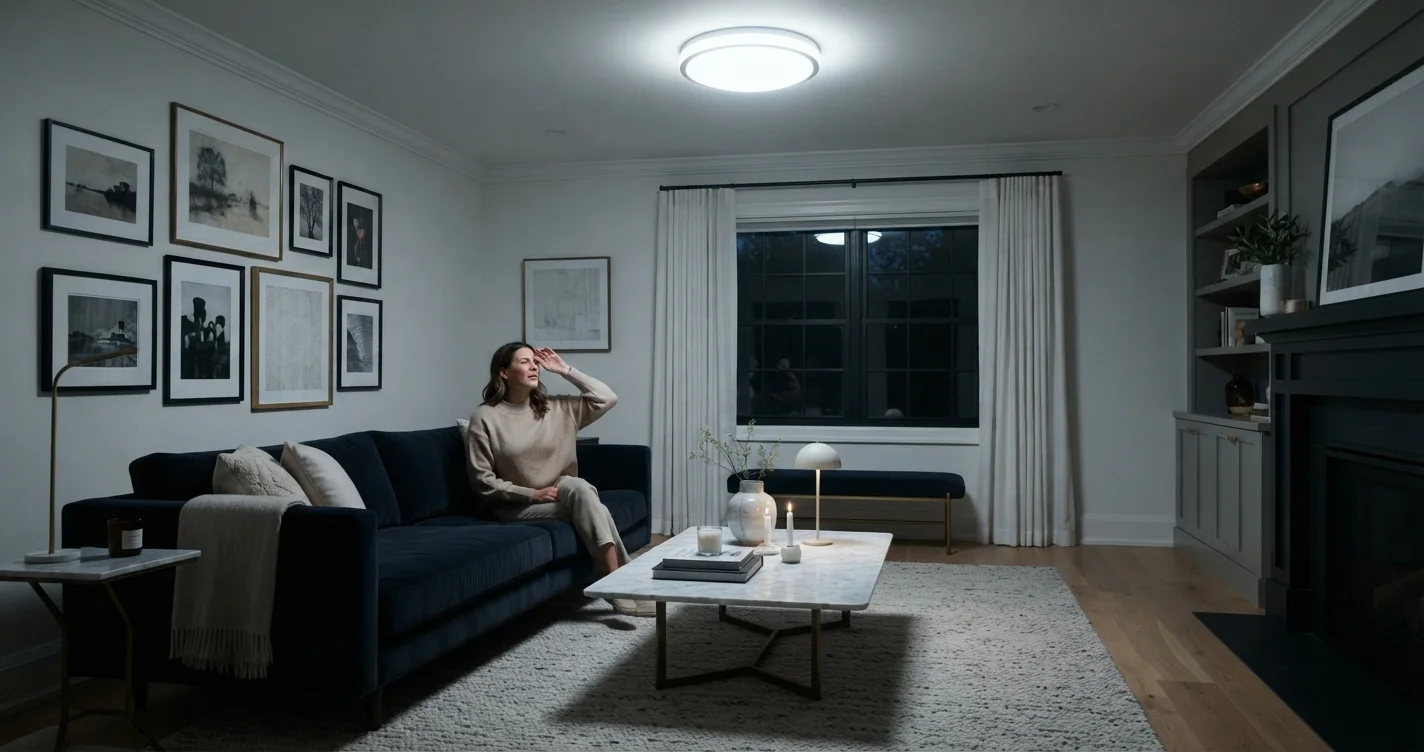
You’ve picked the perfect sofa, chosen a stunning rug, and spent hours arranging your accessories. Yet, the room still feels off — flat, cold, or just not as inviting as you imagined. It’s a common frustration, and the culprit is often one single, widespread error.
That error? Relying on a single overhead light fixture as your only light source. This is, without a doubt, the number one lighting mistake that ruins any interior decor. It’s a mistake that flattens the room, creates harsh shadows, and destroys the mood you’re trying to build.
In this article, we’ll break down exactly why this approach fails, and, more importantly, how you can fix it to transform your space.
Why One Overhead Light Is Your Decor’s Worst Enemy
Think about a photography studio. Would a professional photographer ever use just one flash from above to take a portrait? Absolutely not. It would create unflattering shadows under the eyes and chin. The same principle applies to your home.
A single ceiling fixture, especially a bare bulb or a flush mount, acts like that single harsh flash. It casts shadows that make the room look smaller, creates dark corners, and washes out the colors of your carefully chosen decor. This interior lighting design flaw instantly makes even a well-furnished room feel like a waiting room.
The worst part? You might not even realize this is what is draining the life out of your space. You just know that something feels “off.”
The Power of Layered Lighting
The solution is surprisingly simple: build a system of layered lighting. This is the single most effective strategy professional designers use. Layering means combining different types of light at different levels in the room.
Instead of one source, you create a visual architecture of light that provides function, mood, and beauty. When you layer effectively, you completely eliminate the flat, harsh look of that single overhead bulb.
Let’s look at the three layers you need to know:
- Ambient Lighting: The base layer. It replaces the harsh overhead light. Think recessed lights on a dimmer, wall sconces, or a central chandelier that diffuses light upward.
- Task Lighting: Focused light for specific activities. This includes a reading lamp by the sofa, a pendant over the kitchen island, or a desk lamp for work.
- Accent Lighting: The magic layer. This highlights art, architectural features, or a beautiful plant. It adds drama and depth.
For a deeper dive on arranging furniture around these light zones, check out our guides on space planning for better flow.
How to Fix It: A Room-by-Room Guide
Fixing the number one lighting mistake isn’t about renovating your entire home. It’s about adding targeted light sources. Here is how to approach each major room:
Living Room: Start with dimmable ambient light (recessed cans or track lighting). Then add at least two table or floor lamps on opposite sides of the room for task and general comfort. Finally, use an accent light to highlight a piece of art or a bookshelf.
Kitchen: Ditch the single overhead fixture. Install under-cabinet task lighting for countertops and a pendant or two over the island. Recessed lights on a dimmer can then serve as the ambient layer, softening the space when you aren’t cooking.
Bedroom: Your overhead light should be on a dimmer and almost never used at full brightness. Invest in matching reading lamps on your nightstands and consider a lamp in the corner for a soft, relaxing glow.
If you are working with a smaller space, reading our home design guides for small rooms can provide more tailored advice.
Practical Examples: Before and After
| Scenario | The Mistake (Single Overhead) | The Fix (Layered Lighting) |
|---|---|---|
| Cozy Living Room | Harsh shadows on the sofa, dark corners, room feels cold. | Dimmable flush mount + two warm-toned floor lamps + small LED spotlight on a painting. |
| Modern Kitchen | Bright ceiling light creates glare on countertops. | Under-cabinet lights for task work + dimmable recessed lights for ambience. |
| Guest Bedroom | Single fixture casts shadows on the bed, no ambiance. | Dimmer switch on ceiling light + two bedside lamps for reading and winding down. |
Notice a pattern here? The fix is almost always about adding a lamp or two and a dimmer. Small changes, massive impact.
Choosing the Right Bulbs for Your Layers
Even the best lamps will fail if you use the wrong bulbs. Color temperature is measured in Kelvin (K). For your home, aim for warm light. Look for bulbs with 2700K to 3000K. This creates a golden, inviting glow. Anything above 3500K will look clinical and cold.
Also, consider dimmers a non-negotiable. A dimmer switch on your main ambient light gives you control over the room’s mood. It transforms a harsh fixture into a flexible one. For more ideas on extending this warmth outdoors, explore our outdoor living inspiration for similar principles applied to patios and gardens.
This principle of controlling light is so powerful. It can completely change how a room feels from morning to evening. Experts in the home and garden industry, like those from leading home design resources, consistently emphasize that lighting is the single most impactful tool you have for transforming a space.
Common Myths About Lighting in Home Decor
Let’s clear up a few misconceptions that often keep people stuck in this bad habit.
Myth 1: “Ceiling lights are for seeing; lamps are for decoration.” No. All light is functional and decorative. A beautiful floor lamp provides excellent task light while serving as a sculptural element.
Myth 2: “More light is better.” Wrong. Harsh, bright light from a single source is the enemy. Soft, layered light is always more flattering to both people and decor.
Myth 3: “I don’t have space for lamps.” You can mount a sconce on the wall, use a pendant light, or place a tiny accent light on a shelf. There is always a way to add a light source without sacrificing floor space.
Knowing how to break these myths is part of mastering lighting for home decor.
Frequently Asked Questions
What is the most common lighting mistake in home decor?
Without a doubt, it’s using only one overhead light source. This creates a flat, uninviting room with harsh shadows and no depth.
What does layered lighting mean?
Layered lighting is the combination of ambient (general), task (focused), and accent (highlighting) lights. This approach creates a balanced, functional, and mood-enhancing environment.
Can I fix lighting without hiring an electrician?
Absolutely. You do not need to rewire your home. Simply buy a few floor lamps, table lamps, or plug-in wall sconces. Adding a smart dimmer or a plug-in dimmer switch is also an easy DIY upgrade.
What color bulb should I use for a warm living room?
Always choose bulbs with a color temperature of 2700K to 3000K. These are labeled “Soft White” or “Warm White” on the box. Avoid “Daylight” or “Cool White” bulbs (5000K).
Is it okay to use bright white light in a kitchen?
You can use a slightly cooler light (3500K) for task lighting under cabinets to see better, but keep your ambient light around 3000K for a more inviting feel.
How can I add accent lighting without renovation?
Use tiny battery-operated LED puck lights for bookshelves, plug-in picture lights for artwork, or small spotlights for plants. They are simple to install and very effective.
Does ceiling height matter for lighting design?
Yes. Low ceilings benefit from flush-mount ambient lights and wall sconces. High ceilings can handle chandeliers and pendants, but still require lamps at human eye level to feel cozy.
Can lighting affect how my furniture looks?
Yes, completely. Poor lighting washes out colors and textures. Good layered lighting highlights the fabric of your sofa, the grain of your wood table, and the richness of your paint color.
Conclusion
If your interior decor feels like it’s missing something, look up. The number one lighting mistake—depending on a single overhead fixture—is likely the culprit.
The fix is not expensive or complicated. Start by adding one floor lamp to your living room. Put a reading light on your nightstand. Add a dimmer to your dining room. You will be shocked at how much more beautiful and welcoming your home becomes.
Lighting is the soul of your home. Layer it well, and your decor will finally shine.