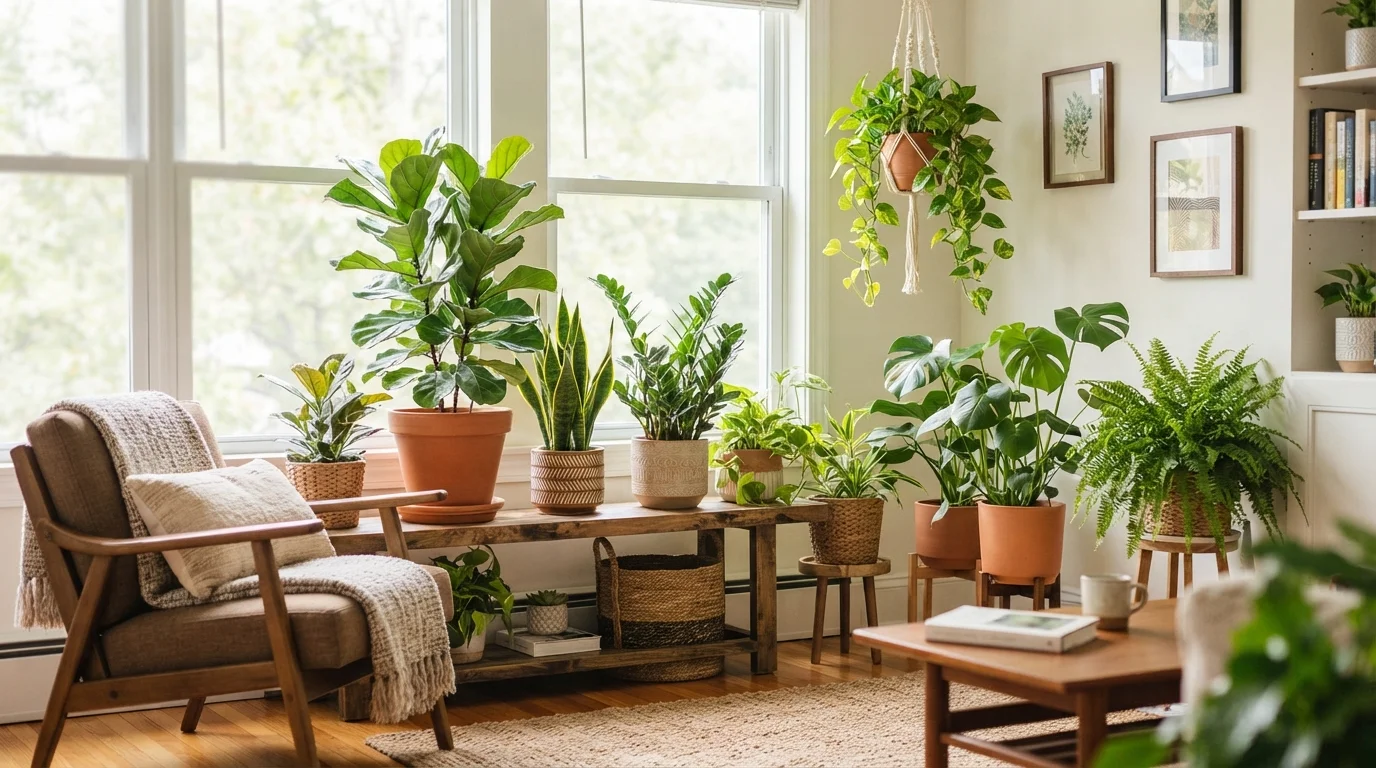
Bringing nature indoors does more than just refresh your living spaces. The right greenery can actually filter common toxins from the air while transforming the look and feel of your home. If you have been searching for the best indoor plants to purify air, you have come to the right place. We have curated a list of top-performing, stylish, and easy-to-care-for options that deliver real results.
In this guide, you will learn which varieties work best for bedrooms, living rooms, and even bathrooms. We’ll also share practical care tips, styling ideas, and a few important safety notes for pet owners. Whether you are a seasoned plant parent or just starting your collection, these air purifying houseplants will make your home healthier and more beautiful.
Why Indoor Plants Are Essential for Cleaner Air and Better Design
Studies by NASA have shown that certain houseplants can remove up to 87% of airborne toxins in 24 hours. Chemicals like benzene, formaldehyde, and trichloroethylene are commonly found in carpets, furniture, and cleaning products. By adding a few well-chosen plants, you are essentially installing a natural filtration system.
Beyond air quality, plants bring texture, color, and life to a room. A single statement fiddle-leaf fig in a woven basket can elevate an entire corner. Grouping smaller indoor plants for home decor on a shelf creates a layered, organic look that softens hard surfaces. It is a simple upgrade that instantly makes a space feel curated and intentional.
The 6 Best Indoor Plants to Purify Air and Transform Your Space
Not all houseplants are created equal when it comes to air purification. Below are the top performers that also score high on the style scale. We have included light requirements, care level, and pet safety so you can choose the perfect match for your home.
1. Snake Plant (Sansevieria trifasciata)
The snake plant is practically indestructible. It thrives on neglect, tolerates low light, and releases oxygen at night — making it ideal for bedrooms. Its tall, sword-like leaves add vertical drama to any room. This is one of the most popular air purifying houseplants because it removes benzene, formaldehyde, and xylene.
2. Spider Plant (Chlorophytum comosum)
With its cascading green and white striped leaves, the spider plant is a classic choice. It is safe for pets, grows quickly, and produces baby “spiderettes” you can propagate. It excels at removing carbon monoxide and formaldehyde. Place it in a hanging planter near a bright window for maximum impact.
3. Peace Lily (Spathiphyllum)
Peace lilies are elegant and forgiving. Their glossy dark leaves and white blooms brighten up shady corners. They rank high on the NASA clean air list for removing ammonia, benzene, and formaldehyde. Keep the soil moist and they will reward you with flowers year-round. Note: they are toxic to cats and dogs, so keep them out of reach.
4. Golden Pothos (Epipremnum aureum)
Pothos is the ultimate trailing plant for shelves and bookcases. It survives in low light and only needs water when the soil dries out. This fast grower filters formaldehyde and xylene effectively. Its heart-shaped leaves come in variegated shades of green and yellow, adding warmth to any space.
5. Rubber Plant (Ficus elastica)
The rubber plant makes a bold statement with its large, glossy leaves. It removes formaldehyde from the air and prefers bright, indirect light. Wipe the leaves monthly to keep them dust-free and photosynthesizing efficiently. This plant works beautifully as a floor plant in a living room or entryway.
6. Bamboo Palm (Chamaedorea seifrizii)
Bamboo palms are lush, tropical, and highly effective at filtering benzene and trichloroethylene. They love humidity, making them perfect for bathrooms or kitchens. With feathery fronds and a compact growth habit, they bring a resort-like feel indoors. They are also non-toxic to pets.
How to Style Your Indoor Plants for Maximum Decor Impact
Once you have chosen your best indoor plants to purify air, the next step is displaying them in a way that enhances your home design. Start by mixing heights. Place tall floor plants like the rubber plant next to low sofas or armchairs. Use plant stands to elevate smaller varieties and create visual layers.
Grouping plants in odd numbers (3 or 5) looks more natural than pairs. Combine different leaf textures — for example, the spiky snake plant next to the soft, trailing pothos. Swap plastic nursery pots for ceramic, terracotta, or woven baskets that match your color palette. For more ideas on integrating plants into your overall layout, explore our space planning guides.
- Use hanging planters to free up floor space and draw the eye upward.
- Create a plant shelf by dedicating a floating shelf to three or four small pots.
- Place a peace lily on a nightstand for a calm, air-purifying effect in the bedroom.
- Combine with natural materials like wood, stone, or rattan for a cohesive look.
Care Tips to Keep Your Air Purifying Houseplants Thriving
Even the toughest houseplants need basic care. Overwatering is the number one killer. Stick your finger an inch into the soil — if it feels dry, it is time to water. Most easy care houseplants prefer to dry out between waterings. Always use pots with drainage holes to prevent root rot.
Light requirements vary. Snake plants and pothos tolerate low light, but peace lilies and rubber plants prefer bright, indirect sun. Rotate your plants every time you water so they grow evenly. Dust leaves regularly with a damp cloth; clean leaves absorb more light and purify better.
Fertilize once a month during spring and summer with a balanced liquid houseplant fertilizer diluted to half strength. Skip fertilizing in winter when growth naturally slows. If you notice yellow leaves, it is usually a sign of too much water — adjust your schedule before changing anything else.
Pet Safety: Which Plants Are Safe for Dogs and Cats?
If you share your home with furry friends, you need to choose plants with care. Many popular air purifying houseplants can be toxic if ingested. The good news is that several excellent options are completely safe.
Pet-safe picks: Spider plant, bamboo palm, and parlor palm are all non-toxic. Boston ferns and calatheas are also safe choices. Avoid if you have pets: Peace lily, snake plant, pothos, and rubber plant can cause drooling, vomiting, or irritation. Always check the ASPCA toxic plant list before bringing a new plant home.
If you are designing a pet-friendly home, consider placing toxic plants on high shelves or in hanging baskets where curious noses cannot reach. For more inspiration on creating a harmonious home, browse our home design articles.
Comparison Table: Top Air Purifying Houseplants at a Glance
| Plant | Light Needs | Water Frequency | Pet Safe | Air Toxins Removed |
|---|---|---|---|---|
| Snake Plant | Low to bright indirect | Every 2-3 weeks | No | Benzene, Formaldehyde, Xylene |
| Spider Plant | Bright indirect | Weekly | Yes | Formaldehyde, Carbon Monoxide |
| Peace Lily | Low to medium | Weekly | No | Ammonia, Benzene, Formaldehyde |
| Golden Pothos | Low to bright indirect | Every 1-2 weeks | No | Formaldehyde, Xylene |
| Rubber Plant | Bright indirect | Every 1-2 weeks | No | Formaldehyde |
| Bamboo Palm | Bright indirect | Weekly | Yes | Benzene, Trichloroethylene |
Frequently Asked Questions About Indoor Air Purifying Plants
1. How many plants do I need to purify the air in a room?
General guidelines suggest one medium-sized plant per 100 square feet for noticeable air quality improvement. That means a typical living room benefits from 3 to 5 well-placed plants. More plants equal faster filtration, but even a single snake plant makes a difference in a small bedroom.
2. Do indoor plants really purify the air?
Yes, but the effect is modest compared to mechanical air purifiers. However, when combined with good ventilation, plants contribute to cleaner air. As noted in a comprehensive guide on home and garden wellness, the psychological benefits of plants — reduced stress and improved focus — are equally valuable.
3. Which indoor plant purifies the air the most?
According to NASA research, the peace lily, snake plant, and bamboo palm top the list. Among low light indoor plants, the snake plant is the most effective. For a combination of style and performance, the peace lily is hard to beat.
4. Can I put air purifying plants in my bedroom?
Absolutely. Many plants, like the snake plant and bamboo palm, release oxygen at night. They also add humidity, which can help with dry winter air. Just avoid overly fragrant blooms if you are sensitive to smell during sleep.
5. Are there air purifying plants that thrive in low light?
Yes. Snake plant, pothos, and peace lily all tolerate low light conditions. While they prefer some indirect sunlight, they will survive in rooms with north-facing windows or artificial light. Just water less frequently in lower light to prevent overwatering.
6. How often should I clean the leaves of my houseplants?
Wipe leaves with a damp cloth every two to four weeks. Dust blocks light absorption and reduces air filtration efficiency. Large-leaf plants like the rubber plant benefit from monthly cleaning, while small-leaf plants like ferns can be gently misted.
7. Can I use artificial light for my air purifying plants?
Yes. Full-spectrum LED grow lights work well, especially in rooms with no natural light. Position the light 6 to 12 inches above the plant and run it for 8 to 12 hours a day. This is a great solution for dark apartments or offices.
Conclusion
Choosing the best indoor plants to purify air is one of the simplest ways to upgrade your home environment. From the hardy snake plant to the elegant peace lily and pet-friendly spider plant, there is a perfect green companion for every room and every lifestyle. These plants not only filter harmful toxins but also bring warmth, texture, and life to your decor.
Start small with one or two easy varieties, observe how they respond to your space, and build your collection over time. For even more ideas on creating a cohesive look, check out our garden design tips or read the latest posts on the Sansouka blog. Your home — and your lungs — will thank you.