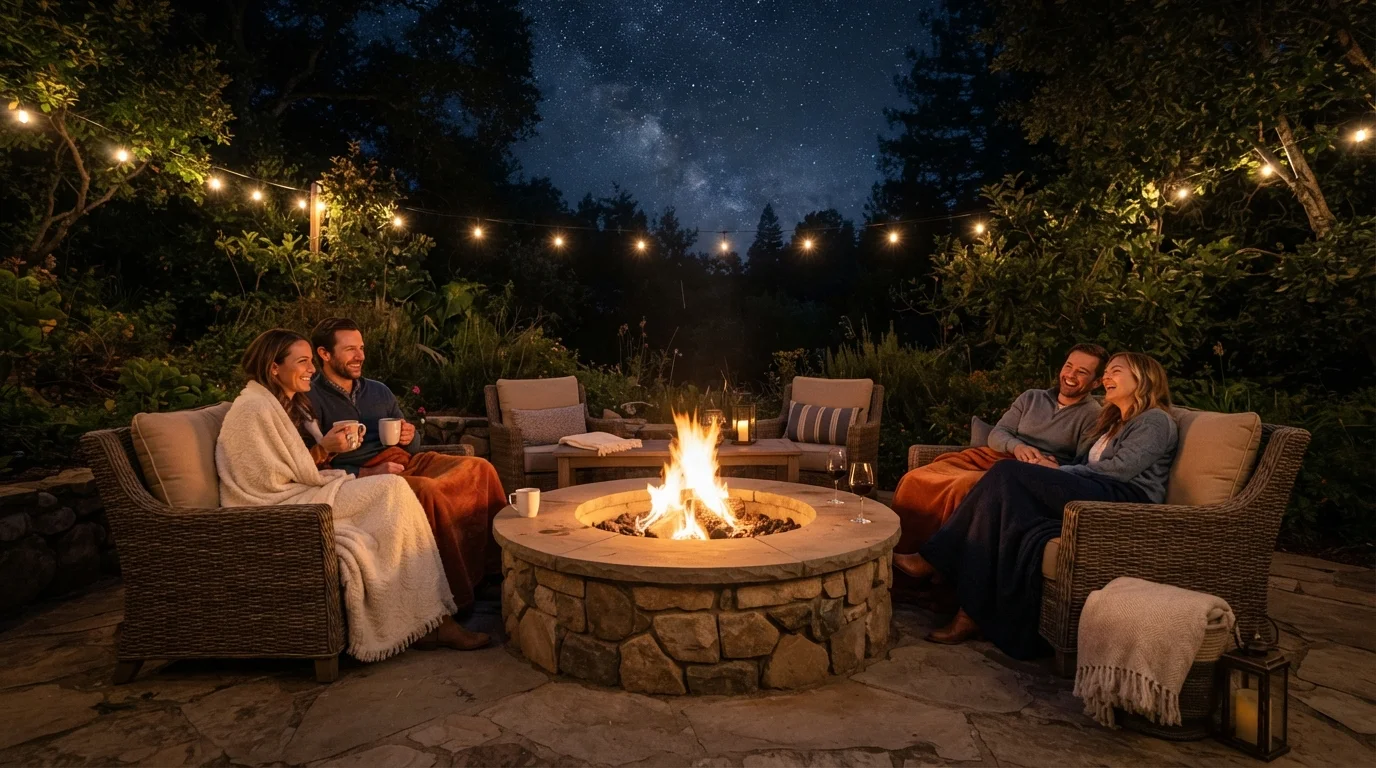
There’s something magical about sitting around a fire as the night sky unfolds above you. Whether you’re roasting marshmallows with the kids, sharing stories with friends, or just sipping a glass of wine solo, a fire pit instantly turns your backyard into a sanctuary. But with so many styles, fuels, and materials out there, choosing the right one can feel overwhelming.
Don’t worry — I’ve got you covered. As someone who has spent over a decade helping homeowners transform their outdoor spaces, I know what works, what doesn’t, and what truly makes those cozy backyard setup moments unforgettable. Let’s dive into the best fire pit ideas for cozy nights under the stars.
Why a Fire Pit Is a Must-Have for Outdoor Living
Fire pits do more than provide warmth — they create a focal point. They pull people away from their phones and into real conversation. A well-placed fire pit extends your home’s livable square footage well into the cooler months.
Plus, they add serious curb appeal. According to recent real estate trends, homes with well-designed outdoor living features sell faster and for higher prices. If you’re looking to upgrade your yard, this is one of the smartest investments you can make.
For more guidance on arranging your entire yard, check out our tips on garden design and layout to complement your new fire feature.
Types of Fire Pits: Which One Fits Your Space?
Not all fire pits are created equal. The first big decision is between wood-burning and gas models. Wood offers that classic crackle and smoky aroma, while gas provides instant ignition and cleaner operation.
Portable fire pits are great for renters or frequent rearrangers. Built-in ones, on the other hand, become permanent landmarks in your landscape. Think about how much maintenance you’re willing to do before committing.
If you want to match your fire pit to your home’s overall vibe, explore our ideas in home design inspiration for a cohesive look indoors and out.
Top Fire Pit Materials Compared
Materials define the look and longevity of your fire pit. Here’s a quick breakdown:
| Material | Aesthetic | Durability | Best For |
|---|---|---|---|
| Steel | Modern, sleek | High (with coating) | Contemporary patios |
| Cast Iron | Rustic, heavy | Very High | Traditional settings |
| Copper | Elegant, patina | Medium-High | Premium gardens |
| Stone/Brick | Natural, permanent | Highest | Built-in installations |
| Concrete | Minimalist | High | Modern landscapes |
Each material develops a unique character over time. Copper, for instance, turns a beautiful greenish-blue patina. Steel can rust if not treated properly, so always check the warranty and finish.
Fire Pit Seating: Create a Natural Gathering Circle
Your fire pit is only as inviting as the seating around it. Think beyond standard chairs. You can use curved benches, weatherproof cushions, or even built-in stone ledges that wrap around the perimeter.
Arrange seating so that everyone can see each other — not just the fire. A circular layout fosters conversation and eye contact. Keep the seats at least two to three feet away from the flames for safety.
For more space planning tips, take a look at our space planning resources to get the distance and flow just right.
Smokeless Fire Pits: A Game Changer for Comfort
Let’s be honest — nobody loves smelling like a campfire for two days. Smokeless fire pits use double-wall technology to burn off excess smoke, resulting in a much cleaner experience.
Brands like Solo Stove and Breeo have popularized this category. They’re especially great for small patios where smoke could blow into windows or onto neighbors. Just keep in mind that they still need some airflow and dry wood to perform well.
If you’re planning a larger outdoor overhaul, check out our complete guide in the outdoor living section for more inspiration.
Creative Fire Pit Ideas for Any Budget
You don’t need to break the bank to create a cozy setup. Here are a few ideas that work at different price points:
- Budget-friendly: A simple steel bowl pit from a big-box store paired with foldable camping chairs.
- Mid-range: A propane-powered tabletop fire pit with built-in glass beads and an L-shaped outdoor sofa.
- High-end: A custom stone fire bowl with a natural gas line, surrounded by built-in concrete seating and a pergola.
Remember that accessories like fire screens, spark guards, and poker tools add safety and polish. Even a cheap pit feels luxurious with the right extras.
Safety Tips for Enjoying Your Fire Pit
Safety should always come first. Place your fire pit on a non-flammable surface like stone, concrete, or gravel. Keep it at least 10 feet away from structures, trees, and dry grass.
Always have a water source or fire extinguisher nearby. Never leave a burning fire unattended, especially if pets or kids are around. And check your local regulations — some areas restrict open flames during drought seasons.
For more data on safe outdoor structures, the Home & Garden resource hub offers additional tips on fire-safe landscaping practices.
Frequently Asked Questions About Fire Pits
What type of fire pit is safest for a wooden deck?
Propane or natural gas fire pits are generally safest on decks because they produce less heat below the unit. Always use a heat-resistant mat underneath and keep the pit away from railings.
Can I leave my fire pit outside in the rain?
It depends on the material. Stainless steel and cast iron can handle some moisture, but covering your pit with a weatherproof cover extends its lifespan significantly. Always remove ash before covering, as wet ash can corrode metal.
How big should a fire pit be for a family of four?
A diameter of 24 to 30 inches is perfect for small groups. For larger gatherings of six to eight people, go with 36 to 44 inches. The goal is to balance seat distance so everyone feels the warmth without getting scorched.
Do smokeless fire pits really work?
Yes, they reduce smoke by up to 90% compared to traditional pits. However, they still produce some smoke, especially during the initial wood burn and if the wood isn’t dry. They’re a huge upgrade for comfort.
Is it cheaper to build or buy a fire pit?
Building a simple stone pit yourself can cost under $200 in materials if you use local stone. Buying a pre-made portable pit starts around $80 for budget models and goes up to $2,000+ for premium gas units. Labor and customization drive up built-in costs.
What’s the best fuel for a fire pit?
Wood offers authentic ambiance and is cheapest per use. Propane is cleaner and easier to control. Natural gas is the most convenient if you already have a line installed, but installation requires a professional. Choose based on your priority — cost, convenience, or atmosphere.
Can I use a fire pit in a small backyard?
Absolutely. Tabletop fire pits, chimineas, and small portable bowls fit even tiny patios. Just keep the safety clearance in mind and check your HOA rules if you have them. A compact setup can still feel magical.
Conclusion
Choosing the right fire pit transforms your backyard from a forgotten space into the heart of your home. Whether you go for a budget-friendly portable model or invest in a built-in stone masterpiece, the key is to match the pit to your lifestyle, space, and taste.
Remember the extras: comfortable seating, proper safety gear, and a little creativity go a long way. As you plan your cozy nights under the stars, think about how each element connects to your outdoor fire pit and overall landscape.
For a broader view of how to design your entire outdoor area, explore the full collection of ideas on our blog. Now go ahead — light that fire and make some memories.