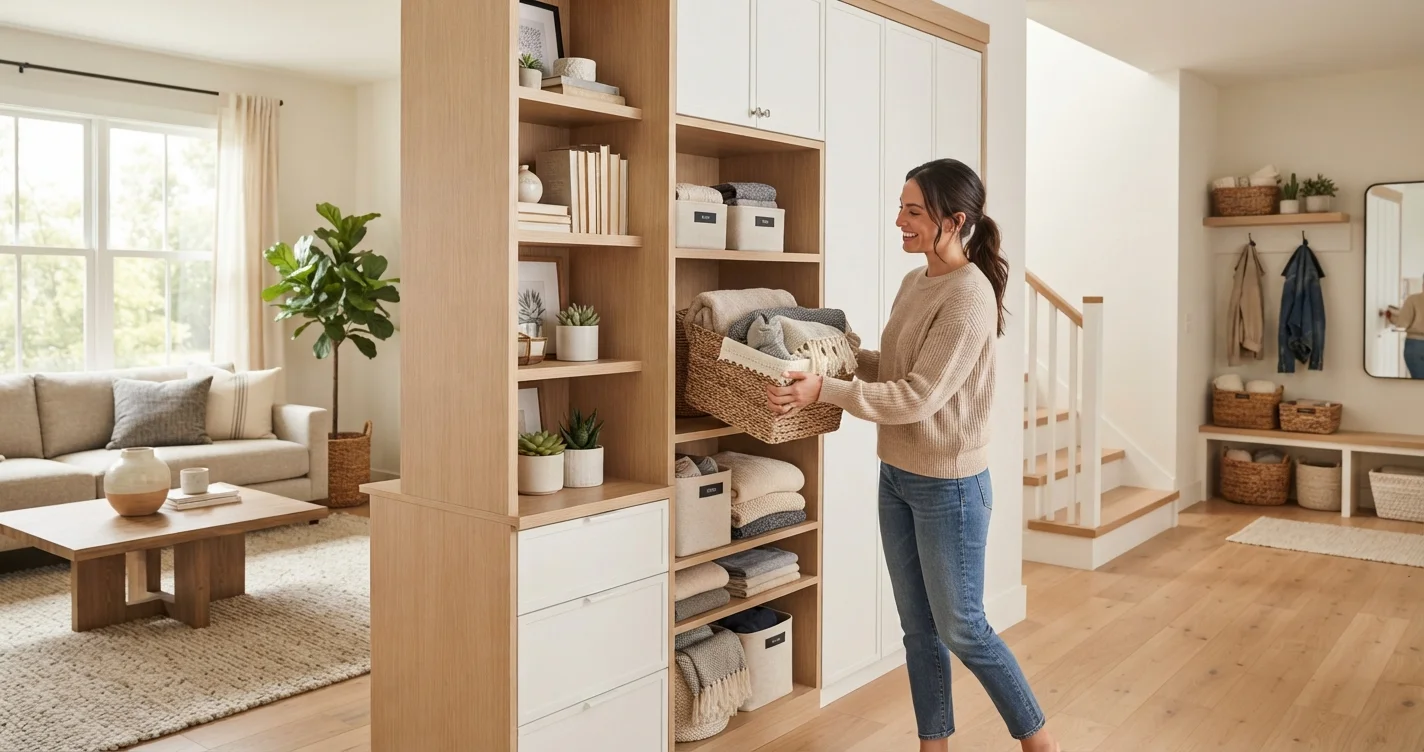
Let’s face it — no matter how tidy you try to be, stuff accumulates. Between kids’ toys, kitchen gadgets, and that pile of mail on the counter, a clutter-free home can feel like a fantasy. But it doesn’t have to be. With the right approach, you can design a space that breathes, functions, and stays organized. The secret? Smart storage ideas that keep your home clutter-free without making you feel like you live in a storage unit.
Over the past 15 years, I’ve helped hundreds of homeowners transform chaotic rooms into calm retreats. And the biggest lesson I’ve learned is this: storage should be invisible. You don’t notice it — but you absolutely notice the peace it brings. Whether you’re working with a tiny apartment or a sprawling house, these practical strategies will change the way you think about space.
Why Clutter Happens (And How to Fix It for Good)
Clutter isn’t about being messy — it’s about a mismatch between what you own and where you put it. Most homes have “dead zones” — corners, under stairs, above cabinets — that collect dust instead of purpose. The fix is simple: assign a home for every item. If something doesn’t have a designated spot, it will wander.
Start by auditing your space. Pull everything out of a single closet or drawer. Sort into three piles: keep, donate, and trash. Only then can you measure what you actually need to store. This foundational step is essential for any clutter-free home tips strategy to stick.
For a deeper dive on how to rethink your layout, check out our space planning resources — they pair perfectly with the storage ideas below.
Vertical Storage: Own Your Walls
Floors are precious real estate. Walls? They’re waiting to work for you. Vertical storage is one of the most effective home organization solutions for small and large spaces alike. Think floating shelves, pegboards, and wall-mounted cabinets. They keep items off surfaces and within easy reach.
In a kitchen, install a magnetic strip for knives instead of a bulky block. In a laundry room, mount a narrow shelf above the machines for detergent and dryer sheets. Even a simple row of hooks in the entryway can save coats and bags from becoming a heap. The goal is to claim every inch of vertical space from floor to ceiling.
Multifunctional Furniture That Pulls Double Duty
Why buy a coffee table that just holds drinks when you can buy one that hides blankets? Space-saving furniture has evolved far beyond the old pull-out sofa. Today’s designs are sleek, modern, and built for real life. Ottomans with storage inside, platform beds with drawers underneath, and dining tables that expand or fold away — these pieces save space without sacrificing style.
Take your entryway. A slim bench with a flip-top lid can store shoes, umbrellas, and leashes while giving you a spot to sit. That’s a win-win. For a full look at how to choose the best pieces for your layout, visit our home design section for curated ideas.
Hidden Storage in Unexpected Places
The best storage is the kind you don’t see. Hidden storage ideas turn ordinary architectural features into secret compartments. Stair treads can open to reveal drawers. Hollow bench seats can hide pet supplies. Even the toe-kick space under kitchen cabinets can be retrofitted with shallow pull-out trays for baking sheets.
In your bathroom, consider a recessed medicine cabinet that sits flush with the wall. In the living room, a custom-built TV unit can conceal electronics and cables behind closed doors. These solutions keep your space looking clean while housing all the items you need — just out of sight.
Room-by-Room Checklist for a Clutter-Free Home
Sometimes you just need a roadmap. Use this table as a quick reference for smart storage ideas that keep your home clutter-free in every room:
| Room | Idea | Benefit |
|---|---|---|
| Entryway | Wall-mounted cubbies with baskets | Corrals shoes, mail, and keys instantly |
| Kitchen | Pull-out pantry shelves | Easy access to cans and spices |
| Bathroom | Over-the-toilet shelving unit | Uses dead vertical space |
| Bedroom | Under-bed storage bins | Hides off-season clothes |
| Home Office | Floating desk with hidden cable tray | Clean look, no wire clutter |
For more tailored advice on specific rooms, read our blog posts where we cover everything from mudroom organization to closet makeovers.
The Power of Decorative Baskets and Bins
Let’s not underestimate the humble basket. Stylish woven bins, fabric boxes, and ceramic canisters do double duty: they contain clutter and add texture to a room. Place a large basket in the living room for throw blankets. Use smaller ones on shelves for remote controls, chargers, and notebooks. They’re movable, affordable, and instantly make a space feel intentional.
Pro tip: label your bins. It sounds obvious, but it prevents the “I’ll remember what’s in there” trap. Use chalkboard tags or simple adhesive labels. This simple habit is a cornerstone of clutter-free home tips that last.
Digital Decluttering as Part of the Process
Physical clutter gets all the attention, but digital clutter can be just as overwhelming. Set aside 20 minutes to delete duplicate photos, unsubscribe from marketing emails, and organize your desktop folders. A calm digital space supports a calm physical one. And while you’re at it, consider digitizing paper documents — then recycle the originals. That’s less paper to find a home for.
For inspiration on blending indoor organization with outdoor serenity, take a look at our garden design tips. A clutter-free mindset extends beyond your four walls.
Frequently Asked Questions
1. How do I start decluttering when I feel overwhelmed?
Start small. Choose one drawer, one shelf, or one corner. Set a timer for 15 minutes. You’ll be surprised how much you can accomplish in short bursts. Momentum builds quickly.
2. What are the best storage solutions for small apartments?
Think vertical and multifunctional. Wall-mounted shelves, over-door organizers, and furniture with hidden compartments are must-haves. Avoid bulky pieces that eat up floor space.
3. How often should I declutter my home?
Seasonally is a good rule. Every three months, do a quick sweep of closets, pantry, and common areas. Toss expired items, donate what you don’t use, and reorganize as needed.
4. Can I combine storage with decor?
Absolutely. Decorative baskets, stylish bins, and floating shelves are both functional and beautiful. The key is to choose containers that complement your room’s color palette and style.
5. What is the single biggest mistake people make with storage?
Buying containers before decluttering. If you don’t first purge what you don’t need, you’re just organizing chaos. Always sort first, then shop for storage solutions.
6. Are there any recommended products for clutter control?
Yes, look for modular systems that can grow with your needs. For a curated selection of top-rated storage tools, you can explore expert-recommended home organization products that help maintain a tidy space.
7. How do I get family members to maintain the system?
Make it easy for them. Label bins clearly. Create a “drop zone” for things they use daily. And teach everyone where items belong — don’t assume they’ll guess.
8. Should I hire a professional organizer?
If you’ve tried multiple times and the clutter keeps coming back, a pro can help you build a system tailored to your habits. It’s a worthwhile investment for lasting results.
Final Thoughts on a Clutter-Free Home
Keeping a home organized doesn’t require a giant budget or a personality overhaul. It just requires the right smart storage ideas that keep your home clutter-free — ideas that work with your space, your lifestyle, and your daily rhythms. Start with one vertical shelf, one hidden cabinet, or one basket. The feeling of opening a drawer that’s perfectly tidy? That’s the reward. And trust me, it’s addictive.
Now go reclaim your space. Your home will thank you.