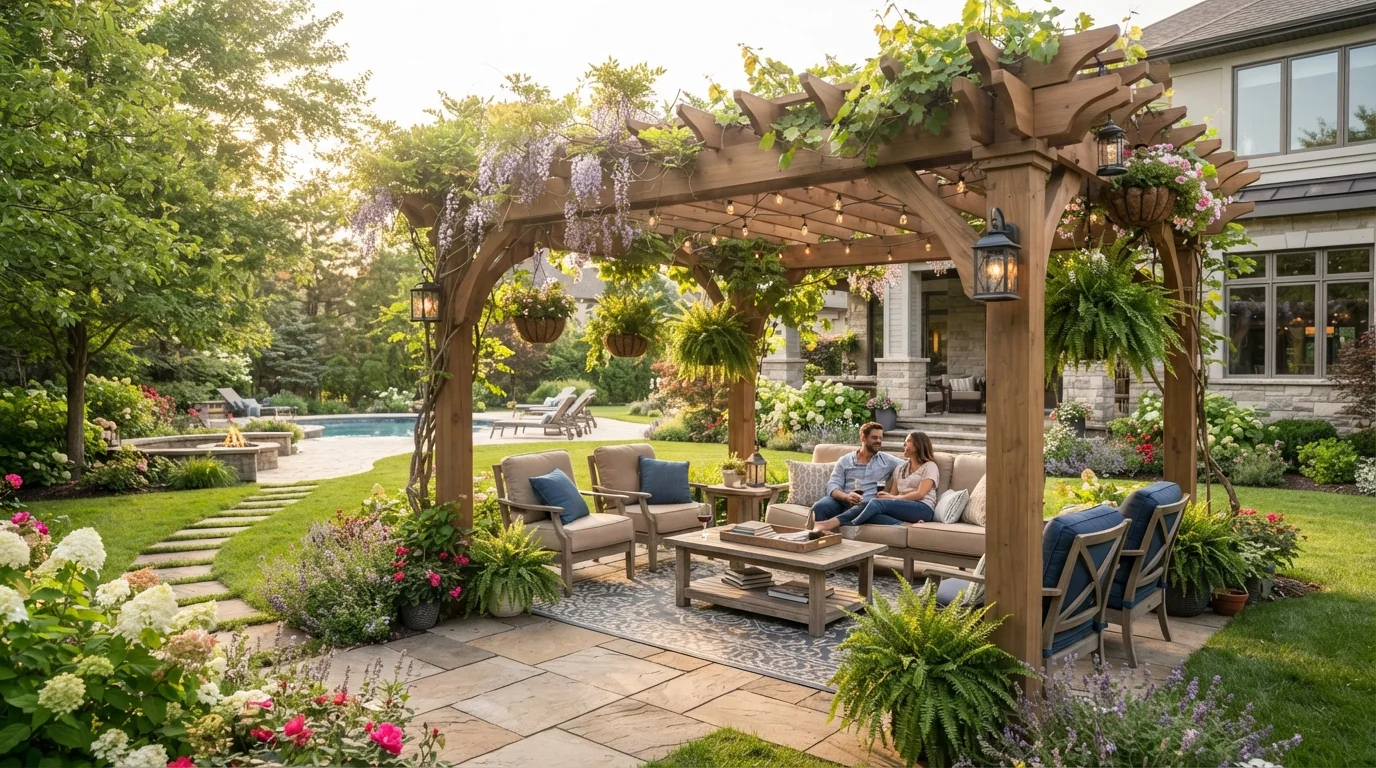
Imagine stepping into your backyard and finding a cool, shaded oasis that feels both luxurious and inviting. A pergola does exactly that. It is more than just a structure—it is the backbone of your outdoor living space, offering relief from the sun while adding architectural elegance.
Whether you have a sprawling lawn or a cozy patio, the right pergola can redefine how you use your yard. From modern minimalist designs to rustic retreats, the possibilities are endless. In this guide, we will explore creative pergola ideas that blend function with beauty, helping you create a space you will love year-round.
We will cover material choices, shade solutions, and smart design tricks to maximize comfort. If you are also looking to integrate your pergola with the rest of your property, check out our tips on space planning for a cohesive layout.
Why a Pergola is the Ultimate Backyard Shade Solution
A pergola is not just a decorative element. It provides essential backyard shade solutions that make your outdoor area usable even on the hottest days. Unlike a solid roof, a pergola allows for airflow and a soft, dappled light that feels natural and relaxing.
You can customize the level of shade with add-ons like retractable canopies, climbing plants, or bamboo screens. This flexibility means you control the ambiance—from full sun for morning coffee to deep shade for afternoon reading. For more ideas on blending your pergola with nature, explore garden design strategies that complement your structure.
Top 5 Pergola Styles to Match Your Home
Choosing a style is the fun part. Here are five popular directions to consider, each with a distinct personality:
- Modern Minimalist: Clean lines, black or gray metal frames, and minimal ornamentation. Perfect for contemporary homes.
- Rustic Wood: Cedar or redwood beams with a natural finish. Ideal for a farmhouse or cabin aesthetic.
- Mediterranean Romance: Wrought iron or stucco columns, often paired with climbing vines like wisteria or jasmine.
- Freestanding Pavilion: A standalone structure that can be placed in the middle of the lawn, away from the house.
- Attached Lean-To: Fixed to the side of your home, extending your indoor living area directly into the yard.
Each style can be adapted to your climate and budget. Before you build, think about how the pergola will interact with your existing home design to ensure a seamless transition.
Choosing the Best Material for Durability and Style
Your choice of material affects both the look and the longevity of your pergola. Here is a quick comparison to help you decide:
| Material | Durability | Maintenance | Best For |
|---|---|---|---|
| Redwood or Cedar | High (naturally resistant to rot) | Moderate (stain/seal every 2-3 years) | Warm, rustic looks |
| Aluminum | Very high (no rust, no rot) | Low (just rinse with water) | Modern, low-maintenance yards |
| Steel or Wrought Iron | High (needs rust-proof coating) | Moderate (repaint as needed) | Mediterranean or traditional designs |
| Vinyl (PVC) | High (won’t warp or crack) | Very low (hose it down) | Budget-friendly, coastal climates |
If you live in a rainy or humid area, consider aluminum or vinyl for peace of mind. Wood lovers can still enjoy a natural feel by choosing a durable species like ipe or cedar. For advanced shade control, many homeowners pair their structures with automated retractable roofs, a trend we cover in our blog on smart outdoor upgrades.
How to Add Shade Without Blocking the View
One common worry is that a pergola might feel too closed in. The solution is to use lightweight, semi-transparent shade materials.
Consider a sail shade or a sheer outdoor curtain that you can draw open or close. Climbing plants like grapevines or passionflower create a natural green canopy that filters sunlight beautifully. For a more modern approach, use adjustable louvers on the roof. These allow you to tilt the slats, changing from full sun to complete shade in seconds.
Lighting and Decor to Elevate the Experience
A pergola shines after sunset. String lights are a classic choice—they are affordable and create a warm, festive glow. For a more sophisticated look, install LED strip lights along the beams or recessed spotlights in the posts.
Furniture matters too. Choose weather-resistant sofas, a dining table, or even a hanging daybed. Add an outdoor rug, throw pillows, and a few potted plants to make the space feel like an outdoor room. This is where elegant garden features truly come to life, turning a simple structure into your favorite spot in the house.
Research shows that well-designed outdoor spaces significantly increase home enjoyment and property value. For a deeper dive into product recommendations that can enhance your setup, you can explore this resource on home and garden solutions.
Pergola Design Tips for Small Backyards
Do not worry if your yard is compact. A pergola can actually make a small space feel larger and more defined. Stick to a single-material design to avoid visual clutter.
Use light colors for the frame to reflect heat and keep the area bright. Attach a mirror to one of the support posts to create an illusion of depth. Also, consider a corner pergola that fits snugly into an L-shaped patio, maximizing every square foot. Incorporating smart pergola design tips like these ensures your space feels expansive, not cramped.
Frequently Asked Questions (FAQ)
Do I need a permit to build a pergola?
In most areas, a permit is required if the structure is over a certain size or attached to your home. Always check with your local building department before starting construction.
Can I install a pergola on a deck?
Yes, but you must ensure the deck can support the additional weight. Reinforce the footings or consult a structural engineer for safety.
What is the best height for a pergola?
Standard height is between 8 and 10 feet. This allows for good airflow and headroom while still providing effective shade.
How do I keep my pergola from getting too hot?
Use a light-colored roof material, add a retractable canopy, or plant deciduous vines that provide shade in summer and drop leaves in winter.
Can I attach a pergola to my house?
Absolutely. A lean-to pergola attaches directly to the exterior wall, extending your living space seamlessly. Just ensure proper waterproofing where it meets the wall.
What is the cheapest way to build a pergola?
A DIY kit made of pressure-treated pine or vinyl is the most budget-friendly. Freestanding kits are easier to install and often cost less than custom builds.
How do I protect my pergola from wind?
Use wind-permeable materials like slatted roofs or shade cloth. Avoid solid panels that can act like a sail. Anchor the posts securely in concrete.
Can I use a pergola over a hot tub?
Yes, it is a popular choice. The structure provides privacy and relief from direct sun. Use moisture-resistant materials like aluminum or treated wood near the water.
Conclusion
A pergola is one of the most rewarding additions you can make to your backyard. It solves the problem of harsh sun while elevating the entire look of your property.
By choosing the right style, material, and shade accessories, you create an outdoor living space that serves as an extension of your home. Whether you go for a simple wooden structure or a high-tech louvered roof, the result is a place where memories are made—from summer barbecues to quiet morning retreats.
Start planning your project today. With the insights from this article, you are ready to make informed choices that balance beauty, function, and budget. Your dream backyard is just a pergola away.