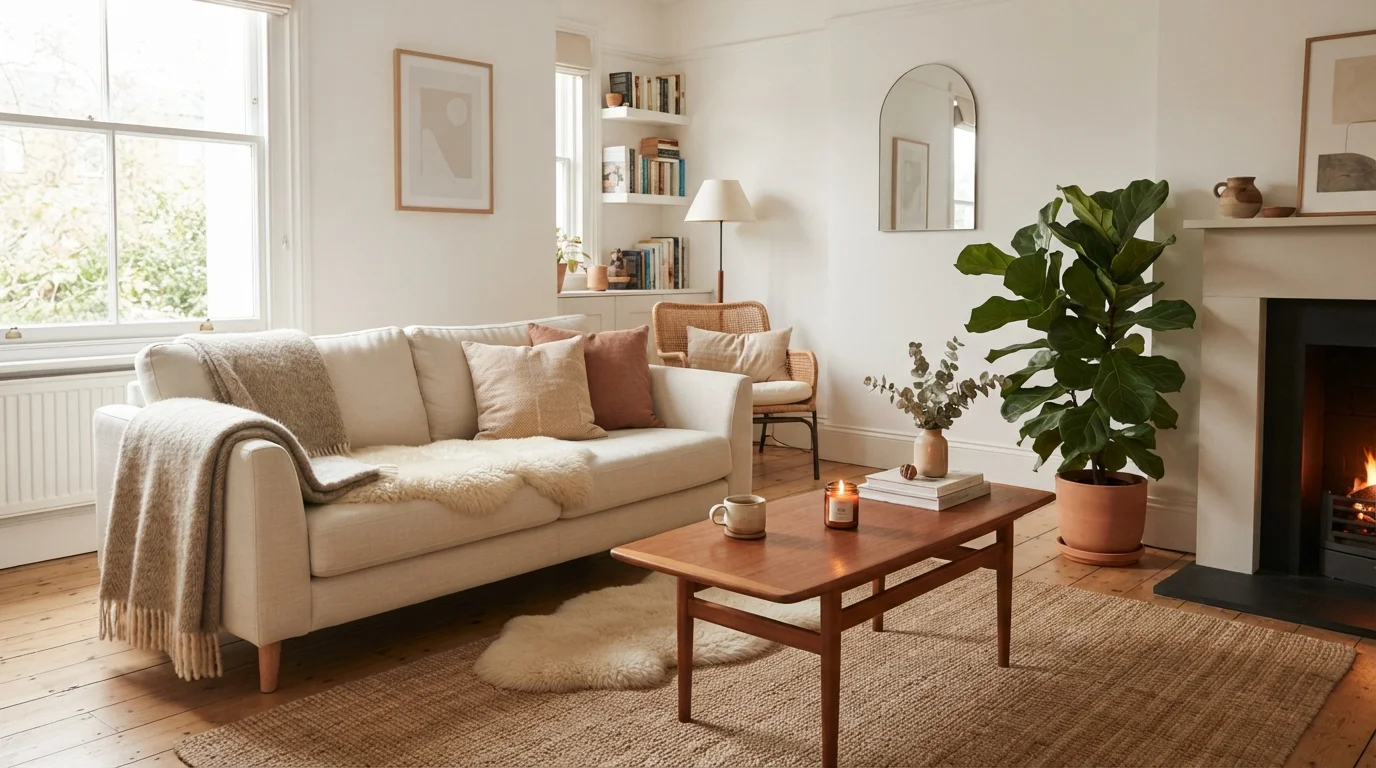
Minimalist interior design has a tricky reputation. On one hand, it promises calm, clarity, and a clutter-free life. On the other hand, too many people step into a minimalist room and feel like they’ve walked into a doctor’s waiting room — sterile, cold, and impersonal.
The good news? You don’t have to choose between clean lines and comfort. A cozy minimalist home is absolutely achievable, and it starts with intentional choices about texture, color, and warmth. Let’s walk through exactly how to keep your minimalist space inviting.
Why Minimalism Feels Cold (and How to Fix It)
The coldness usually comes from three mistakes: too much white, too few textures, and zero personal touches. When every surface is smooth, every wall is stark white, and every item is purely functional, the soul of the home disappears.
To shift from cold to cozy, you need to introduce elements that feel human. Think nubby wool throws, warm oak side tables, and lamps that cast soft, amber light. In fact, layering textures is one of the fastest ways to add warmth to a minimalist interior design scheme.
If you’re working on a full home refresh, start with your space planning to make sure each room has a natural flow that feels open, not empty.
Layer Textures Like a Pro
Texture is the secret weapon of warm minimalism. A room with only smooth surfaces — lacquered wood, flat paint, polished concrete — feels flat and uninviting. The moment you add a chunky knit blanket or a sisal rug, the room breathes.
Here are simple texture pairings that work every time:
- Linens + leather: Soft, wrinkled linen bedding next to a dark leather headboard feels grounded.
- Wool + wood: A rough wool throw on a smooth walnut chair creates visual friction.
- Stone + cotton: A stone coffee table paired with slubby cotton cushions adds organic depth.
- Ceramic + metal: Matte ceramic vases next to brushed brass handles soften industrial edges.
The goal is to create contrast without clutter. Each texture should serve a purpose — comfort, visual interest, or both. This approach is a pillar of any cozy minimalist home strategy.
Choose a Warm Neutral Palette
White isn’t the enemy, but the wrong white is. Stark, cool whites (think bright white paint with blue undertones) instantly make a room feel like a gallery. Instead, choose warm neutrals: creamy off-whites, pale beiges, greiges, and soft mushroom tones.
These colors absorb and reflect light in a way that feels enveloping. Paint your walls in a shade like “Warm White” or “Navajo White,” and you’ll notice the room feels softer even before you add furniture.
Accent with deeper, earthy tones: terracotta, olive green, or caramel. They add richness without breaking the minimalist rule of visual quiet. For more ideas on complementary palettes, browse the home design section for color inspiration.
Lighting Is Everything
One overhead light in the center of the ceiling? That’s a recipe for harsh shadows and a cold atmosphere. Warm minimalism relies on layered lighting: ambient, task, and accent.
Use floor lamps in corners to wash walls with light. Place a table lamp with a linen shade on a sideboard — it diffuses the glow beautifully. And don’t forget candles (faux or real) to introduce a flickering, human warmth.
A simple rule: every room should have at least three light sources at different heights. That instantly softens the edges of a minimalist interior design space.
Bring Nature Indoors (The Minimalist Way)
Greenery adds life, literally. But in a minimalist home, you can’t just fill every corner with plants. Choose one or two substantial, sculptural plants — a fiddle-leaf fig, a monstera, or a tall snake plant — and let them stand alone.
For an even cleaner look, use dried branches or eucalyptus stems. They require zero maintenance and offer a natural, textural silhouette against a blank wall. Wooden bowls, stone coasters, and organic fiber baskets also count as natural elements that warm up a room.
If you have an outdoor space that feeds into your interior design, check out garden design tips for creating a seamless indoor-outdoor flow.
Furniture: Go for Soft Edges and Natural Materials
Sharp, angular furniture feels cold. Rounded edges — a curved sofa, a circular coffee table, an arched mirror — feel safe and welcoming. When shopping for a comforting minimalist space, prioritize for sofas and armchairs with deep seats and soft cushions.
Natural materials are your best friends. Here’s a quick comparison of common materials:
| Material | Feeling | Best used for |
|---|---|---|
| Polished concrete | Cold, industrial | Floors (add rug) |
| Unfinished oak | Warm, organic | Tables, shelves |
| Brushed brass | Soft, luxurious | Lighting, hardware |
| Velvet | Sumptuous, cozy | Sofa, pillows |
| Ceramic/matte tile | Earthy, quiet | Kitchen backsplash |
Mix and match one or two “cold” materials with several warm ones. Even a concrete floor works if you cover it with a thick jute rug and warm lighting.
Edit Your Decor With Intention
Minimalism doesn’t mean zero decoration. It means every piece earns its place. A single large ceramic vase, a stack of beautifully bound books, a framed art piece with organic tones — these add personality without noise.
Display things you love. If you have a collection of small objects, group them in odd numbers (three or five) on a tray or in a shadow box. The rule of thumb: if it doesn’t serve a function or bring you joy, it probably shouldn’t be out.
Many design resources online echo this strategy. For example, general guides in the home and garden space niche emphasize that edited, intentional styling is at the heart of modern living.
Frequently Asked Questions
Can minimalism really feel cozy?
Absolutely. Coziness comes from warmth, texture, and soft lighting — not from having lots of stuff. A cozy minimalist home proves that less can actually feel warmer when chosen thoughtfully.
What colors keep a minimalist room warm?
Warm whites, beiges, greiges, soft pinks, dusty blues, and earthy greens. Avoid cool whites with blue or gray undertones. Accent with terracotta, ochre, or caramel for added depth.
How many pieces of decor should a minimalist room have?
There’s no magic number, but a good rule is 3–5 intentional objects per surface. Each piece should have visual weight or emotional meaning. If something doesn’t add value, let it go.
What’s the best flooring for a warm minimalist look?
Wide-plank oak in a natural or light honey stain is ideal. If you have concrete or tile floors, cover them with natural fiber rugs (jute, wool, sisal) to soften the space.
How do I make white walls feel warm?
Choose a white with warm undertones (creamy, buttery, or pinkish). Layer in wood furniture, linen curtains, and warm lighting. The walls won’t feel cold if everything around them is soft.
Is minimalism expensive to achieve?
It can be, because you’re buying fewer pieces but investing in quality. However, second-hand furniture, DIY repairs, and painting existing pieces can achieve the look for less. Focus on one room at a time.
Can I mix minimalism with other styles?
Yes. Warm minimalism pairs well with Japandi, Scandinavian, organic modern, and even rustic touches. Just keep the clutter low and the materials natural.
How do I keep a minimalist home from feeling boring?
Use contrast — light vs. dark, smooth vs. rough, matte vs. gloss. Introduce one unexpected item, like a sculptural chair or a bold piece of art. And update your textiles with the seasons for a fresh feel.
Conclusion
Minimalist interior design doesn’t have to feel like a sterile showroom. By layering textures, warming up your palette, using thoughtful lighting, and choosing natural materials, you can create a space that breathes serenity while wrapping you in comfort.
Remember: minimalism is about editing, not eliminating. Keep what serves you — in function and in feeling. A home that feels calm and cozy at the same time? That’s the real win.
If you enjoyed these tips, keep exploring the blog for more strategies on making your home a sanctuary.