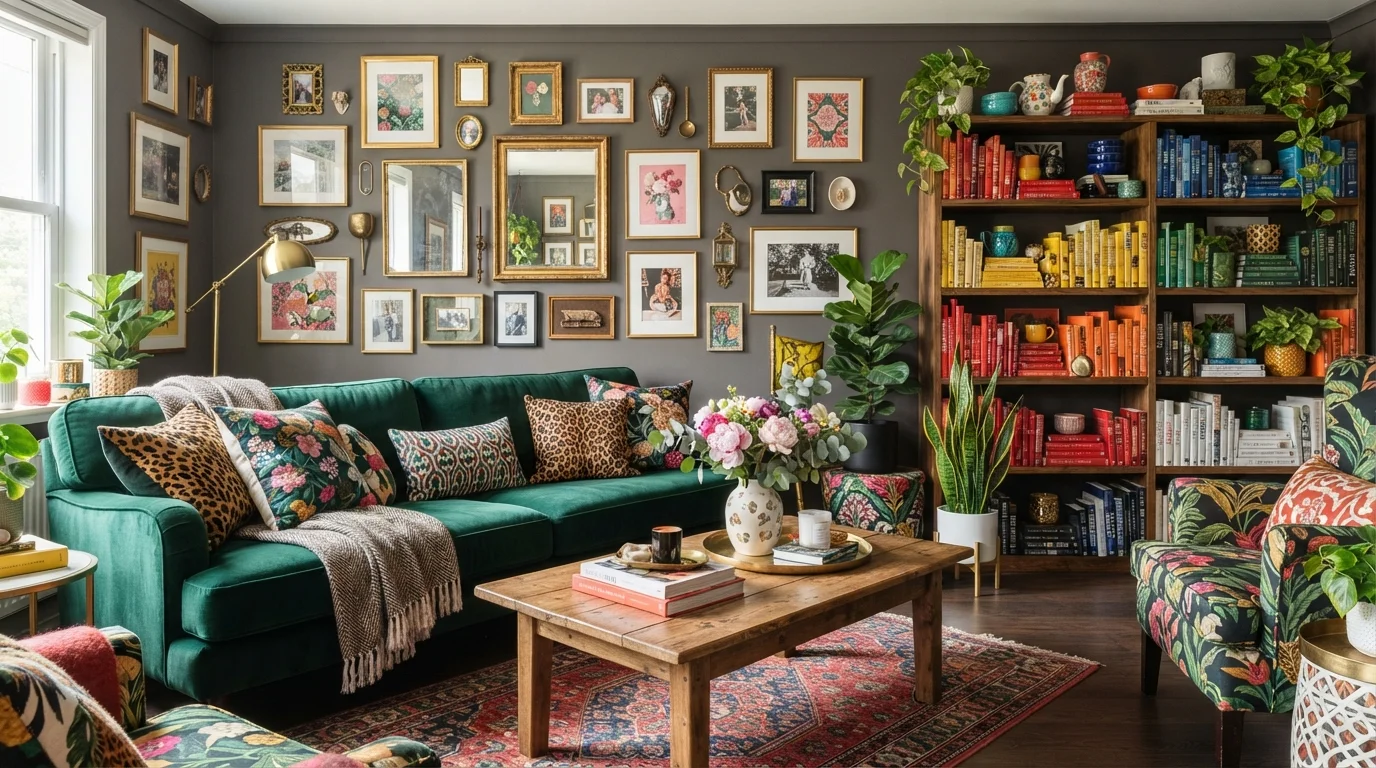
Maximalist interior design is having a major moment. Unlike minimalism’s clean lines and empty surfaces, maximalism celebrates abundance, color, and personality. But let’s be honest — it can easily tip into chaos if you don’t have a strategy.
The good news? You can embrace the “more is more” philosophy without your home looking like a flea market exploded. The secret lies in intentionality, visual rhythm, and a few grounding tricks. Whether you’re a seasoned decor lover or just dipping your toes into maximalist interior design, this guide will help you layer with confidence and keep the “messy” at bay.
What Is Maximalist Interior Design, Really?
Maximalism isn’t just about stuffing a room with stuff. It’s a deliberate style that mixes patterns, textures, colors, and objects to create a rich, personal environment. Think of it as visual storytelling — every piece has a role, even if that role is simply “bringing joy.”
The difference between chic maximalism and a chaotic space comes down to editing. A true maximalist edits like an art curator, not a hoarder. If you’re new to the style, start by exploring the home design category for foundational ideas on balancing bold elements with function.
Start With a Cohesive Color Palette
One of the biggest mistakes in maximalist decor is using every color you love without a unifying thread. The result? Visual noise. Instead, choose a dominant palette of 3 to 5 colors and repeat them throughout the room. This creates a sense of flow even when patterns clash.
For example, a living room anchored in jewel tones (emerald, sapphire, amethyst) can handle a floral sofa, striped pillows, and a geometric rug — as long as those same colors show up in different elements. This technique, sometimes called color drenching techniques, ties everything together beautifully.
Want to test it? Start with a neutral base (like a warm beige wall or a cream sofa) and layer your bold colors on top. It gives the eye a place to rest.
Master the Art of Pattern Mixing
Pattern mixing is where maximalism gets its reputation for risk. But you don’t need a degree in design to pull it off. The trick is to vary the scale: pair a large floral print with a small geometric pattern and a medium stripe. This creates visual hierarchy instead of a jumbled mess.
Another pro tip: use a common color across all patterns. A rug with navy stripes, curtains with navy florals, and navy piping on a pillow will feel intentional even if the prints are wildly different. You can practice bold pattern mixing on a smaller scale first — try it on throw pillows before committing to wallpaper.
For more structured advice on arranging furniture around these bold choices, check out these space planning tips.
Embrace “Curated Clutter” With Display Rules
Maximalism loves collections — but a collection needs a home. Scattering knickknacks on every surface makes a room feel dusty and disorganized. Instead, group similar items together. Think: a shelf of blue-and-white ceramics, a gallery wall of black-and-white photos, or a tray of vintage perfume bottles.
The goal is curated clutter, not random stuff. Here are a few practical rules to follow:
- Group by threes or fives — odd numbers look more natural to the eye.
- Use trays and bowls to corral small objects on coffee tables and consoles.
- Leave negative space — even maximalists need “breathing room” between objects.
- Edit seasonally: rotate out 20% of your decor to keep the look fresh.
Layer Textures for Depth (Not Clutter)
Texture is your secret weapon in maximalist interior design. When you mix velvet, linen, leather, wood, and metal in one room, the eye stays engaged without feeling overwhelmed. Texture adds richness without adding visual clutter.
For example: a velvet sofa paired with a chunky knit throw, a rattan coffee table, and a silk rug creates a tactile paradise. The more textures you have, the more luxurious the space feels — even if the color palette is muted. This is especially useful in small rooms where too many patterns might feel suffocating.
Consider drawing inspiration from nature. Many principles of maximalist interior design work wonderfully when extended outdoors as well. Take a look at our outdoor living ideas for inspiration on bringing that layered look to your patio or balcony.
Anchor the Room With a “Quiet” Element
Every maximalist room needs a visual anchor — something subdued that gives the eye a break. This could be a solid-colored sofa, a plain white ceiling, a large neutral rug, or even a calm accent wall. Without an anchor, the room feels like it’s shouting at you from every corner.
Think of it like a jazz band: the wild trumpet solos work because the bass keeps a steady rhythm. In your home, that bass might be a simple linen sofa or a jute rug under a riot of colorful pillows.
For a science-backed perspective, experts in environmental psychology suggest that our brains process cluttered environments more slowly than ordered ones. According to research from specialists in home organization and design, balancing visual stimulation with restful elements improves both mood and focus.
Use Wallpaper and Ceilings as a Canvas
One of the easiest ways to go maximalist without the mess is to commit bold patterns to fixed surfaces. Wallpaper with a large-scale botanical print or a dramatic geometric ceiling turns your walls into artwork — and it eliminates the need for dozens of small decorative items.
A bold ceiling, especially, is a hallmark of confident maximalism. Paint it in a deep color or apply a patterned wallpaper. This draws the eye upward and makes the room feel larger, even as you’re layering plenty of decor below. It’s a clever trick used by top interior designers to keep abundance from feeling cluttered.
Don’t forget that your garden design can echo this approach too — think colorful tiles, layered plantings, and eclectic furniture for a seamless indoor-outdoor maximalist vibe.
Common Maximalist Mistakes to Avoid
Even seasoned decorators slip up. Here’s a quick-reference table of what to watch out for:
| Mistake | Why It Happens | How to Fix It |
|---|---|---|
| No visual anchor | Every piece competes for attention | Add one neutral item (sofa, rug, wall color) |
| Same-sized patterns | Patterns blend into a blob | Mix large, medium, and small prints |
| Displaying without purpose | Random objects feel like clutter | Group by theme or color |
| Ignoring lighting | Flat light kills the layered effect | Use table, floor, and accent lights |
FAQ: Maximalist Interior Design Without the Mess
1. Can I do maximalism in a small apartment?
Absolutely. Use smaller-scale furniture, keep the floor clear, and let vertical surfaces (walls, shelves) carry the boldness. Mirrors also help bounce light and reduce visual heaviness.
2. How many colors is too many?
Stick to a palette of three to five dominant colors. Use neutral shades as “rest stops” between brights — this prevents the space from feeling hectic.
3. What’s the difference between maximalism and cluttercore?
Maximalism is intentional and curated. Cluttercore leans into nostalgia and almost chaotic randomness. Both are valid, but maximalism requires editing — cluttercore doesn’t.
4. Do I need expensive furniture for maximalism to work?
Not at all. Thrifted finds, DIY art, and hand-me-downs often have more personality than store-bought sets. What matters is how you arrange and layer them.
5. Can I mix maximalism with other styles like boho or mid-century?
Yes! Maximalism is the ultimate fusion style. Boho adds texture and earthiness, while mid-century brings clean silhouettes that balance the chaos. Just keep your color palette consistent.
6. Should every room in my home be maximalist?
Not necessary. Many people keep bedrooms calmer for rest and let living areas or studies go full maximalist. Consistency across your home isn’t the goal — personal meaning is.
7. How do I know when a room is “done”?
You’ll feel it. A finished maximalist room should feel exciting but comfortable — like you want to sit and explore it, not run away from it. Step back and see if your eye moves naturally through the space.
Conclusion: Go Bold, Stay Intentional
Maximalist interior design is one of the most rewarding ways to make a house feel like *your* home. It invites color, memory, and creativity into your daily life. But the line between “beautifully layered” and “overwhelming mess” is thin — and that line is intentionality.
Start small: pick a corner or a shelf to test your layering skills. Use the anchors we’ve discussed — color palettes, varied patterns, negative space, and texture. Over time, you’ll build a space that feels abundant without feeling chaotic.
For more inspiration on curating your home with purpose, browse the full blog archives for expert tips on blending style and livability.