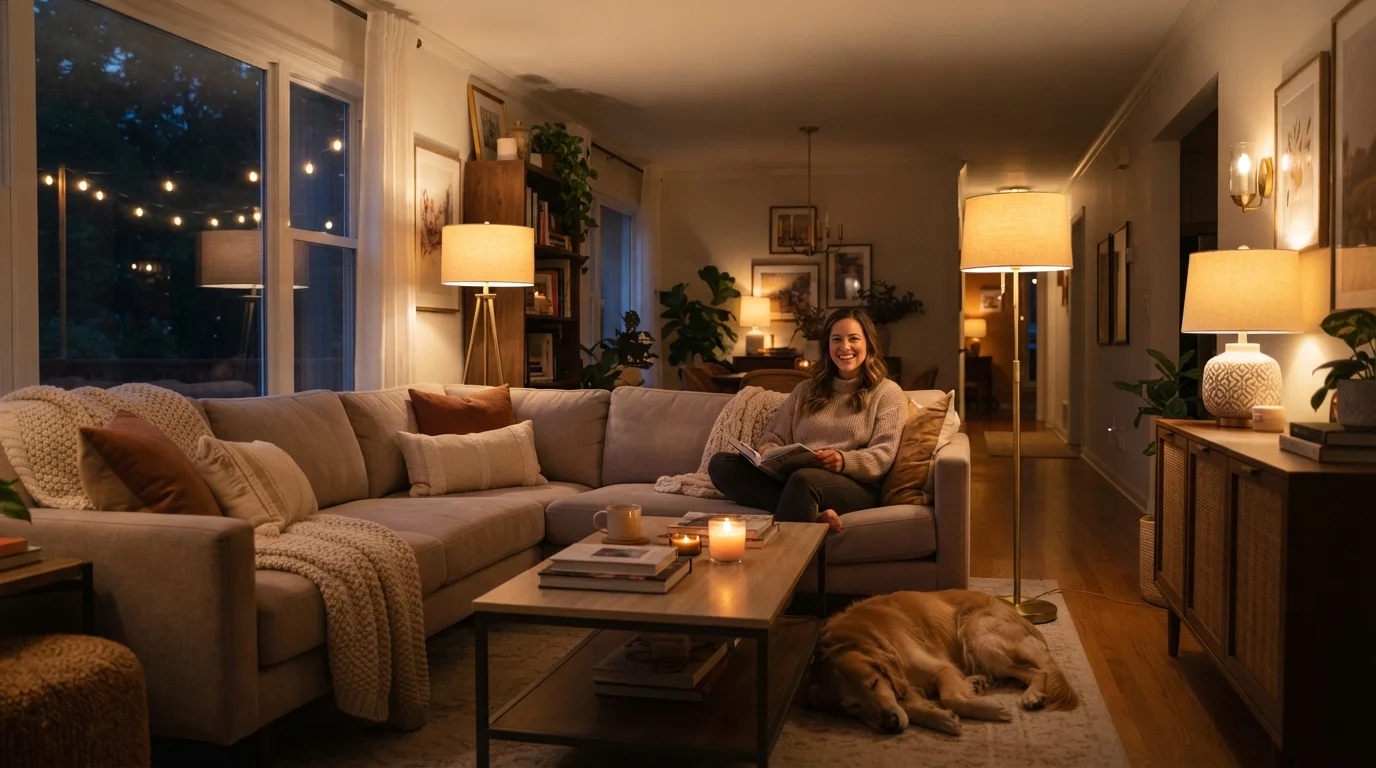
Have you ever walked into a room and felt instantly at ease—like the space was giving you a hug? Chances are, that room had great lighting layers. Good lighting is the unsung hero of interior design. It can make a tiny apartment feel grand or a large living room feel intimate. But a single overhead fixture? That’s a one-dimensional approach that leaves shadows and creates a flat, unwelcoming vibe.
Lighting layers are exactly what they sound like: combining different types of light sources to create depth, mood, and function. By mixing ambient, task, and accent lighting, you can control how a room feels at any time of day. Whether you are curled up with a book or hosting a dinner party, the right setup makes all the difference.
In this guide, we’ll break down each layer and share actionable tips to turn your house into a sanctuary. If you are just starting your design journey, you might also enjoy our curated blog posts on home styling for extra inspiration.
What Are Lighting Layers? The Three Essential Types
Lighting layers are simply the combination of three main types of light: ambient, task, and accent. Think of them as the ingredients in a recipe. Use just one, and the dish is bland. Use all three—balanced correctly—and you get a masterpiece.
- Ambient lighting is the base layer. It replaces natural daylight and fills the room evenly.
- Task lighting is focused light for specific activities like reading, cooking, or shaving.
- Accent lighting is the drama queen. It highlights artwork, architectural features, or plants.
Together, they create a flexible system that adapts to your life. For more on planning how light moves through your home, check out our space planning resources for practical layouts.
Starting with Ambient Lighting: The Foundation of Warmth
Ambient lighting is your room’s base layer. It should be soft, diffused, and as close to natural daylight as possible. The goal is to eliminate harsh shadows and dark corners. Common sources include ceiling-mounted fixtures, chandeliers, track lights, and large floor lamps that bounce light off the ceiling.
For a truly warm home lighting feel, use dimmers on your ambient sources. Dimmers let you lower the intensity from bright and clean for cleaning to soft and golden for movie nights. A 2700K to 3000K color temperature bulb in your main ceiling fixture instantly makes the room feel cozier than cooler, bluish light.
One common mistake is relying solely on a single overhead light. That’s the opposite of layered lighting design. Instead, pair your ceiling light with a couple of floor lamps in corners to create a soft, enveloping glow.
Task Lighting: Function Meets Comfort
Task lighting is your functional layer. It provides directed illumination for activities that require focus. Think reading lamps beside the sofa, under-cabinet lights in the kitchen, or a directional pendant over your desk.
When designing task lighting, position the source so it doesn’t cast shadows on your work area. For a home office, a swing-arm lamp with a metal shade directs light exactly where you need it. In the kitchen, LED strip lights under cabinets eliminate glare on countertops and make chopping vegetables safer.
Remember: task lighting does not have to be harsh. Choose fixtures with adjustable heads and warm bulbs to blend seamlessly into your overall warm home lighting scheme. You can even use task lights as ambient fill when dimmed low.
Accent Lighting: Adding Depth and Personality
Accent lighting is your interior design secret weapon. It draws the eye to specific focal points—a piece of art, a textured wall, or a beautiful indoor plant. The rule of thumb is that accent light should be at least three times brighter than the ambient light in the spot it hits.
Use track lights, wall-mounted picture lights, or small spotlights to achieve this effect. A simple can light aimed at a tall fiddle-leaf fig can transform a plain corner into a striking vignette. For outdoor spaces, consider integrating outdoor living lighting to extend this welcoming feel onto your patio or deck.
Don’t underestimate the power of a single uplight behind a sofa or a LED strip behind a TV. This creates depth and makes the room feel larger. Accent lighting is the layer that gives a space that “magazine-worthy” touch.
Choosing the Right Bulbs and Color Temperatures
The bulb you choose is just as important as the fixture. Color temperature is measured in Kelvin (K). For a cozy, relaxing atmosphere, stick with warm white bulbs (2700K to 3000K). These mimic the glow of candlelight or a sunset and are perfect for living rooms and bedrooms.
Daylight bulbs (5000K and above) are better for garages, workshops, or bathrooms where you need to match colors accurately. Avoid mixing different color temperatures in the same open space—it can look disjointed and confusing. Consistency across your lighting layers creates a cohesive look.
For a deeper dive into how professional designers balance these technical choices, you can refer to this expert guide on home lighting design. It offers more advanced strategies for choosing the right fixtures for your space.
| Lighting Layer | Purpose | Recommended Bulb Temp (K) | Best Fixture Examples |
|---|---|---|---|
| Ambient | Base illumination | 2700–3000K | Flush mounts, chandeliers, floor lamps |
| Task | Focused activity lighting | 2700–3500K | Desk lamps, under-cabinet strips |
| Accent | Highlight features | 2700–3000K | Track lights, picture lights, uplights |
Common Mistakes to Avoid in Layered Lighting Design
Even with the best intentions, homeowners often fall into traps. The most common mistake is using only one source of light per room. Another is forgetting to install dimmers—they are cheap and transform the mood instantly.
Poor fixture placement is also a big issue. A pendant light hanging too high becomes useless as ambient lighting. Over-accenting is another pitfall; if everything is highlighted, nothing stands out. Stick to one or two accent points per room.
Lastly, do not ignore the transition zones. Hallways and entryways often get skipped, but they set the tone for the whole house. A small table lamp on a console or a dimmable sconce makes that first step inside feel intentional and warm.
Bringing It All Together: A Cozy Living Room Example
Let’s imagine a typical living room. Start with ambient lighting: a central semi-flush mount on a dimmer, plus two floor lamps in opposite corners. That’s your base. Add task lighting: a brass arc lamp aimed over the sofa for reading, and a small lamp on the side table for crosswords.
Now for accent lighting: a picture light over a large canvas painting on the wall, and a tiny LED spotlight inside a glass cabinet highlighting your favorite ceramics. The result is a room that feels layered, rich, and deeply comfortable.
If you want to explore this concept in other parts of your home, take a look at our home design section for more room-by-room guides.
Frequently Asked Questions About Lighting Layers
1. Can I use smart bulbs for layered lighting?
Absolutely. Smart bulbs let you adjust brightness and color temperature with your phone, making layered lighting design easier than ever. You can even create preset “scenes” for different activities.
2. How many light sources do I need per room?
For most rooms, aim for at least three separate light sources. A combination of one ambient, one task, and one accent layer works well. In larger rooms, you may need multiple of each.
3. Is layered lighting expensive to install?
Not at all. You can start with floor lamps and table lamps from budget-friendly stores. The key is dimmers and correct bulb temperatures—both are very affordable upgrades.
4. Should I use the same fixture style in every room?
No. Each room can have its own personality. However, maintaining a consistent color temperature (warm light throughout) helps create a seamless flow from room to room.
5. Can layered lighting make a small room look bigger?
Yes! Use ambient light to wash walls evenly, add an accent light on a far wall to draw the eye deeper, and keep task lighting low. This tricks the eye into perceiving more depth.
6. What about bathrooms?
Bathrooms need strong task light at the vanity (sconces on both sides of the mirror are best) plus a soft ambient ceiling light. Accent lighting over a freestanding tub or a plant adds spa vibes.
7. Do I need a professional electrician?
For adding new wiring or moving fixtures, yes—hire a licensed electrician. But plug-in lamps, sconces, and smart bulbs require no professional help.
8. How does outdoor lighting fit into layers?
Outdoor spaces benefit from the same concept. Use path lights as ambient, a bright lantern for task (grilling), and uplights on trees as accent. Check our garden design tips for inspiration.
Conclusion: Small Changes, Big Impact
Mastering lighting layers does not require a total renovation. Start with one room. Add a dimmer, swap out a harsh bulb, introduce a floor lamp, and point a small light at something you love. You will immediately notice how the room breathes and feels more alive.
The secret to a warm and welcoming home is not expensive furniture—it is how you use light. By thinking in layers, you gain total control over the atmosphere. Whether you are redecorating a new apartment or refreshing a family home, these principles will serve you well for years to come.