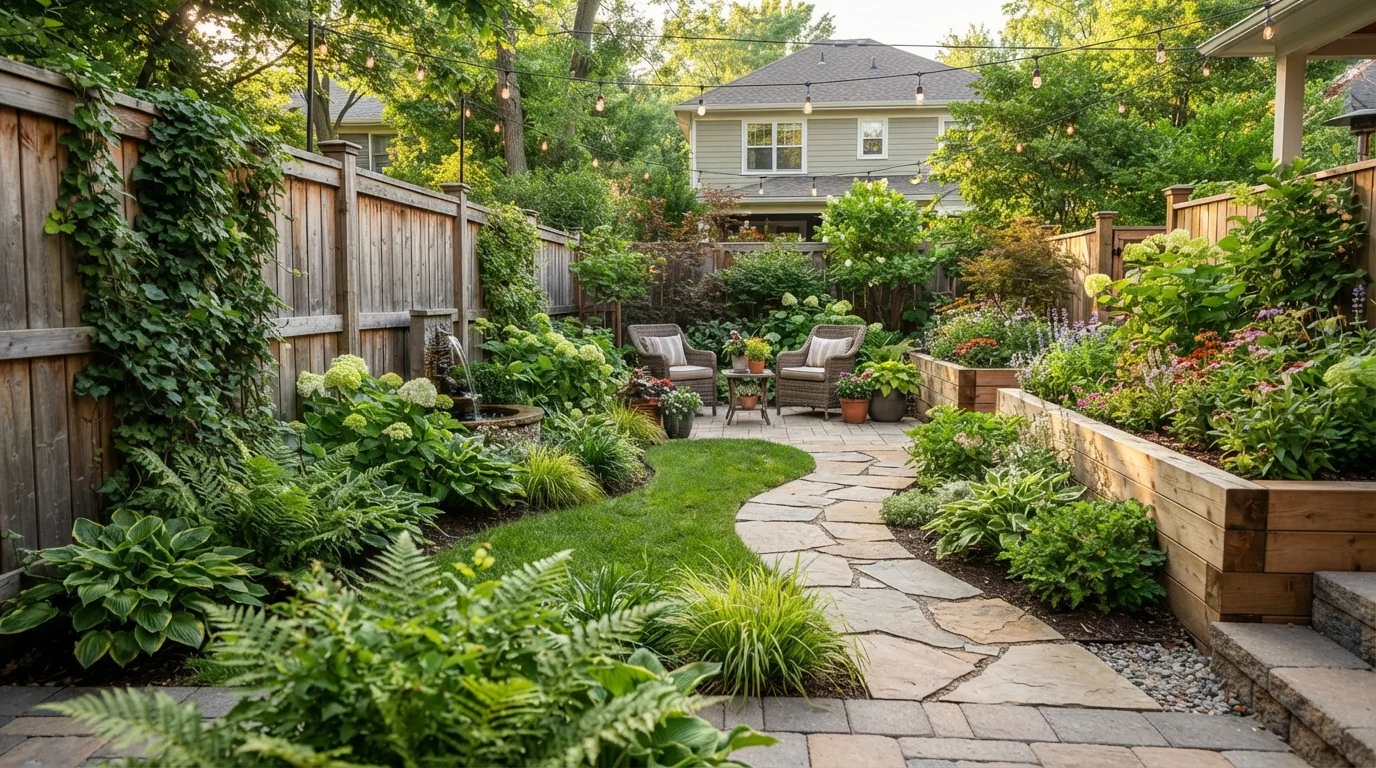
You don’t need acres of land to create a stunning outdoor retreat. In fact, landscaping for small yards is one of the most rewarding challenges in garden design. With the right tricks, your tiny patio or postage-stamp lawn can feel open, lush, and twice as large.
The secret lies in smart planning, clever visual illusions, and choosing elements that work harder for you. Whether you’re working with a narrow side yard or a compact city courtyard, these ideas will help you make every inch count.
Why Small Yards Need a Different Design Mindset
Traditional landscaping assumes you have sprawling space to work with. Large trees, winding paths, and broad lawns look great on a five-acre property, but they crush a small space fast. In small yard layouts, you need to think like a minimalist designer: every element must earn its place.
Start by defining how you want to use the yard. Is it for dining, lounging, gardening, or all three? Focus on one primary function and add secondary features sparingly. This approach keeps the space from feeling cluttered and helps maintain an open, airy atmosphere.
For more foundational advice on arranging your home’s flow, check out our space planning resources. Many of the same principles apply to outdoor rooms.
Vertical Gardening Ideas to Lift the Eye
When ground space is limited, go up. Vertical gardening ideas are the most effective way to add greenery without eating into your floor area. Wall-mounted planters, living walls, and trellises turn blank fences into lush backdrops.
Consider a modular trellis system for climbing vines like jasmine or clematis. Not only do they create privacy, but the vertical foliage draws the eye upward, making your yard feel taller and more expansive. You can also hang tiered planters from a pergola or fence to grow herbs, succulents, or trailing flowers.
One of the best tools for small gardens is a leaning ladder shelf. It takes up almost no depth and offers multiple levels for pots. Group plants with similar watering needs together to simplify maintenance.
Scale Down Your Hardscaping and Furniture
A common mistake in landscaping for small yards is overscaling. Pavers that are too large, furniture that’s too bulky, or a dining table that seats eight when you only seat four will dominate the space. Instead, choose smaller, slender pieces.
Opt for bistro sets instead of full dining tables. Use narrow bench seating that tucks against a wall. For paths, use rectangular pavers laid lengthwise to elongate the space visually. The goal is to keep proportions in check so the yard feels comfortable, not cramped.
Consider multi-functional furniture like a storage bench that doubles as seating, or a foldable table you can store when not in use. For more inspiration, visit our outdoor living section, where we cover furniture choices for compact patios.
Use Color and Texture to Create Depth
Color is one of the most powerful tools in small garden design. Light, cool tones like soft blues, silvers, and whites recede, making boundaries seem farther away. Dark colors bring things forward, so use them sparingly near the edges.
Paint fences or walls a pale sage or warm gray instead of dark brown. This instantly pushes the visual boundary back. Layer textures too: smooth gravel underfoot, rough stone in a small water feature, and soft foliage like ferns or ornamental grasses add richness without overwhelming.
A simple color palette—such as whites, greens, and one accent color—keeps the eye moving smoothly across the space without jarring stops.
Create Focal Points That Distract and Expand
A well-placed focal point tricks the eye and gives the brain something to anchor on. In small yards, avoid placing the focal point in the center. Instead, put it diagonally at one corner. This creates a longer visual path around the yard, making it feel larger.
Great focal points for compact spaces include a small birdbath, a sculptural shrub, a color-contrasting planter, or a simple water fountain. The key is to keep it simple—one strong element per view.
For more ideas on how to integrate design features into your home, take a look at our home design articles, which cover interior-to-exterior transitions.
Mirrors, Reflections, and Transparent Barriers
Mirrors aren’t just for indoor walls. An outdoor-rated mirror placed on a shaded fence instantly doubles the visual depth of your yard. It reflects light and greenery, creating the illusion of a completely separate garden beyond.
Another trick: use transparent or semi-transparent barriers instead of solid fences. Woven metal screens, glass panels, or slatted wood let light and air pass through, softening boundaries. Combine this with a reflective birdbath or a glossy ceramic pot to bounce light around the space.
Water features also work beautifully for reflection. A small, dark-surfaced basin mirrors the sky and surrounding plants, adding dimension.
Smart Zoning for Multi-Use Yards
A tight space can still serve multiple purposes if you zone it intelligently. Use different materials on the ground to signal different areas: gravel for the seating zone, pavers for the dining zone, and stepping stones leading to a garden bed.
Keep zones small. A 6×6-foot deck can define a lounge area, while a 3×6-foot strip of lawn beside it becomes a play or planting zone. Use low hedges or a change in elevation (one step down) to separate areas without blocking views.
Here’s a quick overview of popular zone combinations for small yards:
| Zone Type | Suggested Area | Visual Separator |
|---|---|---|
| Dining | 4×4 ft | Outdoor rug |
| Lounge | 5×5 ft | Low planter box |
| Planting | 3×5 ft (raised bed) | Gravel edge |
| Play/Path | 2×6 ft | Stepping stones |
As you plan these zones, refer to our garden design category for more layout inspiration tailored to tight footprints.
Frequently Asked Questions
What is the best ground cover for a small yard?
For small spaces, choose ground covers that stay low and don’t spread aggressively. Stepping stone paths with gravel or decomposed granite work well. For greenery, try creeping thyme, moss, or dwarf mondo grass.
How can I make my small yard feel private without walls?
Use tall planters with ornamental grasses, bamboo screens in pots, or a trellis with climbing vines. These provide height and privacy without the weight of a full fence. Overhead string lights or a pergola with hanging plants also add a cozy envelope.
Can I have a lawn in a tiny yard?
Yes, but keep it small. A 5×5-foot patch of actual turf or a clover lawn works well. Alternatively, use artificial turf for zero maintenance. Surround it with borders to define it clearly, so it doesn’t feel like a leftover piece of grass.
What colors make a small garden look bigger?
Light, cool colors like soft blues, pale greens, whites, and silvers create an illusion of depth. Use them on walls, fences, and pots. Dark colors should be reserved for small accents like a chair or a pot.
How do I choose plants for a small yard?
Choose compact or dwarf varieties. Look for plants labeled “dwarf,” “miniature,” or “compact.” Upright growth habits (like columnar shrubs) add height without spreading sideways. Avoid large, spreading trees unless you’re willing to prune hard every year.
Is vertical gardening high maintenance?
Not if you choose the right system. Self-watering wall planters and drip irrigation reduce effort. Use plants suited to your climate and group them by sunlight needs. Once established, many vertical gardens need only weekly care.
What is the biggest mistake in small yard landscaping?
Overcrowding. It’s tempting to fill every corner, but too many plants, furniture, or decor pieces make a space feel chaotic and tiny. Edit ruthlessly: if it doesn’t serve a purpose or bring joy, remove it.
Can I use a mirror in my garden safely?
Yes, but use mirrors rated for outdoor use. Acrylic mirrors are lightweight and unbreakable. Place them where they reflect greenery or sky, not direct afternoon sun (to avoid hot spots). Secure them well to fences or walls.
Conclusion
Landscaping for small yards isn’t about limitations—it’s about creative freedom. By lifting the eye with vertical greenery, scaling down furniture, using color strategically, and zoning smartly, you can transform any compact outdoor area into a spacious-feeling sanctuary.
Remember, less is more. Each element you add should pull double duty or enhance the sense of openness. Start with one or two of these ideas, test them out, and your yard will begin to feel bigger before you know it. For a deeper dive into the principles of space-saving design, explore our blog for more tips and inspiration.
For a curated selection of tools, plants, and design products that work perfectly in small spaces, check out expert-recommended options at this resource for home and garden solutions.