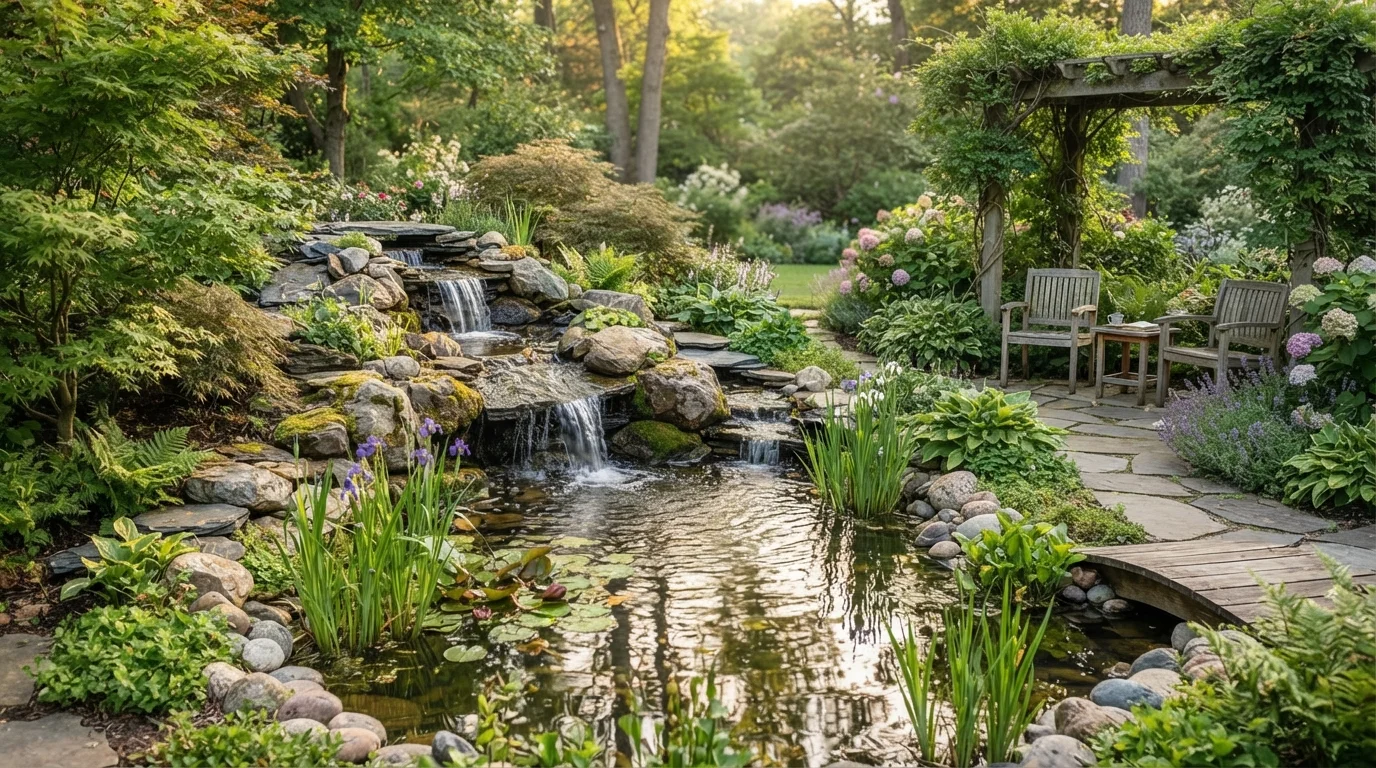
Nothing transforms a garden quite like the sound of moving water. It masks street noise, invites songbirds, and instantly lowers your heart rate. Whether you have a sprawling lawn or a compact patio, adding a water feature is one of the most effective ways to create a sanctuary in your yard.
In this guide, I’ll walk you through water feature ideas that balance beauty with practicality. You’ll find designs that fit every budget and skill level, from simple DIY fountains to elaborate pond ecosystems. Let’s start planning your backyard water feature.
Why Adding Water Elevates Your Garden Design
Water features do more than look pretty. They create a focal point that draws the eye and soothes the mind. The gentle trickle of a fountain or the reflective surface of a small pond adds a layer of sensory calm that hardscaping alone cannot achieve.
From a design perspective, water introduces movement and contrast. It breaks up large areas of greenery and complements stone, wood, and metal elements. For a deeper dive into blending styles, check out our guide to garden design where we explore how to integrate natural elements with structural features.
Functionally, water features support local wildlife. Birds will visit for a drink, dragonflies will patrol for mosquitoes, and beneficial insects will find a home. A well-placed feature becomes the heart of your outdoor space.
1. Classic Tiered Fountain for Timeless Elegance
Tiered fountains are the little black dress of garden decor. They fit traditional, Mediterranean, and even modern cottage gardens with ease. Water cascades from bowl to bowl, creating a layered sound that is both gentle and rhythmic.
You can find pre-cast concrete or resin versions at most home centers, or you can build one from stacked ceramic pots. The key is to ensure the pump is strong enough to push water to the top tier. Place it near a seating area or at the end of a pathway for maximum effect.
If your garden style leans toward minimalism, look for a single-spout fountain in dark stone or brushed metal. It offers the same auditory calm without the visual complexity. This is one of the most popular garden fountain design options for small yards.
2. Reflective Garden Pond with Native Plants
A pond doesn’t need to be massive to be meaningful. Even a 3-foot by 4-foot liner pond can support water lilies, dwarf cattails, and a few goldfish. The key is balance: keep half the surface open for reflection and plant the edges to soften the line.
Use a pre-formed plastic liner or flexible EPDM rubber for easy installation. Position the pond where it catches morning light but gets some afternoon shade to prevent algae blooms. Add a small solar fountain to keep the water moving and mosquito-free.
For those interested in complete outdoor transformations, our outdoor living section has more tips on integrating ponds with patios and fire pits.
3. Wall-Mounted Waterfall for Tight Spaces
No ground space? No problem. A wall-mounted waterfall turns a blank fence, a garden shed wall, or even a brick façade into a living art piece. Water runs down a textured panel—stone, slate, or glass—and collects in a basin at the base.
These units are surprisingly easy to install. Most come as all-in-one kits with a pump and LED lighting. Mount it securely, fill the reservoir, and plug it in. The sound is more dramatic than a fountain because the water falls from height, creating a soothing splash.
Consider pairing this with a small planter box of ferns or ivy at the base. The combination of dripping water and green foliage creates a small water garden feel without taking up any floor area.
4. Natural Stream and Rock Cascade
If you have a sloped yard, a stream is the most logical and stunning backyard water feature you can build. Water flows over rocks and bends around curves, mimicking a mountain creek. The result is both visual and auditory magic.
You’ll need a pondless basin at the bottom, a pump at the top, and a flexible liner to channel the water. Use local stones to create the streambed, and plant moss or creeping thyme along the edges to anchor the look. The sound of water tumbling over rocks is deeply calming.
This project is more labor-intensive, but the payoff is huge. It also pairs beautifully with a bridge or stepping stones, tying into broader space planning strategies for larger gardens.
5. Modern Self-Contained Water Bowl
For contemporary gardens, simplicity reigns. A self-contained water bowl—often made of stainless steel, copper, or polished concrete—sits directly on a patio or deck. Water bubbles up from the center and spills over the rim, recirculating quietly.
These features are almost maintenance-free. They don’t require excavation, plumbing, or complex filters. Just fill the basin, plug in the pump, and add a few drops of algaecide now and then. They’re perfect for renters or anyone who wants a clean, minimal look.
You can place one on a dining table as a centerpiece or set it on the ground as a sculpture. The reflective surface adds depth and light to any corner, making it a go-to among DIY water feature enthusiasts.
6. Birdbath Fountain Combo
Combine two garden essentials into one. A birdbath fountain is a pedestal basin with a small pump that creates a gentle trickle. Birds love the moving water, and you get the aesthetic of a classic birdbath with the bonus of sound.
Look for a model with adjustable flow so you can dial in just a drip or a soft spray. Place it near shrubs or trees so birds have a quick escape route from predators. Keep the water shallow—no more than two inches deep—for safety.
This is one of the most affordable water feature ideas that delivers both visual charm and ecological value. It also serves as a fantastic entry point for anyone new to water gardening.
For a systematic approach to designing your entire property, our home design resources cover everything from layout to material selection.
Water Feature Maintenance at a Glance
Keeping your feature clean doesn’t have to be a chore. Use the table below to match maintenance effort with your chosen style.
| Type | Weekly Effort | Key Task |
|---|---|---|
| Self-Contained Bowl | 5 minutes | Top off water, skim debris |
| Wall Waterfall | 10 minutes | Clean pump filter, check LED lights |
| Tiered Fountain | 15 minutes | Wipe bowls for mineral buildup |
| Small Pond | 20 minutes | Remove algae, check pump intake |
| Natural Stream | 30 minutes | Clear leaves from basin, adjust rocks |
Additionally, all features benefit from a thorough pump cleaning every three months. Use a stiff brush and white vinegar to remove calcium deposits. If you want to learn more about sustainable gardening practices, this comprehensive home and garden resource offers excellent seasonal maintenance guides.
Design Tips to Maximize Tranquility
Placement is everything. Position your water feature where you can hear it from your most-used windows or patio seats. Avoid putting it directly under large deciduous trees, or you’ll spend every autumn scooping leaves out of the basin.
Use lighting to extend the enjoyment. Submersible LED lights in blue or warm white create a magical glow after sunset. For fountains, uplighting from the base emphasizes the water’s movement and reflection.
Finally, scale matters. A tiny fountain in a huge yard will feel lost. A massive pond in a narrow space will feel overwhelming. Keep proportions in mind, and always match the feature to your existing garden style.
Frequently Asked Questions
What is the easiest water feature to install?
A self-contained water bowl or a plug-and-play birdbath fountain. Both require no digging or plumbing. Just place them on a level surface, fill with water, and plug in the pump.
How much does it cost to add a water feature to a yard?
Prices range from $50 for a simple solar fountain to $2,000+ for a custom pond with professional installation. DIY options using liners and repurposed pots can stay under $150.
Do water features attract mosquitoes?
They can, if the water is still. Keep water moving with a pump or fountain, and add mosquito dunks (harmless to pets and plants) to standing water. Goldfish also eat mosquito larvae in ponds.
Can I install a water feature on a balcony?
Yes. Look for tabletop fountains or wall-mounted units that plug into a standard outlet. Use a small reservoir to avoid spills. Check your lease or HOA rules before installing anything that drips over a railing.
How often should I change the water?
For most fountains, change the water every one to two weeks. For ponds with fish and plants, do a partial water change (20-30%) monthly to keep nutrient levels balanced.
What is the best material for a garden fountain?
Cast stone or concrete lasts the longest and holds up to freeze-thaw cycles. Resin and fiberglass are lighter and cheaper but may crack in extreme cold if not drained properly.
Do I need a professional to install a pond?
Not necessarily. Small pre-formed ponds are DIY-friendly. For larger natural streams or ponds with filtration systems, hiring a professional ensures proper excavation and pump sizing.
Conclusion
Adding a water feature to your yard isn’t just about aesthetics—it’s about creating a daily ritual of calm. Whether you choose a simple bubbling bowl or a full rock stream, the sound and sight of water will redefine your outdoor experience.
Start with one of these water feature ideas that matches your space, budget, and skill level. Your garden will become the peaceful retreat you’ve been dreaming of, where every moment feels a little more relaxing.
For more inspiration on transforming your home and landscape, visit our blog for regular updates on design trends and practical tips.