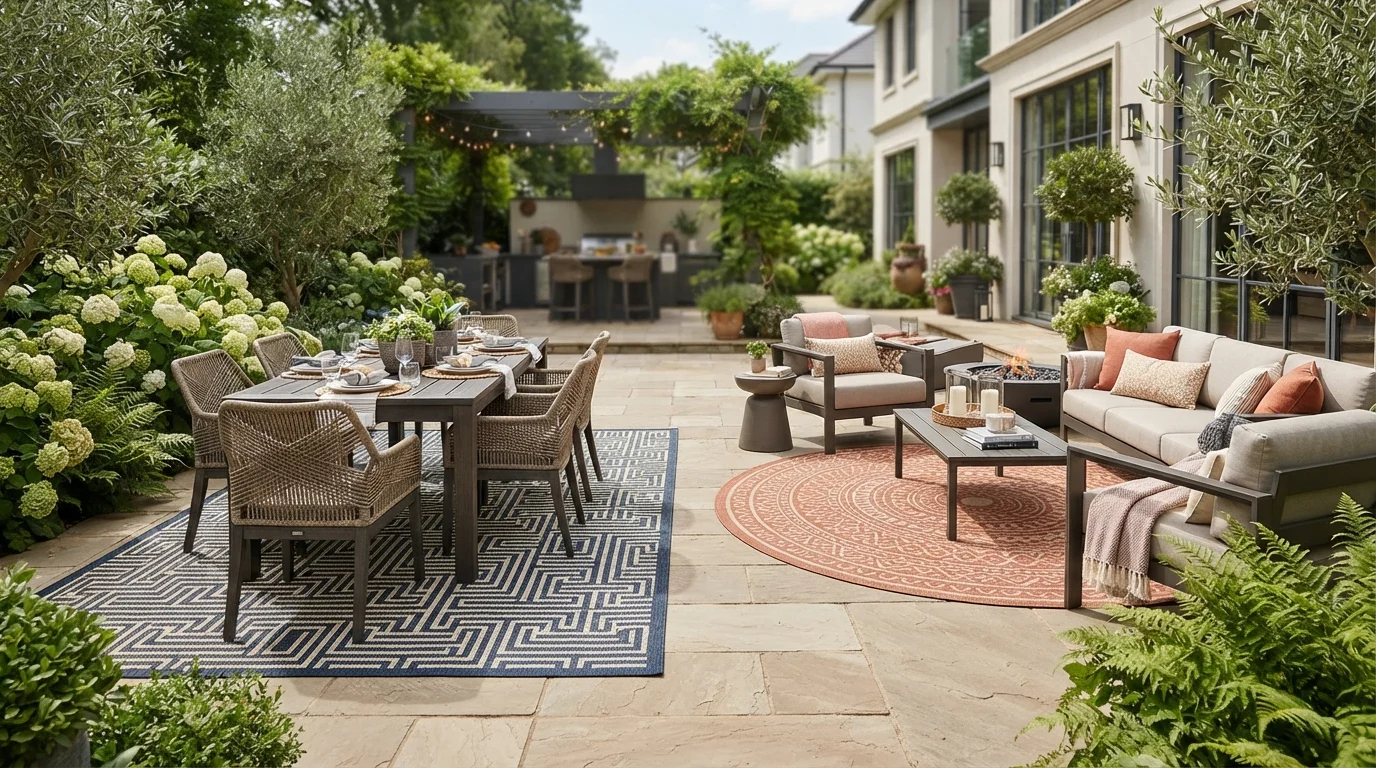
Your patio has the bones of a great outdoor room. But without clear separation, it can feel like a jumble of furniture and plants. The solution is simpler than you think: strategic rug placement. When used correctly, outdoor rugs define zones on your patio, turning a blank slab into a functional, stylish extension of your home.
Think of your patio as a house without walls. Each area—dining, lounging, cooking—needs its own identity. A rug acts as a visual anchor. It tells the eye, “This spot is for conversation,” or “This spot is for meals.” In 15 years of working with outdoor spaces, I’ve seen rugs transform patios more than almost any other accessory.
This guide covers exactly how to pull it off. You’ll learn which rug works for dining, which works for lounging, and how to avoid the most common placement mistakes. Let’s start building your patio zones.
Why Rugs Are the Best Tool for Defining Outdoor Zones
Rugs create invisible boundaries. Without them, your patio furniture can look randomly placed. A rug instantly groups chairs and tables into a meaningful arrangement. It also adds warmth underfoot, which encourages people to actually use the space.
From a design perspective, rugs trick the brain. A round rug under a small bistro set suggests a breakfast nook. A large rectangular rug under a sofa set defines a living room. This psychological separation is why patio zone ideas almost always start with floor coverings.
For more foundational concepts on arranging your home’s flow, check out our space planning tips. The same principles apply indoors and out.
Choose the Right Size for Each Zone
Size matters more than pattern. A rug that’s too small makes a zone feel skimpy. One that’s too large swallows the furniture and muddles the boundaries. Here’s a quick breakdown for the three most common patio zones:
| Zone Type | Recommended Rug Size | Furniture It Should Cover |
|---|---|---|
| Dining | 8×10 ft or larger | Table + all chair legs, even when pulled out |
| Lounging | 6×9 ft or 8×10 ft | Front legs of sofa + coffee table |
| Reading / Bistro | 4×6 ft or 5×7 ft | Two chairs + small side table |
Measure your furniture layout first. Leave at least 18 inches of rug showing around the edges. That extra border keeps the zone looking intentional and generous.
Position Rugs to Separate Lounging and Dining Areas
On a large patio, the biggest challenge is keeping the dining and lounging areas distinct. Place your dining rug directly under the table, centered. Then position your lounge rug at least 2 feet away. This gap creates a visual pathway.
If the patios are on different levels (even a slight step), use rugs to reinforce that shift. A darker rug on the lower level and a lighter rug on the upper level helps the brain register the change. When you master outdoor rug placement, you guide foot traffic naturally without walls.
Don’t forget the edges. If your patio is near a garden bed or lawn, consider a rug with a natural fiber look to bridge the transition. Our garden design archives have more ideas for blending hardscape and softscape.
Use Color and Pattern to Label Zones
Color is your second secret weapon. Use it intentionally. For a dining zone, choose a rug with a tight, low-pattern design. Spills wipe off easily, and the pattern hides crumbs. For a lounging zone, you can go bolder: stripes, geometrics, or even a faux-ikat.
- Dining zone: Flatweave, low-pile, or indoor-outdoor sisal in neutral tones with a subtle border.
- Lounging zone: Thicker pile or synthetic shag in a warm color (terracotta, navy, sage) for coziness.
- Play zone (kids or pets): Dark, busy patterns like Moroccan trellis or tribal prints to hide dirt.
Matching rug colors to your cushion or throw pillow palette creates a cohesive look. A pop of color in the rug can also define a fire-pit conversation pit. For deeper inspiration on coordinating outdoor decor, visit our home design section.
Anchor High-Traffic Entry Points with a Runner
Every patio has a primary door or gate. That walkway is a zone too, but it’s often overlooked. A long runner rug immediately tells guests where to walk, keeping mud and grass off your main rug zones.
Place a 2×6 ft or 2×8 ft runner just inside the sliding door or at the top of the deck stairs. Choose a dark, textured pattern. This simple addition protects your other rugs from traffic and adds a finishing touch. It also extends your outdoor living room rug concept right to the threshold.
You can find more general outdoor inspiration in our outdoor living library. We update it monthly with real-world patio makeovers.
Layer Rugs for Depth in Larger Spaces
Layering isn’t just for indoor rooms. On a large patio, you can place a smaller, patterned rug on top of a larger, neutral jute rug. This creates a distinct island within a zone. For example, put a 4×6 ft colorful rug under a coffee table, sitting on top of a 6×9 ft neutral base rug.
This technique works brilliantly in corner seating arrangements. It adds texture and visual interest without overwhelming the space. Just make sure the base rug is flat and non-slip. Synthetic blends work best for the top layer because they resist mildew between layers.
For a deeper dive into home layout strategies, browse our blog archives for more zone-making tutorials.
Secure Your Rugs Against Wind and Weather
Outdoor rugs need grip. A flipped rug not only looks sloppy—it ruins the zone definition. Use non-slip rug pads made for outdoor use. They sit under the rug and prevent it from sliding on tile, concrete, or wood.
If you live in a windy area, add heavy furniture leg anchors or corner weights. Some rugs come with grommets for staking into grass. For a low-maintenance option, consider recycled plastic rugs. They are stain-resistant and can be hosed down easily.
Taking care of your rugs extends their lifespan significantly. Most quality outdoor rugs can stay outside year-round in mild climates. In harsh winters, roll them up and store them in a dry shed.
Frequently Asked Questions
Can I use an indoor rug on my patio?
It’s not recommended. Indoor rugs lack UV protection and moisture resistance. They’ll fade and mildew quickly. Stick with rugs labeled “indoor/outdoor.”
How do I clean an outdoor rug?
Shake it out weekly. For spot cleaning, use a mild soap and water. For deep cleaning, hose it down and let it dry completely in the sun. Many synthetic rugs can even be pressure-washed on low.
What’s the best material for a dining zone rug?
Polypropylene or recycled PET plastic. Both are stain-resistant, quick-drying, and won’t rot. Avoid natural fibers like cotton or wool in dining zones—they absorb wine and grease.
How many zones should a small patio have?
Stick to one primary zone (like dining or lounging) plus a small accent zone (like a single chair and a plant). Overcrowding a small patio with multiple rugs makes it feel cluttered.
Do rug colors fade in direct sun?
Yes, over time. Choose solution-dyed rugs (the color is baked into the fiber, not painted on). They resist fading 3–5 times longer than printed rugs.
Should my outdoor rug match my indoor rug?
Not exactly, but they should coordinate. If your indoor rug is neutral, you can be bolder outdoors. If your indoor rug is very bright, balance it with a quiet outdoor rug. Consistency in color temperature (warm vs. cool) helps.
Can I use a round rug to define a zone?
Absolutely. Round rugs are perfect for circular dining tables or bistro sets. They soften the hard edges of a square patio and naturally create a conversation circle.
Conclusion
Outdoor rugs are the unsung heroes of patio design. They give your space structure, personality, and comfort. When you understand how to use outdoor rugs to define zones on your patio, you stop guessing and start designing.
Start with one zone—your dining area or lounge spot. Pick the right size, choose a durable material, and anchor it with a non-slip pad. You’ll immediately notice how much more inviting your patio feels.
For further reading on making the most of your home’s usable square footage, the HomeGarden resource hub offers a curated collection of tools and guides for outdoor renovations. And if you’re looking to refresh your entire property with a cohesive plan, the comprehensive HomeGarden program can walk you through the full process from layout to finishing touches.
Now go roll out that rug and claim your zones.