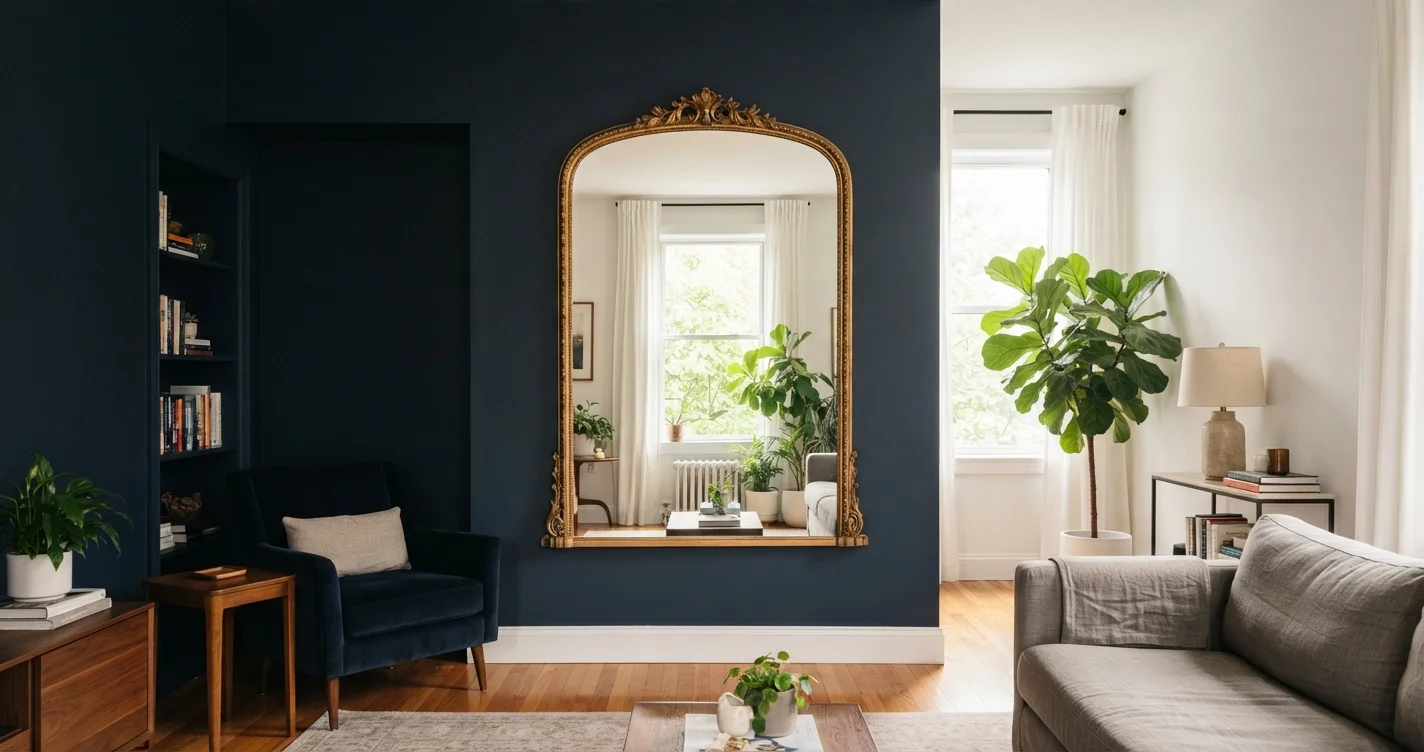
Dark rooms can feel cramped, moody, and even a little depressing. But before you start painting walls or installing new windows, there’s a faster, cheaper fix: mirrors. A well-placed mirror does more than just show your reflection. It bounces light around, tricks the eye, and creates the illusion of square footage you didn’t know you had.
This guide walks you through how to use mirrors to brighten and expand any dark room in your home. Whether you’re dealing with a windowless hallway or a dim living room, these actionable tips will transform your space. Let’s get started.
Why Mirrors Are Your Best Ally in Dark Rooms
Mirrors work like magic because they reflect both natural and artificial light. A single mirror can double the illumination in a space if placed correctly. They also create depth, which tricks your brain into seeing a larger room.
Think of a mirror as a second window. When light hits the reflective surface, it scatters across the room, softening shadows and brightening corners. This is especially useful in north-facing rooms or basements where natural light is scarce.
Beyond light, mirrors add visual interest. They can act as art pieces, make ceilings feel higher, and even highlight your favorite furniture or home design elements.
Where to Place Mirrors for Maximum Light
Placement is everything. A mirror on the wrong wall might do nothing, while a mirror on the right wall can transform the entire room. Here’s where to put them:
- Opposite a window: This is the classic move. The mirror catches natural light and throws it back into the room.
- Next to a light source: Place a mirror beside a lamp or sconce to amplify the glow. Perfect for reading nooks or dark corners.
- At the end of a hallway: A large mirror at the end of a corridor creates depth and bounces light from adjacent rooms.
- Behind furniture: Lean a mirror behind a sofa or console table. It reflects light from the front of the room.
For best results, angle the mirror slightly downward. This captures more light from the floor and lower parts of the room, making the ceiling feel taller too.
Choosing the Right Size and Shape
Bigger isn’t always better, but size matters. A large mirror makes a stronger visual impact than several small ones scattered around. In a dark room, go for one oversized mirror rather than a gallery wall of tiny frames.
Round mirrors soften angular rooms. They work beautifully in entryways or above a fireplace. Rectangular mirrors, especially horizontal ones, make a room feel wider. Vertical mirrors draw the eye up and add height to low ceilings.
Mirrored furniture is another option. A mirrored coffee table or console reflects light from above without taking up wall space. This is a smart trick for brightening dark rooms with mirrors when you have limited wall area.
Mirror Frames: Light vs. Dark
The frame matters more than you think. A dark, heavy frame can cancel out the light-reflecting benefits of the mirror itself. For dark rooms, choose frames that complement or enhance the lightness:
| Frame Color | Best For | Effect on Light |
|---|---|---|
| White or cream | Minimalist, airy spaces | Blends with walls, maximizes reflection |
| Gold or brass | Warm, cozy rooms | Adds glow, bounces warm light |
| Mirrored edge | Ultra-modern design | Disappears visually, emphasizes reflection |
| Natural wood | Boho or rustic spaces | Neutral, won’t overpower the light |
If you love a dark frame, go thin. A slim black or dark wood frame can still work if the mirror surface dominates. Avoid thick, ornate frames in dim rooms—they absorb light instead of reflecting it.
Using Multiple Mirrors Strategically
One mirror is good. Two or three, placed correctly, are better. The trick is to create a pattern of reflection that multiplies light sources. For example, place two mirrors on adjacent walls that both face a window. The light will bounce between them, effectively creating a brighter zone.
Another pro trick: place a mirror directly across from a chandelier or pendant light. This doubles the fixture’s illumination and adds sparkle to the whole room. It’s a fantastic approach for space planning in dining rooms or living areas.
Be careful not to overdo it. Too many mirrors can make a room feel chaotic. Stick to two or three statement pieces, and let them do the heavy lifting.
Creative Mirror Hacks for Small Dark Rooms
Need more ideas? Here are some creative ways to use mirrors in tight, dark spaces:
- Mirror a closet door: Sliding closet doors with mirror panels make a bedroom feel twice as large and way brighter.
- Lean a floor mirror: A large floor mirror leaned against a wall adds casual elegance and reflects a whole section of the room.
- Use mirrored backsplash: In a dark kitchen or bathroom, a mirrored backsplash behind the sink bounces light from windows or fixtures.
- Hang a mirror near an art piece: Place a small mirror beside a painting or photo. The mirror reflects the art and makes it pop, while also brightening that corner.
These strategies work especially well in rental apartments or smaller homes where structural changes aren’t possible. Mirrors are a zero-renovation solution for making a room look bigger with mirrors and light.
Common Mistakes to Avoid
Even with good intentions, a mirror can backfire. Here’s what to watch out for:
- Reflecting something ugly: If your mirror faces a cluttered corner or messy shelf, it doubles the visual noise. Always check what your mirror is reflecting.
- Placing mirrors too high: A mirror mounted too high only reflects the ceiling. For light bouncing, the center of the mirror should be at eye level.
- Using too many small mirrors: Fragmented reflections can feel busy. One large mirror is usually more effective than several small ones.
- Forgetting about cleaning: Dust and smudges reduce reflection. Keep your mirrors spotless for maximum brightness.
Avoid these pitfalls, and your mirrors will work hard for you. For more ideas on transforming your home, check out the full collection of blog articles on home improvement and decor.
Frequently Asked Questions
Can a mirror really make a room look twice as big?
Yes, if placed correctly opposite a window or light source. The reflection creates depth, tricking the eye into seeing more space. It won’t change actual square footage, but the visual effect is powerful.
What’s the best mirror shape for a narrow hallway?
A tall, vertical rectangular mirror works wonders. It draws the eye upward and makes the hallway feel wider. Avoid round mirrors in narrow spaces—they don’t maximize the vertical line.
Should I use unframed mirrors in dark rooms?
Unframed mirrors are excellent because the surface takes center stage. They blend into walls and reflect maximum light. If you want a minimalist look, go frameless.
How many mirrors should I use in one room?
One to three is plenty. More than that can feel cluttered. Focus on quality placement rather than quantity. A single well-positioned mirror beats three poorly placed ones.
Do mirrored furniture pieces work?
Absolutely. Mirrored coffee tables, sideboards, and nightstands reflect light from above and around. They’re perfect for mirror decor ideas in rooms where wall space is limited.
What’s the best mirror placement for a dark bathroom?
Mount a large mirror directly across from the bathroom window or light fixture. If you have a double vanity, use two mirrors to double the light reflection.
Can mirrors help in a basement with no windows?
Yes, but you’ll need to pair them with good artificial lighting. Place mirrors near floor lamps or recessed lights. The mirrors will amplify the existing light, making the basement feel less like a cave.
How do I clean mirrors for best reflection?
Use a microfiber cloth and a spray of water with a drop of dish soap. Avoid harsh chemicals that can damage the backing. Wipe in a zigzag pattern to prevent streaks.
Conclusion
Dark rooms don’t need expensive renovations or a total redesign. With the right strategy, how to use mirrors to brighten and expand any dark room becomes a simple, effective hack. From choosing the correct frame to placing mirrors opposite windows, every decision counts.
Start with one room. Identify the darkest corner, pick a mirror that fits the style, and place it where it catches the most light. You’ll be amazed at the difference a single reflective surface can make. For broader guidance on creating a cohesive home environment, explore the garden design and outdoor living categories too—light and flow matter everywhere.
Mirrors are more than decor. They’re tools for transformation. Use them wisely, and your home will feel brighter, bigger, and more welcoming than ever.