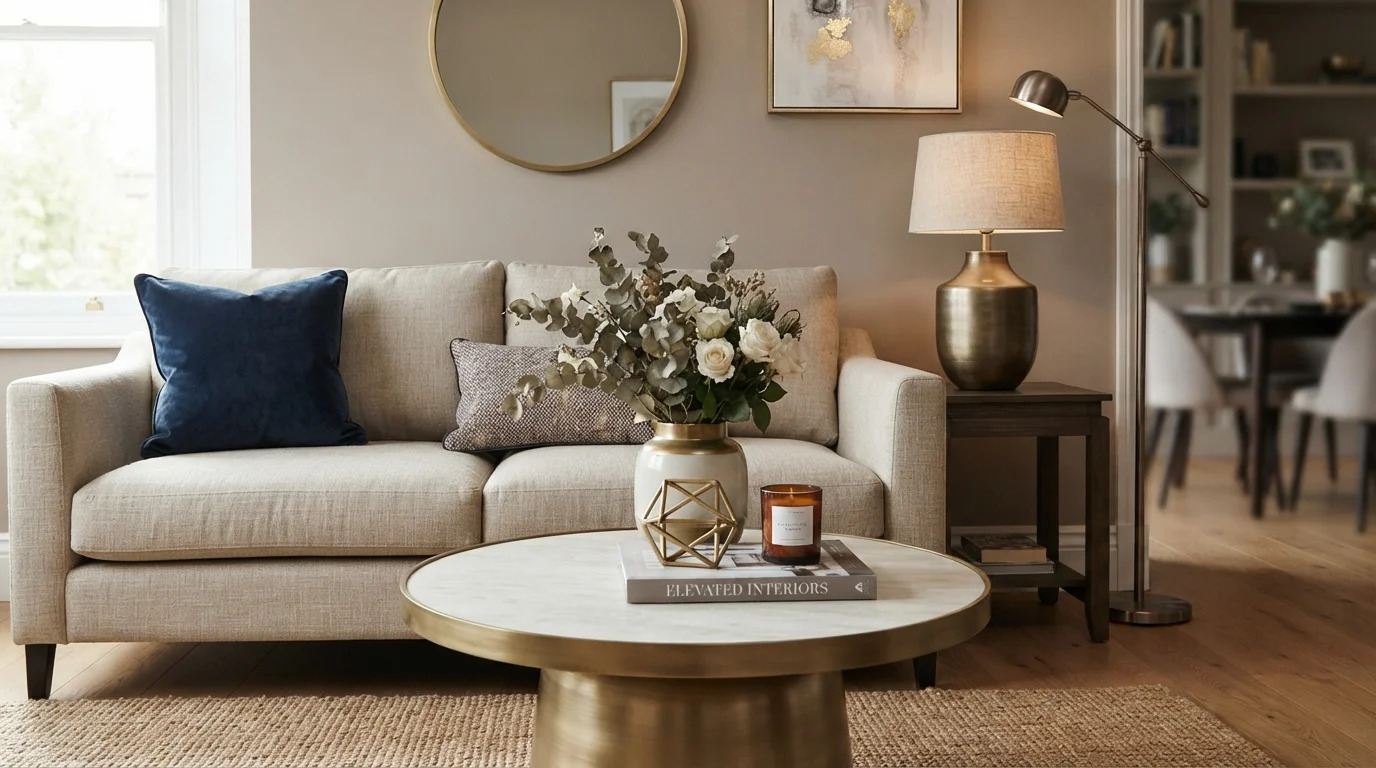
Metallic accents can transform a room from flat to fabulous—when done right. But we’ve all seen that one living room where gold frames, brass lamps, and chrome side tables compete for attention like a broken disco ball. It’s a fine line between elegant shimmer and outright gaudiness.
The good news is that you don’t need an interior designer to make metallics work. With a few smart rules, you can weave silver, gold, copper, and rose gold into your home in a way that feels curated, not costume-y. Let’s break down exactly how to do it.
Start With a Neutral Foundation
The number one reason metallic accents look tacky is because there’s too much visual noise. When your walls, furniture, and floors are already loud, adding shiny surfaces creates chaos. Instead, anchor your space with neutral tones—think warm whites, soft grays, beiges, or muted earth tones.
Neutrals act like a blank canvas. They allow the metallic pieces to catch light and draw the eye without competing for attention. For example, a matte gray sofa paired with a brushed brass coffee table feels intentional and sophisticated.
If you love color, keep it to accent pillows or art. Let the metallics remain the star of the show, not an extra layer of confusion. For more inspiration on getting the base right, check out our home design guides on building a cohesive palette.
Stick to One or Two Metal Finishes Per Room
Mixing every metal under the sun is a fast track to visual chaos. A polished chrome lamp, a gold mirror, and a copper vase in the same corner can feel like a hardware store explosion. Instead, limit yourself to one primary metal and one secondary accent.
For modern spaces, brushed nickel or matte black steel works beautifully as a primary. If you prefer warmth, go with unlacquered brass or antique gold. Your secondary metal should appear only once or twice—like a brass faucet in a bathroom with mostly chrome fixtures.
Here’s a quick cheat sheet for pairing metals:
- Warm white + brushed brass + matte black — clean yet cozy
- Cool gray + polished silver + chrome — crisp and contemporary
- Earthy beige + copper + oil-rubbed bronze — rustic elegance
- Bold navy + gold + pewter — dramatic and refined
Choose Texture Over Shine
Too much polish equals too much reflection. A room full of glossy metallics can feel cold and impersonal—like an elevator in a business hotel. The trick is to choose finishes with texture and patina instead.
Look for hammered copper bowls, matte nickel lamp bases, or satin brass drawer pulls. These finishes catch light softly rather than screaming for attention. Vintage and antique metals also work wonders, since they come with natural wear that adds character.
Remember: the goal is home design tips that feel lived-in, not staged for a catalog. Textured metallics give you that balance between elegant and approachable.
Use the 20% Rule for Placement
A good rule of thumb is to keep metallic elements to about 20% of the room’s visual weight. This includes hardware, lighting, furniture legs, decorative objects, and frames. Beyond that, you risk tipping into bling territory.
Instead of spreading metallics everywhere, concentrate them in one or two zones. For example, place a metallic mirror above the console table, a slim brass floor lamp by the armchair, and a small copper tray on the coffee table. That’s enough to create depth without overwhelming the space.
If you’re planning a larger metallic piece—like a gold-accented coffee table or a chrome dining set—keep surrounding accessories low-key and matte. This creates a focal point without turning the room into Las Vegas.
Layer Metallics With Natural Materials
Metallics and natural elements are a match made in design heaven. Wood, stone, linen, leather, and rattan break up the shine and add warmth. The contrast makes both materials look better.
Place a brass vase on a reclaimed wood shelf. Lean a silver-framed mirror against a textured stone wall. Drape a cream wool throw over a chrome-and-leather chair. These combinations create a sophisticated, collected-over-time feel.
For an approach rooted in thoughtful layout, explore our space planning guides to see how arrangement affects the overall harmony of your room.
Lighting Makes or Breaks the Look
Metallic accents are reactive—they respond to how light hits them. Harsh overhead lighting can make even the most subtle gold look garish. Soft, layered lighting is essential for a flattering finish.
Use dimmable overhead fixtures, floor lamps, and accent lights to cast warm, diffused glow. Position metallic objects near a window where natural light can gently bounce off them. Avoid pointing a bright spotlight directly at a shiny surface—it creates glare, not glamour.
A well-lit room makes metallics appear dimensional and luxurious. Poor lighting makes them look cheap. It’s that simple.
Introduce Metallics Through Functional Pieces First
If you’re nervous about overdoing it, start with everyday items that already have a purpose. Think drawer pulls, faucet handles, light switch plates, cabinet knobs, or the legs of a dining table. These small touches add polish without feeling like you’re trying too hard.
As you gain confidence, move to statement pieces like a metallic mirror frame or a side table with metal inlay. The key is to build gradually. One well-chosen brass fixture can do more for a room than a shelf full of shiny trinkets.
For more ideas on integrating metals into your layout naturally, browse our blog for practical decor inspiration.
Know When to Stop
Perhaps the most important rule of all: edit ruthlessly. Before buying another metallic piece, step back and ask yourself if it adds something essential. If the room already has shine, consider a matte or textured alternative instead.
A single oversized gold mirror in a hallway creates impact. A dozen small gold frames scattered around the same room creates clutter. Learn to love negative space—it’s what makes the shimmer feel intentional.
As you refine your approach, you might enjoy resources like curated home decor collections from trusted designers to see how professionals edit metallic accents into real homes.
Frequently Asked Questions (FAQ)
Can I mix gold and silver in the same room?
Yes, but do it intentionally. Keep one dominant and use the other as a subtle accent. Stick to similar undertones—warm gold with warm silver, or cool gold with cool silver. Avoid equal amounts of both.
What is the most versatile metallic for beginners?
Brushed brass or satin nickel. Both have a low sheen, blend easily with most color palettes, and look elegant without being flashy.
How do I use metallics in a small room without overwhelming it?
Focus on tiny details—drawer pulls, light switch plates, or a single mirror frame. Keep the rest of the room light and neutral. A little goes a long way in compact spaces.
Are metallic accents still in style?
Absolutely. The trend has shifted from high-gloss to brushed, matte, and antique finishes. This makes them timeless when chosen thoughtfully.
What metals should I avoid for a modern look?
High-polish gold and mirror-finish chrome can feel dated or cheap. Opt for brushed, satin, or oil-rubbed versions for a more contemporary feel.
Can I use metallic wallpaper or tiles?
Yes, but restrict them to an accent wall, a backsplash, or a powder room. Full metallic walls in a large room can feel oppressive.
How do I clean metallic decor without damaging the finish?
Use a soft, dry microfiber cloth for dusting. Avoid harsh chemical cleaners. For brass, use a mild soap and water solution, then dry immediately.
Should metallics match exactly throughout the house?
No, but keep a consistent style—like all warm metals or all cool metals. Slight variation from room to room adds character without disconnection.
Conclusion
Metallic accents are not the enemy of good taste—they’re a tool. Used with restraint and intention, they add warmth, depth, and a touch of luxury to any room. The secret is balance: neutral bases, limited finishes, soft lighting, and plenty of natural textures.
Start small. Edit often. And remember that a single stunning piece will always beat a shelf full of shiny clutter. Your home can shine without screaming for attention—you just need the right recipe.
For additional reading on how to bring your whole home together, don’t miss our garden design features that connect indoor and outdoor style seamlessly.