Expanding your garden doesn’t have to drain your wallet. In fact, with a little patience and know-how, you can propagate your favorite plants for free and turn one plant into dozens. Whether you’re a seasoned green thumb or a curious beginner, these methods are simple, satisfying, and backed by solid botany. Let’s dig into the easiest ways to multiply your plant collection without spending a cent.
Propagation is nature’s way of giving you more of what you love. And the best part? You already have everything you need at home—a sharp pair of scissors, a glass of water, and some potting mix. In this guide, we’ll cover five foolproof techniques that work for everything from succulents to shrubs.
Why Propagate Plants Instead of Buying New Ones
Buying new plants from the nursery adds up fast, especially if you’re designing a lush indoor jungle or a blooming outdoor border. Propagation saves money, reduces waste, and gives you a deeper connection to your garden. Plus, you can share cuttings with friends and create a living legacy from a beloved specimen.
Another major perk is control. When you propagate from your own healthy plants, you know exactly how they’ve been cared for—no pests, no chemicals, no surprises. It also allows you to preserve hard-to-find or heirloom varieties that might not be available at local stores. For more inspiration on arranging your new plants, check out our garden design ideas to plan your layout.
Method #1: Stem Cuttings in Water (The Classic)
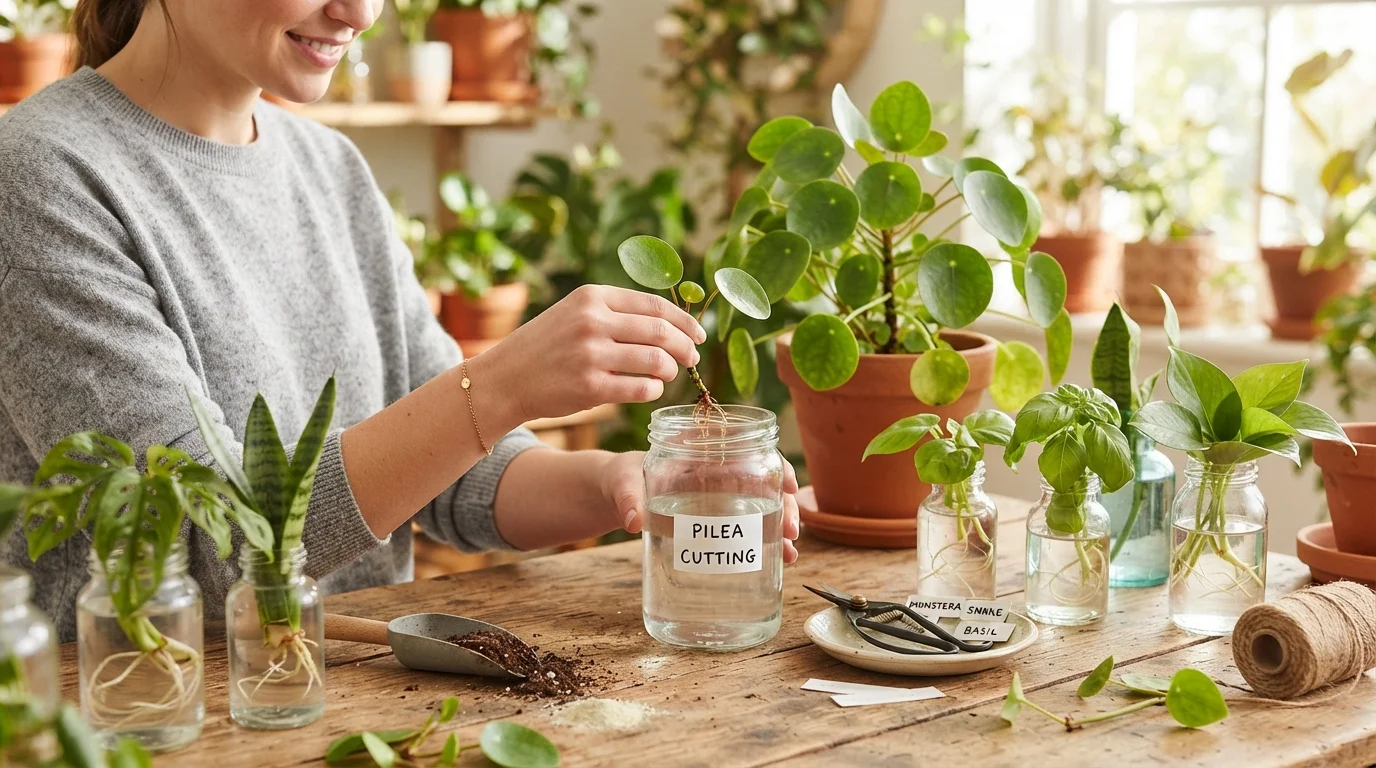
This is the go-to technique for most houseplants, including pothos, philodendrons, and monstera. Simply snip a healthy stem just below a leaf node, remove the lower leaves, and place it in a jar of clean water. Change the water every few days to prevent bacteria from forming.
Roots usually appear within two to four weeks. Once they’re about an inch long, transfer the cutting into a pot with well-draining soil. Keep the soil moist for the first week to help the roots transition. This method is so easy that even kids can do it—perfect for a weekend garden project.
Method #2: Soil Propagation with Stem Cuttings
Some plants root faster in soil than in water, especially woody herbs like rosemary, lavender, and sage. Dip the cut end in rooting hormone powder (optional but helpful), then stick it into a moist pot of perlite and peat mix. Cover with a clear plastic bag to create a mini greenhouse effect.
Place the pot in a warm spot with indirect light. Check the soil moisture every few days—it should feel like a wrung-out sponge, not soggy. In about three weeks, gently tug the cutting; if you feel resistance, roots have formed. This technique is a staple in professional plant propagation methods because it mimics natural conditions.
Method #3: Division for Clumping Plants
Division is ideal for plants that grow in clumps, like hostas, peace lilies, snake plants, and ferns. You get instant new plants with established roots—no waiting for cuttings to root. Carefully remove the parent plant from its pot, then use your hands or a clean knife to separate the root ball into sections.
Each section should have at least three healthy leaves and a good portion of roots. Replant each division into its own container or garden spot, water thoroughly, and keep them shaded for a few days to reduce transplant shock. It’s one of the fastest ways to propagate houseplants at home with nearly zero failure rate.
Method #4: Leaf Cuttings for Succulents
Succulents are masters of survival. A single leaf can turn into an entire plant. Gently twist a plump, healthy leaf from the stem—don’t cut it, as the base needs to stay intact. Let it dry for two to three days until the broken end callouses over. This prevents rot when you place it on top of succulent soil.
Mist the soil lightly every few days. Tiny roots and a baby rosette will emerge from the base of the leaf within two to four weeks. Soon, the original leaf will shrivel and fall off, leaving a brand-new succulent. It’s almost magical, and it’s one of the most satisfying easy gardening tips you’ll ever try.
Pro Tip: Use a shallow tray or egg carton for multiple leaf cuttings at once. Space them out so they don’t crowd each other—each leaf needs its own breathing room.
Method #5: Layering for Shrubs and Climbers
Layering works wonders on plants that don’t root easily from cuttings, like hydrangeas, roses, and wisteria. Pick a low-growing stem, bend it to the ground, and bury a section of it under soil—leaving the tip exposed. Use a U-shaped pin or a rock to hold it in place.
In a few months, roots will develop from the buried node. Once the new plant is well-rooted, cut it free from the mother plant and transplant it. This method requires patience but gives you a strong, independent plant that’s genetically identical to the original. It’s a classic trick among landscape designers, especially when working on outdoor living spaces.
Essential Tools and Supplies for Success
You don’t need fancy gear, but a few basics make a big difference. Here’s what I keep on my propagation station:
- Clean, sharp pruners or scissors — dull blades crush stems and invite disease.
- Small pots or containers with drainage holes — never let cuttings sit in standing water.
- Rooting hormone powder — speeds up root development, especially for woody stems.
- Transparent plastic bags or dome lids — maintain humidity for soil cuttings.
- Spray bottle for misting — gentle watering prevents disturbing delicate roots.
All of these items are cheap and reusable. Investing in quality tools is one of the smartest easy gardening tips I can share—it saves you time and frustration in the long run.
Common Mistakes to Avoid
Even experienced gardeners make errors. The most common one is overwatering. Cuttings have no roots to absorb water, so too much moisture causes rot. Stick your finger in the soil—only water when the top inch feels dry.
Another mistake is using a pot that’s too large. A small container concentrates moisture and warmth around the cutting, encouraging roots to grow. Also, avoid direct sunlight for newly propagated plants; bright, indirect light is best. For more detailed guidance on setting up your space, explore our space planning category for smart grow area layouts.
Comparing Propagation Methods: A Quick Table
| Method | Best For | Time to Roots | Difficulty |
|---|---|---|---|
| Stem Cuttings in Water | Pothos, Philodendron, Monstera | 2–4 weeks | Easy |
| Stem Cuttings in Soil | Rosemary, Lavender, Sage | 3–6 weeks | Moderate |
| Division | Hostas, Peace Lily, Snake Plant | Instant plant | Easy |
| Leaf Cuttings | Succulents, African Violets | 2–4 weeks | Easy |
| Layering | Hydrangea, Rose, Wisteria | 2–4 months | Moderate |
This table helps you pick the right technique for each plant. For more advanced propagation tips, I recommend checking out the detailed guide at Home Garden Space, which covers pro-level strategies for rare species.
Frequently Asked Questions
Can I propagate any plant at home?
Most plants can be propagated, but some are trickier than others. Annuals and perennials from cuttings do well, while slow-growing trees may require grafting. Start with easy varieties like pothos or mint to build confidence.
Do I need rooting hormone for all cuttings?
No. Many plants root perfectly without it. Rooting hormone helps with woody stems or difficult-to-root species, but it’s not mandatory for basics like spider plants or coleus.
How long does it take to see roots?
It varies by plant and method. Some succulents root in two weeks, while woody shrubs can take two months. Temperature, humidity, and light all affect speed. Keep a journal to track what works best in your home.
Should I change the water every day for water cuttings?
Not every day, but every three to four days. Changing water prevents stagnation and bacterial growth. If the water turns cloudy, change it immediately.
Can I propagate in winter?
Yes, but growth will be slower due to lower light levels. Use a grow light or place cuttings near a bright south-facing window. Heating mats can also speed up root development.
Why are my cuttings turning yellow?
Yellow leaves often indicate overwatering or a lack of light. Check that your pot drains well and that the cutting is getting bright, indirect sunlight. Remove any yellow leaves to direct energy to root growth.
What is the most foolproof propagation method?
Division is the safest bet—you’re separating an already-rooted plant. Water propagation for pothos and philodendrons is also very forgiving. Both methods are excellent for beginners looking to propagate your favorite plants for free with minimal risk.
Final Thoughts on Free Plant Propagation
Learning to propagate your own plants is one of the most rewarding skills a gardener can develop. It saves money, deepens your understanding of plant biology, and gives you the freedom to create a garden that’s uniquely yours. Start with one or two methods from this guide and expand as you gain confidence.
Remember, every successful cutting started with a little patience and a lot of love. If you want more ideas on how to style your propagated plants, visit our home design section for inspiring indoor arrangements. And don’t forget to check the blog for seasonal tips and troubleshooting advice. Happy propagating!