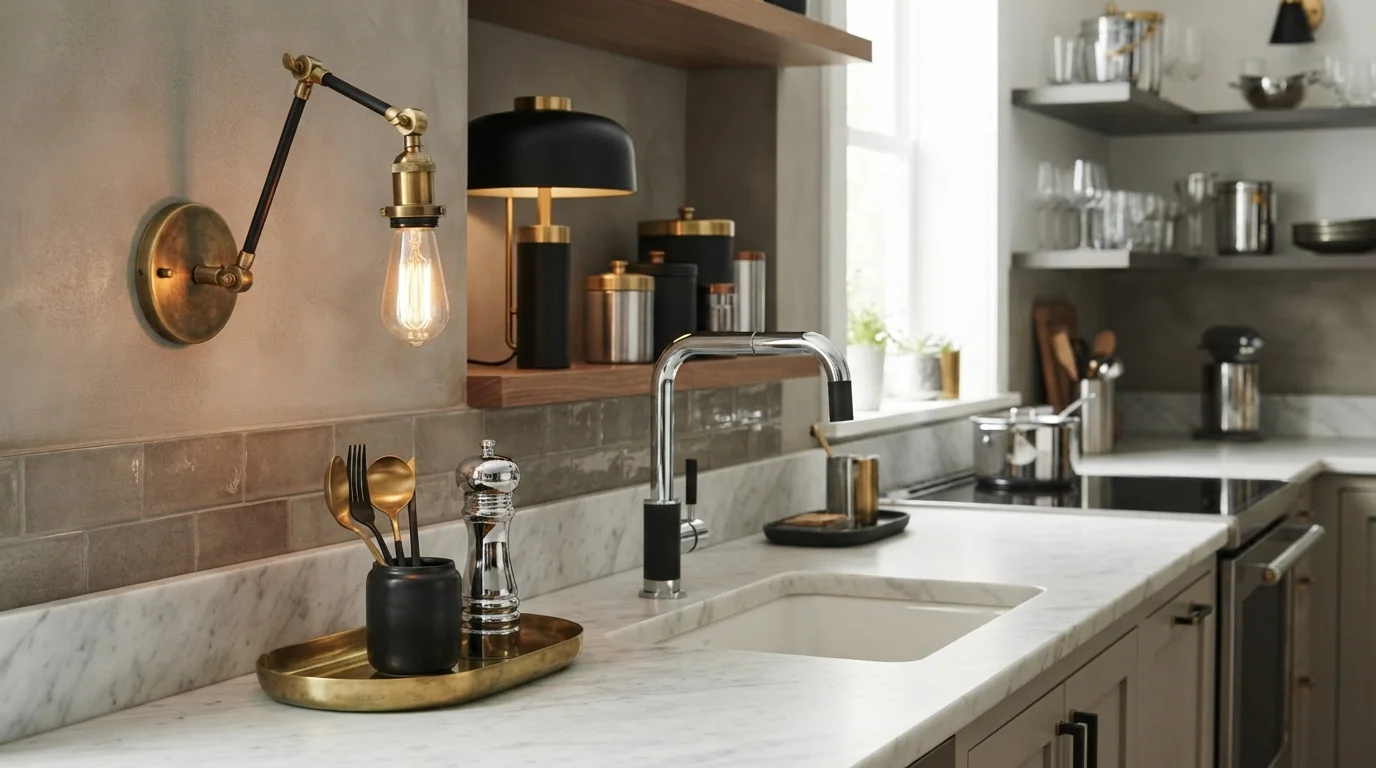
For years, the golden rule of interior design was simple: stick to one metal finish throughout a room. Brass for the whole kitchen. Chrome for every bathroom fixture. But that rule is now happily outdated. Today, the most polished spaces feel layered, not matched.
Mixing metal finishes like brass, black, and chrome is one of the fastest ways to add depth and personality to your home. The key is knowing how to combine them without the space feeling chaotic. When done right, this technique signals confidence and a curated eye.
In this guide, we will walk through practical strategies to mix metal finishes like brass, black, and chrome in any room. From kitchens to bathrooms and living areas, these tips will help you create a cohesive, intentional look that feels both modern and timeless.
Why Mixing Metal Finishes Works So Well
Contrast creates visual interest. When every surface shares the same shiny chrome or uniform brass, the eye has nothing to pause on. The room feels flat. By introducing a mix of warm and cool tones—like brass (warm) next to chrome (cool) or black (grounding)—you create a composition that feels dynamic and rich.
This approach also gives you flexibility. You can use a statement chandelier in polished brass even if your faucet is chrome. You are no longer locked into a single manufacturer or finish timeline. That freedom alone makes mixing finishes a favorite tool among interior designers.
Think of metal finishes like jewelry for your rooms. Would you wear a gold necklace, gold earrings, a gold ring, and a gold belt all at once? Probably not. The most stylish outfits mix warm and cool metals. The same logic applies to your home design choices.
The 60-30-10 Rule for Metals
The easiest way to mix finishes without stress is the 60-30-10 rule. This design principle usually applies to color, but it works beautifully for metals too. Assign 60% of your metal surfaces to one dominant finish. Use 30% for a secondary finish. Reserve 10% for an accent.
For example, in a kitchen, chrome could be the 60% (faucet, sink strainer, cabinet knobs). Brass becomes the 30% (pendant lights, bar cart hardware). Black makes up the 10% (a single black soap dispenser or the stove knobs). This ratio ensures one finish leads while the others support.
This simple framework prevents that cluttered, junkyard look. It gives your eye a clear hierarchy. You can apply the same ratio in bathrooms, living rooms, and even outdoor living areas where metal furniture and lighting coexist.
Best Room-by-Room Combinations
Not every room needs the same metal mix. The finishes you choose should feel appropriate for the space and its function. Below are three of the most successful combinations for popular rooms in the home.
Kitchen: Brass + Black + Chrome
The kitchen is the best place to start. Brass faucets remain a top trend, but pairing them with black cabinet hardware creates a striking contrast. Introduce chrome through appliances or a sleek pot filler. The result is a kitchen that feels collected over time, not ordered from a catalog.
Pro tip: Keep your dominant finish consistent on high-use items like the faucet and sink. Use the accent finishes on smaller, replaceable items like light pulls or a toaster. This makes future updates easy and affordable.
Bathroom: Black + Chrome + Warm Brass
In a bathroom, a matte black shower head paired with a chrome vanity faucet reads as modern and fresh. Add a warm brass mirror frame or a brass towel ring as the accent. This combination works especially well in spaces with white or neutral tiles, as the metals become the main accessories.
If you want to explore more ideas for small spaces, check out our tips on space planning to see how scale and placement affect the visual weight of each metal.
Living Room: Chrome + Brass + Black
Living rooms benefit from larger statement pieces. Use chrome in the lighting (floor lamp, sconces), brass in side table legs or picture frames, and black in the coffee table base or media console hardware. This mix keeps the room from feeling too precious while still looking intentional.
Remember that texture matters too. Brushed and matte finishes are more forgiving and easier to mix than high-gloss or polished surfaces. If you are new to mixing, stick to one polished finish and the rest in matte or satin.
Common Mistakes and How to Avoid Them
Even seasoned designers can slip up. The most common mistake is using too many finishes at once. Stick to three at the absolute maximum. Four or more starts to look like a hardware store display. Choose your three, and commit.
Another frequent error is ignoring the undertones of your finishes. Brass varies from warm golden to slightly greenish. Chrome is pure cool silver. Black finishes can lean brownish (if powder-coated) or cool (if anodized). Hold samples side by side before purchasing to ensure they harmonize rather than clash.
Lastly, do not forget about finish placement in relation to natural light. A polished brass fixture in front of a bright window can cause blinding glare. A matte black pull on a dark cabinet can disappear entirely. Walk through the room at different times of day to see how light changes the way each metal reads.
If you are still uncertain, a good reference point is to look at how designers approach mixed finishes in real projects. Seeing examples in context builds confidence.
Practical Tools for Choosing Finishes
A simple visual tool is the finish family approach. Warm finishes (brass, copper, gold) share a similar hue. Cool finishes (chrome, nickel, stainless steel) live on the other side. Black is neutral and works with both. Group your finishes into one warm, one cool, and black—and you have an instant balanced trio.
Another trick is to use a unifying element. If your brass has a slightly brushed texture, choose a brushed black and a satin chrome. The consistent texture across different tones creates cohesion. A sample board with all three finishes next to each other helps you see the relationship before you install anything.
For those looking into larger home updates, consider how your metal choices interact with garden design elements like outdoor faucets, gate handles, and patio furniture. The same principles apply outside.
Table: Quick Reference for Mixing Finishes
| Space | 60% (Dominant) | 30% (Secondary) | 10% (Accent) |
|---|---|---|---|
| Kitchen | Chrome (faucet, handles) | Brass (pendant lights) | Black (soap dispenser) |
| Bathroom | Matte Black (shower head) | Chrome (faucet, drain) | Warm Brass (mirror frame) |
| Living Room | Chrome (floor lamp, sconces) | Brass (side table legs) | Black (media console hardware) |
| Entryway | Brass (door handle, mirror) | Black (coat hooks) | Chrome (mail holder) |
This table is a starting point. Adjust the percentages based on your personal preference and the size of the room. The goal is balance, not exact math.
Frequently Asked Questions
Can I mix brass and chrome in the same room?
Absolutely. Brass and chrome together is one of the most popular combinations. The warm gold of brass contrasts beautifully with the cool silver of chrome. Just make sure each has a clear role—one dominant, one secondary—so neither fights for attention.
Is mixing metal finishes still in style for 2025?
Yes, it remains a strong trend. Designers continue to embrace mixed metals because they add character and break the monotony of uniform finishes. It is no longer a passing fad but a standard tool in modern interior design.
How many metal finishes should I use in one room?
Stick to three finishes maximum. Two is safe and elegant. Three feels curated. Four or more can look cluttered and accidental. If you love a fourth finish, integrate it through a small decor item like a candle holder or vase rather than a permanent fixture.
Should all my mixed finishes be the same sheen?
Not necessarily, but similar sheen helps. Mixing a high-polish brass with a matte black and a satin chrome can work if the room has good lighting and other textural elements. For beginners, it is easier to keep all finishes in either matte/satin or polished—not a mix of both extremes.
Can I mix metal finishes in a rental home?
Yes. In rentals, focus on portable items. Use brass lamps, black picture frames, and chrome side tables. Avoid permanent changes like swapping faucets unless your landlord permits it. Temporary adhesive hooks and knobs are also great for testing finishes without commitment.
Does the color of my walls affect how metals look?
Absolutely. Warm beige or cream walls make chrome look brighter and brass appear richer. Cool gray or blue walls can make brass look dull and chrome feel icy. Hold your metal samples against your wall color before finalizing your choices.
What about mixing stainless steel appliances with brass hardware?
This is very common. Stainless steel appliances act as the 60% dominant finish. Add brass hardware on cabinets and a brass faucet for the 30%. Use black for small accessories. The stainless steel is neutral enough to blend with almost any accent finish.
Where can I get more design inspiration?
Studying professional portfolios and design blogs is a good start. Additionally, exploring resources like expert home improvement guides can offer deeper dives into finishing techniques and product recommendations.
Conclusion
Mixing metal finishes like brass, black, and chrome is not just possible—it is desirable. It transforms a room from ordinary to intentional. You no longer need to fear a chrome faucet next to a brass light fixture. With the right ratio, consistent textures, and a clear plan, your home can feel layered and luxurious.
The golden rule of matching everything is gone. Embrace contrast. Start small: pick one room, apply the 60-30-10 rule, and see how the space comes alive. Once you try it, you may wonder why you ever stuck to just one.