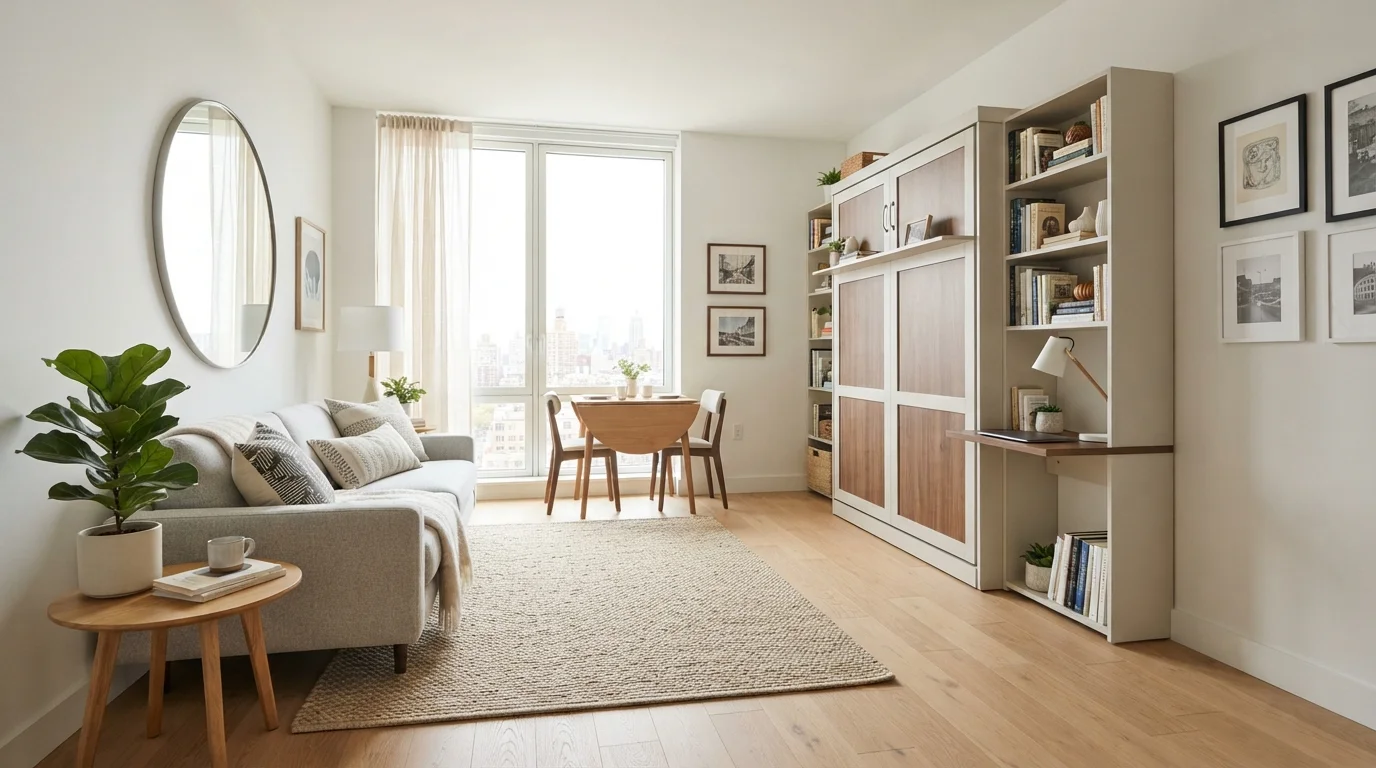
Living in a cozy home doesn’t mean you have to feel cramped. With the right strategies, you can decorate a small room so it looks twice its size without knocking down any walls. Smart design choices trick the eye and create breathing room.
I’ve spent years helping homeowners turn tiny bedrooms, compact living rooms, and narrow home offices into airy, functional spaces. The secret isn’t magic—it’s about light, scale, and strategic placement. Ready to make your space feel bigger? Let’s dive in.
1. Start With a Light and Airy Color Palette
Color sets the mood and the perceived size of a room. Light tones like soft white, pale gray, beige, and pastel blue reflect natural light, making walls feel farther away. Stick to one main light hue and use slightly darker shades for accents.
If you love bold colors, don’t ditch them—use them sparingly. A deep navy accent wall behind your bed can add depth without closing the room in. The key is balance. For a cohesive flow, consider browsing home design articles that explore color psychology in depth.
2. Use Mirrors to Create an Illusion of Depth
Mirrors are the cheapest renovation you’ll ever do. Place a large mirror opposite a window to double the natural light and visually push the wall back. A floor-length mirror in a corner or a mirrored closet door can instantly transform a cramped bedroom.
Pro tip: lean a tall mirror against the wall instead of hanging it. This casual placement adds a relaxed, designer feel while still working its magic on your small room design ideas. Always keep the glass clean—dust dulls the reflective effect.
3. Choose Furniture That Breathes
Oversized sofas and bulky coffee tables are enemies of a small room. Instead, pick pieces with exposed legs—sofas with legs, console tables, and open shelving. This allows light to pass underneath, giving the floor more visual space.
Multifunctional furniture is your best friend. A storage ottoman serves as a seat, footrest, and hidden bin. A wall-mounted desk folds away when not in use. When you shop, always ask yourself: “Does this piece help me maximize my small space, or does it just take up room?”
For more layout inspirations, check out space planning guides tailored for compact homes.
4. Let Light Flow Freely (Natural and Artificial)
Heavy blackout curtains can make a room feel like a cave. Swap them for sheer, light-filtering drapes or bamboo blinds that let sunlight pour in. If privacy is a concern, use semi-sheer shades that blur the view but keep the brightness.
Layer your lighting: ceiling lights, wall sconces, and small table lamps. Avoid a single overhead fixture that casts harsh shadows. Instead, use multiple light sources at different heights—this tricks the eye into perceiving more volume.
One excellent resource for small space lighting solutions offers practical product recommendations that align with minimal decor.
5. Keep Clutter Out of Sight (and Mind)
Visual clutter is the number one enemy of small rooms. When every surface is covered with trinkets, papers, or cables, the space feels chaotic and tiny. Invest in clever storage: baskets under the coffee table, floating shelves above doors, and bed frames with built-in drawers.
Use vertical space. Tall bookcases draw the eye upward, emphasizing ceiling height. A simple rule: if it’s not beautiful or useful, store it away. Your small space decorating tips list should always include “edit ruthlessly.”
Here’s a quick storage checklist to keep you on track:
- Assign a home for every item you own.
- Use lidded bins to hide miscellaneous items.
- Hang hooks inside cabinet doors for small accessories.
- Keep countertops and nightstands 80% free.
6. Scale Down Patterns and Go Vertical With Stripes
Large, busy patterns can overwhelm a petite room. Choose smaller-scale prints for pillows, rugs, and curtains. Vertical stripes—whether on wallpaper or a tall headboard—lengthen the walls and create the illusion of height.
If you love botanical or geometric prints, keep them to one accent element, like a single throw pillow. The rest of the room should remain calm and neutral. This principle is essential in all small room design ideas you apply.
7. Use Rugs to Define Zones Without Walls
In an open-concept small space, a rug can visually separate the living area from the dining nook. Just make sure the rug is large enough. A too-small rug makes the room look chopped up and smaller.
Ideally, the front legs of your sofa and chairs should sit on the rug. This grounds the furniture and creates a cohesive area. Stick to low-pile rugs in light tones to keep the floor looking clean and expansive.
For a more cohesive look across your entire home, don’t miss the latest blog posts on open-plan living solutions.
8. Hang Curtains High and Wide
Mount your curtain rod as close to the ceiling as possible, and extend it beyond the window frame. This trick pulls the eye up and makes the window—and the whole wall—feel larger. Use full-length curtains that just kiss the floor.
A common mistake is using short curtains that stop at the window sill. That cuts the wall in half visually. Go floor-to-ceiling and watch your room transform. It’s one of the most effective ways to make a room look bigger on a budget.
Comparison Table: Small Room vs. Large Room Design Choices
| Element | Small Room Approach | Large Room Approach |
|---|---|---|
| Color | Light, monochromatic | Bold, dramatic contrasts |
| Furniture | Multifunctional, leggy pieces | Statement, oversized sections |
| Lighting | Layered, diffuse | Chandeliers, accent spotlights |
| Rug | Large, light, low-pile | Layered, high-pile, patterned |
| Storage | Vertical, hidden | Built-in, walk-in closets |
Frequently Asked Questions
What is the best color to make a small room look bigger?
White, off-white, pale gray, and soft pastels are top choices. These colors reflect light and create an airy atmosphere. Avoid dark colors on all four walls unless you want a dramatic, intimate cocoon effect.
Can dark furniture work in a small room?
Yes, but use it sparingly. One dark piece—like a charcoal sofa or a walnut coffee table—can add grounding. Balance it with light walls, pale floors, and plenty of mirrors to keep the room from feeling heavy.
How many mirrors should I use?
One large mirror (at least 3 feet tall) is usually enough to make an impact. Placing it opposite a window maximizes natural light. Avoid cluttering the room with several small mirrors, as that can look busy.
Should I avoid area rugs in a small room?
No, but size matters. A small rug will shrink the space. Choose a rug that is large enough to fit under your main furniture pieces. A light-colored, low-pile rug works best to maintain visual flow.
What is the biggest mistake people make when decorating a small room?
Overcrowding. Pushing all furniture against the walls is another common error. Pulling pieces slightly away from the walls creates breathing room. Also, forgetting to use vertical space is a missed opportunity.
Does decluttering really help a room feel bigger?
Absolutely. Visual clutter overloads the brain and makes a room feel smaller. Even a simple surface clean-up can make a noticeable difference. Aim to keep 80% of surfaces clear.
Are open shelves a good idea for small rooms?
Yes, as long as you style them minimally. Open shelves can make a room feel taller and airier than bulky cabinets. Keep items sparse and coordinated to avoid a messy look.
Conclusion
Learning how to decorate a small room so it looks twice its size is about working smarter, not harder. You don’t need a renovation budget—just a thoughtful approach to color, furniture, light, and storage.
Start with one or two of these tips today. Move a mirror, swap a curtain, or edit a shelf. You’ll be amazed at how much bigger your space feels. And if you want to explore more ideas, our outdoor living section even has tips for expanding your usable space beyond the walls.
Now go ahead—give your small room the big makeover it deserves.