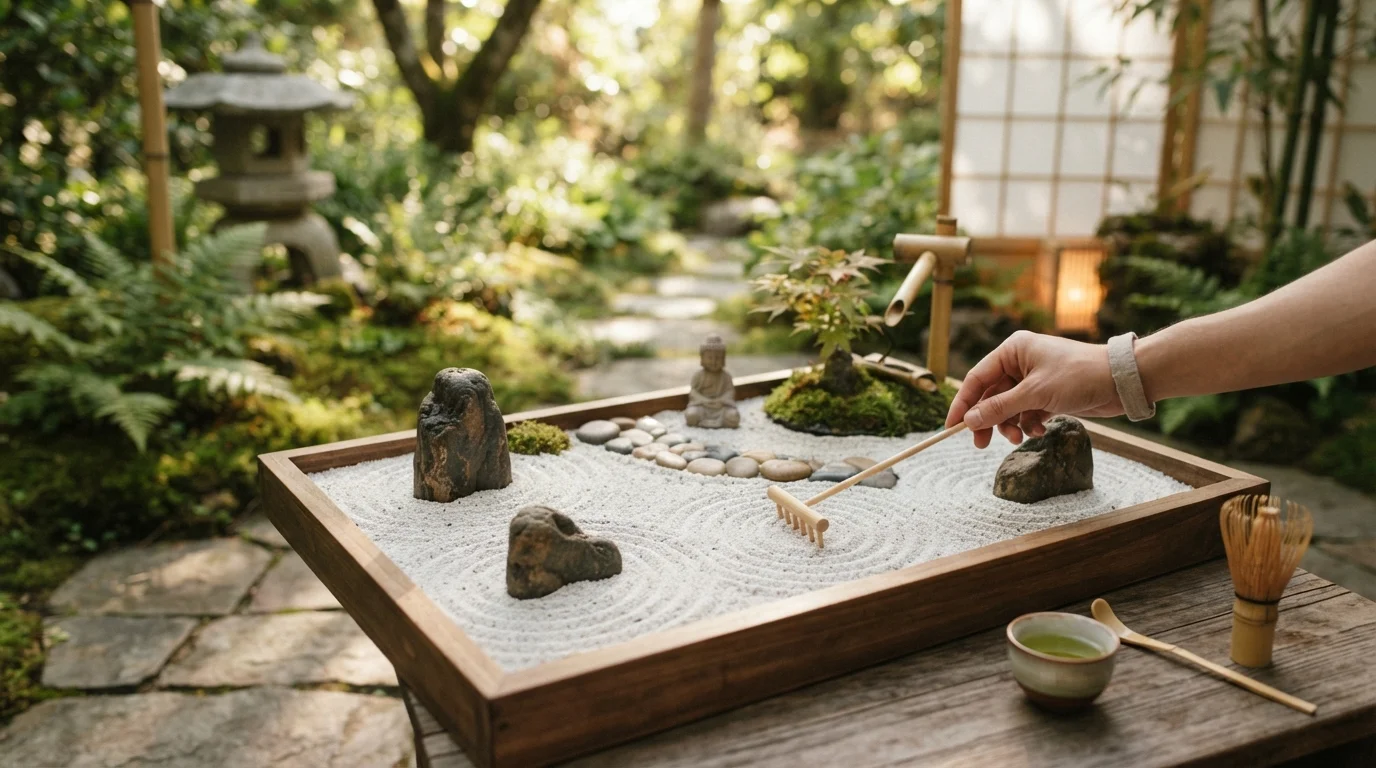
Life moves fast. Deadlines pile up, notifications never stop, and your mind feels like a browser with too many tabs open. You need a pause button. That’s exactly what a Zen garden offers — a physical space designed to slow you down and reset your nervous system.
Creating a Zen garden to melt away daily stress isn’t just about aesthetics. It’s about building a daily ritual of calm. Whether you have a sprawling backyard or a tiny balcony, this guide walks you through every step, from choosing the right gravel to placing your first stone.
Why a Zen Garden Works for Stress Relief
Zen gardens, also known as Japanese rock gardens or karesansui, are minimalist landscapes that use sand, rocks, and moss to represent water, mountains, and islands. The act of raking the sand into patterns is meditative. It forces you to focus on the present moment, similar to mindfulness meditation.
Studies show that interacting with natural elements lowers cortisol levels and reduces blood pressure. When you design a Japanese rock garden design at home, you create a visual anchor that reminds your brain to switch from “fight or flight” to “rest and digest.”
For more ideas on how to integrate this into your overall property, check out our guide on outdoor living spaces that complement your new sanctuary.
Choosing the Perfect Location
You don’t need a lot of space. A Zen garden can be as small as 3 feet by 3 feet. The key is to pick a spot that feels separate from the rest of your home. A corner of your patio, a section near a fence, or even a quiet nook in your front yard works well.
Look for a place that gets some morning sun but offers afternoon shade. You want the space to be comfortable for sitting or kneeling while you rake. Avoid high-traffic areas where people walk through constantly — the whole point is retreat.
If you’re mapping out a larger redesign, our space planning tips can help you visualize how to carve out a meditation zone without sacrificing function.
Essential Materials for Your Zen Garden
To create an authentic look, you’ll need a few specific materials. Don’t overcomplicate it — simplicity is the soul of Zen. Here is a checklist of what you’ll need:
- Gravel or sand: Pea gravel (1/4 inch) is ideal because it holds rake patterns well. White or light gray colors reflect heat and create a clean look.
- Rocks: Choose irregular, weathered stones. Granite, basalt, or river rocks work great. Avoid sharp or polished stones.
- A wooden rake: A small bamboo or cedar rake with wide tines is perfect for creating wave patterns.
- Edging: Use stone, brick, or treated wood to keep the gravel contained.
- Moss or ground cover: A patch of moss adds green contrast and age to the design.
- Landscape fabric: Place this under the gravel to prevent weeds from popping through.
Step-by-Step: Building Your Zen Garden
Step 1: Prepare the Ground
Clear the area of grass, weeds, and roots. Dig down about 3–4 inches to create a shallow basin. Level the ground as much as possible, then lay down landscape fabric. This prevents weeds without using chemicals.
Step 2: Install Edging
Secure your edging material around the perimeter. For a clean, modern look, use black steel edging or natural stone. Make sure it sits about an inch above the final gravel level to keep everything in place.
Step 3: Add the Gravel
Pour the pea gravel in and spread it evenly. Aim for a depth of 2–3 inches. Use a long board or a leveling rake to smooth it out. This is your “ocean” — keep it uniform.
Step 4: Place the Stones
Arrange your main rocks in odd numbers (3, 5, or 7). Place them slightly off-center for a natural, asymmetrical look. Bury the base of each stone about a third of its height so it looks grounded, as if it grew there.
Step 5: Add Moss and Accents
If you want moss, press small patches of sheet moss around the base of the rocks. You can also add a small bamboo fence, a stone lantern, or a simple bench. Keep accents minimal — no more than two or three elements.
Step 6: Rake Your First Pattern
Use your wooden rake to create concentric circles around the large stones (to simulate islands in water) and straight lines in open areas. The raking itself is the therapy. Do it slowly, with intention.
For more inspiration on plant choices and hardscape, take a look at our garden design category — it’s full of practical examples.
Best Plants for a Zen Garden
In traditional Zen gardens, plants are used sparingly. Too much foliage defeats the minimalist purpose. Here is a table of the most suitable plants and their characteristics:
| Plant | Height | Sun Requirement | Why It Works |
|---|---|---|---|
| Japanese Maple | Up to 15 ft | Partial shade | Delicate leaves, elegant shape, fall color |
| Dwarf Bamboo | 2–4 ft | Full sun to partial | Adds vertical interest, rustling sound in wind |
| Moss (sheet or cushion) | 1–2 in | Shade | Creates a carpet of green, ages beautifully |
| Azalea (dwarf) | 2–3 ft | Partial sun | Spring blooms, compact growth habit |
| Japanese Black Pine | Up to 20 ft | Full sun | Classic Zen silhouette, drought-tolerant once established |
Keep each plant pruned and shaped. A Zen garden is about control and harmony, not wild growth. If you’re new to pruning, the book Japanese Garden Design: Complete Guide offers detailed maintenance routines for beginners and experts alike.
Raking Patterns and Their Meanings
Raking isn’t just decorative — it’s symbolic. Each pattern represents a natural element and carries a specific intention:
- Straight lines (suibyo): Represent flowing water or calm oceans. Great for large open areas.
- Concentric circles (en): Placed around rocks to represent ripples around an island. Promotes focus and stability.
- Wave patterns (seigaiha): Zigzag or undulating lines symbolize waves hitting the shore. Used for dynamic energy.
You can change the pattern every day or every week. That’s the beauty of a stress relief garden idea — it’s never permanent. It invites you to come back and create something new each time.
Adding a Meditation Corner
If you have room, include a small seating area. A flat stone or a wooden platform at the edge of the garden gives you a place to sit quietly after raking. You don’t need a chair — kneeling or sitting cross-legged on a flat stone is traditional.
Position the seat so you face the garden’s main composition. Let your eyes rest on the largest rock. Breathe. Spend five minutes here after each raking session to let the calm settle in.
This concept ties beautifully into broader home design principles. You can learn more by browsing our home design category for ideas on blending indoor and outdoor calm.
Maintenance: Keep It Simple
Zen gardens require less maintenance than a lawn, but they aren’t zero work. Here’s what to expect:
- Weekly raking: Erases footprints and leaves. It’s your reset ritual.
- Leaf removal: Use a leaf blower on low speed or a soft rake. Never let leaves decompose on the gravel.
- Weed check: Pull any weeds that escape the landscape fabric immediately.
- Stone cleaning: Hose off moss or dirt from rocks once a season to keep them crisp.
The entire routine takes about 15–20 minutes per week. Think of it as a moving meditation rather than a chore.
Frequently Asked Questions
Can I build a Zen garden on a balcony?
Absolutely. Use a large wooden tray or a shallow planter box. Fill it with sand and miniature rocks. You can even use a desktop Zen garden kit for an indoor version.
How much does a small Zen garden cost?
A DIY version for a 4×4 foot area costs around $80–$150 for gravel, edging, and a rake. Larger professional installations can run $500–$2,000.
Do I need real moss or can I use artificial?
Real moss is better for humidity and authenticity, but high-quality artificial moss works in dry climates or indoor spaces with no direct sunlight.
What is the best rake for a Zen garden?
Look for a flat wooden rake with 5 to 7 wide tines. Bamboo handles are lightweight. Avoid metal rakes — they scratch and ruin the sand pattern.
How often should I replace the gravel?
Gravel rarely needs full replacement. Just add a bag of new gravel every 2–3 years to refresh the color and depth. Rinse it with a hose to remove dust.
Can I add water features to a Zen garden?
Yes, a small bamboo water spout (shishi-odoshi) or a stone basin (tsukubai) adds soothing sound. But keep the water feature small — the focus should remain on dry elements.
Is a Zen garden pet-friendly?
Yes, but cats may use the sand as a litter box. Cover the garden with a light mesh or place citrus peels around the edges to deter them. Dogs usually leave it alone with training.
What if I don’t have time to maintain it?
A Zen garden with low-maintenance gravel and a single stone requires only occasional raking. Skip the moss and plants, and you’ll have a clean, no-fuss minimalist garden layout that requires less than 5 minutes per week.
Conclusion
Building a Zen garden to melt away daily stress is one of the most rewarding projects you can undertake for your mental health. It doesn’t require a big budget or a green thumb — just a willingness to slow down and work with your hands.
Start small. Pick a corner. Lay down gravel. Place a single stone. Rake a circle around it. That first five-minute session will already change how your evening feels. Over time, your garden will grow into your personal reset button — a place where stress literally melts away, one rake line at a time.