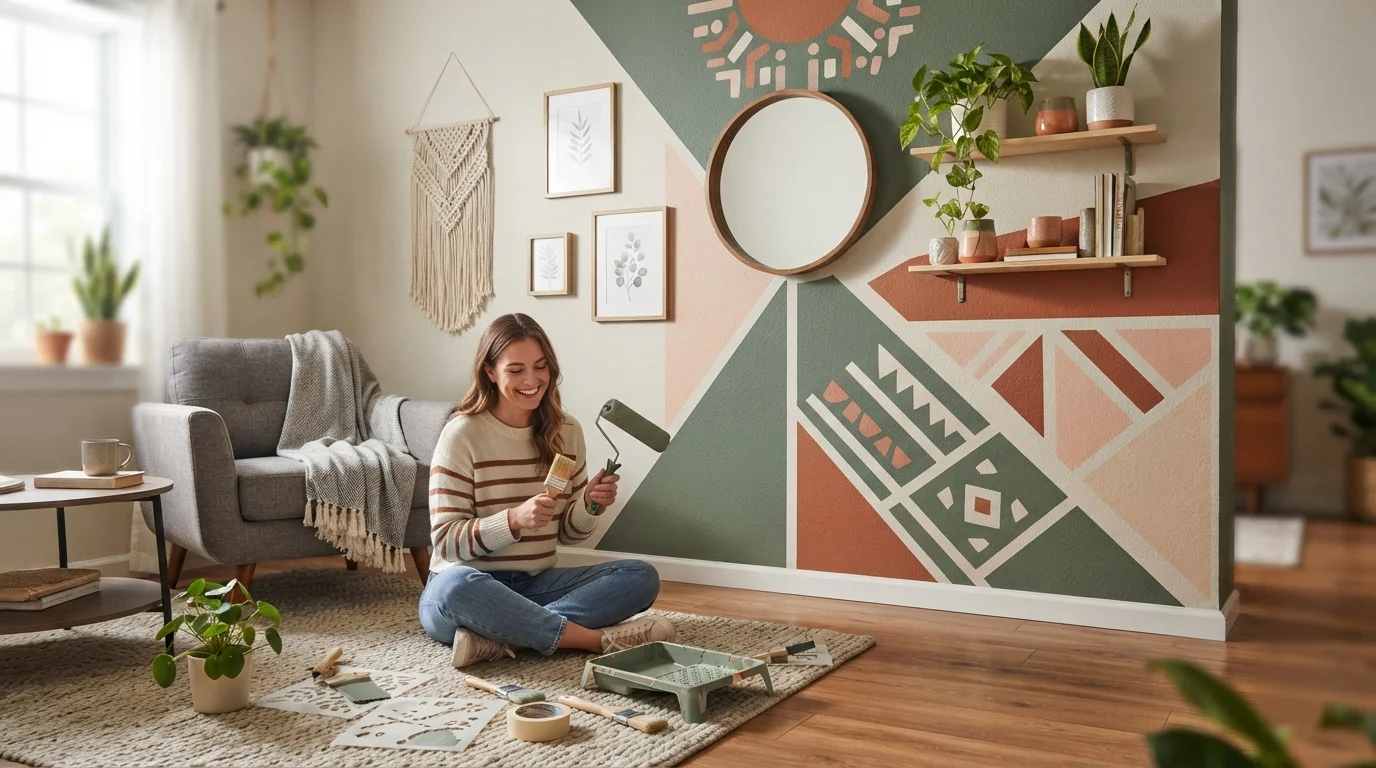
You don’t need a full renovation or a designer’s budget to make a bold statement in your home. A statement accent wall can completely shift the energy of a room, drawing the eye and creating a focal point that feels intentional and curated. The best part? You can absolutely create a statement accent wall without spending a fortune.
Many people assume that accent walls require expensive wallpaper, custom millwork, or high-end paint. That’s simply not true. With a little creativity, some elbow grease, and smart shopping, you can achieve a high-impact look for under $100 — sometimes even under $50. Let’s dive into practical, money-saving strategies that deliver serious style.
Why an Accent Wall Works (and Saves You Money)
An accent wall is one of the most cost-effective ways to refresh a room. Instead of painting or covering all four walls, you focus your time and materials on a single surface. That means less paint, less wallpaper, and less labor — but maximum visual impact.
Whether you rent or own, an accent wall is also reversible in many cases. Peel-and-stick options, temporary wallpaper, and removable wall decals make it easy to change your mind later. It’s a low-risk, high-reward project for any home design enthusiast.
Beyond aesthetics, a well-planned accent wall can actually make a room feel larger, cozier, or more dramatic — depending on the color and pattern you choose.
1. Use Paint Creatively (Not Just a Solid Color)
Paint is the cheapest tool in your toolbox. A gallon of quality paint costs around $30 to $50, and you’ll likely have leftovers. Instead of a flat color, try one of these painterly techniques:
- Color blocking: Paint geometric shapes like triangles, stripes, or arches. Use painter’s tape for crisp edges.
- Ombré effect: Blend two shades of the same color from dark to light for a soft, watercolor vibe.
- Stenciling: Buy or make a stencil and create a repeating pattern — it looks like expensive wallpaper for pennies.
- Two-tone split: Paint the top half one color and the bottom half another, separated by a straight line or molding.
These techniques require only paint and tape, yet they mimic the look of custom wall treatments. If you want more guidance on arranging furniture around your new focal point, check out our space planning tips to balance the room.
2. Repurpose Scrap Wood or MDF
Wood is one of the most forgiving materials for a DIY accent wall. You don’t need expensive hardwood. Scrap lumber, pallet wood, or even MDF strips can create incredible texture.
Here are three budget-friendly wood wall ideas:
- Horizontal slats: Nail thin strips of wood horizontally with small gaps between each slat. Paint them white for a modern farmhouse look.
- Geometric wooden panels: Cut small squares or diamonds, arrange them in a pattern, and glue or nail them directly to the wall.
- Reclaimed wood planks: Source old pallets or barn wood for free or cheap. Sand them lightly and arrange them in a herringbone or random pattern.
You can often find discounted lumber at big-box stores’ “cull” sections or on Facebook Marketplace. The rustic texture of wood adds warmth that paint alone can’t achieve.
3. Try Peel-and-Stick Wallpaper on a Partial Wall
Peel-and-stick wallpaper has exploded in popularity — and for good reason. It’s affordable, removable, and incredibly easy to install. But covering a whole wall can still be pricey. Solution? Use it on just a portion of the wall.
Create a “headboard effect” behind your bed, a rectangle behind your sofa, or a vertical stripe down the center of the wall. This uses only two to three rolls instead of five or six. You get the high-end patterned look without the high-end cost.
Look for sales at home improvement stores or online retailers. Many brands offer discontinued patterns at deep discounts. For more ideas on extending your style outdoors, explore our garden design section for complementary palettes.
4. Use Fabric or Drop Cloths
Fabric is one of the most underrated materials for accent walls. You can staple fabric directly to the wall (like a headboard on a grand scale) or hang it on a curtain rod for a soft, draped effect.
Canvas drop cloths from the hardware store ($10–$20) can be washed, dyed, or painted. Stretch them across the wall and staple them into the studs. Alternatively, buy a queen-sized flat sheet in a bold print for under $30. Use liquid starch to adhere it to the wall — it’s removable and won’t damage the paint underneath.
This trick works especially well in bedrooms or living rooms where you want a cozy, textured backdrop. It’s a true cheap accent wall idea that looks custom.
5. Gallery Walls as Your Accent
If you’re hesitant about committing to paint or wallpaper, let your decor do the talking. A gallery wall arranged in a defined shape — like a rectangle, circle, or arch — can function as an accent wall.
Use inexpensive frames from thrift stores or dollar stores. Spray paint them all the same color for unity. You can even print your own art or frame fabric scraps and postcards. Group them tightly together on one wall, leaving the other walls mostly bare. This draws the eye and creates that intentional focal point.
The cost is minimal if you already have frames or art. And as a bonus, you can change the arrangement whenever you want without repainting.
| Material | Estimated Cost | Difficulty Level | Best For |
|---|---|---|---|
| Paint | $30 – $50 | Easy | Any room |
| Scrap wood | $20 – $60 | Medium | Living rooms, bedrooms |
| Peel-and-stick wallpaper | $40 – $100 | Easy | Rentals, accent strips |
| Fabric / drop cloths | $10 – $30 | Easy | Bedrooms, cozy corners |
| Gallery frames | $15 – $50 | Easy | Any room |
6. Don’t Forget the Ceiling or Niche Areas
Sometimes the most unexpected surfaces make the best accent walls. Consider painting or wallpapering the ceiling in a small room — like a powder room or entryway. This creates a “jewel box” effect that feels luxurious without using much material.
Similarly, an alcove, a recessed bookshelf back wall, or a narrow hallway end can become your accent space. Because these areas are small, you can splurge on a slightly nicer material without breaking the bank.
Think of these areas as opportunities to experiment. If it doesn’t come out perfectly, the scale is small enough to redo easily. For more inspiration on maximizing small spaces, browse our outdoor living ideas that blend indoor and outdoor design.
Finally, remember that professional-grade tools aren’t always necessary. As leading home improvement experts suggest, starting with a clear vision and the right basic supplies is often more important than the brand of paint you choose. Focus on preparation—clean your wall, repair holes, and use good painter’s tape—and the results will look professional.
FAQ: Creating a Statement Accent Wall on a Budget
1. What is the cheapest material for an accent wall?
Paint is by far the cheapest option, especially if you use techniques like color blocking or stenciling. A single gallon can cover an entire wall, and you likely already have brushes and tape at home.
2. Can I do an accent wall if I rent?
Absolutely. Use removable options like peel-and-stick wallpaper, fabric with liquid starch, or decals. These solutions come off cleanly without damaging the wall.
3. How do I choose which wall to accent?
Choose the wall your eyes naturally land on when you enter the room. Common choices include the wall behind the bed, the wall with the sofa, or the wall without windows or doors.
4. Do I need special tools for a wood accent wall?
Not really. A saw, measuring tape, level, hammer or nail gun, and wood glue are usually enough. Many hardware stores will cut wood to size for you if you ask.
5. How long does a DIY accent wall take?
Most projects take a weekend. Painting and fabric walls can be done in a few hours. Wood walls may take a full day, especially if you’re measuring and cutting.
6. Will a dark accent wall make my room look smaller?
Not necessarily. Dark colors can make a wall recede visually, especially if the other walls are light. It can actually add depth and coziness instead of shrinking the space.
7. Can I combine two materials on one accent wall?
Yes! For example, paint the bottom half of the wall and add wood slats to the top half. Or use wallpaper on a central panel and paint the border. Mixing materials adds texture and interest.
8. What if I mess up?
That’s the beauty of budget projects. Paint can be painted over. Stickers can be peeled off. Fabric can be removed. You’ve spent very little, so you have the freedom to try again.
Conclusion
Creating a statement accent wall without spending a fortune isn’t just possible — it’s one of the smartest moves you can make for your home. With materials you already have or can buy cheaply, you can transform a plain room into a stylish sanctuary.
Start small. Pick one technique from this list that excites you. Gather your supplies, invite a friend over, and make it a fun weekend project. Before you know it, your room will have a whole new personality — and your wallet will thank you.
Ready for more home projects? Check out our full blog for ongoing inspiration, DIY guides, and decor tips that make a big difference without a big budget.