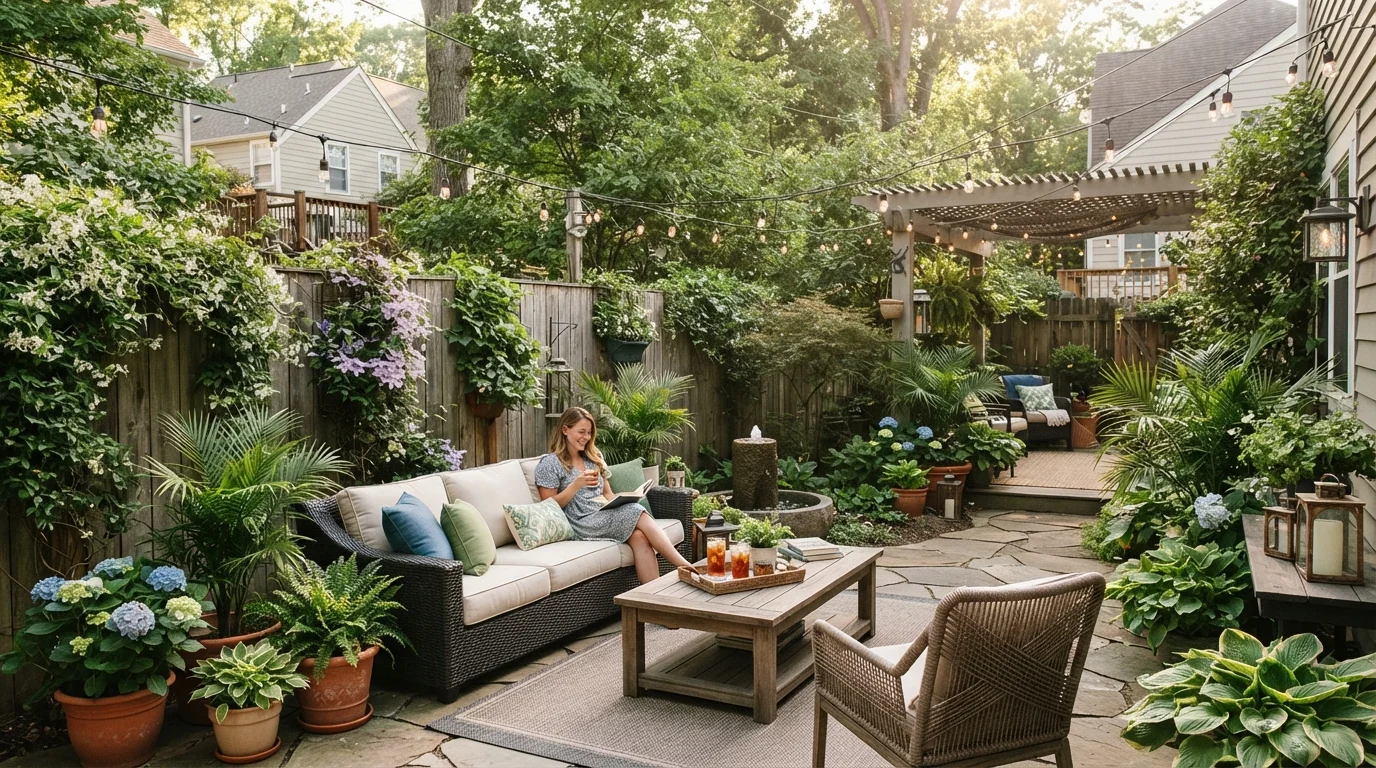
Living in a tight-knit neighborhood has its charms—community potlucks, watchful eyes on your mail, maybe even a shared fence line. But when you step into your backyard, that closeness can quickly feel like an audience. You want to sip your morning coffee without waving at three different houses, or host a dinner without feeling like you are on stage.
The good news? You do not need acres of land or a blank check to carve out a private backyard oasis close neighbors won’t interrupt. With strategic planning and a few clever design choices, you can turn even the most exposed lot into a secluded sanctuary. Let’s walk through the exact steps to reclaim your outdoor space.
1. Assess Your Privacy Weak Spots Like a Detective
Before planting a single shrub, spend a full day observing your yard. Where do eyes naturally fall? Which windows face directly into your seating area? Is the neighbor’s deck towering above yours?
Make a rough sketch or take photos from your main sitting spots. Mark every line of sight. This is your “exposure map.” You might discover that the only problem area is a three-foot gap between two fences, not the entire perimeter.
Knowing exactly where the privacy breaks exist saves you time and money. You can then target those specific points instead of blanketing the whole yard in expensive fencing. For more ideas on laying out these zones, check out our space planning guides for compact lots.
2. Vertical Layers: The Quickest Privacy Fix
Vertical elements are your best friend in a close-neighbor setup. They block views, absorb sound, and add lush texture without eating up floor space. Think of them as living walls.
Fast-growing options like bamboo (clumping varieties only, to avoid invasion), arborvitae, or tall ornamental grasses create a green screen within two growing seasons. For instant gratification, buy larger nursery stock or use modular trellis panels with climbing vines like jasmine or ivy.
- Bamboo in large concrete planters – portable, no root spread, instant height.
- Espalier trees – flat against a fence, visually elegant.
- Hanging curtains on a pergola – outdoor-grade fabric that filters light and view.
- Lattice + clematis – fast bloomer with dense foliage.
3. Sound Masking: Silence Is Not the Goal
Privacy isn’t just visual. In a close-neighbor yard, you hear conversations, lawnmowers, and barking dogs. The trick isn’t to block every decibel—it’s to mask them with pleasant white noise.
Water features are the most elegant solution. A small bubbling urn or a wall fountain costs under $200 and creates a consistent, soothing sound that covers chatter. Position it near your main seating area for maximum effect.
Wind chimes, rustling grasses (like miscanthus), and strategically placed outdoor speakers playing ambient music also help. The goal is to shift the background sound from “neighbor’s TV” to “gentle stream.”
4. Furniture Placement That Fosters Intimacy
How you arrange your furniture changes the entire feel of the space. Group seating so people face each other, not the fence line. Use a high-backed bench or a deep sectional to create a physical barrier behind you.
Position chairs and sofas at an angle that avoids direct sightlines to neighboring windows. Even shifting a table three feet to the left can remove a neighbor’s full view of your face.
Add an outdoor rug to define the zone. Rugs anchor the room visually and make the area feel more like an indoor living room. This psychological trick helps your brain perceive the space as private, even if the fence is see-through.
For a deeper look at how to design multi-use outdoor zones, explore our home design resources tailored for smaller properties.
5. The Power of a Ceiling Over Your Head
A simple overhead structure instantly privatizes a yard. It blocks downward views from second-story windows and creates a defined room. A pergola, shade sail, or even a large market umbrella does the trick.
Drape outdoor curtains along one or two sides of the pergola. You can leave them open for airflow and close them when you want full enclosure. Affordable sets in weather-resistant polyester are widely available online.
If a permanent structure isn’t an option, a cantilever umbrella—the kind with a offset base—provides coverage over a dining table without a central pole getting in the way. Position it to block the most exposed corner of your yard.
Here is a quick comparison of overhead options based on cost and privacy gain:
| Option | Approx. Cost | Privacy Increase | Installation Difficulty |
|---|---|---|---|
| Pergola + curtains | $300 – $1,200 | High (when curtains closed) | Moderate |
| Shade sail (triangle) | $50 – $150 | Medium (partial overhead cover) | Easy |
| Market umbrella (offset) | $150 – $400 | Low-Medium (single spot coverage) | Very Easy |
| Gazebo (pop-up metal) | $200 – $600 | High (full walls optional) | Easy (two people) |
6. Greenery That Blocks, Not Just Decorates
Plants are the most natural and beautiful privacy solution. But you need the right kind. Choose evergreen varieties for year-round coverage, and stagger them in layers for depth.
A vertical garden screen made from a living wall planter system grows herbs, ferns, and small flowers in a compact footprint. Attach it to a fence or freestanding frame and watch it fill in within months.
Consider these top privacy plants for tight spaces:
- Skip Laurel – dense, fast-growing, stays green in winter.
- Emerald Green Arborvitae – narrow, perfect for tight corners.
- Climbing Hydrangea – self-clinging, beautiful blooms.
- Pittosporum – glossy leaves, responds well to pruning.
Pair your green screen with a cozy seating nook. For more inspiration on blending plants with hardscapes, visit our garden design section for detailed planting plans.
7. Lighting That Defines Nighttime Seclusion
Once the sun goes down, your privacy changes. Lights in your yard can attract attention if placed poorly. Use low-level, warm lighting that pools around your seating area rather than blasting the entire yard.
String lights overhead create a soft canopy that feels intimate. Path lights on the ground guide the eye downward. Avoid floodlights or bright white LEDs that illuminate the fence line and make your space visible from afar.
Candles (use LED versions for safety) on a side table add flicker and warmth. The goal is a glow that says “cozy evening” not “stadium lighting.”
For a complete guide on arranging your entire outdoor space, including lighting and furniture, check our outdoor living category for seasonal tips and product recommendations.
Frequently Asked Questions
1. What is the fastest way to add privacy to a backyard?
The fastest fix is a combination of a large offset umbrella and outdoor curtains on a simple clothesline or tension rod. You can set it up in an afternoon for under $100.
2. Will bamboo ruin my neighbor’s yard?
Only if you plant running bamboo. Choose clumping bamboo or keep it in large, bottomless containers buried in the ground to control root spread. This keeps everyone happy.
3. How tall should my privacy screen be?
At least 6 feet tall for ground-level blocking. If second-story windows are an issue, aim for 8 to 10 feet. Check local zoning codes—many areas restrict fence height to 6 feet without a permit.
4. Do I need to ask my neighbor before building a fence?
Yes, especially if the fence will sit on the property line. A written agreement or shared cost arrangement prevents disputes later. A friendly conversation goes a long way.
5. Can I create privacy on a rental property without permanent changes?
Absolutely. Use freestanding trellises, tall planters with bamboo, tension-rod curtains, and large umbrellas. Nothing needs to be drilled or cemented. Take it all with you when you move.
6. Are there plants that grow fast and stay narrow?
Yes. Emerald Green Arborvitae grows only 3 to 4 feet wide and reaches 12 to 14 feet tall. Italian cypress is another great pencil-thin option for vertical height without width.
7. How do I reduce noise from neighbors specifically?
Water features mask noise best. Add thick plant hedges along the shared fence—dense foliage absorbs some sound. For heavy noise, consider a white noise machine disguised as a decorative speaker.
8. What’s the biggest mistake people make in small-yard privacy?
Overcrowding. People try to block every angle with massive structures, making the yard feel like a box. Instead, focus on blocking only key sightlines and leaving the rest open for airflow and light.
Conclusion
Creating a private backyard oasis close neighbors won’t disturb is entirely achievable with smart design and a little patience. Start by mapping your exposure points, then layer in vertical screens, sound masking, and thoughtful furniture placement.
You don’t need a fortress. You just need a few intentional zones where you can relax, read, and entertain without feeling watched. Whether you choose fast-growing evergreens, a pergola with curtains, or a simple water feature, every step brings you closer to the sanctuary you deserve.
For more curated ideas on improving your home’s outdoor spaces, browse our blog for seasonal inspiration and DIY projects that fit any budget.