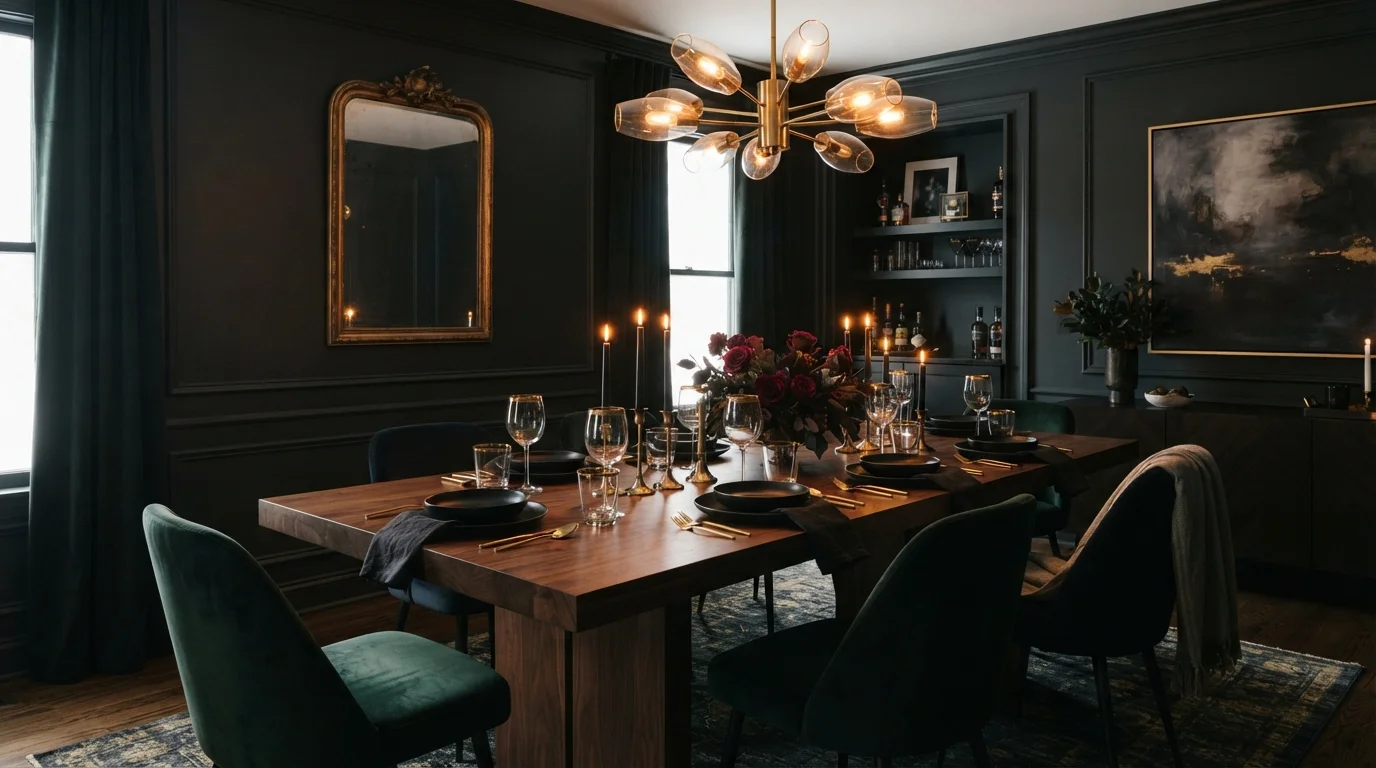
Imagine walking into a dining room that feels like a intimate, candlelit evening every single night. That’s the power of a moody dining room—a space that wraps you in warmth, depth, and undeniable elegance.
Moody doesn’t mean dark and dreary. It means intentional. It means layering rich colors, sumptuous textures, and controlled lighting to create a sophisticated dining room that feels both dramatic and inviting. Whether you host formal dinner parties or enjoy quiet weeknight meals, this design approach transforms your dining area into a sanctuary of style.
In this guide, I’ll walk you through every step to achieve a dramatic dining room design that feels luxurious and lived-in. From choosing the right paint color to styling your table for maximum impact, you’ll find actionable advice backed by years of home design expertise.
Why Choose a Moody Dining Room?
A moody dining room isn’t a passing trend—it’s a timeless aesthetic that embraces shadows and richness. Unlike all-white spaces that can feel cold or sterile, a dark dining room decor creates an immediate sense of intimacy and luxury.
When the lights go down, the walls seem to recede, making the room feel larger and more intimate at the same time. The focus shifts to what’s on the table: the food, the people, the conversation. That’s exactly what a dining room should do.
Psychologically, deeper hues like charcoal, navy, and forest green signal sophistication and calm. They create a cocooning effect that encourages lingering over meals. If you’ve ever walked into a dimly lit speakeasy and felt instantly relaxed, you already understand the appeal of a moody home decor scheme.
Choosing the Right Color Palette for Elegance
Color is the foundation of any sophisticated dining room. Forget sterile whites or boring beiges. Instead, dive into the deep end with these power players:
- Charcoal Gray: A neutral that reads as soft and smoky, not harsh.
- Deep Navy Blue: Classic and grounding, pairs beautifully with brass or gold.
- Forest Green or Emerald: Brings nature indoors without feeling rustic.
- Burgundy or Plum: Rich and romantic, perfect for a warm glow.
- Black (yes, black): Used strategically on an accent wall or ceiling for drama.
Start by painting the walls in your chosen shade. Then, consider painting the ceiling a tone or two lighter in the same family. This technique draws the eye upward and makes the room feel taller without breaking the mood.
For a guided approach to color selection across your entire home, browse our home design category for more room-by-room inspiration.
Lighting: The Secret Weapon of a Moody Dining Room
Lighting can make or break your dramatic dining room design. The goal is to create layers of light that you can control independently. Harsh overhead fixtures are your enemy. Instead, invest in these key elements:
1. A Statement Chandelier or Pendant: This is the jewelry of the room. Choose something sculptural in black, brass, or aged bronze. It should hang low over the table—about 30 to 36 inches from the tabletop.
2. Dimmers on Everything: This is non-negotiable. Install dimmer switches for every light source. The ability to go from bright for cleaning to low and romantic for dinner is what creates that moody ambiance.
3. Candlelight: Real or flameless, candles add flickering warmth that no electric light can replicate. Place a cluster of pillar candles on a tray or invest in a modern candelabra.
4. Wall Sconces: Install sconces at eye level to highlight artwork or architectural details. They create a soft wash of light that eliminates harsh shadows.
For more tips on arranging your space, especially if your dining area connects to a living zone, check out our space planning category for layout strategies that enhance flow.
Furniture and Fabrics: Texture Is Everything
In a sophisticated dining room, texture does the heavy lifting that color alone can’t. Since the palette is intentionally dark, you need contrast through materials to keep the room from feeling flat.
Start with the dining table. A dark wood like walnut or ebony works perfectly, but consider a table with a live edge or a sleek lacquered finish for added visual interest. Pair it with upholstered chairs in velvet or bouclé—these fabrics absorb light and feel luxurious to the touch.
Then layer in:
Rugs: A low-pile wool rug in a geometric pattern or solid dark tone anchors the table and adds sound absorption. Make sure it extends at least 24 inches beyond the table on all sides.
Curtains: Floor-to-ceiling drapes in linen or velvet. Blackout lining is optional, but heavy fabric gives a sense of enclosure and drama.
Table Linens: Skip the white tablecloth. Use dark chargers, matte black flatware, and linen napkins in ochre or rust for a pop of warmth.
Art and Accessories That Amplify the Mood
Your walls are prime real estate for reinforcing the mood. In a moody dining room, choose oversized artwork with dark backgrounds—think abstract paintings in deep blues or black-and-white photography with high contrast.
Frame your pieces in black or dark wood. A gallery wall can work, but keep the frames consistent to avoid visual clutter. Alternatively, one large statement piece above a credenza or sideboard creates a powerful focal point.
Accessories should be minimal but meaningful. A sculptural vase in smoked glass, a ceramic bowl in matte black, or a stack of leather-bound books on a side table all contribute without distracting. Mirrors are a clever trick: placing one opposite a window or candle sconce bounces light around the room, keeping the space from feeling too cave-like.
For more ideas on bringing sophisticated touches to other areas of your property, don’t miss our blog posts on cohesive home design.
The Power of a Well-Styled Table
Your table is the stage for the entire dining experience. For a moody dining room, styling it with intention elevates everything. Here’s a quick reference to build the perfect tablescape:
| Element | What to Choose | Why It Works |
|---|---|---|
| Tablecloth or Runner | Dark linen, velvet, or textured cotton | Adds depth and absorb sound, softens glowing candlelight |
| Dinnerware | Matte black, charcoal, or deep emerald plates | Creates contrast with food and ties back to wall color |
| Flatware | Brass, bronze, or black matte finish | Adds a warm metallic sheen against dark ceramics |
| Glassware | Smoked glass, amber tint, or clear with heavy bases | Catches candlelight and feels weighty, elegant |
| Centerpiece | Single low arrangement of deep red flowers, eucalyptus, or dried branches | Keeps sight lines clear, adds organic texture |
Don’t overcrowd the table. Leave enough room for platters and place settings. The goal is restrained elegance—every piece should feel intentional and necessary.
For a deeper dive on making your entire home feel cohesive and refined, explore the resources at home garden design ideas to complement your dining makeover.
Small Details That Make a Big Impact
Sometimes the smallest touches define a room. In your dark dining room decor, pay attention to these finishing details:
Baseboards and Trim: Paint them the same color as your walls but with a satin or semi-gloss finish. The slight sheen catches light and defines the room’s edges without introducing a contrasting color.
Hardware: Replace any shiny silver or chrome handles on cabinets with oil-rubbed bronze, matte black, or unlacquered brass. These finishes patina beautifully over time.
Plants: Artificial or preserved greenery in dark pots adds life without the need for perfect natural light. Snake plants, fiddle leaf figs, or dried eucalyptus stems work like magic.
Scent: Use a subtle candle or diffuser with notes of cedar, sandalwood, or tobacco. Scent is a powerful mood enhancer that ties the room together.
FAQ
Will a dark dining room make my space feel smaller?
Surprisingly, no. When done correctly, a dark dining room recedes visually, making the walls feel farther away. The trick is to balance dark paint with good lighting and reflective surfaces like mirrors or metallic accents.
What type of paint finish should I use for a moody dining room?
Use matte or flat finish on walls for a velvety, non-reflective look. Use eggshell or satin on trim and ceilings to catch light slightly. Avoid high-gloss unless you’re going for a retro, lacquered effect.
Can I create a moody dining room on a budget?
Absolutely. Paint is the cheapest transformation. Add dimmer switches (a $20 DIY), swap your lightbulbs for warm LED bulbs (2700K), and update table linens and accessories. You don’t need new furniture to achieve the look.
Is a moody dining room suitable for small spaces?
Yes, but focus on one or two dark walls and keep the ceiling light. Use mirrors to amplify natural light during the day. Layer in lamps and sconces so you can avoid harsh overhead light.
What colors go best with dark walls in a dining room?
Earthy tones like rust, mustard, olive, and cream create beautiful contrast. Metallics like brass, copper, and gold pop dramatically against dark backgrounds. Stick to warm accents to keep the room cozy rather than cold.
How do I make the room feel elegant instead of depressing?
Elegance comes from contrast and texture. Mix matte black furniture with glossy ceramics. Add velvet upholstery and shiny glass. Introduce candlelight and fresh flowers. The goal is richness, not darkness.
Can I use this style in an open-plan dining room?
Yes. Define the dining area by painting the ceiling or a feature wall darker than the rest of the open space. Use a large area rug and a statement light fixture to visually zone the dining area without closing it off.
Conclusion
Creating a moody dining room is about embracing depth, emotion, and intentional design. It’s not about hiding light—it’s about controlling it. It’s not about feeling dark—it’s about feeling rich, warm, and luxurious.
Start with a deep color palette, layer in textured fabrics, install dimmable lighting, and style your table with purpose. Take it step by step, and soon you’ll have a sophisticated dining room that feels like your favorite hidden gem—except it’s right in your home.
Ready to explore more? Dive into our outdoor living category for ways to extend that same moody elegance to your patio or garden.