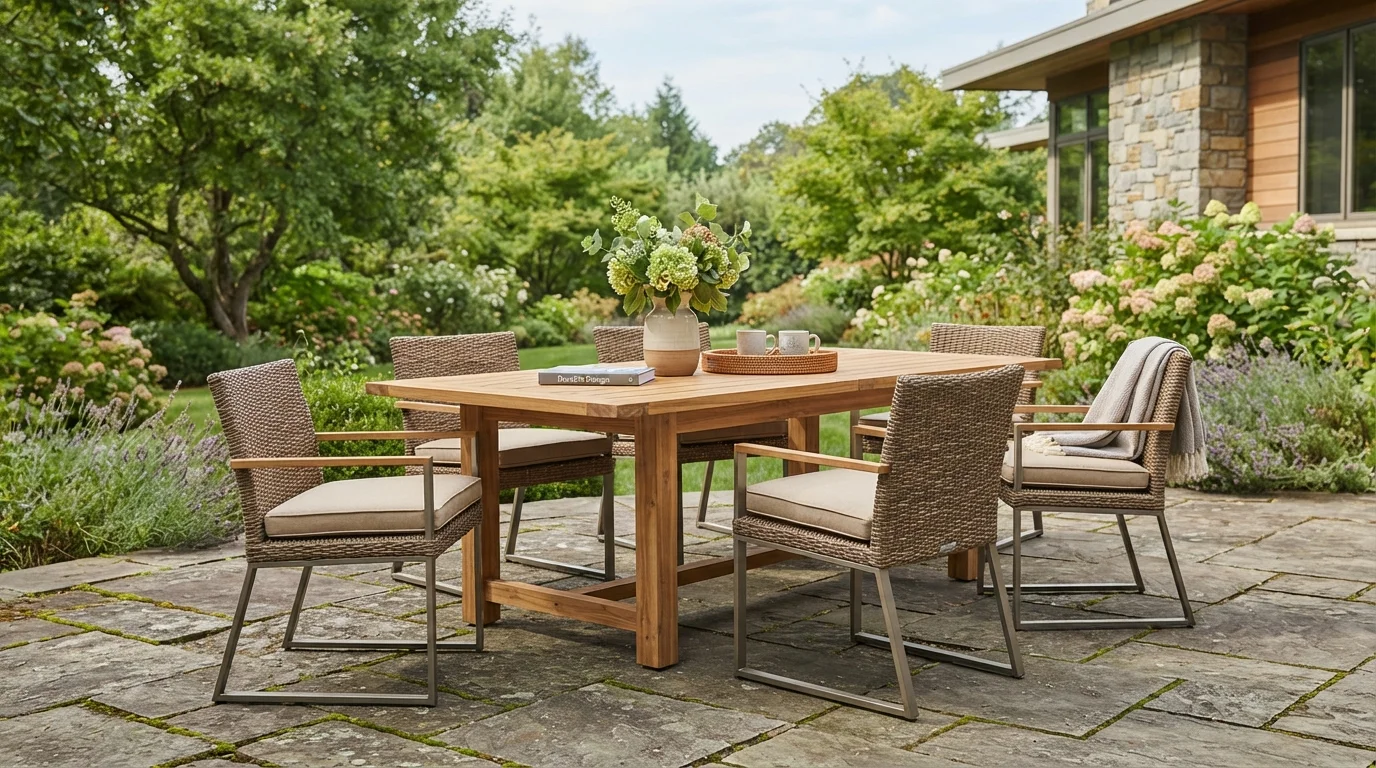
Investing in outdoor furniture is a big decision. You want pieces that look great, feel comfortable, and—most importantly—stand up to rain, sun, wind, and snow. The truth is, not all furniture labeled “outdoor” can handle real-world weather. That’s why learning how to choose weather-resistant furniture that lasts for years is essential for any homeowner.
Whether you’re furnishing a small balcony or a sprawling patio, the right materials and construction make all the difference. Skip the cheap, trendy sets and focus on pieces built to endure. In this guide, I’ll walk you through everything you need to know, from frame materials to cushions and maintenance.
Why Material Matters More Than Style
When it comes to weather-resistant furniture, the frame is your foundation. Aluminum, teak, and synthetic wicker are the gold standards. Aluminum won’t rust, teak naturally resists rot, and synthetic wicker handles UV rays without cracking. Avoid iron unless you live in a dry climate—it rusts quickly in humidity.
For a deeper dive on how to integrate these materials into your overall home aesthetic, check out our home design tips for blending indoor comfort with outdoor durability.
Teak vs. Eucalyptus vs. Cedar: Which Wood Wins?
Natural wood brings warmth to any outdoor space. Teak is the undisputed champion for outdoor use because of its high oil content, which repels water and insects. Eucalyptus is a more affordable alternative, but it requires annual sealing. Cedar is lightweight and fragrant, but it’s softer and may dent or scratch more easily.
- Teak: Highest durability, minimal maintenance, turns silver-gray over time.
- Eucalyptus: Budget-friendly, needs oil or sealant yearly.
- Cedar: Naturally insect-repelling, best for covered patios.
Whichever wood you choose, always check that it’s sourced from sustainable forests. A high-quality teak table can last over 20 years with basic care.
Metal Frames: Aluminum, Steel, and Wrought Iron
Powder-coated aluminum is the top pick for modern durable patio furniture. It’s lightweight, rust-proof, and easy to move. Stainless steel is stronger but heavier, and it can show rust if the coating chips. Wrought iron offers classic elegance, but it’s prone to rust and very heavy—perfect for windy areas if you don’t plan to rearrange often.
When shopping, tap the frame. A hollow, thin sound means cheap construction. Solid frames with reinforced joints will hold up better in storms. For guidance on arranging heavy pieces without damaging your deck, visit our space planning resources.
Fabric and Cushions: What Actually Repels Water?
Cushions are often the first thing to fail on outdoor furniture. Look for solution-dyed acrylic fabric, like Sunbrella®. These fabrics resist fading, mold, and water absorption. Polyester blends are cheaper but fade quickly and hold moisture.
Check if the cushions have quick-dry foam or a drainage system. Without it, rain can soak through and cause mildew. Removable, machine-washable covers are a huge bonus—they keep your furniture looking fresh year after year.
Maintenance Secrets That Double Furniture Life
Even the best weatherproof outdoor decor needs a little love. Cover furniture during harsh winter months or heavy storms. Clean metal and wicker with mild soap and water twice a year. For teak, apply a teak sealer if you want to preserve its golden color; otherwise, let it naturally weather to silver—it’s equally durable.
Store cushions indoors when not in use, especially in humid climates. A simple furniture cover can triple the lifespan of your set. Many homeowners overlook this step, but it’s the single easiest way to avoid costly replacements.
For inspiration on creating a cohesive look that ties your interiors and exteriors together, see our garden design ideas.
Style Meets Practicality: Tables, Umbrellas, and Accessories
A dining table should be sturdy enough to handle hot dishes and rain. Stone or porcelain tops are elegant and virtually indestructible, but they’re heavy. Aluminum slat tables are lighter and rust-proof. When choosing an umbrella, always buy one with a tilt mechanism and UV-blocking fabric.
For a complete overview of coordinating your patio pieces, visit our blog for seasonal maintenance schedules and decorating tips.
| Material | Best For | Avg. Lifespan | Maintenance |
|---|---|---|---|
| Powder-coated Aluminum | Frames, dining sets | 15–20 years | Wipe clean |
| Teak Wood | Tables, benches | 20+ years | Oil optional |
| Synthetic Wicker (PE resin) | Chairs, sofas | 10–15 years | Hose down |
| Solution-dyed Acrylic | Cushions, pillows | 7–10 years | Machine wash covers |
Budget Realities: When to Spend and When to Save
You don’t need a fortune to furnish your patio, but you should invest in the pieces you’ll use most. Spend more on dining tables and lounge chairs—they take the most abuse. Save on side tables and decor items, which are easier to replace. A mid-range aluminum set with high-quality cushions often outperforms a cheap wooden set that warps after one season.
For additional research on creating a functional and beautiful outdoor area, you can reference expert buying guides from trusted home and garden resources that evaluate furniture longevity.
Frequently Asked Questions
1. What is the most weather-resistant material for outdoor furniture?
Powder-coated aluminum and high-end teak are the most weather-resistant. They handle sun, rain, and snow without rusting, rotting, or warping.
2. Is synthetic wicker better than natural wicker for outdoor use?
Yes. Natural wicker is meant for indoor or covered spaces only. Synthetic wicker (made from PE resin or HDPE) is UV-stabilized and waterproof, making it ideal for open patios.
3. How do I protect my outdoor furniture from rain?
Use waterproof covers when storms are expected. Choose furniture with quick-dry foam and slatted table tops that allow water to drain instead of pooling.
4. Can I leave cushions outside all year?
It’s not recommended. Even weather-resistant fabrics fade and wear faster with constant sun and moisture. Store cushions indoors during winter and rainy seasons.
5. How often should I treat teak furniture?
It depends. If you want to keep the golden color, apply teak oil or sealant once a year. If you prefer the natural silver patina, no treatment is needed.
6. What’s the best metal for coastal areas?
Aluminum with a marine-grade powder coat is best for coastal areas. It resists salt spray and humidity far better than steel or iron.
7. Does expensive furniture always last longer?
Not always, but generally yes. Price often reflects better materials, thicker frames, and superior craftsmanship. Look for warranties of 5 years or more as a quality signal.
8. How can I make my furniture last 10+ years?
Clean it twice a year, use covers during off-seasons, store cushions indoors, and tighten any loose bolts annually. Regular care makes even mid-range furniture last a decade.
Conclusion
Choosing weather-resistant furniture doesn’t have to be overwhelming. Focus on materials like aluminum, teak, and synthetic wicker. Invest in good cushions with UV-resistant fabric. And never skip basic maintenance—covering and cleaning your pieces can double their lifespan. With the right choices, your outdoor space will stay beautiful and functional for years to come.
Ready to upgrade your patio? Start by evaluating your climate and how you actually use your space. Then pick pieces that match both your lifestyle and your local weather patterns. Your future self will thank you every sunny afternoon.