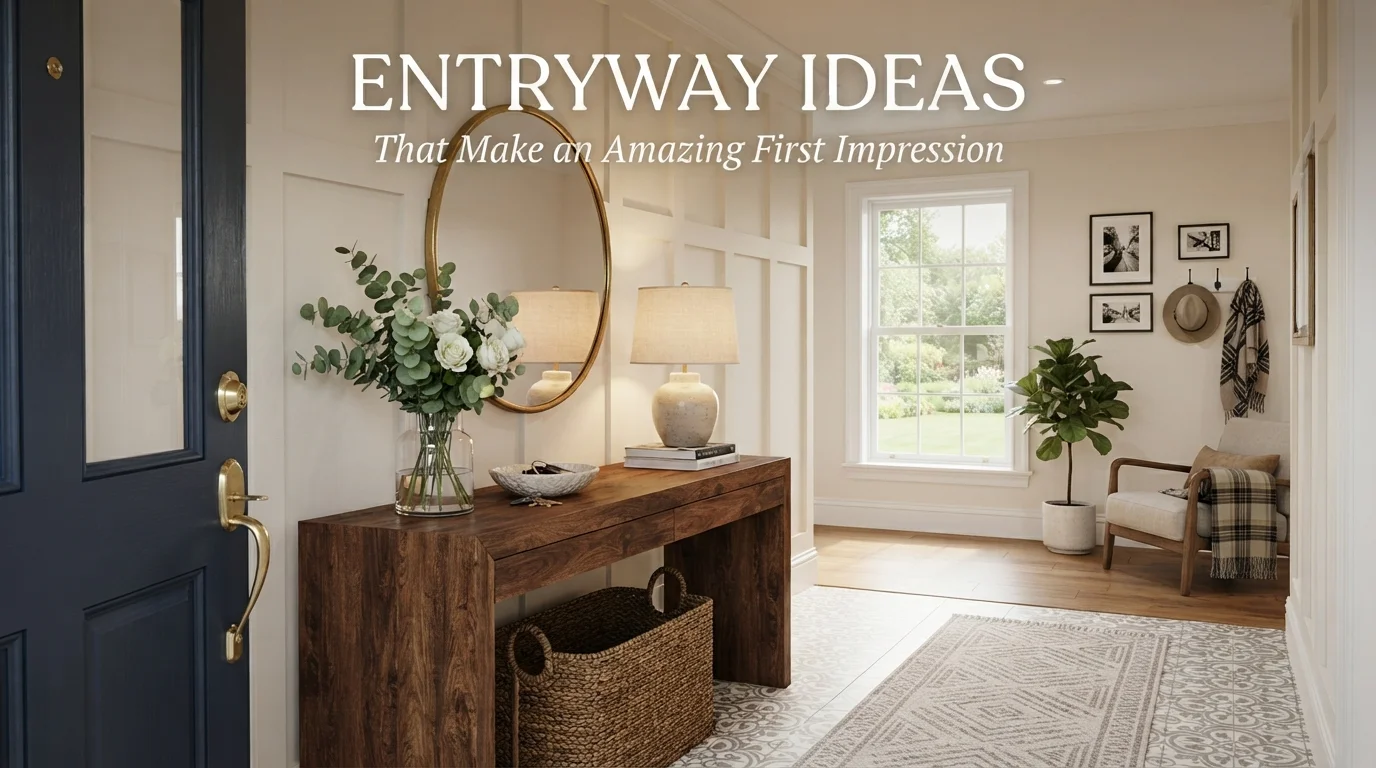
Your entryway is the first thing guests see—and the last thing you see before heading out. It sets the tone for the entire home. Whether you have a grand foyer or a tiny hallway, a few smart entryway ideas can turn this transitional space into a functional and stylish welcome area. Let’s dive into the details that will make visitors feel at home the moment they step through the door.
Why the Entryway Matters More Than You Think
Psychologically, the entrance to your home acts as a buffer zone. It helps you shift from “outdoor mode” to “home mode.” A cluttered, dark entryway can dampen your mood before you even hang up your coat. On the other hand, a well-organized and inviting space creates a positive first impression.
Investing time here also pays off in daily convenience. You’ll stop hunting for keys under the couch cushions. And if you’re planning a sale, a polished entryway can seriously boost curb appeal. The right small entryway design can even make a narrow hall feel twice as wide.
Anchor the Room with a Functional Console Table
An entryway table is more than a place to drop mail. It’s a design anchor. Choose a slim console (12 to 18 inches deep) if space is tight. A round pedestal table works wonders in a square foyer.
Style it with layers: a table lamp for warm light, a shallow tray for keys and change, and a small vase with fresh greenery. Avoid overloading the surface—leave at least 60% empty. For extra flair, hang a mirror above the console. It visually doubles the square footage and lets you check your hair before heading out.
Mudroom Organization: Tame the Daily Chaos
If your entry doubles as a mudroom, you need a drop zone for shoes, bags, and outerwear. Start with a dedicated bench. A wooden bench with built-in cubbies below keeps boots off the floor. Add a few sturdy hooks on the wall above—space them 6 inches apart to avoid crumpled coats.
- Hooks at two heights: lower for kids, higher for adults
- A slim shoe rack: keeps the floor walkable
- One catch-all basket: for scarves, gloves, and dog leashes
- Weekly “reset” habit: empty the basket and return items to their proper spots
Good front hall storage doesn’t need to be bulky. Even a wall-mounted shelf with labels can reduce morning stress. For more inspiration on arranging your whole home efficiently, check out our resources on space planning strategies.
Lighting: The Instant Mood Changer
Harsh overhead lights make an entry feel cold. Layered lighting transforms it. Combine a ceiling fixture (flush-mount is best for low ceilings) with a table lamp on the console and perhaps a floor lamp in a corner.
Use warm bulbs (2700K – 3000K) to create an inviting glow. Dimmer switches are a game-changer: bright in the morning for grabbing things, dim in the evening for a soft welcome. If your entry is windowless, a well-placed mirror next to a lamp bounces light around the room.
You can find more detailed lighting and layout recommendations in our main blog, where we cover everything from living rooms to entryways.
Small Entryway Design: Maximize Every Inch
Working with a narrow or tiny foyer? The key is to think vertical and shallow. A wall-mounted shelf that is only 8 inches deep works as a drop zone without eating into walkway space. A tall, narrow cabinet (like a shoe cabinet) uses vertical real estate efficiently.
Opt for a console table with open legs—solid bases visually block the room. Floating shelves above the door frame can store rarely-used items. And do not skip a small rug: a runner that leaves 4–6 inches of floor on each side makes the hall appear longer.
One creative trick: install a slim umbrella stand in a corner. It’s practical and adds a sculptural touch. For exterior spaces adjacent to your entry, you might also enjoy ideas from our outdoor living collection.
In a similar vein, leading home and garden resources suggest that even a 3-foot-deep entry can feel spacious with the right furniture proportions and color choices.
Colors and Textures That Wow
First impressions are 90% visual. Paint the entryway in a color that energizes or calms, depending on your intent. Deep navy or charcoal adds drama and hides scuff marks. Soft sage green or warm beige creates a serene, nature-connected feel.
Texture adds depth. A woven jute rug brings organic warmth. A wooden bench softens with a linen cushion. A metal console introduces cool contrast. Mix at least three textures (e.g., wood, metal, and fabric) to avoid a flat look.
For a quick reference, here is a simple guide to choosing an entryway color scheme:
| Mood | Suggested Color | Best Texture Pairing |
|---|---|---|
| Energizing | Mustard yellow or coral | Matte ceramic + smooth wood |
| Calm & airy | Pale blue or greige | Linen + woven jute |
| Dramatic | Charcoal or forest green | Black metal + reclaimed wood |
| Neutral classic | Warm beige or cream | Brass + textured wallpaper |
Entryway Decor: Small Touches, Big Impact
The details matter. Add a small rug with a bold pattern—it acts as a visual landing zone. Hang a piece of art that reflects your personality, but keep it simple: one large piece works better than a cluster in a small space.
Fresh flowers or a low-maintenance snake plant in a decorative pot bring life. A scented candle or reed diffuser with a light scent (like white tea or citrus) makes the air as inviting as the visuals. Just keep the fragrance subtle—no overwhelming florals.
FAQ about Entryway Ideas
1. What is the most important piece of entryway furniture?
A console table or a narrow shelf. It provides a landing spot for keys and mail, and it anchors your decor. Without it, the space feels empty and uninviting.
2. How can I make a small entryway look bigger?
Use a large mirror opposite the door to reflect light. Choose slim furniture, light wall colors, and a rug with horizontal stripes to widen the space visually.
3. Do I need a rug in the entryway?
Yes, but choose a durable, low-pile rug or a flatweave (like jute or indoor/outdoor material). It traps dirt and adds color, but avoid thick shag rugs that block the door from opening easily.
4. How many hooks do I need for a family of four?
At least six: two per person (one for coat, one for bag or hat). Plus two extra for guests. A hook rail system is more flexible than individual hooks.
5. What should I avoid putting in the entryway?
A full-size armchair or a large plant that blocks the path. Also avoid fragile decor items that kids or pets might knock over. Keep it functional first, pretty second.
6. Can I combine entryway storage with a home office space?
Yes, but only if the area is at least 5 feet wide. Use a slim standing desk or a wall-mounted drop-down table. Keep office supplies in a decorative basket to maintain the home feel.
7. How often should I declutter the entryway?
Every week. Do a quick sweep: remove mail, return shoes to storage, and wipe down surfaces. A Monday morning reset takes 5 minutes and keeps the first impression fresh.
8. Is a bench necessary in an entryway?
Not strictly, but it is highly recommended for putting on and taking off shoes. If space is extremely tight, a wall-mounted folding bench is a great alternative.
Conclusion
Your entryway is the handshake of your home. With these entryway ideas, you can create a space that is both beautiful and practical—whether you have a grand hallway or a compact nook. Start with one improvement: add a table, upgrade the lighting, or install hooks. Small changes build up to an amazing first impression that you and your guests will appreciate every day.
Remember, good design considers daily rhythm, not just appearances. For more room-by-room guidance, browse our home design category.