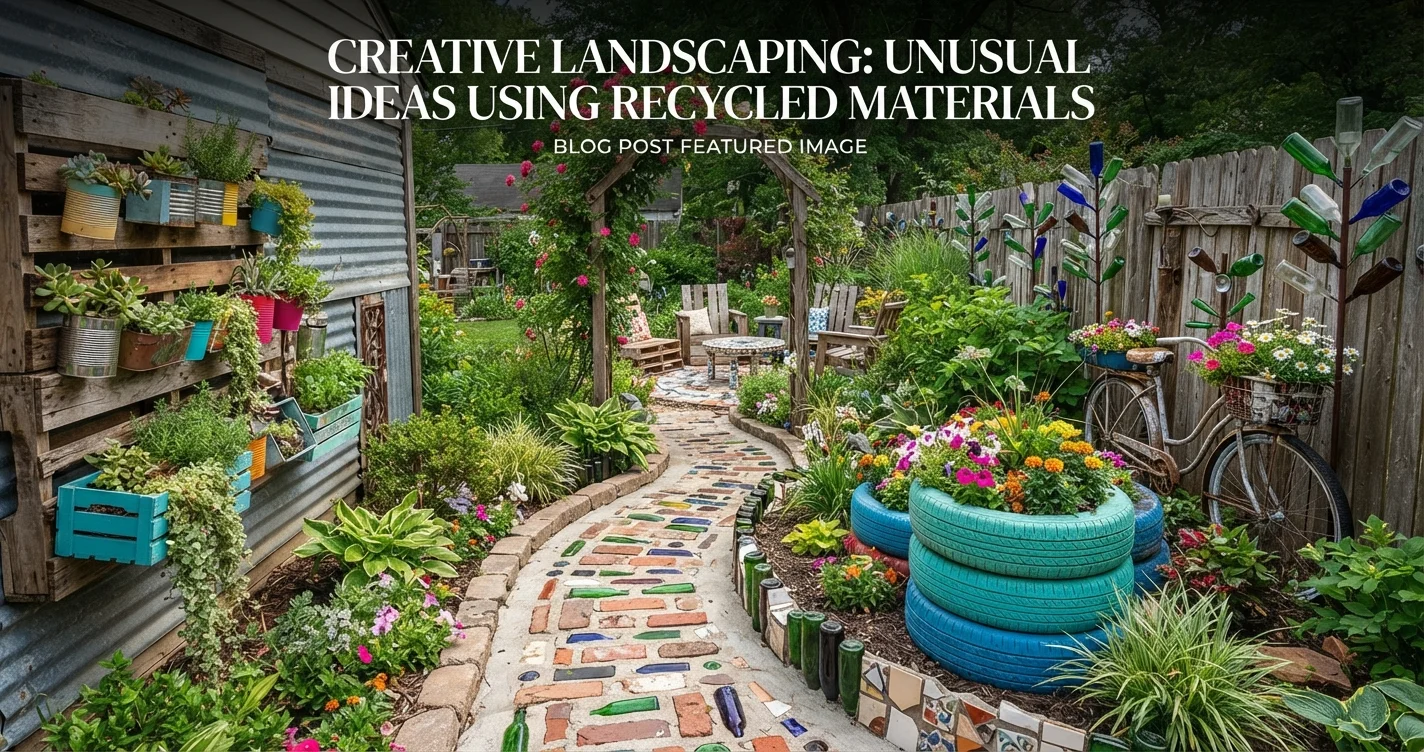
Sick of the same old garden center statues and gravel paths? You’re not alone. More homeowners are ditching cookie-cutter designs in favor of something that tells a story. That’s where creative landscaping using recycled materials comes in. Not only does it save money, but it gives your yard a unique personality while keeping waste out of landfills.
Whether you’re a seasoned gardener or a newbie looking for sustainable landscaping ideas, this guide will walk you through unusual, practical ways to repurpose everyday items. From old tires to wine bottles, we’ll show you how to turn trash into visual gold.
Why Choose Recycled Materials for Your Landscape?
First, let’s talk about the “why.” Landscaping with recycled materials isn’t just a trend—it’s a smart move for your wallet and the planet. Buying new stone, wood, or metal can cost a fortune. Meanwhile, salvaged items often cost pennies or are completely free.
Plus, these materials add texture and history. A weathered wooden pallet or a rusty wheelbarrow brings a rustic charm that shiny new products can’t replicate. Every piece has a backstory, making your garden feel curated rather than bought.
For more inspiration on blending indoor and outdoor aesthetics, check out our garden design ideas that bridge the gap between house and yard.
1. Tire Planters: From Trash to Flower Beds
Old tires are notoriously hard to recycle. Instead of sending them to a dump, turn them into bold planters. Stack them, paint them in bright colors, and cut them into shapes like swans or flowers.
Here’s a quick tip: use non-toxic outdoor spray paint to seal the rubber. Fill the center with soil and plant cascading flowers like petunias or succulents. The dark rubber absorbs heat, which is great for warm-season plants.
You can also cut a single tire into a wavy border for a flower bed. It’s one of the most popular recycled garden ideas because it’s cheap and surprisingly durable.
2. Bottle Walls and Bottle Edging
Glass bottles are perfect for vertical interest. Build a “bottle wall” by stacking them horizontally with mortar, just like bricks. The sunlight shining through the colored glass creates a stained-glass effect.
Alternatively, dig a shallow trench and push wine or beer bottles upside down along the edge of a path. The bottoms create a mosaic-like border that catches light. This works especially well with blue or green bottles.
If you love mixing decorative elements into your yard, you’ll also enjoy our outdoor living tips for creating cozy, functional spaces.
3. Pallet Vertical Gardens
Wood pallets are the superheroes of upcycled outdoor spaces. They’re everywhere—often free behind hardware stores. Use one as a vertical planter by stapling landscape fabric to the back, filling the slats with soil, and planting herbs or succulents.
Lean the pallet against a wall or fence. It’s a lifesaver for small yards because it grows plants upward rather than outward. Plus, the natural wood texture looks fantastic with modern minimalist decor.
Just make sure to use heat-treated pallets (stamped “HT”) rather than chemical-treated ones, especially if you’re growing food.
4. Broken Concrete Stepping Stones
Demolition sites are goldmines for garden paths. Broken concrete slabs—often called “urbanite”—can be arranged like flagstones. They’re heavy, stable, and free.
Lay them over a bed of sand to keep them level. Leave gaps for creeping thyme or moss to soften the look. The irregular shapes give a raw, industrial feel that contrasts beautifully with soft greenery.
This is a classic example of sustainable landscaping that requires zero manufacturing energy. You’re literally keeping concrete out of the landfill.
5. Old Drawers as Hanging Planters
Don’t toss that broken dresser. Pull out the drawers, sand them down, and attach chains or ropes to the sides. Hang them from a pergola or strong tree branch.
Fill each drawer with soil and trailing plants like ivy or creeping Jenny. The contrast between the vintage wood and fresh green leaves is stunning. You can also paint the drawers in pastel shades for a shabby-chic vibe.
- Size matters: Use deeper drawers for root vegetables like carrots.
- Drainage: Drill a few holes in the bottom before adding soil.
- Weight: Make sure your hanging hook can handle 20+ pounds.
6. Tin Can Lanterns and Wind Chimes
Save your soup cans and coffee tins. After washing and removing labels, punch a pattern of holes into the metal with a nail and hammer. Place a LED tea light inside, and you’ve got rustic lanterns for evening dinners.
You can also string several cans together with fishing line to make wind chimes. Paint them in metallic colors for a polished look, or leave them raw for an industrial feel.
This is one of those DIY garden decor projects you can finish in an afternoon. Kids love helping with the hammering part (supervised, of course).
Comparison: Recycled Materials vs. Store-Bought
Still wondering if recycled is worth the effort? Take a look at the table below:
| Material | Recycled Option | Store-Bought Cost | Environmental Impact |
|---|---|---|---|
| Planters | Old tires, buckets | $15–$50 each | Keeps rubber out of landfill |
| Path stones | Broken concrete urbanite | $3–$6 per square foot | Zero manufacturing needed |
| Garden borders | Glass bottles, bricks | $2–$10 per linear foot | Reuses non-degradables |
| Vertical garden | Wood pallet | $50–$100 for a kit | Saves wood from incineration |
7. Bathtub Pond or Raised Bed
An old clawfoot bathtub is the ultimate statement piece. Turn it into a mini pond with water lilies and goldfish, or fill it with soil for a massive raised vegetable bed.
Seal the drain hole with a rubber plug, add a layer of pebbles for drainage (if using soil), and you’re done. The deep sides are perfect for plants with big root systems, like tomatoes or squash.
This idea works with any large salvaged container—think old sinks, washing machine drums, or even cast-iron cookware. For more layout advice, see our space planning guides for outdoor areas.
FAQ: Creative Landscaping with Recycled Materials
1. Will recycled materials last as long as new ones?
Most will, if you prep them properly. Metal needs rust-proofing, wood should be sealed, and glass is virtually indestructible. Many recycled items (like concrete and metal) outlast cheaper new products.
2. Are there any safety concerns with using recycled items in gardens?
Yes. Avoid pressure-treated wood (contains arsenic) and tires near edible plants (they leach zinc). Always wash and seal items thoroughly. Lead paint is a red flag—strip or discard it.
3. Where can I find free or cheap recycled landscaping materials?
Check Facebook Marketplace, Craigslist, demolition sites (with permission), and local hardware store pallet piles. Also ask friends who are renovating or cleaning out garages.
4. Can I use recycled materials in a formal garden design?
Absolutely. Paint them in uniform colors (like all black or white) to create a cohesive look. Symmetrical placement also helps. A row of identical painted tire planters can look very intentional.
5. How do I keep weeds from growing through recycled path stones?
Lay down landscape fabric or thick cardboard underneath the stones. Mulch the gaps with gravel or sand. This prevents weeds while still allowing water to drain.
6. Do I need special tools to work with recycled materials?
Usually not. A drill, hammer, saw, and staple gun cover most projects. For cutting tires or concrete, you might need an angle grinder—wear safety goggles and gloves.
7. Will a recycled garden hurt my home’s resale value?
Not if done tastefully. A well-maintained garden with unique, clean features can actually be a selling point. Just avoid sloppy or incomplete projects—neatness matters.
8. Can I mix recycled and new materials in the same landscape?
Yes, and it often looks better. Pair a sleek new patio with a reclaimed wood bench. The contrast highlights both elements. Visit our home design category for more mixing tips.
Conclusion
Creative landscaping using recycled materials isn’t just about saving a few dollars. It’s about making your outdoor space uniquely yours while showing a little love to the planet. Each bottle, tire, or pallet you repurpose is a small act of rebellion against waste.
Start small—maybe a bottle border or a pallet herb garden. As you get comfortable, tackle bigger projects like the bathtub pond or a full path made of urbanite. Your neighbors will wonder where you bought your garden (and you can smile, knowing you built it from things other people threw away).
Ready to dive deeper? Explore sustainable home and garden resources for more expert guides on eco-friendly upgrades. And don’t forget to check our blog for weekly inspiration on transforming your living spaces.