Why Garden Edging Matters More Than You Think
Garden edging is one of the most overlooked features in yard design. Yet, a clean, well-defined edge can transform an average garden into a polished landscape. It’s the frame for your flower beds, the line that separates lawn from mulch, and the secret weapon for curb appeal.
If you’re looking for creative garden edging ideas, you’re in the right place. Whether you want a rustic look, modern minimalism, or a budget-friendly DIY, there is a solution for every style. Let’s explore options that will truly change your yard’s look.
1. Natural Stone Edging: Timeless and Organic
Nothing blends into the landscape quite like natural stone. Fieldstone, flagstone, or river rock edging creates an organic, earthy feel that works with any garden theme. The irregular shapes add texture and depth, making flower beds look intentional and mature.
For a more dramatic effect, stack stones two to three layers high. This also helps with soil retention on sloped gardens. If you’re planning a complete redesign, check out our garden design resources for more layout inspiration.
Pro tip: Mix different sizes of stone for a natural, unstructured look. Avoid perfectly uniform pieces—you want it to look like it grew there.
2. Steel and Metal Edging: Clean and Modern
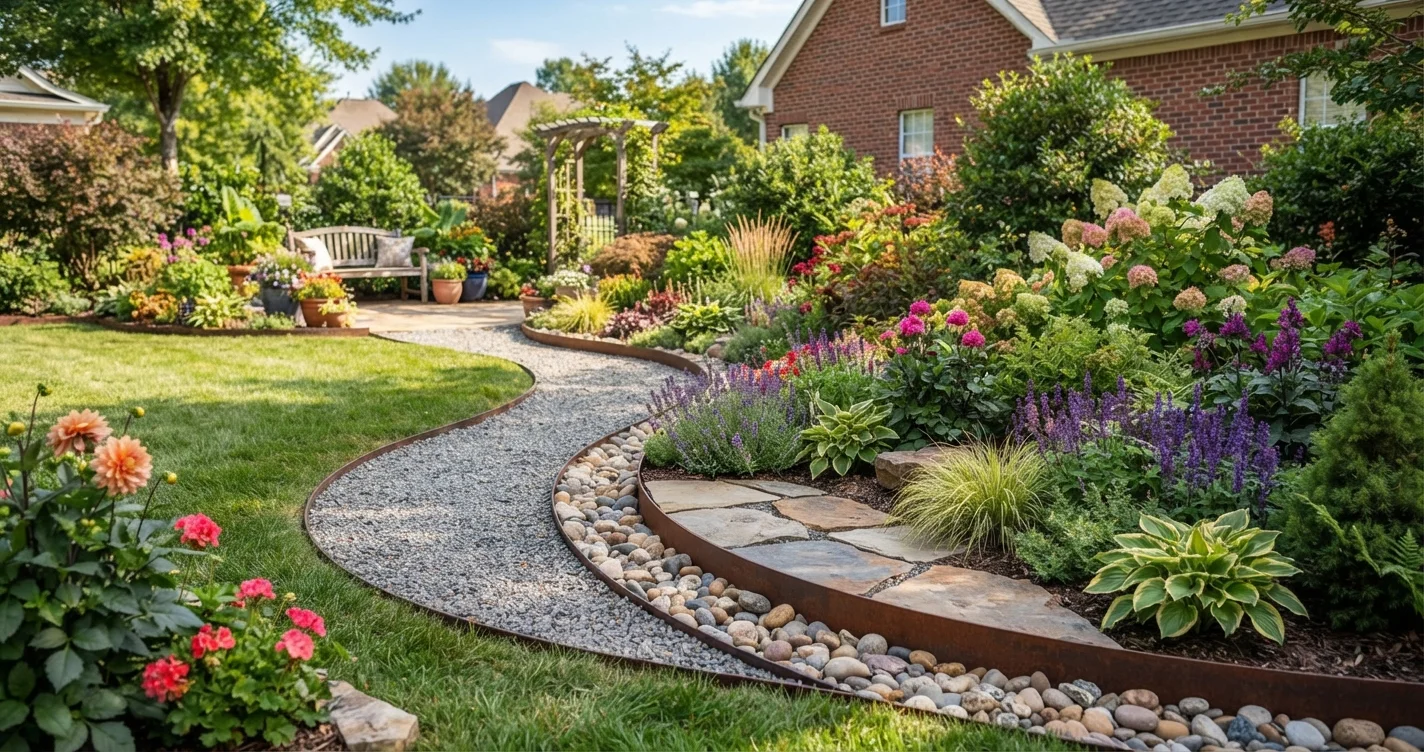
Corten steel is a favorite among modern landscape designers. It develops a beautiful rusted patina over time, giving your yard an industrial-chic vibe. Metal edging is incredibly durable and creates crisp, sharp lines that keep grass and mulch in their place.
Steel edging works especially well in contemporary yards with geometric planting beds. It contrasts beautifully with green lawns and colorful flowers. Many homeowners combine it with gravel pathways for a cohesive look.
You can even add low-voltage LED strip lights along the edge for a stunning evening effect. This is one of those creative garden edging ideas that doubles as a safety feature.
3. Brick and Paver Borders: Classic and Versatile
Bricks and pavers are the tried-and-true heroes of landscape edging. You can lay them flat for a subtle border, stand them vertically for a picket-like fence effect, or angle them in a sawtooth pattern for extra character. The color options range from warm reds to cool grays.
Installing brick edging is a straightforward DIY project. Just dig a shallow trench, level the base with sand, and tap the bricks into place. For a more formal garden, use interlocking pavers that create a seamless look.
If you’re tackling a full yard overhaul, consider browsing our space planning guides to organize your outdoor area efficiently.
4. Recycled and Upcycled Edging: Budget-Friendly and Unique
Who says garden edging has to cost a fortune? Recycled materials like glass bottles, old roof tiles, reclaimed wood, or even worn-out tires can become amazing borders. Turn wine bottles upside down along a path for a colorful, whimsical line. Use salvaged bricks for a rustic, weathered look.
Upcycled edging is perfect for DIY garden edging enthusiasts. It adds a personal touch that no store-bought product can match. Just make sure the materials are weather-resistant and won’t leach harmful chemicals into your soil.
Need help tying this into your home’s aesthetic? Take a look at our home design tips to create a seamless transition from indoors to outdoors.
5. Living Edging: Plants as Borders
Why use artificial materials when nature provides its own? Low-growing perennials, ornamental grasses, or compact boxwoods make excellent living borders. They soften the transition between different garden zones and add year-round greenery.
For a fragrant edge, plant lavender or thyme along pathways. They release their scent when brushed against, creating a sensory experience in your garden. Just make sure to choose plants that stay compact and don’t require constant trimming.
Living edging is a long-term investment, but it pays off with organic beauty that evolves with the seasons. Pair it with hardscape elements for an elegant balance.
6. Concrete and Cast Stone: Durable and Decorative
Concrete edging blocks are affordable, heavy, and extremely durable. They come in curved, straight, or interlocking styles. Cast stone offers the look of natural stone without the high price tag. You can even stain concrete to match your home’s exterior or your hardscape palette.
One popular trend is pouring custom concrete molds in place, allowing you to create flowing, serpentine borders that hug flower beds perfectly. This is great for modern yard design where curves soften straight architectural lines.
Concrete edges also work well as mowing strips, preventing grass from creeping into beds and making lawn maintenance much easier. It’s a practical solution that still looks polished.
Comparison of Edging Materials
| Material | Durability | Cost | DIY Difficulty | Best For |
|---|---|---|---|---|
| Natural Stone | Very High | High | Moderate | Rustic, natural gardens |
| Steel/Metal | Very High | Medium-High | Moderate | Modern, minimalist yards |
| Brick/Pavers | High | Medium | Easy | Traditional, formal gardens |
| Upcycled Materials | Variable | Low | Easy | Budget, eclectic spaces |
| Living Plants | Medium | Low-Medium | Easy | Soft, organic borders |
| Concrete | Very High | Low-Medium | Moderate | Curved, durable edges |
Common Mistakes to Avoid with Garden Edging
- Too shallow: Edging buried less than 4 inches deep will shift with frost or heavy rain. Always dig a proper trench.
- Ignoring drainage: Solid concrete or metal edges can trap water. Leave small gaps or use permeable materials where water accumulates.
- Mismatching styles: A sleek metal edge looks odd next to a cottage garden. Match the material to your garden’s personality.
- Skipping the base: Lay gravel or sand beneath pavers and stones to prevent sinking over time.
- Forgetting maintenance: Living edges need trimming, metal edges may need rust treatment, and wood edges need sealing. Plan accordingly.
FAQ: Everything You Need to Know About Garden Edging
What is the easiest garden edging for beginners?
Plastic or rubber roll edging is the easiest to install. Just unroll it, press it into a shallow trench, and stake it down. It’s flexible and forgiving for curves.
How deep should garden edging be buried?
At least 4 to 6 inches deep for most materials, and about 1 to 2 inches should remain above ground. This prevents roots and grass from creeping underneath.
Can I use wood edging without it rotting?
Yes, if you use pressure-treated lumber, cedar, or redwood. Apply a coat of outdoor sealant every two years to extend its life significantly.
Does garden edging increase home value?
Absolutely. Clean, defined garden borders improve curb appeal, which is one of the top factors in property appraisal. A well-edged yard often attracts more buyers. For broader renovation advice, check our blog for expert insights.
Which edging works best for curved flower beds?
Flexible materials like steel, aluminum, rubber, or bender board work best for tight curves. Brick laid in a herringbone pattern can also follow gentle curves.
How do I prevent weeds along my garden edge?
Install a weed barrier fabric beneath your edging material, and use a thick layer of mulch (2–3 inches) on top. Deeply buried edging also blocks weed roots.
Is metal edging safe around pets and kids?
Yes, most metal edging has rolled or beveled edges that are not sharp. Corten steel and aluminum are safe choices. Just avoid thin, raw-cut metal strips.
What is the most eco-friendly garden edging option?
Recycled materials like reclaimed bricks, upcycled glass, or living plant borders are the most sustainable. Avoid PVC or non-recyclable plastics if going green is your priority.
Conclusion: Your Yard Deserves a Perfect Frame
Choosing the right edging is about more than just keeping grass out of your flower beds. It’s about giving your landscape structure, personality, and lasting beauty. Whether you go with natural stone, sleek steel, or upcycled charm, the best option is the one that fits your lifestyle and garden style.
Start small if you’re unsure. Edge one bed, see how it feels, and expand from there. Your yard will instantly look more intentional and well-cared for. And if you want more ideas on how to connect your garden to your overall home aesthetic, explore our outdoor living guides for cozier, more functional spaces.
For further inspiration and professional guidance, you may also find useful tips on landscape design at this resource for home and garden enthusiasts.
Now grab your tools, choose your material, and start edging your way to a more beautiful yard today.