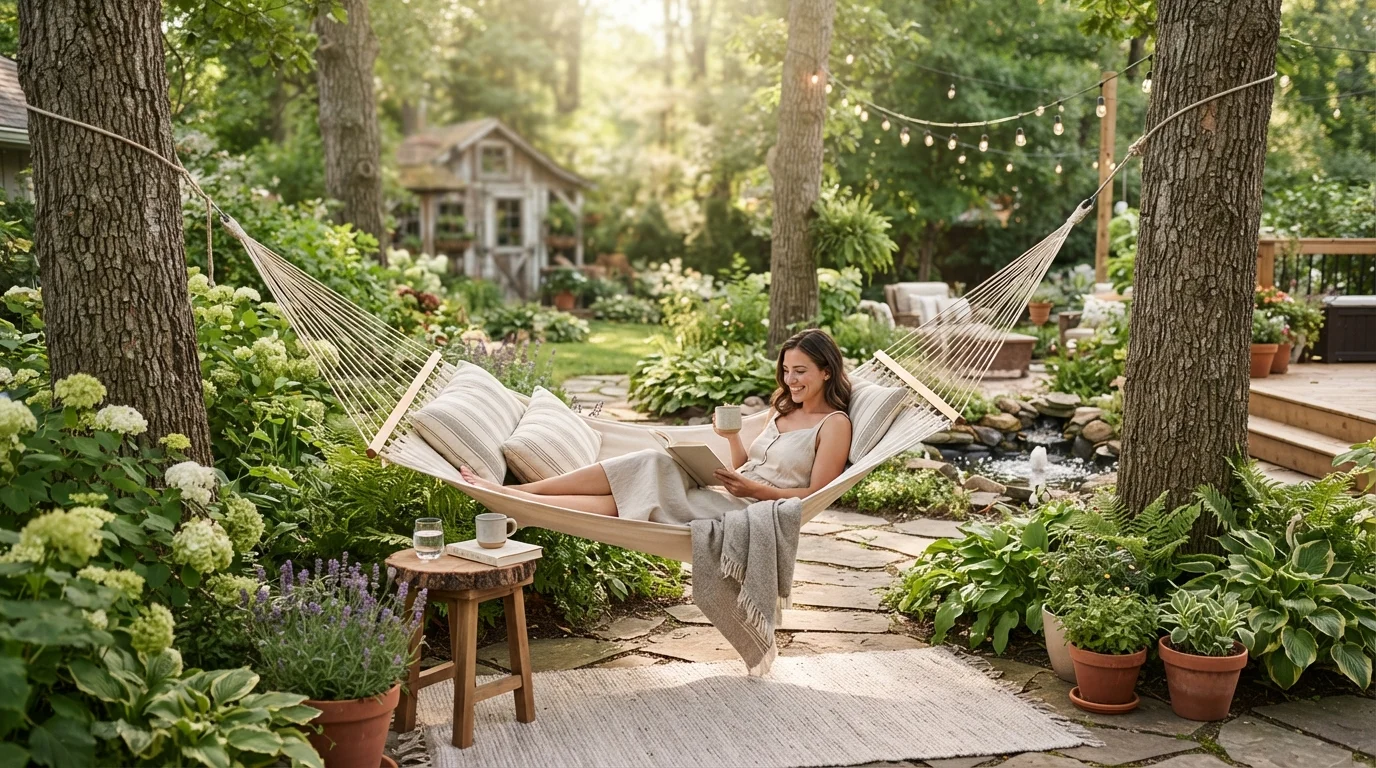
There’s something magical about stepping into your backyard, hearing the birds, and sinking into a hammock with a cool drink and a good book. But turning that dream into reality takes a bit of planning. A hammock thrown haphazardly between two trees often leads to awkward angles, sagging fabric, and a disappointing nap.
When you focus on creating a relaxing hammock zone in your backyard oasis, you’re designing more than just a place to sit. You’re crafting a sanctuary for rest, reflection, and reconnection with nature. Whether you have a sprawling lawn or a compact patio, you can build a hammock area that feels like a permanent vacation.
Below, I’ll walk you through everything from choosing the perfect location to adding those cozy finishing touches. You’ll learn from real-world examples and practical tips that work for any space. Let’s get started.
Why a Dedicated Hammock Zone Transforms Your Backyard
A hammock isn’t just a piece of outdoor furniture—it’s an invitation to slow down. In a world that constantly demands our attention, having a designated spot for relaxation changes how you use your yard. Instead of a neglected patch of grass, you gain a destination.
Think about the last time you visited a park or a beach resort. The hammock area was probably tucked away, shaded, and quiet. That’s no accident. A backyard hammock setup works best when it feels intentional. It signals to your brain: “This is rest time.”
I’ve seen homeowners turn awkward corners under a large oak tree into their favorite afternoon reading nook. Others have used a simple stand on a deck to create a floating relaxation spot. The key is to treat the hammock as the centerpiece of your outdoor relaxation space.
If you’re still working on the overall layout of your yard, you might find inspiration in our garden design resources for integrating soft elements like hammocks into your existing landscape.
Choosing the Right Hammock for Your Space
Not all hammocks are created equal. Before you buy, consider your yard’s physical constraints and your personal comfort preferences. Here are the three most common types:
- Rope hammocks: Classic, breathable, and great for hot climates. They create a slight indent pattern on your skin but offer excellent airflow.
- Fabric hammocks (Mayan or Quilted): Softer, more supportive, and ideal for longer naps. Quilted versions offer more padding for people who feel pressure points.
- Hammock chairs: Perfect for small patios or balconies. They hang from a single point and take up less horizontal space.
Also, pay attention to weight capacity and material. Cotton hammocks are cozy but require indoor storage during rain. Polyester or nylon blends handle weather better and resist mildew. For a budget-friendly option that still feels luxurious, many outdoor enthusiasts recommend checking out trusted gear sources like this complete outdoor living collection for durable alternatives.
Finding the Perfect Location and Anchoring
The site you choose determines how often you’ll actually use your hammock. Look for a spot that gets partial shade—morning sun is pleasant, but direct afternoon heat can make a hammock feel like a sauna. Under a mature tree, between two sturdy fence posts, or along a pergola beam are classic choices.
Measure the distance between your anchor points carefully. Most hammocks need about 10 to 15 feet of space, with the attachment points sitting 4 to 6 feet off the ground. If you don’t have trees, a portable hammock stand is a great alternative. It also lets you move your outdoor relaxation space to follow the shade throughout the day.
Always inspect your anchor points for rot, rust, or weakness. A falling hammock is both dangerous and discouraging. Use tree-friendly straps (never rope directly on bark) to protect your trees while keeping your setup secure.
For more ideas on how to zone your property, our space planning category breaks down functional layouts for both small and large backyards.
Adding Comfort Layers: Cushions, Pillows, and Storage
Once your hammock is hanging securely, it’s time to make it irresistible. A bare hammock can feel overwhelming after thirty minutes. Adding a thin memory foam mattress topper (cut to size) inside a quilted hammock makes a huge difference. Outdoor pillows in weather-resistant fabrics add lumbar support and a pop of color.
Think about the ground beneath you, too. A flat, soft surface—like grass, sand, or an outdoor rug—makes getting in and out easier. If your hammock sits on a deck or concrete, consider a small side table or a waterproof storage box for books, sunblock, and a water bottle. This turns your backyard hammock setup into a self-sufficient mini-suite.
You can also hang a small sunshade sail or a canopy umbrella for extra protection. Layering these elements makes your outdoor relaxation space usable from early spring through late fall.
Below is a quick guide to help you choose the right accessories:
| Accessory | Purpose | Best Material |
|---|---|---|
| Hammock Pillow | Neck and lumbar support for reading or napping | Polyester or Sunbrella fabric |
| Side Table (small) | Holding drinks, phone, or a book within reach | Rattan, metal, or teak |
| Sunshade or Canopy | Blocking UV rays and light rain | UV-resistant polyester |
| Outdoor Rug | Soft landing zone and defining the area | Polypropylene (mildew-resistant) |
Enhancing Ambiance With Lighting and Sound
What turns a good relaxing zone into a great one? Atmosphere. After sunset, a string of warm fairy lights draped over the hammock lines or along nearby trees creates a cozy glow. Solar-powered lanterns placed on the ground add safety and style without electricity.
Sound is just as important. If your yard is near a busy street, consider a small, battery-powered water fountain to mask traffic noise. Alternatively, an outdoor Bluetooth speaker (hidden inside a planter) lets you play soft acoustic playlists or rain sounds.
The goal is to engage all your senses gently. You want the space to feel like a secret hideout, not a concert venue. Keep lighting warm and dimmable, and keep sound at a background level. This attention to detail is what elevates your backyard oasis ideas from basic to brilliant.
For broader ideas on outfitting your entire yard, our outdoor living section covers lighting, furniture, and zone planning in depth.
Maintaining Your Hammock Zone Through the Seasons
A relaxing hammock zone isn’t a “set it and forget it” project. To keep it inviting, you’ll need to clean and store items properly. Fabric hammocks should be washed with mild soap and water every few weeks during peak use. Let them dry fully before storing to avoid mold.
During winter or monsoon season, remove all fabric components and store them in a dry shed or garage. Hammock stands can stay outside, but consider a weatherproof cover for the base. Inspect straps and hooks for wear annually—replace any that show fraying or rust.
Simple maintenance ensures your backyard hammock setup stays safe and beautiful for years. And when spring rolls around again, your oasis will be ready in minutes.
If you’re looking for more seasonal updates and project ideas, check our blog for fresh inspiration each month.
FAQ: Creating a Relaxing Hammock Zone in Your Backyard Oasis
1. How much space do I need between two trees for a hammock?
Ideally, aim for 10 to 15 feet between anchor points. The hammock should hang at a 30-degree angle for the most comfortable lie.
2. Can I install a hammock without trees?
Absolutely. A portable hammock stand or a wall-mounted bracket on a sturdy fence or deck post works perfectly. Just ensure the mounting points are rated for your weight.
3. What is the best material for a hammock in a rainy climate?
Polyester or nylon webbing hammocks dry faster and resist mold better than cotton. Look for UV-resistant coatings for extra durability.
4. How do I stop my hammock from flipping over?
Spread your weight evenly and sit in the center. Spreader bars (rigid bars at each end) prevent the fabric from folding and reduce the “burrito” effect.
5. What can I put under a hammock to keep the ground clean?
A weather-resistant outdoor rug, a layer of pebbles, or a wooden pallet deck keeps you dry and clean. For grass, a simple blanket works.
6. How high should I hang a hammock from the ground?
Typically, the lowest point of the hammock should be about 18 inches off the ground. This allows you to sit down easily without scraping the ground.
7. Can I use a hammock chair instead of a traditional hammock?
Yes. Hammock chairs are great for small spaces or if you prefer a more upright sitting position. They work well on balconies, patios, and near pool areas.
8. Is a hammock safe for children?
Yes, with supervision. Use a low-hanging hammock (12 to 15 inches high) and soft fabric. Never leave very young children unattended, as they can roll out.
Conclusion
Creating a relaxing hammock zone in your backyard oasis doesn’t require a huge budget or professional landscaping skills. It simply requires a thoughtful approach to location, comfort, and ambiance. By choosing the right hammock, anchoring it safely, and adding small touches like pillows, lighting, and sound, you can transform any corner of your yard into a personal retreat.
Remember to maintain your setup through the seasons, and don’t be afraid to adjust it as your needs change. Your backyard should evolve with you. Now go ahead—find that perfect spot, hang your hammock, and give yourself permission to relax. You’ve earned it.