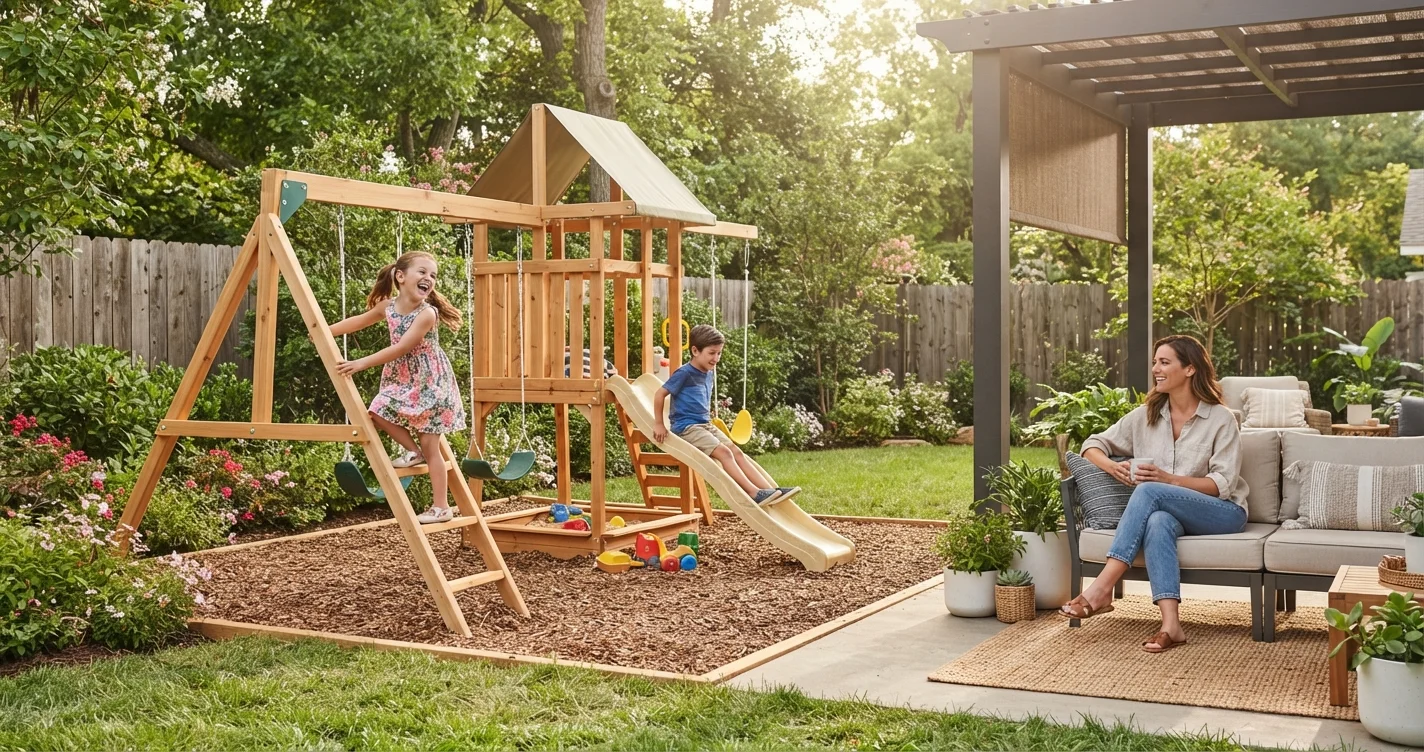
Creating a backyard where kids can run wild and parents can finally relax isn’t just a dream—it’s a smart investment in your home and your family’s happiness. A well-planned kid-friendly outdoor play area balances fun, safety, and aesthetics, making it a space everyone actually wants to use. Whether you’re starting from scratch or upgrading an existing setup, this guide walks you through every essential step.
Why a Kid-Friendly Outdoor Play Area Matters More Than You Think
Kids today spend less time outside than any previous generation. A dedicated backyard play space invites active, imaginative play while giving you peace of mind. It’s also a powerful way to boost your home’s value and curb appeal. When you design with both children and adults in mind, you create an extension of your living room—minus the screens.
Think of this area as a third space: one that encourages messy adventures, quiet reading, and family barbecues all at once. The key is choosing features that serve multiple ages and purposes. For more inspiration on blending indoor comfort with outdoor freedom, explore our outdoor living ideas.
Safety First: The Foundation of Any Great Play Zone
Before you buy a single toy or swing, focus on safety. This isn’t about wrapping everything in bubble wrap—it’s about smart choices that prevent common injuries. Start with the ground surface. Hard-packed soil and concrete are dangerous for falls. Instead, choose rubber mulch, engineered wood chips, or poured-in-place rubber.
For a natural look that still cushions falls, shredded bark works well. Aim for a depth of at least six inches under all climbing equipment. Also, check for tripping hazards like exposed tree roots, uneven paving stones, or low-hanging branches. Regularly inspect wooden structures for splinters, loose bolts, and rot.
A great reference for design principles in outdoor spaces is this home and garden resource, which offers deeper insight into durable, family-friendly materials.
Zoning Your Backyard Play Space for Maximum Fun
Divide your yard into distinct zones to avoid chaos. A clear layout keeps toys organized and reduces clashes between kids playing different games. Here’s how to break it down:
- Active zone: Swings, slides, climbing structures, and open space for running.
- Quiet zone: A sandbox, water table, or small garden patch for digging and sensory play.
- Hangout zone: Shaded seating for parents—think a pergola with outdoor cushions or a simple bench under a tree.
Use low fences, planters, or different ground materials to define each zone naturally. This approach also helps with space planning in smaller yards, where every square foot counts.
Choosing the Right Play Equipment for Different Ages
Pick equipment that grows with your children. A single swing set with a removable baby swing, a slide, and a climbing wall works for toddlers and school-age kids alike. Modular systems are perfect because you can swap out parts as your child’s interests change.
For younger kids (ages 2–5), focus on low-to-the-ground options like a small plastic slide, a cozy playhouse, or a sandpit. For older kids (ages 6–12), add a rope ladder, monkey bars, or a zip line. Always check the manufacturer’s weight limits and age recommendations before purchasing.
If space is tight, consider a compact all-in-one play center that fits against a fence or in a corner. Need help visualizing the layout? Our garden design section has plenty of layout ideas for irregular lots.
Materials That Survive Weather and Wear
Outdoor play equipment faces rain, sun, frost, and dirt. Choose materials that can handle it. Cedar and redwood are naturally resistant to rot and insects. If you go with pressure-treated lumber, seal it annually with a non-toxic finish to prevent splinters.
Metal equipment should be powder-coated to resist rust. Plastic items (slides, swings, playhouses) should be UV-stabilized to prevent fading and cracking. For cushions and canopies, look for marine-grade or solution-dyed fabrics that repel mold.
Below is a quick comparison of common materials for play structures:
| Material | Durability | Maintenance | Best for |
|---|---|---|---|
| Cedar | High | Low (seal every 2 years) | Natural look, warm climate |
| Pressure-treated pine | High | Moderate (seal annually) | Budget-friendly, all climates |
| Powder-coated steel | Very high | Minimal | Large structures, swings |
| UV-stabilized plastic | Good | Very low | Slides, small playsets |
Landscaping That Blends Play and Beauty
A play area doesn’t have to stick out like a sore thumb. Use plants and hardscaping to soften its edges. Ornamental grasses, lavender, and low-growing shrubs create a natural boundary while hiding the bright plastic toys from view. Avoid thorny plants or toxic species like oleander near play zones.
Add a winding path of stepping stones from the house to the play area. It gives kids a fun trail to follow and visually ties the space into the rest of your yard. Consider shade sails or a leafy tree canopy to keep the zone cool during hot afternoons.
Storage Solutions to Keep the Yard Tidy
Toys left in the rain become moldy, broken messes. Invest in smart storage that blends into your landscape. A deck box doubles as a bench. A small shed can hide balls, scooters, and gardening tools. For constant access, use hanging buckets on a fence or a mesh bag for balls.
Teach kids a “put away” routine by making storage colorful and accessible. Low hooks for buckets, labeled bins, and a chalkboard for tracking cleanup turns it into a game. This is also a great way to maintain your home design aesthetic without sacrificing function.
Adding Sensory and Educational Elements
Boost your kid-friendly outdoor play area with elements that stimulate the senses. A small water wall, a wind chime, or a herb garden with mint and basil invites touch, smell, and sound. Paint a section of fence with chalkboard paint for spontaneous art.
Installing a bird feeder or butterfly-attracting flowers like milkweed turns the yard into a living science lesson. These additions cost little but pay huge dividends in curiosity and calm. Plus, they give you and your child something to observe together during quiet moments.
Frequently Asked Questions
What is the safest surface for a backyard play area?
Engineered wood chips, rubber mulch, or poured rubber are top choices. They cushion falls better than grass or dirt. Aim for at least six inches of depth under climbers and swings.
How can I make a small yard work for play?
Use vertical space with wall-mounted climbing holds, a hanging swing, or a tall playhouse with a slide. Multi-use furniture like a sandbox that converts into a bench also saves room.
Do I need to hire a professional to install a playset?
Not necessarily. Many modular sets include clear instructions. But if you’re anchoring into concrete or uneven ground, a pro ensures stability and safety. Always check local building codes.
What plants are safe around children?
Sunflowers, marigolds, snapdragons, and lamb’s ear are non-toxic and child-friendly. Avoid holly, oleander, foxglove, and wisteria near play zones.
How do I keep mosquitoes away from the play area?
Remove standing water, plant citronella or lavender, and use outdoor fans. For natural control, consider bat houses or mosquito-repelling granules made from cedar oil.
Can I combine a play area with a vegetable garden?
Yes! Let your kids have a small patch for fast-growing veggies like cherry tomatoes, bush beans, or strawberries. It teaches responsibility and where food comes from.
How often should I inspect play equipment?
Check weekly during heavy use seasons—look for loose bolts, rust, splinters, and torn netting. Do a deep inspection and tighten everything at the start of each season.
Conclusion
Designing a kid-friendly outdoor play area is one of the best projects you can tackle for your home and family. It encourages active play, sparks imagination, and gives you a beautiful outdoor living space to enjoy together. Focus on safety, smart zoning, and durable materials—then add personal touches that reflect your family’s style. The result is a backyard that grows with your kids and becomes the heart of your home for years to come.
Ready to start planning? Grab a sketchpad, walk your yard, and dream big. Your kids are already counting the minutes until they can go outside and play.