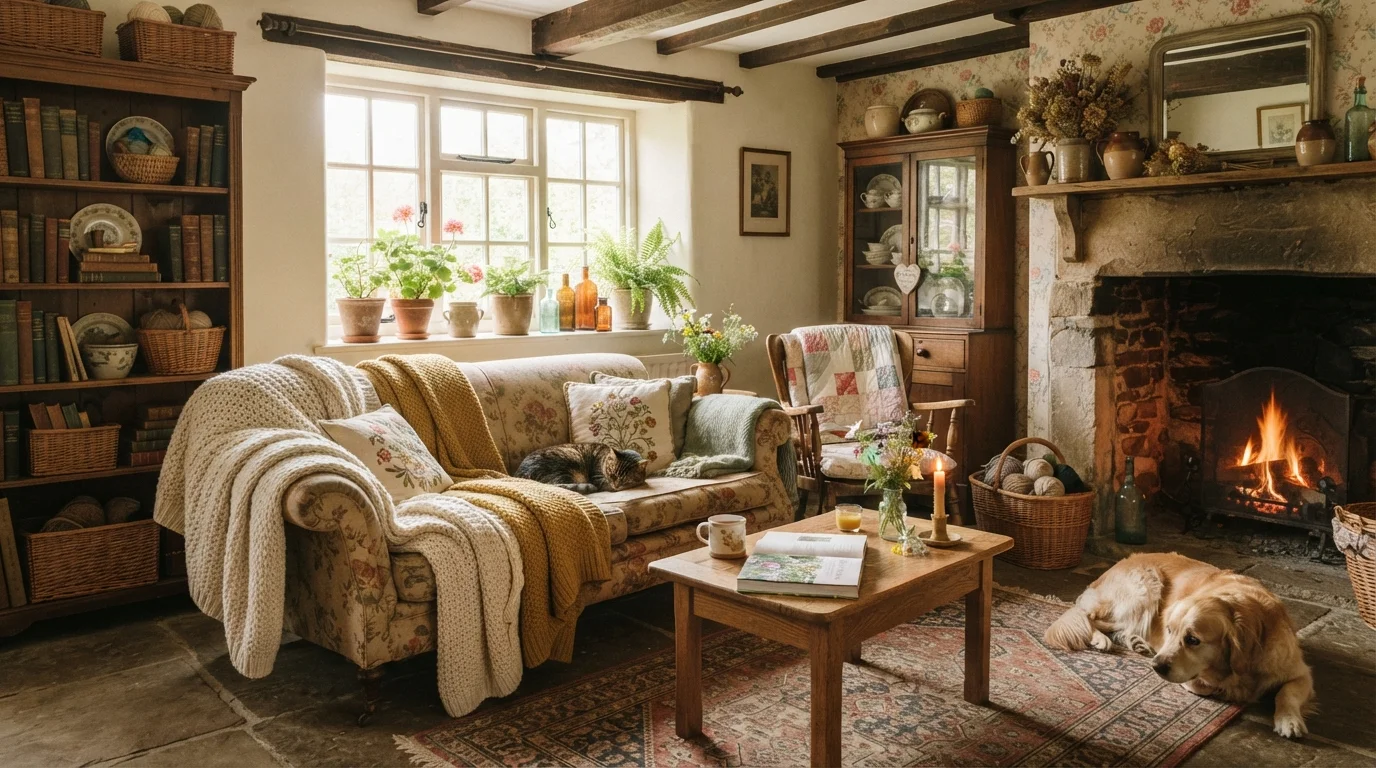
There’s something undeniably comforting about walking into a home that feels like a warm hug after a long day. The cottagecore aesthetic, with its soft textures and nostalgic charm, has become a favorite for those craving a simpler, cozier way of living. Whether you’re in a small apartment or a sprawling farmhouse, these cozy cottagecore interior ideas will help you capture that earthy, romantic feel.
This style is all about embracing imperfections and natural materials. Think worn wooden furniture, hand-thrown pottery, and linens that get softer with every wash. In this guide, we’ll walk through practical ways to weave a warm country vibe into your home, room by room, without breaking the bank.
Embrace Natural Materials and Earthy Textures
The foundation of any cottagecore home is a deep connection to nature. Start by swapping out synthetic rugs for wool or cotton braided ones. Replace glossy finishes with matte wood or raw stone. These changes instantly ground a space and add visual warmth.
Layer different textures to create depth. Combine a chunky knit throw with linen curtains and a jute rug. The contrast between rough and soft is what makes cottagecore home decor feel lived-in and inviting. Don’t be afraid to mix reclaimed wood shelves with smooth ceramic vases.
When sourcing pieces, think antiques or thrift store finds. A distressed wooden dining table tells a story, while a vintage milk glass vase adds a delicate touch. For more inspiration on how to arrange these elements, explore our home design category for curated layout ideas.
Choose a Soft, Sun-Baked Color Palette
Cottagecore interiors thrive on colors that feel like a countryside afternoon. Forget stark whites and harsh grays. Instead, reach for warm, muted hues: sage green, buttercream yellow, dusty rose, and terracotta. These tones mimic the outdoors and create a serene backdrop.
Paint your walls in a matte finish, or try a limewash for that old-world texture. Use accent walls sparingly—maybe a deep olive behind a bookshelf or a soft lavender in a reading nook. The goal is to feel enveloped, not overwhelmed.
Don’t overlook the ceiling. Painting it a pale sky blue or cream can make a room feel taller while adding a touch of whimsy. Pair these colors with natural wood trim for an authentic rustic farmhouse style that feels fresh, not dated.
Layer Vintage Textiles and Florals
Nothing says cottagecore quite like a stack of floral quilts and embroidered pillowcases. Textiles are the easiest way to inject personality into a room. Look for gingham checks, ditsy florals, or even subtle ticking stripes.
Mix patterns, but keep the color palette consistent to avoid visual chaos. A floral sofa can be balanced with a plaid throw and solid linen cushions. Layer rugs over each other for that “collected over time” look that is central to vintage inspired interiors.
- Use 100% cotton or linen sheets for a breathable, soft feel.
- Hang lace or sheer curtains to let in soft, diffused light.
- Add a patchwork quilt at the foot of the bed for extra coziness.
- Drape a cable-knit sweater over a chair for a lived-in touch.
Incorporate Open Shelving and Display Collections
Open shelving is a hallmark of the cottagecore look. It invites you to display your treasures: mismatched teacups, vintage cookbooks, and dried lavender bundles. This approach turns everyday objects into decor.
Wooden shelves with iron brackets are a classic choice. Use them in the kitchen to store stoneware plates and glass jars filled with pantry staples. In the living room, stack books horizontally and place a small plant or candlestick on top. For guidance on maximizing storage while keeping it charming, check out our space planning resources.
Resist the urge to overcrowd. Leave about one-third of each shelf empty so the displayed items breathe. Rotate pieces seasonally—swap out winter evergreens for spring daffodils—to keep the space feeling alive.
Bring the Outdoors In With Plants and Dried Botanicals
Plants are non-negotiable in a cottagecore home. They purify the air and add life to every corner. Go for easy-care varieties like pothos, snake plants, or ferns. But don’t stop there—dried flowers and branches are equally important.
| Type of Botanical | Best Placement | Care Level |
|---|---|---|
| Fresh eucalyptus stems | Bathroom or entryway | Low (change water weekly) |
| Dried lavender bunches | Bedroom or kitchen | None (lasts months) |
| Potted herbs (rosemary, mint) | Windowsill or kitchen counter | Medium (needs sunlight) |
| Pressed flower art | Gallery wall or frame | None |
Arrange dried pampas grass in a ceramic urn or hang bundles of sage upside down from a peg rail. This connection to nature is what creates a true warm country vibe indoors, even in the middle of winter. For more outdoor-to-indoor integration, browse our garden design ideas.
Create Cozy Nooks for Reading and Relaxation
A cottagecore home should have at least one dedicated nook where you can curl up with a cup of tea. It doesn’t require a lot of space—a window seat, a corner armchair, or even a floor cushion by a bookshelf will do.
Prioritize comfort above all. Add a soft sheepskin throw, a side table for your mug, and a warm amber lamp. Keep a basket nearby with extra blankets for chilly evenings. For inspiration on extending this coziness outdoors, see our outdoor living guides.
You can also hang a small shelf within arm’s reach for your current read and a candle. The “hygge” factor here is high—natural light, soft fabrics, and a view of greenery, even if it’s just a potted plant, make all the difference.
FAQ: Cozy Cottagecore Interior Ideas
What is the difference between cottagecore and farmhouse style?
Cottagecore leans more romantic and whimsical, with an emphasis on florals, lace, and vintage finds. Farmhouse style is typically more utilitarian, using galvanized metal, shiplap, and neutral palettes. Both can overlap beautifully in a rustic farmhouse style blend.
How do I make my modern home look cottagecore?
Start with soft lighting—replace overhead fixtures with table lamps and string lights. Add texture through natural fiber rugs and linen curtains. Finally, introduce vintage accessories like ceramic pitchers and embroidered linens to break up the modern lines.
Can I do cottagecore on a budget?
Absolutely. Thrift stores and flea markets are goldmines for cottagecore home decor. Look for solid wood furniture you can sand and paint, or fabric remnants to sew your own pillow covers. A fresh coat of chalk paint on a dated dresser can work wonders.
What kind of lighting works best for a warm country vibe?
Avoid cool white bulbs. Use warm, soft yellow lighting (2700K-3000K). Wicker or rattan pendant lights, brass candlesticks, and fabric lampshades all help create that golden glow. For more curated ideas, visit our blog for seasonal decorating tips.
How important are floral patterns in cottagecore?
Very important, but balance is key. If you have a large floral sofa, keep the walls and floor neutral. Use florals on smaller accents like throw pillows or dish towels if you prefer a subtler approach.
Should I paint my wood furniture?
Only if the original finish is damaged. Mismatched wood tones actually add charm. If you do paint, use a chalk or milk paint and distress the edges lightly for an authentic aged look.
Can I use cottagecore in a small apartment?
Definitely. The aesthetic thrives in small spaces because it relies on layers and collections. Use vertical storage for open shelves, choose multifunctional furniture like storage ottomans, and stick to a light color palette to keep the room airy. For more space-saving strategies, refer to our space planning guides.
Conclusion
Bringing a cozy cottagecore interior to life is about slowing down and choosing pieces that spark joy. It’s a style that forgives mistakes and celebrates character, from a chipped teacup to a hand-stitched quilt. By focusing on natural materials, soft colors, and sentimental collections, you can create a home that feels both nostalgic and completely your own.
As a general rule of thumb for the home decor niche, experts often recommend looking for additional inspiration from trusted home and garden resources to refine your style. Start small—maybe with a new linen throw or a single shelf of treasures—and let your space evolve naturally. The result will be a warm, inviting retreat that you’ll never want to leave.