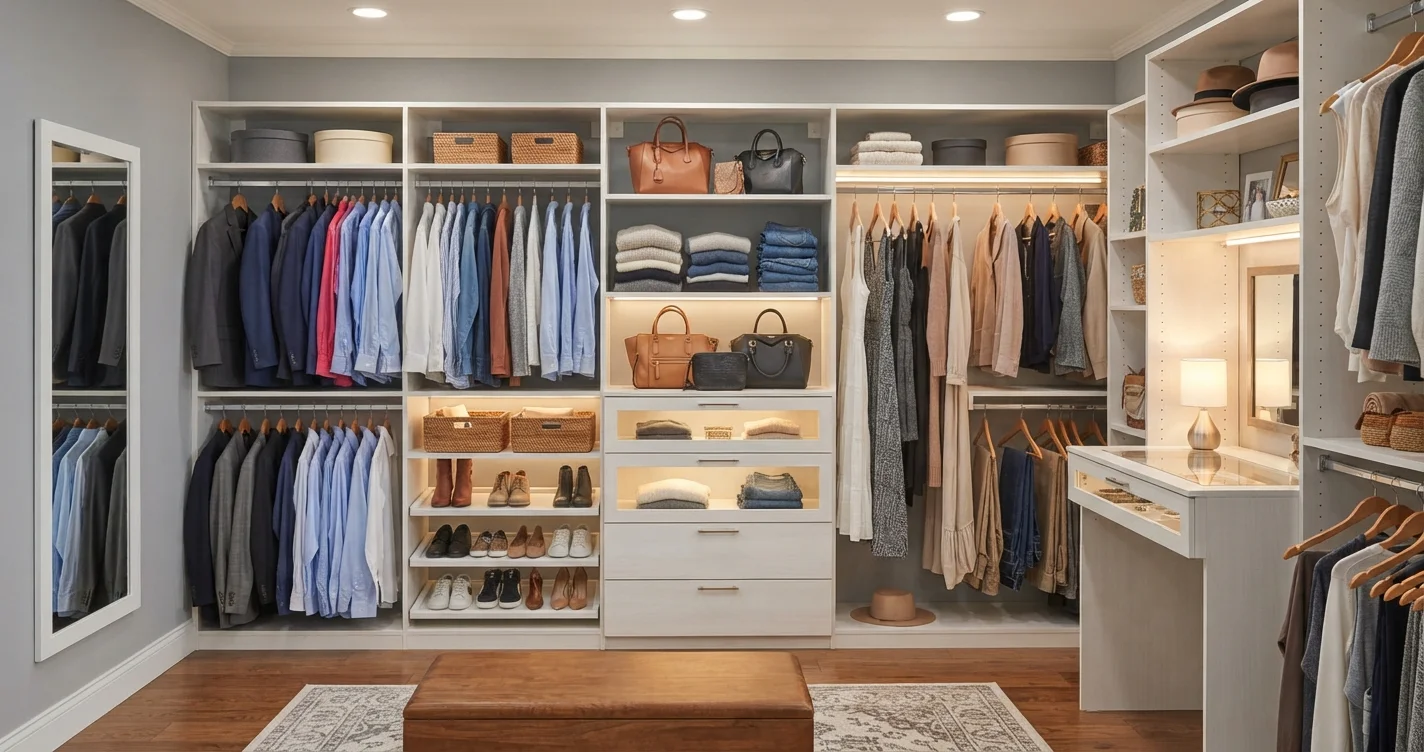
Let’s be honest—most closets are a black hole of tangled hangers, mismatched shoes, and shirts you forgot you owned. But with a bit of strategic thinking, you can turn that chaos into a highly functional zone. This isn’t about buying expensive new cabinets; it’s about applying smart closet layout principles that work with your existing space.
Whether you are dealing with a cramped reach-in or a spacious walk-in, closet space optimization starts with a plan. In this guide, I’ll walk you through actionable strategies to maximize every inch, create logical zones, and make your morning routine smoother. For more foundational ideas, take a look at our space planning resources that cover room-by-room approaches.
1. Assess Your Inventory Before You Even Touch a Shelf
Before you buy a single bin or hook, you need to audit what you actually own. Take everything out of the closet and sort it into piles: keep, donate, repair, and toss. This step is non-negotiable for real closet organization tips.
Ask yourself: When was the last time I wore that sweater? Does that gadget actually help me, or is it just taking up floor space? Be ruthless. An overstuffed closet never feels organized, no matter how many boxes you add.
Once you’ve purged, measure your remaining items. Count the number of long dresses, folded jeans, and pairs of shoes. This data will guide your next layout decisions.
2. The “Zone Method” for Logical Flow
Think of your closet like a tiny retail store. Group similar items together by frequency of use and function. Create a “daily wear” zone at eye level for work clothes, a “special occasion” zone on higher shelves, and a “seasonal” zone near the floor or top.
For a typical reach-in closet, I recommend this layout:
- Gold zone (chest to eye level): Daily tops, blazers, and frequently worn pants.
- Silver zone (below knee): Shoes, boots, storage bins for off-season gear.
- Bronze zone (above eye level): Bulky sweaters, luggage, or sentimental items you rarely touch.
This zoning approach is a cornerstone of smart closet layout because it reduces decision fatigue. You literally grab from the zone you need.
3. Vertical Storage: The Secret Weapon for Small Closets
If your floor space is limited, look up. Most closets waste the vertical real estate between the top shelf and the ceiling. Install an additional shelf or use stackable cubbies to double your capacity.
Double-hanging rods are a game-changer for small closet solutions. Instead of one long rod, install two: one at 40 inches for shirts and jackets, another at 80 inches for pants and skirts. This instantly doubles your hanging space without adding depth.
For shoes, consider over-the-door organizers or adjustable wire shelves that let you see every pair at a glance. A cluttered floor is the enemy of calm.
4. Use Modular Components, Not Custom Carpentry
You don’t need a luxury renovation to achieve a high-functioning closet. Modular storage systems from hardware stores or online retailers are easy to install and adapt as your needs change. Think wire baskets, adjustable shelving units, and clear acrylic drawers.
One of my favorite maximize closet storage hacks is using a cube organizer inside a deep shelf. Each cube holds a category—scarves, belts, workout gear—so nothing gets lost in the abyss.
Inside home design, this approach is called “flexible infrastructure.” It lets you reconfigure your closet seasonally without tools.
5. The “Five-Minute Morning” Test
An optimized closet should be intuitive, not a puzzle. After you arrange everything, run a quick test: can you get dressed in five minutes without fighting hangers or pulling out the wrong shoe?
Here’s a simple comparison of common closet layouts for efficiency:
| Layout Type | Pros | Cons |
|---|---|---|
| Single Rod + Shelf | Simple, cheap, works for short items | Wastes vertical space; hard to hang longer coats |
| Double Rod | Doubles hanging capacity, great for shirts & pants | Requires precise measurement; can feel cramped |
| Modular Cubes + Rod | Flexible, handles folded + hung items | More expensive upfront; needs assembly |
Choose the layout that matches your dominant clothing type. If you wear more jeans than suits, favor cube storage over long rods.
6. Lighting and Visibility Matter More Than You Think
Even the best closet space optimization plan fails if you can’t see what’s inside. A dim closet leads to rummaging, which leads to wrinkles and mess. Install battery-powered LED stick lights under each shelf or along the rod.
Use the same color hangers throughout—black or velvet works best—to create visual unity. When everything looks cohesive, your brain perceives the closet as larger and more organized.
Consider labeling bins with a label maker. For an extra layer of inspiration, browse our blog for stories of real homeowners who transformed their spaces with minimal investment.
7. Maintain the System with a Weekly Reset
No closet stays perfect forever. But you can prevent the return of chaos by spending just five minutes each week on a reset. Return misplaced items, fold a stray shirt, and check that your bins are still serving their purpose.
You might also rotate seasonal items twice a year (spring and fall). Swap heavy sweaters for tee shirts and move boots to the back. This keeps your daily wear zone fresh.
For outdoor gear or garden tools that don’t fit inside, check out our outdoor living ideas for storage sheds and mudroom setups.
FAQ: Frequently Asked Questions
1. How can I optimize a small reach-in closet (2-3 feet wide)?
Go vertical with double rods and slim velvet hangers. Use the back of the door for hooks or a shoe rack. Avoid deep bins that hide items.
2. What is the best way to store shoes in a closet?
Use an angled shoe shelf or a clear drop-front cubby. Store heels on lower shelves and flats in over-the-door pockets.
3. Should I fold or hang sweaters and knits?
Fold them to avoid stretching shoulder seams. Use a shelf or a drawer bin, not a rod.
4. How do I organize a closet shared by two people?
Divide the closet strictly in half vertically. Use separate bins for accessories. Color-code rods so each person knows their side instantly.
5. Are wire shelves better than wood shelves?
Wire allows airflow and visibility but can leave marks on delicate fabrics. Mix materials: wire for shoes, wood for folded sweaters.
6. What is the best hanger type for maximizing space?
Velvet slim hangers are the gold standard. They grip clothes, prevent slipping, and take up 50% less rod space than plastic ones.
7. How often should I reassess my closet layout?
At least twice a year, or after a major life change (new job, baby, move). Your needs evolve; your layout should too.
8. Can I optimize a closet without losing the “aesthetic”?
Absolutely. Use matching bins, neutral baskets, and the same hangers. A clean, unified look is both functional and beautiful. For broader space planning tips, check our category page.
Conclusion
Optimizing your closet isn’t about buying the most expensive system; it’s about applying closet space optimization strategies that respect your habits and your square footage. Start with a ruthless purge, implement zones, look upward for storage, and choose modular pieces that flex with you.
Remember, your closet supports your daily life. When it works well, you save time, reduce stress, and actually enjoy getting dressed. Need deeper inspiration on how to rethink your entire home’s flow? Explore the category of home design for more articles that blend style with function. And if you’re curious about the science behind efficient layouts, check out this resource on home organization systems that dives into practical storage solutions for every room.