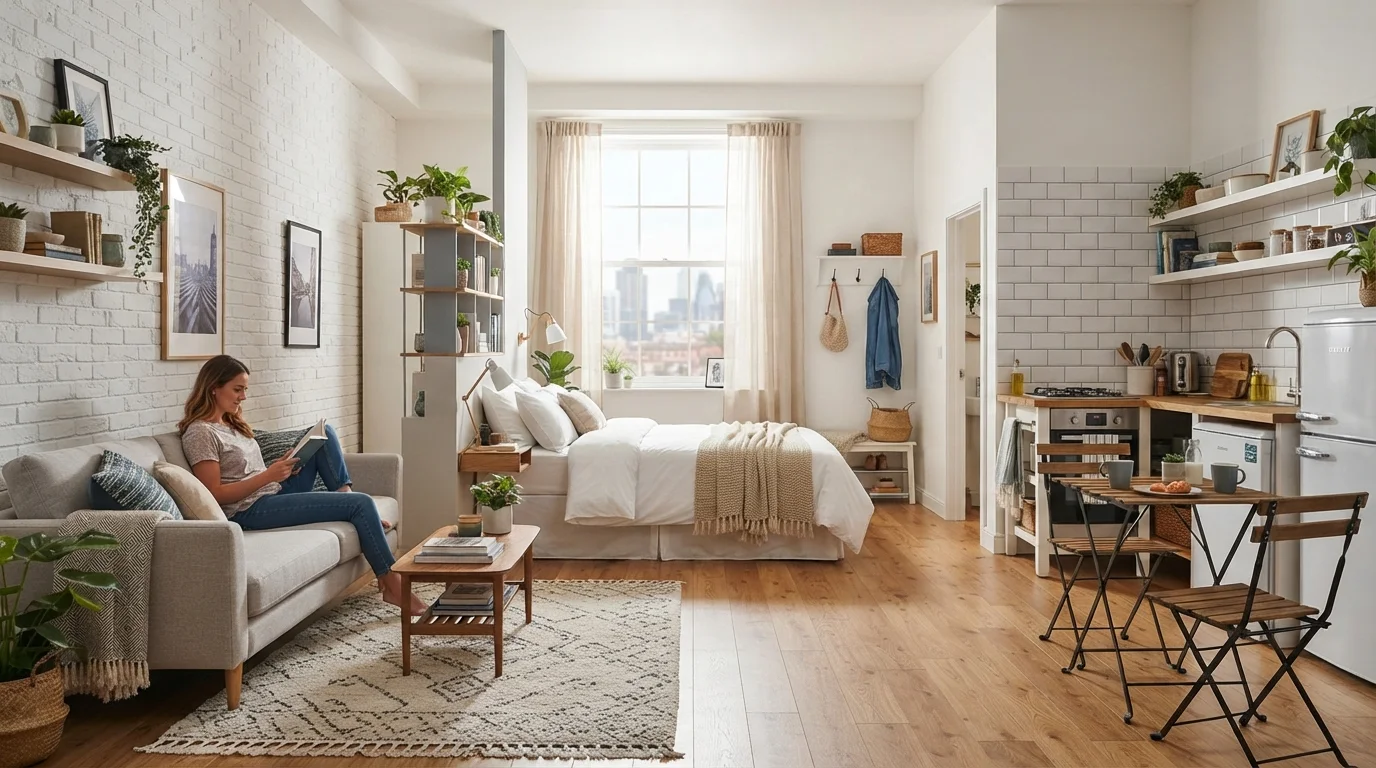
Living in a studio apartment can feel like a constant puzzle. You have one single room that needs to serve as your bedroom, living room, home office, and dining area all at once. Without a smart functional studio apartment layout, the space can quickly feel cramped and chaotic.
The good news? With the right space planning strategies, you can transform even the smallest footprint into a comfortable, stylish, and highly efficient home. In this guide, I’ll walk you through actionable tips to help you design a studio that works for your lifestyle—without sacrificing aesthetics.
We’ll cover zoning techniques, multifunctional furniture, and clever storage hacks that make small space living feel expansive. These aren’t just theoretical ideas—they’re tried-and-true solutions I’ve seen work in hundreds of real studio apartments. Let’s dive into your studio apartment ideas for a smarter layout.
1. Start With Zoning: Divide Without Walls
The first rule of a functional studio apartment layout is creating distinct zones. You don’t have walls to separate your sleeping area from your living area, so you need to define those spaces visually and physically.
Use area rugs to anchor each zone. A soft rug under your bed signals “sleep zone,” while a different texture or pattern rug under your sofa says “chill zone.” This psychological trick helps your brain compartmentalize the open floor plan.
Another effective strategy is using open shelving or a bookshelf as a room divider. It separates the space without blocking light, and you get extra storage. For more inspiration on this, check out our dedicated space planning category for additional layout tricks.
Consider vertical elements like floor lamps or tall plants to mark boundaries. Even a simple curtain track on the ceiling can let you close off your sleeping area at night, giving you a sense of privacy and coziness.
2. Invest in Multifunctional Furniture
In studio living, every piece of furniture should earn its keep. Multifunctional furniture is the backbone of any successful layout. Think beyond a sofa bed—look for pieces that serve two or three purposes seamlessly.
A storage ottoman works as a coffee table, extra seating, and a place to stash blankets. A drop-leaf dining table folds down when not in use, freeing up floor space for yoga or entertaining. I’ve used a desk that doubles as a vanity in dozens of studio projects.
Here are the top multifunctional pieces I recommend:
- Murphy bed with built-in shelving – folds into the wall for instant floor space
- Nesting tables – expand for guests, collapse for everyday
- Sleeper sofa with under-seat storage – guest bed + blanket bin
- Ottoman with hidden compartment – non-negotiable for linens
- Wall-mounted drop-leaf desk – workspace that disappears when not needed
These studio apartment ideas save square footage while keeping your home uncluttered. For more curated home solutions, visit our home design hub.
3. Maximize Vertical Real Estate
When floor space is limited, go vertical. Your walls are untapped potential. Floor-to-ceiling shelving draws the eye upward, making the ceiling feel higher and the room larger. Use tall bookcases, wall-mounted cabinets, or floating shelves to store books, decor, and kitchen essentials.
Install hooks or pegboards on blank walls for hanging coats, bags, or even pots and pans. A wall-mounted fold-out ironing board saves precious closet space. Consider a lofted bed if your ceiling height allows—it frees up the entire area underneath for a desk, seating, or additional storage.
This approach to small space living is about being intentional. A cluttered wall can feel overwhelming, so keep the arrangement curated. Group similar items together and leave some negative space for visual rest.
4. Choose a Cohesive Color Palette
Color plays a huge role in how spacious a studio feels. Stick to a light, neutral base for walls and large furniture—think whites, creams, soft grays, or pale beige. This helps reflect natural light and creates an airy foundation.
Add pops of color through smaller accessories like throw pillows, art, or a vibrant rug. This strategy keeps the room feeling unified rather than chaotic. Dark colors can work, but use them sparingly, like on an accent wall behind your bed or inside open shelving for depth.
Consistency is key. A cohesive palette across your zones tricks the eye into seeing a larger, more connected space. For more ideas on styling your whole property, you might enjoy our garden design section—great flow applies indoors too.
5. Smart Lighting for Every Zone
One overhead light won’t cut it in a studio. You need layered lighting to define each zone and set the mood. Use a mix of ambient, task, and accent lighting to create depth.
Place a floor lamp by your reading chair, a pendant light over your dining table, and dimmable sconces near your bed. Under-cabinet LED strips in the kitchen area are game-changers for meal prep. The key is to have multiple light sources that you can control independently.
Dimmers are your best friend. They let you transition from bright, productive mode to soft, relaxing evenings. This flexibility makes your functional studio apartment layout feel like it has multiple rooms in one.
6. Prioritize Storage Before Decor
Before you buy decorative pieces, solve your storage challenges. Built-in cabinetry is ideal, but rentals often don’t allow that. Instead, look for furniture that hides clutter: beds with drawers underneath, ottomans with storage, and coffee tables with lift-top compartments.
Use the space under your sofa. Choose a sofa on legs and slide flat bins underneath for off-season clothes. Store luggage inside your suitcases. Use the back of doors for shoe organizers or spice racks.
A clutter-free space is essential for small space living. If everything has a home, your studio will feel twice as large. For a deeper dive into organizing, refer to our main blog for more tips.
7. Use Mirrors to Create the Illusion of Space
Mirrors are a studio apartment’s best trick. Place a large mirror opposite a window to reflect natural light and visually double the square footage. A mirrored closet door serves double duty—storage and space expansion.
You can also use mirrored tiles as a backsplash in the kitchen area or a collection of small mirrors arranged like a gallery wall. Just avoid cheap, warped mirrors that distort the room. Invest in one quality full-length mirror and lean it against a wall for a casual look.
This simple design hack makes any layout feel more open. Combined with the right lighting and color palette, the effect is dramatic.
8. Don’t Forget Personalization
Finally, your studio should feel like home. After you’ve optimized the layout, add layers of personality. A gallery wall, indoor plants, and textiles like throws and cushions make the space warm and inviting.
Plants are especially powerful in studios. They improve air quality and bring life to a compact room. A tall fiddle-leaf fig in a corner adds height, while a string of pearls on a shelf adds softness.
When searching for decor, consider resources that specialize in home improvements. For instance, for expert information on home and garden upgrades, check out this trusted resource on home improvement ideas. It can inspire your next project.
Remember, a functional studio apartment layout isn’t about sacrificing style—it’s about being clever with what you have.
Space Planning Comparison: Three Layout Approaches
| Layout Strategy | Best For | Required Furniture | Key Benefit |
|---|---|---|---|
| Open Layout (no dividers) | Minimalists, artists | Low-profile pieces, rugs | Maximum light and flow |
| Divided Layout (physical or visual) | Couples, remote workers | Bookshelf dividers, curtains | Privacy and separation |
| Lofted or Elevated Bed | High ceilings, storage needs | Loft bed frame, desk below | Frees up floor space |
Choose the approach that matches your ceiling height, budget, and daily habits. Each has its own charm.
Frequently Asked Questions (FAQ)
What is the best way to separate a studio apartment?
The best way is using a combination of area rugs, open shelving, and curtains. These define zones without permanently changing the structure. Rugs anchor each area, while shelving provides storage and visual division.
Can I have a home office in a studio apartment?
Absolutely. Use a wall-mounted drop-leaf desk or a compact writing table that folds away. Position it near a window for natural light. A chair that can double as dining seating keeps things flexible.
What size sofa works best in a studio?
A loveseat or a small two-seater is ideal. Avoid oversized sectionals. Look for sofas with storage underneath or a sleeper function to save space.
How do I make my studio apartment feel bigger?
Use light colors, large mirrors, and vertical storage. Keep clutter to a minimum and choose furniture with exposed legs to create visual openness. Consistent flooring throughout also helps.
Is it worth renting a storage unit for a studio?
Only if you have seasonal gear or sentimental items you rarely use. Otherwise, try to purge or use under-bed storage first. Most people overestimate what they need in a studio.
Can I entertain guests in a studio apartment?
Yes! Use nesting tables and stackable stools that store away when not needed. A dining table that extends or a bar cart helps. Push furniture against walls to open up the center for mingling.
What type of bed is best for a studio?
A daybed, Murphy bed, or a platform bed with storage drawers are the best choices. They save horizontal space and serve multiple functions during the day.
Should I use dark or light flooring in a studio?
Light-colored flooring reflects light and makes the room feel larger. If you already have dark floors, balance them with light walls and rugs.
Conclusion
Designing a functional studio apartment layout is completely achievable with a little planning. Focus on zoning, invest in multifunctional pieces, and maximize your walls and lighting. The result? A home that feels spacious, organized, and uniquely yours.
Start with one zone at a time. Rearrange, edit, and personalize. Your studio has more potential than you think. For more thoughtful ideas on enhancing your entire property, explore our outdoor living category for inspiration that extends beyond your front door.