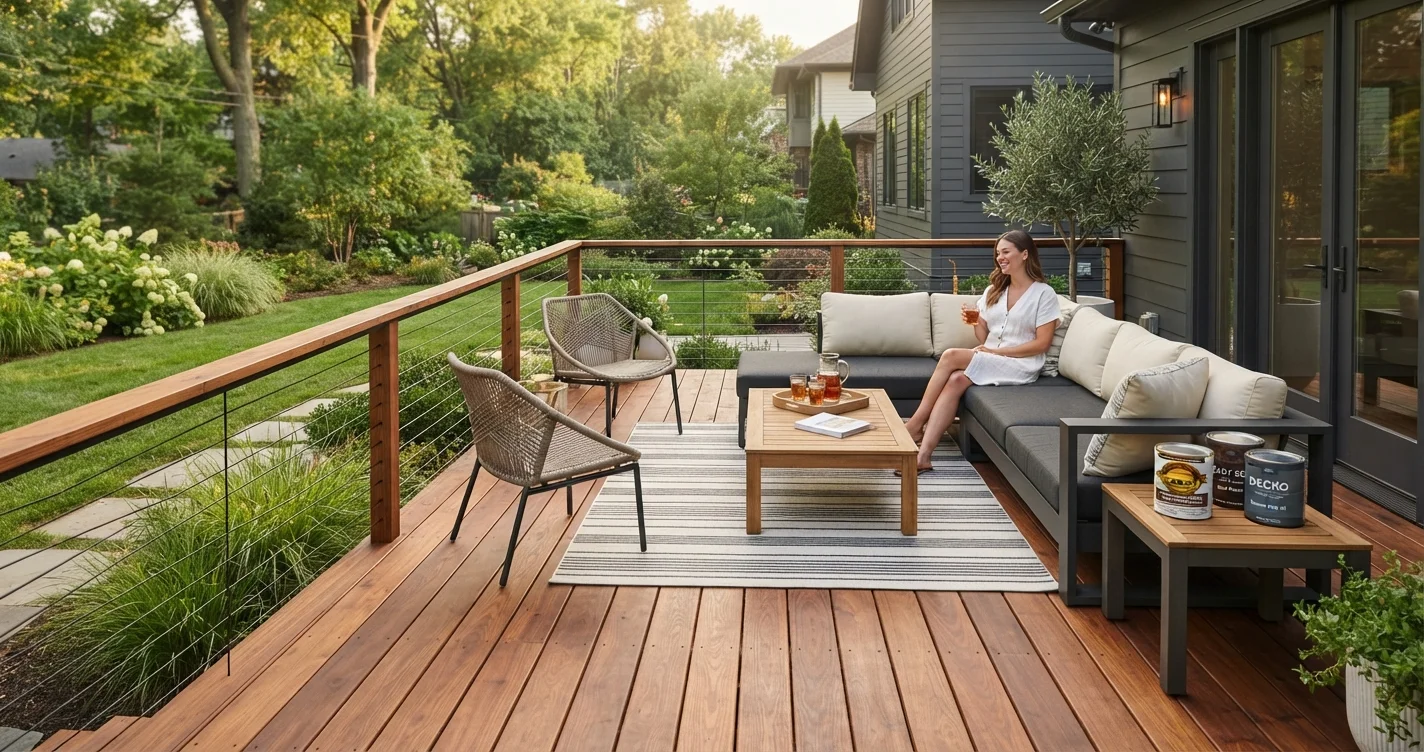
Your deck is the stage for summer barbecues, morning coffees, and quiet evenings under the stars. But if it’s looking tired or outdated, a fresh coat of stain is the quickest way to breathe new life into your backyard. The right color and finish don’t just protect your wood — they completely transform the vibe of your outdoor living space design.
I’ve spent over a decade helping homeowners navigate the confusing world of deck stains. From translucent sealers to solid hide coatings, the options can feel endless. In this guide, I’m breaking down the best deck stains and colors to modernize your backyard in 2025, with practical advice you can actually use.
Why the Right Deck Stain Matters More Than You Think
Deck stain does double duty: it protects your investment from sun, rain, and foot traffic, and it sets the aesthetic tone for your entire yard. A poorly chosen stain can make a beautiful deck look cheap or dated. On the flip side, the right shade can make your home feel more valuable and your garden more cohesive.
Think of your deck as an extension of your indoor style. If your home leans toward minimalist neutrals, a warm gray stain creates a seamless flow. If you love rustic charm, a rich cedar tone adds character. The key is choosing a product that matches both your lifestyle and the local climate.
Top Deck Color Trends for a Modern Backyard
The days of generic reddish-brown stains are fading. Homeowners today are gravitating toward sophisticated, nature-inspired palettes. Here are the most popular modern deck stain ideas gaining traction:
- Cool Grays and Charcoal: These shades feel contemporary and hide dirt surprisingly well. They pair beautifully with bold outdoor furniture.
- Warm Earth Tones (Taupe & Sand): A perfect middle ground between natural wood and painted finishes. These colors complement stone patios and lush greenery.
- Deep Espresso or Black: High-contrast drama is in. A black-stained deck makes your garden plants pop and creates a sophisticated anchor for the yard.
- Translucent Natural Tones: If your deck is made of high-quality cedar or ipe, show it off. A clear or semi-transparent stain lets the grain shine while adding UV protection.
Solid vs. Semi-Transparent vs. Clear: Which Finish Suits You?
Before picking a color, you need to choose a stain type. Each offers a different level of coverage and maintenance. Here’s a quick comparison:
| Stain Type | Best For | Durability | Wood Grain Show? | Re-coat Frequency |
|---|---|---|---|---|
| Solid | Old, mismatched wood; hiding imperfections | Excellent (like paint) | No | Every 3-5 years |
| Semi-Transparent | New decks with beautiful grain | Good | Yes | Every 2-3 years |
| Clear Sealer | Premium hardwoods (ipe, mahogany) | Low (UV protection only) | Full | Every 1-2 years |
For a truly modern look that requires low maintenance, solid stains in matte charcoal or taupe are a winning combination. If you prefer a natural aesthetic, a semi-transparent stain in a muted tone is your best bet.
How to Prep Your Deck for a Flawless Stain Job
You can buy the most expensive stain on the market, but if your deck isn’t prepped properly, it will peel and flake within months. Preparation is the unsung hero of every great deck transformation.
Start with a thorough cleaning. Use a deck cleaner and a stiff brush or pressure washer to remove dirt, mildew, and old finish. Let the wood dry completely for at least 48 hours — moisture trapped under stain is the #1 cause of failure.
Next, sand any rough spots or splinters. This step ensures the stain absorbs evenly. Finally, apply a wood brightener if your deck has turned gray from sun exposure. This restores the natural pH and helps the new color look rich and true.
Application Tips for a Pro-Level Finish
Even the best stain can look amateurish if applied poorly. Here are the non-negotiable rules I share with every DIY client:
- Stir the stain thoroughly and often — pigments settle fast.
- Apply in the shade or on a cloudy day. Direct sun causes the stain to dry too quickly, leading to lap marks.
- Use a stain pad or roller for large areas, and a brush for edges and between boards.
- Work in small sections, maintaining a wet edge to avoid visible lines.
- Back-brush after rolling to ensure deep penetration into the wood grain.
For extra durability, especially on horizontal surfaces like deck boards, consider applying two thin coats instead of one thick coat. The results will last noticeably longer.
Integrating Your Deck Color with Your Garden and Home Design
A modern deck doesn’t exist in a vacuum. The stain color you choose should coordinate with your home’s siding, your outdoor furniture, and even the plants around it. A cohesive palette makes your garden design feel intentional and polished.
For example, a charcoal deck pairs stunningly with white or light gray house siding. If your home has brick or stone, a warm taupe stain creates harmony. Don’t forget about your planters and cushions — soft greens, terracotta, and navy blues all look incredible against modern gray or espresso-stained wood.
If you’re also planning to update your patio furniture or add a pergola, check out our home design ideas for more inspiration on tying everything together.
Long-Term Maintenance: Keeping Your Modern Deck Looking Fresh
Modern doesn’t mean no-maintenance. The sun is relentless, and foot traffic takes its toll. To keep your stain looking vibrant, sweep debris regularly and wipe up spills quickly. A yearly cleaning with a mild deck wash will remove dirt without stripping the color.
Look for stains that include UV blockers and water repellents. Some of the best products on the market now feature advanced resin technology that flexes with the wood as it expands and contracts. This prevents cracking and peeling. For a trusted resource on premium coatings and color selection, you can explore professional-grade deck care products that many contractors recommend.
Plan to reapply a protective top coat every two to three years if you use a semi-transparent stain, or every three to five years for a solid stain. Keeping up with maintenance is far cheaper than replacing rotten boards later.
Frequently Asked Questions About Deck Stains and Colors
1. What is the most popular deck stain color for 2025?
Cool gray and charcoal tones are leading the trend. They offer a sleek, contemporary look that works with almost any architectural style and hides dirt better than lighter shades.
2. Can I stain over an old stain without stripping?
Only if the existing stain is in good condition and not peeling. If it’s flaking, you need to strip it down to bare wood. Otherwise, the new layer won’t adhere properly and will peel quickly.
3. How long should I wait between cleaning and staining?
At least 48 to 72 hours of dry weather. The wood must be completely dry — check by sprinkling a few drops of water on the deck. If the water beads up, it’s not ready. If it soaks in, you’re good to go.
4. Is solid stain better than paint for a deck?
Yes, solid stain is superior to paint. Solid stain breathes with the wood and won’t peel as aggressively as paint. It also bonds better to the wood fibers, making future maintenance easier.
5. What color stain makes a small deck look bigger?
Light neutral tones like sand, beige, or light gray reflect more light and create the illusion of a larger space. Avoid dark colors on small decks unless you want a cozy, intimate feel.
6. Do I need to use a primer before staining?
No, deck stains do not require primer. The stain is designed to penetrate the wood directly. If you want a more uniform color on very different boards, use a wood conditioner or pre-stain treatment instead.
7. How can I test a stain color before committing?
Most hardware stores sell small sample quarts. Apply the stain to a hidden section of your deck or a scrap piece of the same wood. Observe it in different lighting conditions — morning, afternoon, and evening — before making a final decision.
8. Can I use a deck stain on fences or outdoor furniture?
Yes, many deck stains are suitable for fences and outdoor furniture made of similar wood. Just confirm the label specifies it’s for vertical or horizontal surfaces. Some formulations are optimized for foot traffic on decks.
Final Thoughts on Modernizing Your Backyard Deck
Choosing the best deck stains and colors is one of the most rewarding upgrades you can make to your home. It’s a weekend project with a high-impact result that instantly elevates your outdoor living experience. Whether you go for a bold dramatic black or a soft natural translucent, the key is thoughtful preparation and a high-quality product.
Don’t rush the process. Take your time selecting a color that complements your architecture and garden. Your deck is more than just a structure — it’s the heart of your backyard. Give it the attention it deserves, and it will reward you with years of beautiful, functional living space.