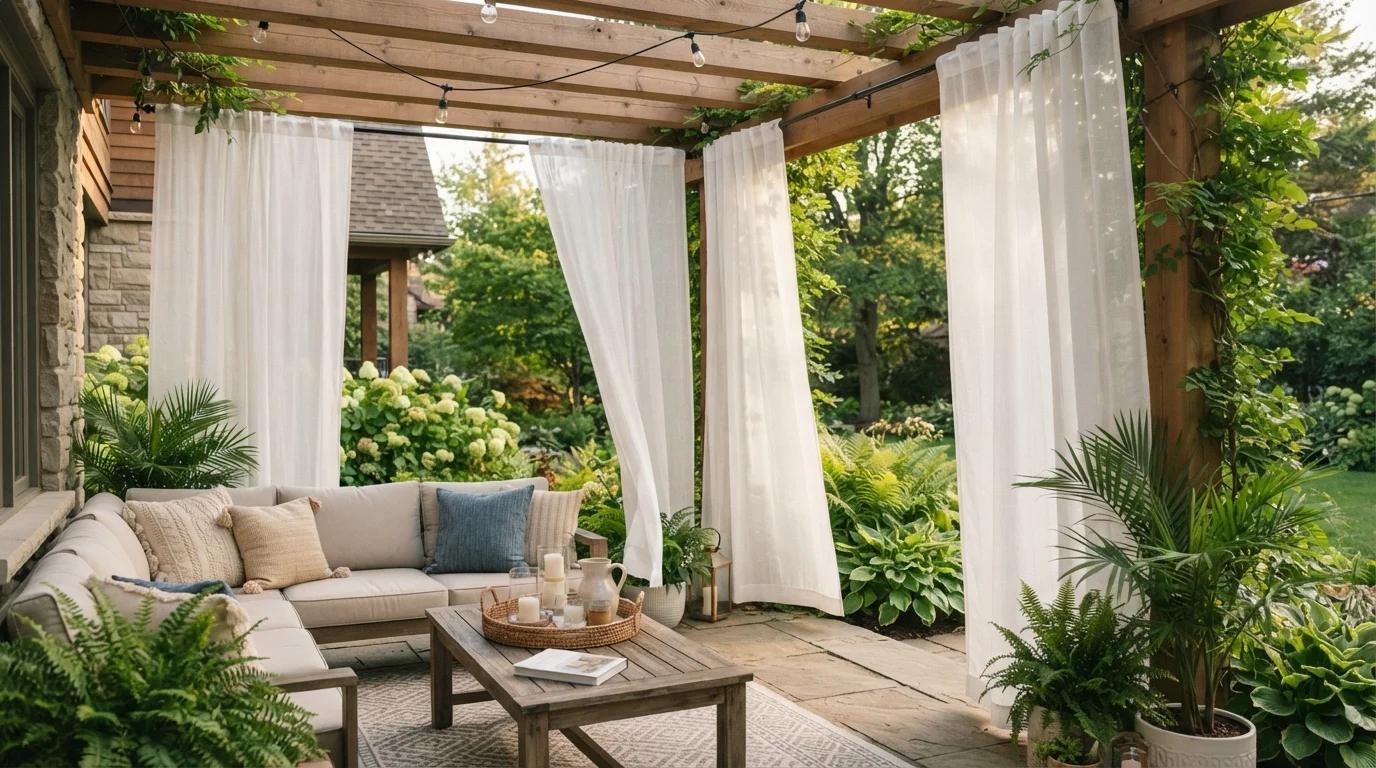
Your outdoor space should feel like a true extension of your home—comfortable, private, and inviting. Yet many patios, decks, and porches end up feeling exposed, like a stage for the whole neighborhood to watch. The fix? Outdoor curtains for privacy and elegance. They soften hard edges, block prying eyes, and add a touch of sophistication that rivals any indoor drapery.
In this guide, I’ll walk you through everything you need to know: choosing fabrics, installing hardware, styling your space, and maintaining your curtains through the seasons. Whether you own a sprawling backyard or a compact city balcony, these ideas will help you create a serene sanctuary you’ll never want to leave.
Why Choose Outdoor Curtains for Privacy?
Privacy is the most obvious benefit, but it’s not the only one. Outdoor curtains also reduce glare, block wind, and create a sense of enclosure that makes your patio feel like an outdoor room. If you live in a dense neighborhood or close to a street, a simple curtain panel can transform your morning coffee ritual from awkward to peaceful.
Beyond function, they offer instant visual appeal. Fabrics in neutral tones or bold stripes can tie your furniture together and elevate the overall look. Think of them as the jewelry of your outdoor living space—finishing touches that make everything else pop.
Choosing the Right Fabric for Weather Resistance
Not all fabrics are built for the outdoors. You need materials that resist moisture, UV rays, and mildew. Sunbrella and Olefin are top performers—they’re solution-dyed, meaning the color won’t fade after a single summer. Polyester with a water-repellent coating also works well for covered patios.
Avoid cotton or linen unless you plan to bring the curtains inside after each use. Natural fibers absorb moisture and develop mold quickly. For maximum durability, look for fabrics labeled “weather resistant” or “indoor/outdoor.”
Here’s a quick comparison of common outdoor curtain materials:
| Fabric | Durability | Best For |
|---|---|---|
| Sunbrella (Acrylic) | Excellent | Full sun, rain exposure |
| Olefin | Very Good | High humidity, coastal areas |
| Polyester (coated) | Good | Covered patios, partial shade |
| Polyester (uncoated) | Moderate | Shaded, wind-protected areas |
If you’re unsure where to start, check out some trusted outdoor fabric resources for reliable options that match your climate.
Hardware and Installation Tips
You don’t need a contractor to hang outdoor curtains. A sturdy tension rod, a wall-mounted curtain rod, or even a wire cable system can do the job. For covered patios, use a ceiling-mounted track to create a clean, seamless look.
Here’s what I recommend based on experience:
- Tension rods work inside doorways or between two posts—no drilling required.
- Standard curtain rods with weatherproof brackets are ideal for mounting on wood or brick walls.
- Cable systems give a minimalist, modern feel and handle windy conditions well.
Always use stainless steel or powder-coated aluminum hardware to prevent rust. Hooks and rings should be corrosion-resistant too. And don’t forget weights or magnets at the bottom of each panel—they’ll keep the curtains from flapping wildly in a breeze.
Styling Ideas for Different Outdoor Spaces
Outdoor curtain ideas vary depending on where you place them. On a screened porch, floor-length panels in a light linen-look fabric create a breezy, resort vibe. For an open deck, layer heavier curtains over a privacy screen to add texture and block wind from multiple directions.
If you’re working with a small balcony, opt for short cafe-style curtains that cover just the lower half. They provide privacy while still letting in light and views. For a pergola, hang curtains from the top beams and tie them back during the day—this creates a dramatic, romantic setting for evening dinners.
Need more inspiration for your overall layout? Take a look at space planning ideas that can help you arrange your furniture and curtain panels for maximum comfort.
Combining Curtains with Other Privacy Solutions
Curtains don’t have to work alone. Pair them with privacy screen outdoor elements like lattice panels, vertical gardens, or tall planters. This combination gives you layered privacy—the plants block the lower sightline while the curtains do the rest.
Another smart trick is to install sheer curtains behind thicker, opaque ones. Sheers diffuse harsh sunlight during the day, and at night you can pull the opaque panels closed for full seclusion. It’s the same logic you use inside your bedroom, adapted for the outdoors.
For a cohesive look, choose curtain colors that complement your garden design. Earthy tones like sage, taupe, and terracotta blend beautifully with greenery, while crisp white creates a clean contrast against dark furniture.
Maintenance and Care for Long-Lasting Curtains
Outdoor curtains need occasional cleaning, especially if you live in a dusty or humid area. Most weather resistant curtains can be hosed down gently or wiped with a mild soap solution. Machine washing is an option for some fabrics—just check the label first.
Let curtains dry completely before storing them for winter. Fold them loosely and keep them in a breathable bag or bin to prevent mildew. If you leave them up year-round, give them a quick rinse every two months to remove pollen and grime.
One insider tip: apply a fabric protectant spray every six months. This adds an extra layer of water and UV resistance, effectively doubling the lifespan of your investment.
Frequently Asked Questions
1. How do I measure for outdoor curtains?
Measure the width of your opening and multiply by 1.5 to 2 for fullness. For height, measure from the rod to the floor, then add 4 inches for the hem if you want a slight puddle effect.
2. Can I use regular indoor curtains outdoors?
You can, but they won’t last. Indoor fabrics fade, mildew, and tear quickly when exposed to moisture and UV rays. Invest in dedicated outdoor fabrics.
3. What’s the best way to hang curtains without a roof?
Use freestanding curtain poles in heavy concrete bases, or install a tension rod between two permanent posts. If you have a pergola, wrap the fabric around the top beam and secure it with clips.
4. How do I keep curtains from blowing in the wind?
Add weighted hems, magnetic clips at the bottom, or adhesive Velcro strips along the side edges. Some panels come with built-in weights for this exact reason.
5. Can outdoor curtains be used as a room divider?
Absolutely. Hang them from a ceiling track to separate a dining zone from a lounge area on a large deck or patio. It’s a flexible way to define spaces without permanent walls.
6. Do outdoor curtains block much sunlight?
Opaque and lined curtains block up to 95% of UV rays. Sheer options filter light while still providing some privacy. Choose based on how much shade you need.
7. Are there fire safety concerns with outdoor curtains?
Check the fabric’s fire rating. Most outdoor-specific curtains are treated to be flame-retardant. Avoid hanging them near grills, fire pits, or open flames.
8. How often should I replace outdoor curtains?
With proper care, quality outdoor curtains last 3 to 5 years. If you notice fraying, heavy fading, or persistent mildew stains, it’s time for a replacement.
Conclusion
Outdoor curtains for privacy and elegance are one of the easiest upgrades you can make. They soften your space, shield you from neighbors, and add a designer touch that feels both intentional and effortless. The best part? You can install them in an afternoon and enjoy the transformation immediately.
Start by choosing a fabric that suits your climate, pick a hanging style that fits your structure, and don’t forget to layer with plants or screens for extra coverage. For more ideas on creating a cohesive outdoor oasis, explore our home design tips that tie your indoor and outdoor aesthetics together.
Now go ahead—pull those panels closed, pour yourself a drink, and enjoy the peace and privacy you’ve earned.