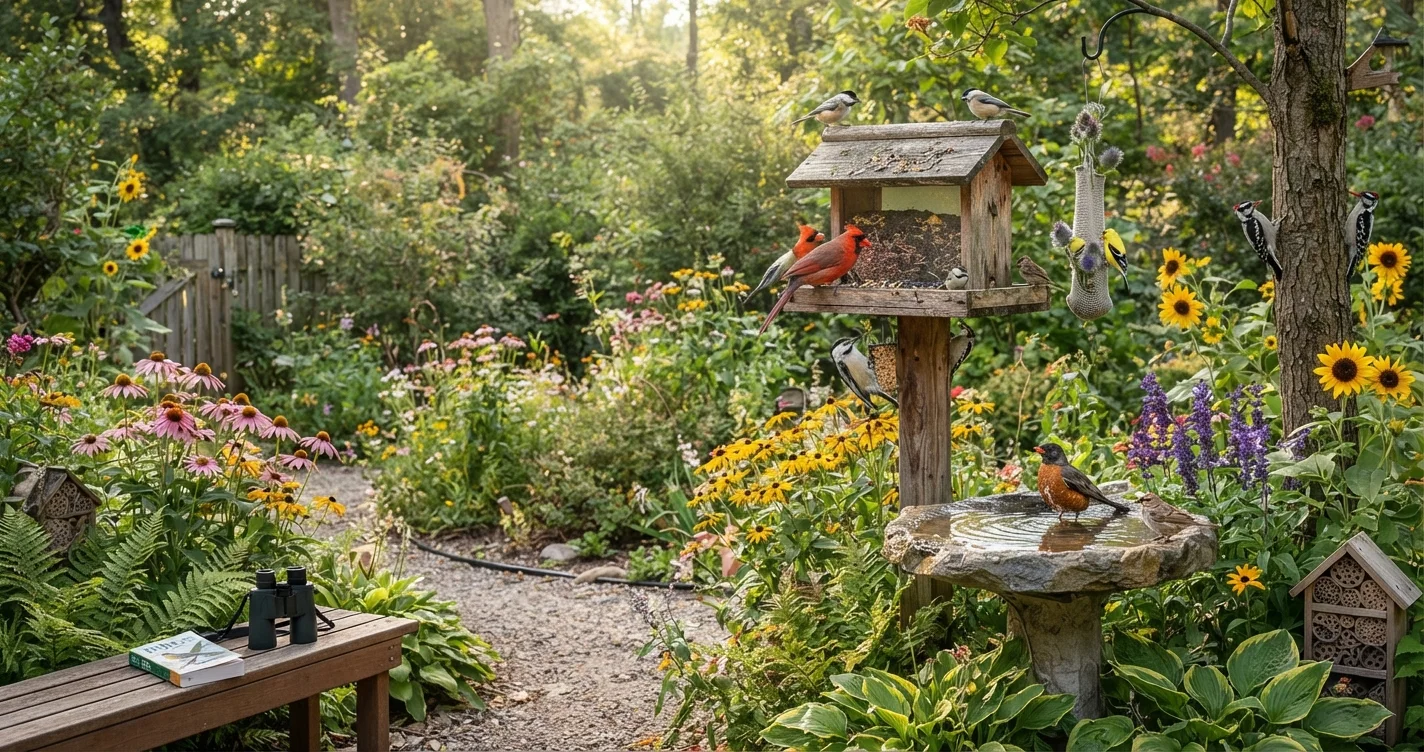
Imagine stepping into your backyard with a cup of coffee, binoculars in hand, and spotting a flash of blue as an Eastern Bluebird lands on a branch you planted just for it. Creating a wildlife-friendly backyard oasis is one of the most rewarding projects you can tackle. It blends the joy of backyard bird watching with smart, sustainable outdoor living spaces that feel alive every season.
Whether you have a sprawling lawn or a cozy patio, you can transform it into a haven for local birds, butterflies, and beneficial insects. The best part? You don’t need to be a master gardener. With a few strategic choices, your yard becomes a year-round destination for nature right outside your window.
In this guide, I’ll walk you through the essential steps to design a habitat that birds love. We’ll cover native plants, water sources, shelter, and maintenance tips that keep your oasis thriving. Let’s get your backyard buzzing with life.
Why Build a Wildlife-Friendly Backyard?
Birds face shrinking habitats due to urban development and pesticide use. Your yard can become a critical stopover for migratory species and a safe nesting site for locals. Plus, a diverse garden naturally controls pests and reduces your need for chemicals.
From a design perspective, a wildlife-friendly yard is low-maintenance once established. Native plants are adapted to your climate, meaning less watering and fertilizing. That frees up your weekends for actual bird watching instead of yard work.
And let’s be honest: there’s something deeply satisfying about seeing a chickadee take a bath in a shallow dish you set out. It connects you to a larger ecosystem. If you’re already exploring garden design concepts, adding wildlife elements is the next logical step.
Choose Native Plants That Feed and Shelter Birds
Native plants are the backbone of any wildlife-friendly backyard oasis. They provide seeds, berries, nectar, and the insects that baby birds need to survive. Unlike exotic ornamentals, native species co-evolved with local birds, so they offer exactly the right nutrition.
For example, planting a mix of coneflowers (Echinacea), goldenrod, and asters attracts finches and sparrows that love seeds. Berry-producing shrubs like serviceberry, viburnum, and elderberry are magnets for thrushes and cedar waxwings.
Don’t forget layers: tall trees for nesting, medium shrubs for cover, and low groundcovers for foraging. An oak tree alone can support over 500 species of caterpillars — the primary food for nesting songbirds.
- Oak, Maple, or Birch — host trees for caterpillars and insects.
- Serviceberry and Dogwood — berries that persist into fall migration.
- Milkweed and Butterfly Weed — essential for monarchs and insect-eating birds.
- Native Grasses (Little Bluestem, Switchgrass) — seeds and nesting material.
For a structured approach, check out ideas in outdoor living layouts that incorporate native plant beds as natural dividers.
Provide Reliable Water Sources Year-Round
Water is the single most effective element for attracting birds. A simple birdbath works, but a shallow, moving water source is even better. Birds are drawn to the sound and sparkle of dripping or splashing water.
Place a birdbath near dense shrubs so birds can retreat if they feel threatened. Change the water every two to three days to prevent mosquito larvae and algae buildup. In winter, add a small heater to keep a patch of water ice-free — that’s when birds need it most.
Consider adding a small recirculating fountain or a “dripper” attachment. Even a shallow terracotta saucer set on the ground will attract robins and towhees that prefer bathing at ground level. These features become the social hub of your backyard bird watching setup.
Create Shelter and Nesting Spots
Birds need safe places to hide from predators and harsh weather. Evergreen trees and shrubs — like arborvitae, holly, or juniper — provide year-round cover. Dense thickets of berry bushes also double as protective nesting sites.
Leave a section of your yard a little wild. Piles of brush, logs, and leaf litter offer shelter for ground-feeding birds and insects. Dead trees (called “snags”) are goldmines for woodpeckers, chickadees, and nuthatches that excavate nesting cavities.
You can also install nest boxes tailored to specific species. Bluebirds prefer boxes facing open fields, while wrens love boxes hanging near a porch. Proper placement and cleaning after each season increase occupancy rates significantly.
| Bird Species | Preferred Nest Box Height | Entrance Hole Size | Habitat Tip |
|---|---|---|---|
| Eastern Bluebird | 4–6 ft on a pole | 1½ in | Open areas, short grass |
| Chickadee | 4–8 ft on a tree | 1⅛ in | Woodland edge, shrubby |
| House Wren | 5–10 ft hanging or wall | 1¼ in | Near dense shrubs |
| Tree Swallow | 4–6 ft on a pole | 1½ in | Open fields near water |
Shelter arrangements should mimic natural edges. Transition from tall trees to shrubs to open lawn — this “edge effect” attracts the greatest diversity of species.
Supplement Food Wisely With Feeders
While native plants provide natural food, bird feeders can supplement during lean months or harsh winters. The key is to offer the right seed for the birds you want. Black-oil sunflower seeds appeal to the widest variety, including cardinals, finches, and nuthatches.
Nyjer (thistle) feeders are goldfinch magnets. Suet cakes attract woodpeckers, chickadees, and titmice. Hummingbird feeders with a simple sugar-water solution (4:1 ratio, no red dye) bring in ruby-throats during migration.
Place feeders within 10 feet of cover so birds can escape hawks. Clean feeders every two weeks with a diluted bleach solution to prevent disease. If you notice sick birds, take feeders down for a week to encourage natural foraging.
For more inspiration, the National Wildlife Federation’s Garden for Wildlife program offers excellent certifcation guidelines that align with these feeder and plant recommendations.
Reduce Pesticides and Embrace Natural Cycles
Pesticides kill the insects that birds rely on for food, especially during breeding season. Even “organic” pesticides can harm beneficial insects like bees and caterpillars. The most wildlife-friendly backyard oasis is one where you tolerate a few aphids and caterpillars.
Instead of spraying, encourage natural predators. Ladybugs, lacewings, and birds themselves keep pest populations in check. Planting dill, fennel, and yarrow attracts parasitic wasps that target garden pests.
Leave fallen leaves in garden beds over winter. They shelter overwintering insects and create natural mulch. A healthy, chemical-free garden supports a complete food web — and gives you more birds to watch.
If you’re working on overall space planning for your property, designating a “no-spray zone” near windows and patios maximizes your viewing pleasure.
Frequently Asked Questions
How long does it take for birds to find a new backyard oasis?
It varies. Some species, like house sparrows and mourning doves, may visit within hours. Shyer species like thrushes might take weeks. Planting mature native shrubs and adding water speeds up the process significantly.
Can I create a wildlife-friendly yard in a small space?
Absolutely. Balconies and patios work with container gardens of native wildflowers, a small water dish, and a tube feeder. Even a window box with native vines can attract hummingbirds.
What are the best native plants for shade?
Try ferns, wild ginger, trillium, and coral bells. Serviceberry and redbud tolerate partial shade. Many woodland birds like towhees and thrushes thrive in these conditions.
Should I remove invasive plants first?
Yes. Invasives like English ivy, Japanese honeysuckle, and purple loosestrife crowd out natives that birds need. Replace them gradually with regionally appropriate species to avoid disturbing nesting birds.
How often should I clean feeders and birdbaths?
Birdbaths: every 2–3 days. Feeders: every 2 weeks or whenever seed looks wet or moldy. A diluted bleach solution (1:9 parts water) works well, but rinse thoroughly before refilling.
Will feeding birds make them dependent on me?
Research shows that birds get only 10–20% of their diet from feeders. They forage naturally for the rest. Feeders help most during weather extremes, but birds won’t starve if you stop.
What about predators like cats and hawks?
Keep cats indoors for both bird and cat safety. Hawks are a natural part of the ecosystem. Provide dense shrubs where smaller birds can hide. A healthy habitat has enough cover for all.
Can I get my backyard certified as wildlife habitat?
Yes. The National Wildlife Federation and many state agencies offer certification programs. Requirements include native plants, water, cover, nesting sites, and sustainable practices. It’s a fun way to formalize your wildlife-friendly backyard oasis.
Conclusion
Turning your yard into a wildlife-friendly backyard oasis doesn’t require a degree in ecology — just a willingness to work with nature instead of against it. Start with a few native shrubs, add a clean water source, and keep a feeder stocked with quality seed.
You’ll notice the changes within weeks: more songs, more colors, more life. Your morning coffee will never be the same. And as your garden grows, so does your connection to the wild neighbors who share your patch of earth.
Ready to dig deeper? Browse more ideas for home design integration with nature, or explore our complete guide on outdoor living transformations.