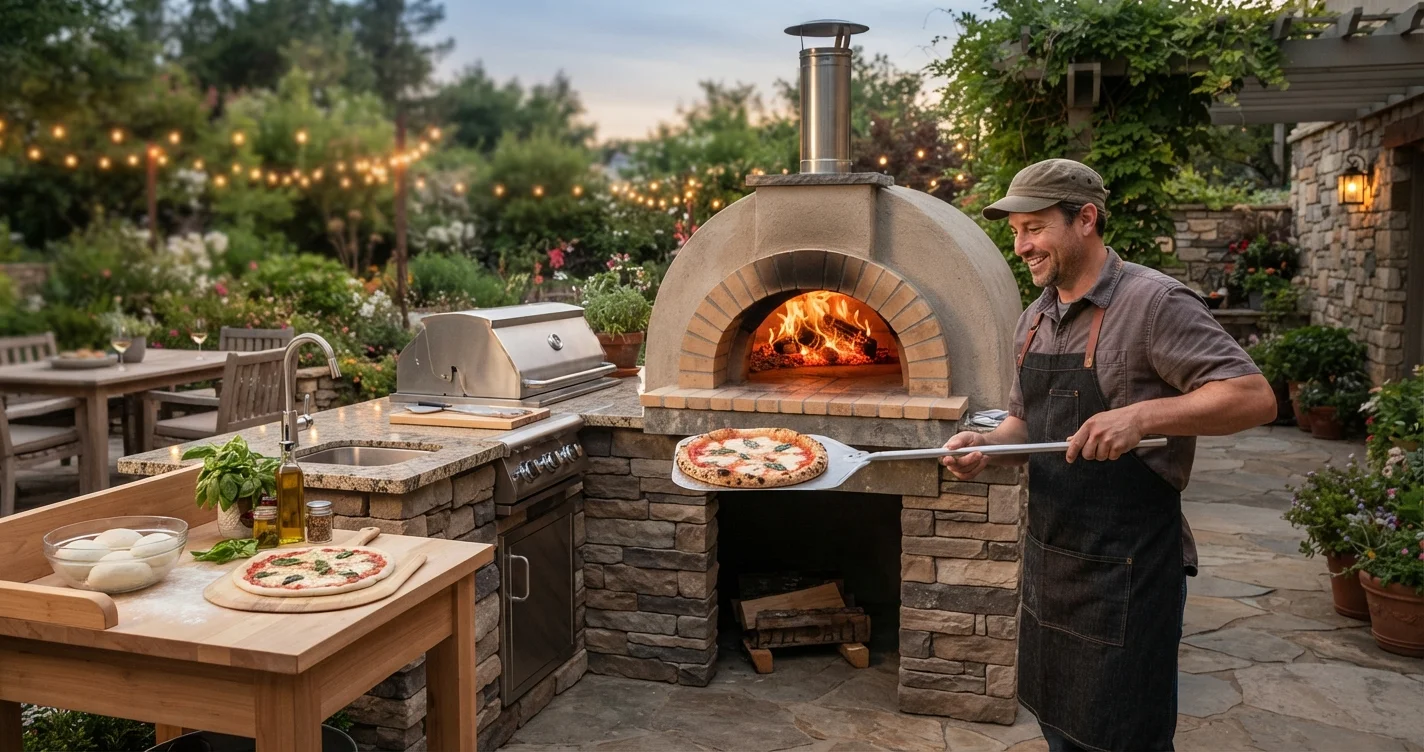
There’s something magical about pulling a bubbling, crispy-crusted pizza straight from a wood-fired oven in your own backyard. If you’re a home cook who loves hosting, adding a pizza oven transforms your outdoor kitchen from a simple grill station into a true culinary destination. But figuring out how to add a pizza oven to your outdoor kitchen can feel a bit overwhelming with all the options, layouts, and fuel types available.
I’ve designed and written about outdoor kitchens for over 15 years, and I can tell you: a pizza oven is one of the best investments you can make for your space. Not only does it deliver restaurant-quality results, but it also becomes the centerpiece of every gathering. In this guide, we’ll cover placement, fuel choices, construction tips, and how to weave this feature into your existing outdoor living setup without blowing your budget—or your back.
Why a Pizza Oven Belongs in Your Outdoor Kitchen
A standard grill is great for burgers and steaks, but it can’t compete with the high heat (700–900°F) that a pizza oven achieves. That intense heat creates the perfect Neapolitan crust—blistered, chewy, and cooked in under 90 seconds. Beyond pizza, you can roast vegetables, bake bread, sear fish, or even cook a whole chicken.
From a design standpoint, a backyard pizza oven setup adds visual drama. Whether you choose a sleek stainless steel countertop model or a rustic brick dome, it signals that this kitchen means business. Guests naturally gravitate toward the warmth and the aroma, making it the heart of your outdoor entertaining area.
If you’re still planning the layout of your yard, take a look at some garden design ideas to see how a pizza oven can anchor a seating zone or define a cooking corridor. The key is integrating it so it feels intentional, not like an afterthought.
Choosing the Right Fuel: Wood, Gas, or Pellet?
Your fuel choice will dramatically affect the flavor, cooking style, and maintenance of your pizza oven. Let’s break down the three main options so you can pick what fits your lifestyle.
Wood-Fired Ovens
These are the traditionalists’ choice. You feed the fire with hardwood logs, and the smoke infuses the food with a deep, rustic flavor. The downside? You need to manage the fire (start it about an hour before cooking), and temperatures can be trickier to control. Expect a learning curve, but the payoff is unmatched authenticity.
Gas-Fired Ovens
Gas models heat up in 10–15 minutes and maintain a steady temperature with a simple dial. You lose that smoky wood flavor, but many gas ovens include a ceramic stone that still gives you a crisp crust. If you cook midweek and want convenience, gas is your best bet. For a comprehensive outdoor kitchen pizza oven, many homeowners install a gas unit with a wood tray just for added aroma.
Pellet Ovens
Pellet ovens are a hybrid: they use compressed wood pellets, fed automatically into a firepot. You get wood-fired flavor with the convenience of a thermostat. They’re lighter and often cheaper, making them a great entry point if you’re new to the game.
| Fuel Type | Heat-Up Time | Flavor | Ease of Use | Best For |
|---|---|---|---|---|
| Wood | 45–60 min | Smoky, bold | Moderate | Enthusiasts, weekends |
| Gas | 10–15 min | Neutral | Easy | Busy families, weeknights |
| Pellet | 15–20 min | Smoky, mild | Easy | Beginners, versatility |
Placement and Structural Considerations
Before you buy anything, decide where the oven will live. A built-in pizza oven requires a non-combustible base—think concrete, stone, or steel framing. Never place it directly against a wooden deck or vinyl siding. You also need at least 24 inches of clearance on the sides and back for airflow and safety.
Consider wind direction. If your oven is wood-fired, smoke can blow into your dining area or your neighbor’s yard. Position the opening so prevailing winds carry smoke away from guests. Also, think about proximity to your kitchen door—carrying raw dough and toppings across the lawn gets old fast.
If you’re working with a smaller footprint, a countertop model on a stainless steel cart can work beautifully. Just make sure the cart is rated for high heat. For larger spaces, a permanent island creates a stunning focal point. You can even combine it with a grill, sink, and storage, as I’ll cover next.
Designing the Perfect Pizza Oven Island
A true pizza oven island design turns cooking into a performance. Here are the essential elements to plan for:
- Counter space on both sides – You need room for stretching dough, topping pies, and landing finished pizzas. Aim for at least 24 inches on the prep side.
- Storage for tools – Keep peels, brushes, and a pizza stone within arm’s reach. Drawers or shelves under the counter work perfectly.
- Lighting – Add under-counter LED strips or a pendant light above the oven. You’ll be cooking at night often, and good lighting prevents burnt crusts.
- A protective roof or pergola – If you live in a rainy area, covering the island extends its life. Just ensure the roof is high enough (at least 10 feet) to avoid heat damage.
For a deeper dive into arranging your whole backyard, check out some space planning strategies. A well-zoned layout separates the cooking, prep, and dining areas for a natural workflow.
Step-by-Step: How to Add a Pizza Oven Without a Full Reno
Not everyone wants to tear up their patio. I’ve helped clients add a pizza oven without any major construction. Here’s the process for a freestanding or countertop addition:
- Choose a portable model – Look for ovens with a built-in thermometer and thick insulation. Ooni and Gozney make excellent options that heat up fast and pack down small.
- Set up a stable surface – A metal cart or a pre-made outdoor kitchen cabinet from a big-box store. Make sure it’s level and fireproof.
- Run power and gas if needed – For a gas model, a licensed pro can tap into your existing grill line or install a new quick-connect. For electric pellet ovens, an outdoor GFCI outlet is enough.
- Create a landing zone – Invest in a good stainless steel prep table nearby. Place it where you can reach the oven opening without walking around barriers.
- Accessorize – Buy a wood peel (for launching), a metal peel (for turning), an infrared thermometer, and a cover to protect the oven from rain and dust.
For more inspiration on upgrading your entire space, browse the home design section. Even a small change like a pizza oven can elevate the whole property vibe.
Safety, Maintenance, and Long-Term Care
Fire safety is non-negotiable. Keep a fire extinguisher rated for grease and wood fires within 10 feet of the oven. Install a heat shield if the oven is near a wooden wall or fence. And always supervise children and pets around the hot dome.
After each use, brush out ash and debris from the floor of wood-fired ovens. For gas or pellet models, wipe down the exterior with a damp cloth and check the burner ports for clogs. Once a season, do a deep clean: burn the oven at high heat for an hour to carbonize residue, then scrape it clean.
If you’re concerned about durability, consider this: a well-built brick oven can last 20–30 years with basic care. Even portable metal ovens, if kept covered when not in use, will serve you for a decade. For tips on extending the life of all your outdoor equipment, check out the latest articles on our blog.
Also, for a deeper understanding of outdoor kitchen materials and heat management, you can reference authoritative guides like this comprehensive outdoor living resource which covers everything from foundation tips to countertop choices.
Frequently Asked Questions
1. Can I add a pizza oven to an existing outdoor kitchen?
Yes, absolutely. If you already have a counter with a grill, you can slot in a countertop pizza oven on the extra surface, or replace a side burner with a dedicated built-in model. Just check the weight capacity of the counter.
2. How much does it cost to add a pizza oven?
Prices range from $300 for a small portable gas oven to $5,000+ for a large built-in wood-fired unit, not counting installation. Including island construction and gas line work, expect $2,000–$10,000 total.
3. What size pizza oven do I need?
If you mostly cook for 2–4 people, a 12–14 inch oven is enough. For parties, go with a 16–18 inch interior diameter so you can fit larger pizzas or cook two smaller ones back-to-back.
4. Can I use a pizza oven in winter?
Yes, with insulation. Many outdoor ovens work perfectly in freezing temperatures. The dome retains heat, and the cold air actually helps create a more dramatic temperature gradient for a better crust. Just warm up the stone an extra 10 minutes.
5. Do I need a permit to build a permanent pizza oven?
In most areas, yes—especially if you’re adding a gas line or building a permanent structure. Check with your local building department. Most will require a permit for any structure over a certain size or any gas appliance installation.
6. What’s the best material for the oven base?
Fire brick and refractory mortar are ideal for permanent ovens because they handle extreme heat without cracking. For portable models, look for stainless steel bodies with double-wall or ceramic fiber insulation.
7. How do I keep the pizza from sticking to the peel?
Dust your peel with a mixture of 50% semolina flour and 50% fine cornmeal. Build your pizza quickly on the peel, and give it a gentle shake before launching to make sure it slides freely.
8. Can I cook other things besides pizza?
Definitely. Steaks, fish, roasted vegetables, flatbreads, calzones, and even desserts like baked apples or s’mores. A pizza oven is essentially a high-heat oven; think of it as your outdoor roasting station.
Conclusion
Adding a pizza oven to your outdoor kitchen pizza oven setup is more than a purchase—it’s an invitation to cook differently. You’ll slow down, tend the fire, and create meals that feel like an event. Whether you go with a simple countertop gas unit or build a grand brick dome, the process of learning how to add a pizza oven to your outdoor kitchen is rewarding and surprisingly manageable.
Start by choosing your fuel, then map out the location and base. From there, you can either buy a ready-made unit or work with a contractor for a custom install. In a few weekends, you’ll be hosting pizza nights that your friends will talk about for years. Now go build that outdoor cooking station—your first Neapolitan is waiting.