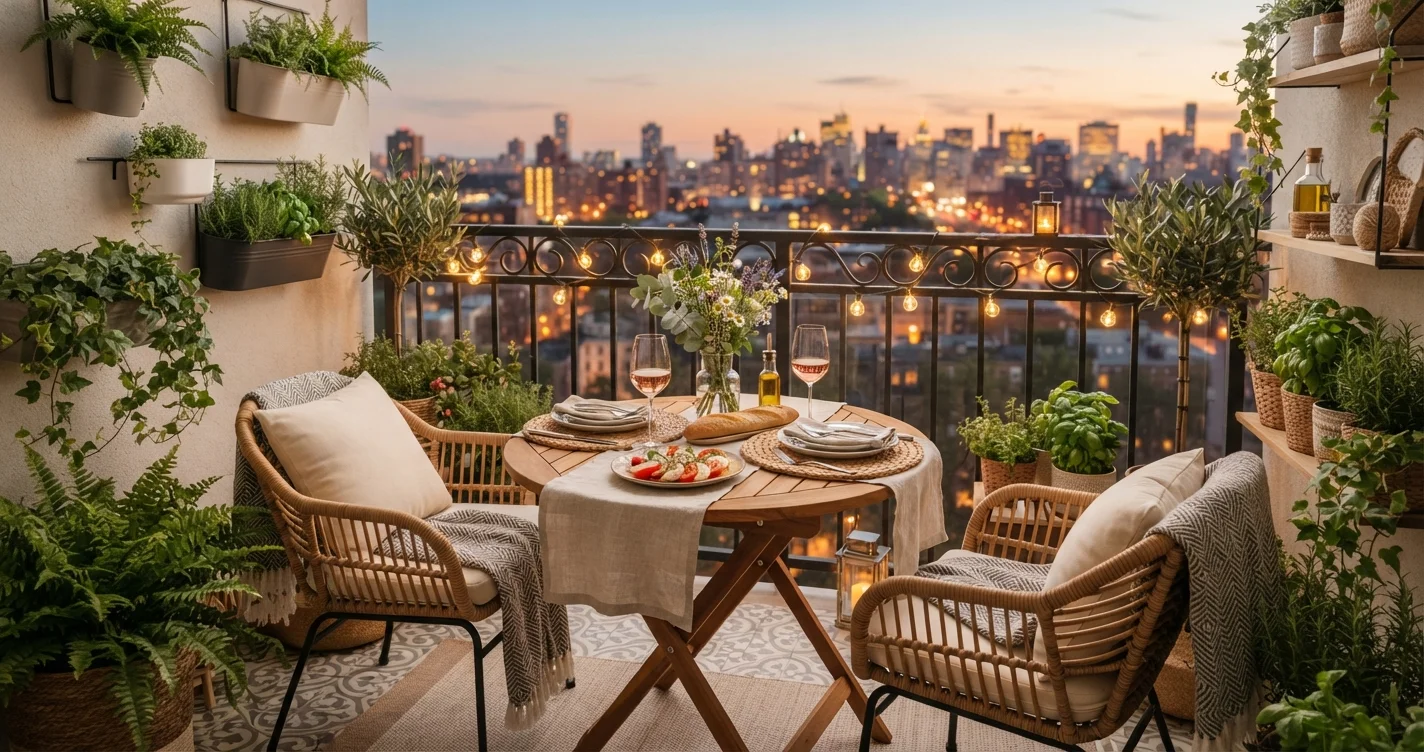
Dreaming of weekend brunches under the open sky but working with a balcony the size of a postage stamp? You are not alone. Many urban dwellers assume that creating an alfresco dining space for small balconies is impossible. The truth is, with a little strategy and the right pieces, even the tiniest concrete ledge can become your favorite spot for morning coffee or evening wine.
This guide walks you through every step, from picking the perfect foldable table to adding greenery that won’t crowd your feet. Whether you are a renter or a homeowner, these small balcony dining ideas will help you maximize every square inch without sacrificing style.
Measure Twice, Buy Once: The Golden Rule of Small Balcony Dining
Before you scroll through Pinterest or add that dreamy bistro set to your cart, grab a tape measure. Knowing the exact length and width of your balcony is the foundation of a functional outdoor dining space. Write down the dimensions, including the door swing clearance.
A common mistake is buying a table that leaves no room to actually sit down. You need at least 24 inches of space between the table edge and any wall or railing for a chair to slide in comfortably. If you only have a 4-foot-long balcony, a round table often works better than a rectangle.
Consider a drop-leaf or wall-mounted table. These allow you to fold the surface down when not in use, freeing up precious floor space for standing or stretching. For more general ideas on organizing tight layouts, check out our space planning tips for compact homes.
Furniture That Folds, Flips, and Disappears
The secret to any successful small balcony alfresco dining space is furniture that works double duty. You want pieces that are light enough to move but sturdy enough to hold a full dinner plate and a glass of rosé.
Here are the top three furniture types for a cozy balcony setup:
- Folding bistro tables: Classic, affordable, and they tuck away in a closet during winter.
- Stackable stools or nesting chairs: These can be stored under the table or stacked in a corner.
- Bench seating with storage: A slim bench can hide cushions, plant supplies, or extra dinnerware inside.
Always choose materials that resist rust and UV rays. Powder-coated aluminum or teak wood are excellent choices. Avoid heavy wrought iron unless you have a ground-floor patio.
Creating the Illusion of More Space
Your eyes can be tricked into seeing a larger area. Use light colors for your furniture and textiles. A white or pale gray table reflects sunlight and makes the balcony feel airy rather than cramped. Add a small mirror on the wall opposite the railing to bounce light and depth.
Vertical elements are your best friend. Hang a slim vertical garden for balcony on one wall. Not only does it add privacy from neighbors, but the greenery also softens hard edges. If you have railings, use planter boxes that attach to the outside, keeping the floor clear.
For more inspiration on incorporating plants into your layout, visit our garden design section, which includes ideas for compact green walls.
Lighting That Sets the Mood
Good lighting transforms a functional dining spot into a true alfresco dining space for evening entertaining. Skip the harsh overhead bulb if you have one. Instead, use a string of warm LED fairy lights along the railing or ceiling.
Battery-operated lanterns are ideal for rentals where you cannot drill. Place one on the table as a centerpiece and another on a shelf. If you have a power outlet nearby, a small clip-on spotlight directed at the table works wonders for reading menus or playing cards.
Remember that lighting also creates privacy. A well-lit table draws the eye inward, reducing the feeling of being exposed to neighbors or street traffic.
Compact Tableware and Serving Solutions
Dining outside on a small balcony means rethinking your serving strategy. Use nesting bowls and stackable plates to save storage space. A wooden cutting board can double as a serving platter for cheese and crackers, eliminating the need for extra trays.
Invest in a slim rolling cart. These are narrow enough to fit beside a table and can hold drinks, napkins, and a small ice bucket. When not in use, roll it against the wall and use it as a plant stand.
Compare the most popular table sizes for compact spaces:
| Table Type | Width / Diameter | Best For | Storage |
|---|---|---|---|
| Round bistro | 24–30 inches | 2 people, tight corners | Folds flat |
| Drop-leaf rectangle | 36 inches open | 1–4 people, narrow balconies | Folds against wall |
| Wall-mounted bar | 12–18 inches deep | Standing only, very small spaces | Flips up |
Choosing the right shape and size will make your compact outdoor furniture feel intentional rather than cramped.
Privacy and Weather Protection
One of the biggest challenges of balcony dining is feeling exposed. A simple bamboo screen or outdoor curtain attached to the railing creates an instant cocoon. These also block wind, making your space usable on breezier days.
For sun protection, consider a cantilever umbrella that extends over your table without taking up floor space. Alternatively, a wall-mounted awning provides shade without the pole. If you live in a rainy climate, keep a lightweight waterproof cover handy to throw over the table when a shower hits.
You can explore more ways to shield your outdoor area in our outdoor living category, which covers solutions for patios and balconies of all sizes.
Seasonal Updates Without the Clutter
Keep the space feeling fresh with minimal effort. Swap out cushion covers with the seasons: bright yellows and corals in summer, deeper burgundies in fall. A set of two small throw pillows is enough to change the entire vibe.
Change your centerpiece, not your furniture. A small vase with fresh herbs in spring, a bowl of pinecones in winter—these cost nothing and keep the space feeling curated. For a deeper dive into cohesive home styling, browse our home design collection.
Finally, never underestimate the power of a good outdoor rug. It defines the dining zone, adds warmth underfoot, and can be rolled up and stored when winter comes.
Frequently Asked Questions
What is the best table size for a small balcony dining area?
For two people, a round table with a diameter of 24–30 inches is ideal. For narrow balconies, a drop-leaf table that mounts to the wall works best.
Can I fit a dining set on a 3-foot-deep balcony?
Yes, but you will need wall-mounted or folding furniture. A slim bar table with tall stools can work for standing meals, or use a small bistro set with the table against the wall.
What materials hold up best outdoors on a balcony?
Powder-coated aluminum, teak, and synthetic rattan are durable and weather-resistant. Avoid solid wood unless it is treated for outdoor use.
How do I protect my balcony dining furniture from rain?
Use waterproof furniture covers when not in use. If you store furniture inside during winter, choose lightweight foldable pieces that are easy to carry.
Should I use real plants or fake ones for privacy?
Real plants are better for air quality and aesthetics, but they require maintenance. Low-light options like ferns and snake plants thrive on covered balconies. For more details on choosing plants, check resources like this guide on home and garden tips.
How many chairs can I realistically fit?
For a 4×6-foot balcony, two chairs and a small side table are comfortable. For longer but narrower spaces, consider a bench against one wall and two stools.
Can I entertain four people on a tiny balcony?
Yes, but use a drop-leaf table and stackable stools. Serve food family-style to minimize the number of plates and bowls on the table.
What is the most common mistake when designing a small balcony dining space?
Buying furniture that is too large. Always measure the space with the door open, and allow for at least 18 inches of walking room around the table.
Conclusion
Creating an alfresco dining space for small balconies is not about squeezing in a full-sized table and chairs. It is about choosing versatile furniture, using vertical space wisely, and layering in textures that make the area feel like an extension of your home. Start with a tape measure, pick one statement piece, and build from there. With the right layout and a few personal touches, your tiny balcony can become the most coveted seat in the house.
For more small-space solutions and styling inspiration, visit our main blog where we cover everything from compact kitchens to cozy reading nooks.