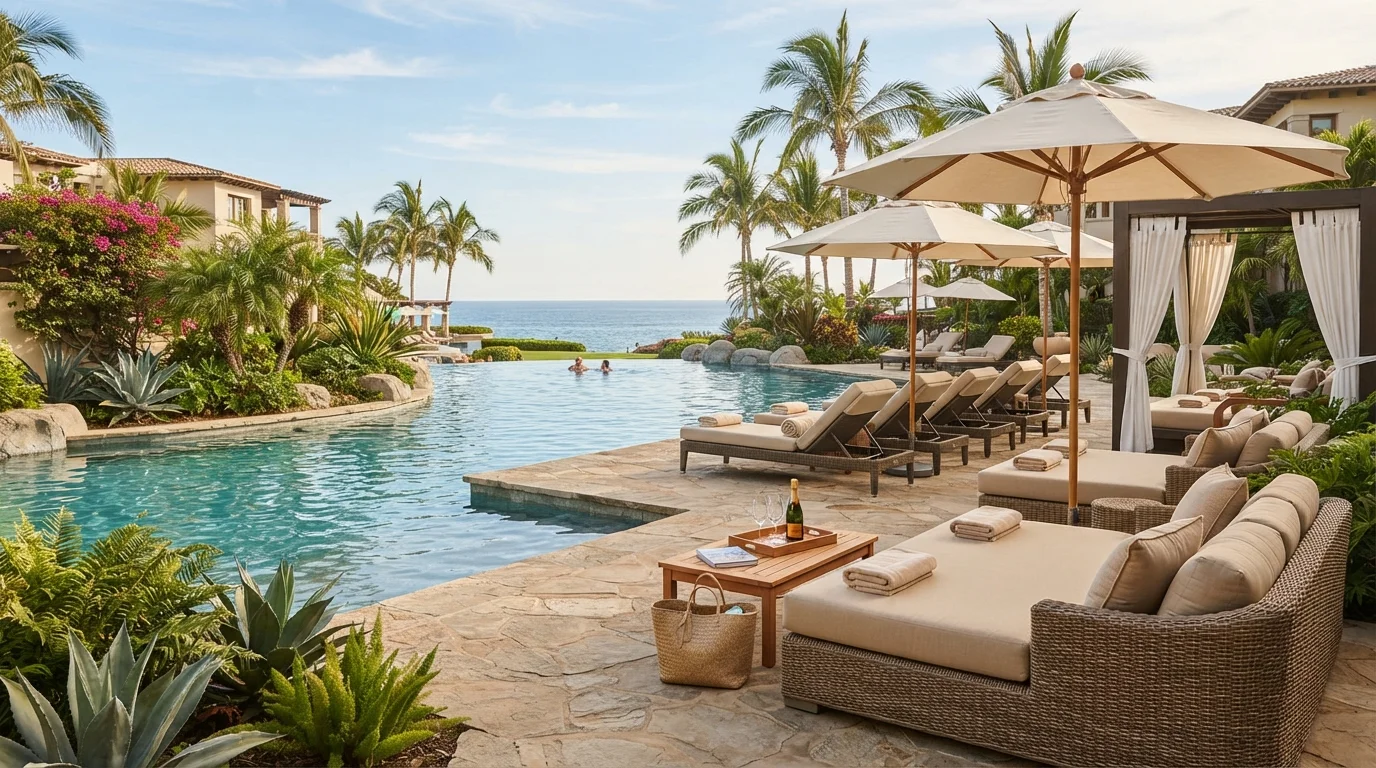
Imagine stepping out your back door and feeling like you’ve checked into a five-star resort in Bali or the Bahamas. The sun is warm, the water is cool, and every piece of furniture around you whispers relaxation. That’s the magic of a well-designed poolside lounge area. You don’t need a sprawling estate to make it happen either. With thoughtful planning and a few strategic investments, your own backyard can become the ultimate weekend staycation spot.
In this guide, I’ll walk you through how to design a resort-style poolside lounge area that balances comfort, durability, and visual appeal. We’ll cover everything from zoning and furniture selection to lighting and greenery. By the end, you’ll have a clear blueprint to create a space that makes your neighbors wonder if you hired a professional interior designer for the outdoors.
Start with a Clear Layout and Zoning Strategy
Resorts never place all their lounge chairs in a haphazard jumble. They organize the space into distinct zones that serve different moods. In your own backyard, think of your pool deck as a series of rooms. You might want a sunbathing zone directly next to the water, a shaded dining or cocktail area a few steps away, and a cozy fire pit corner for evening conversations.
Measure your available square footage and map out these zones on paper. Allow at least six feet of clearance around high-traffic walkways so people don’t drip water on sunbathers. If you’re working with a tight space, consider integrating multi-functional furniture, like a bench that doubles as storage for towels and floaties. For more structural advice, exploring smart space planning strategies can help you maximize every inch of your patio.
A well-planned layout prevents the dreaded “bottleneck shuffle” on busy weekends and makes the area feel twice as large. It also makes cleaning easier because everything has its designated place.
Invest in High-Performance Outdoor Lounge Furniture
The furniture you choose will make or break the resort vibe. Cheap plastic chairs might save cash upfront, but they crack under UV rays and wobble after one season. Look for pieces rated for contract-grade outdoor use. Materials like powder-coated aluminum, UV-resistant synthetic wicker, and solution-dyed acrylic fabrics stand up to sun, rain, and chlorine without fading.
For a true luxury poolside design, think in layers. Start with sturdy lounge chairs that recline fully. Add deep-seated sofas with plush, quick-dry cushions for the shaded zone. Include a low-profile coffee table or side tables that can hold drinks, books, and sunscreen without tipping over. A cantilever umbrella or a sleek pergola provides essential shade, keeping the furniture cooler and your skin protected.
According to a recent industry report on home and garden renovation trends, durability is now the top priority for homeowners investing in outdoor upgrades. That means buying furniture that looks like it belongs in a tropical resort but can survive a Midwest thunderstorm.
Create Shade Structures That Look Architectural
Resorts master the art of shading without making the area feel dark or cramped. They use structures that are both functional and sculptural. A louvered pergola with adjustable slats lets you control how much sun filters through throughout the day. If you prefer something softer, a sail shade stretched over the lounge area creates dramatic geometric shadows.
Position your shade so that it covers the seating zone during the hottest part of the afternoon (usually between 12 PM and 3 PM). That leaves the sunbathing zone fully exposed for those who want a tan. Adding outdoor curtains on one side of the pergola provides extra shade and a sense of enclosure, which we’ll touch on next.
Greenery also plays a role here. A row of tall bamboo or palm trees planted on the western side of the deck filters the low-angle sun and adds instant tropical atmosphere. Pairing these elements with smart garden design concepts ensures your pool area feels integrated with the landscape rather than tacked on.
Use Privacy to Build Exclusivity
A resort wouldn’t feel luxurious if every guest could see into your lounge chair from the street or the neighbor’s second-floor window. Privacy is a silent luxury feature that makes the space feel like a private sanctuary. You can achieve it without building a fortress wall. Lattice screens with climbing vines, tall hedges, or frosted glass panels all offer seclusion with style.
If your budget allows, consider a living wall or a vertical garden. Not only does it block sightlines, but it also improves air quality and muffles street noise. For a simpler solution, bamboo fencing rolls install quickly and bring that beach-club aesthetic to any backyard. Pair this with a subtle water feature, like a small fountain or a sheer descent waterfall, to add white noise that drowns out neighborhood chatter.
Your outdoor living strategy should treat the pool deck as an extension of your home’s interior—meaning, you wouldn’t leave a bedroom window uncovered, so don’t leave your lounge area exposed either.
Layer Lighting for Mood and Safety
Resorts don’t just flick on one floodlight and call it a night. They use a layered lighting approach that transitions from bright daytime function to soft, romantic evening ambiance. Start with task lighting around cooking or dining areas. Then add accent lighting to highlight trees, water features, or architectural elements.
For the lounge area itself, consider low-voltage LED path lights that guide guests safely from the house to the pool. String lights overhead create a canopy of stars, while in-ground well lights illuminate the edges of the pool deck. Use dimmers wherever possible so you can adjust the mood from lively afternoon party to quiet evening cocktail hour.
A crucial safety tip: never place lights directly over the water unless they are rated specifically for wet locations and installed by a licensed electrician. The goal is to create a softly lit environment that feels magical but never blinding or hazardous.
Add Texture and Details Through Hardscaping
Resorts pay obsessive attention to the surfaces underfoot. Your poolside lounge area should transition between materials that feel good both barefoot and with sandals. Cool, non-slip travertine is a classic choice because it stays comfortable in direct sun. Large-format porcelain tiles that mimic wood or stone are another durable option that resists slipping when wet.
Consider incorporating an outdoor rug in the lounge zone to define the area and add a pop of color or pattern. Sisal or polypropylene rugs handle moisture well and feel soft on the feet. A narrow strip of decorative gravel or pebbles between the pool edge and the decking can act as a drainage buffer and visual transition.
Here’s a quick comparison of popular hardscape materials for pool decks:
| Material | Heat Resistance | Slip Rating | Maintenance Level |
|---|---|---|---|
| Travertine Pavers | Excellent (stays cool) | High (textured) | Low – seal every 2 years |
| Cool Deck (coated concrete) | High | Moderate | Moderate – reseal every 3 years |
| Porcelain Tile (wood-look) | Good | High (if textured) | Very low – occasional sweeping |
| Natural Bluestone | Moderate (can get warm) | High when flamed finish | Low – seal every 2-3 years |
Choose your material based on your climate and how much direct sun the area receives. Then tie it all together with thoughtful accessories like outdoor throw pillows, ceramic planters, and a stylish cooler disguised as a bench.
Use a Cohesive Color Palette
Resort designers stick to a tight color palette—usually two or three main tones plus one accent. For a poolside lounge area, neutral earth tones like sand, taupe, and driftwood create a calm base. Then bring in accent colors through cushions, towels, and planters. Think ocean blues, coral pinks, or tropical lime green.
Keep hardscape materials within the same tonal family. If your pool deck is a warm beige stone, avoid cool gray furniture. Consistency in undertones makes the space feel intentionally designed rather than assembled from clearance bins. The result is a look that photographs beautifully and relaxes you the moment you walk through the gate.
Frequently Asked Questions
What is the best flooring material for a poolside lounge area?
Travertine and textured porcelain tile are top choices because they remain cooler underfoot and offer good slip resistance. Avoid polished marble or smooth glazed tile near the water.
Do I need a permit to build a pergola over my pool deck?
In most jurisdictions, yes. Contact your local building department to check setback requirements and height limits. Some regions also require permits for electrical work if you add lighting or fans.
What size umbrella should I get for a lounge area?
For a standard seating group of four chairs and a table, choose an umbrella with a diameter of at least 9 to 11 feet. Make sure the base is heavy enough (50 lbs or more) to handle a breeze.
How do I keep mosquitoes away from the pool lounge?
Use a combination of citronella candles, oscillating fans, and strategic landscaping that avoids standing water. You can also install a misting system with natural repellent oils. Avoid planting dense shrubs right next to seating areas.
Can I create a resort-style lounge on a small budget?
Absolutely. Start with the basics: a couple of high-quality lounge chairs, a shade solution like a cantilever umbrella, and a side table. Add one or two large planters with tropical foliage. Layer in rugs and lighting as your budget grows.
Should I install a built-in sound system?
It depends on how often you entertain. A portable Bluetooth speaker with good weather resistance gives you flexibility for less money. Built-in systems are great for permanent installations but require a professional contractor and careful wiring.
How often should I replace outdoor cushions?
High-quality solution-dyed acrylic cushions last 5 to 7 years with proper care. Store them in a waterproof container during winter and clean them with mild soap and water twice per year.
What plants look best around a resort-style pool?
Choose plants that thrive in humid, sunny conditions without dropping leaves into the water. Good options include tropical varieties like bird of paradise, foxtail ferns, agave, and bougainvillea. Always check that they are non-toxic if you have pets.
Final Thoughts
Designing a resort-style poolside lounge area isn’t about copying a hotel exactly. It’s about borrowing the principles that make those spaces feel so effortless: clear zoning, durable and comfortable furniture, layered lighting, and a cohesive aesthetic. Start with one zone, get it right, and expand over time.
Your backyard has the potential to be your favorite vacation spot—one that costs nothing in airfare and is always available. Whether you’re sipping coffee by the water at sunrise or hosting friends under string lights at midnight, a thoughtful design turns every moment into a mini-escape. And if you need more inspiration, you can always browse our latest outdoor living guides to keep the ideas flowing.