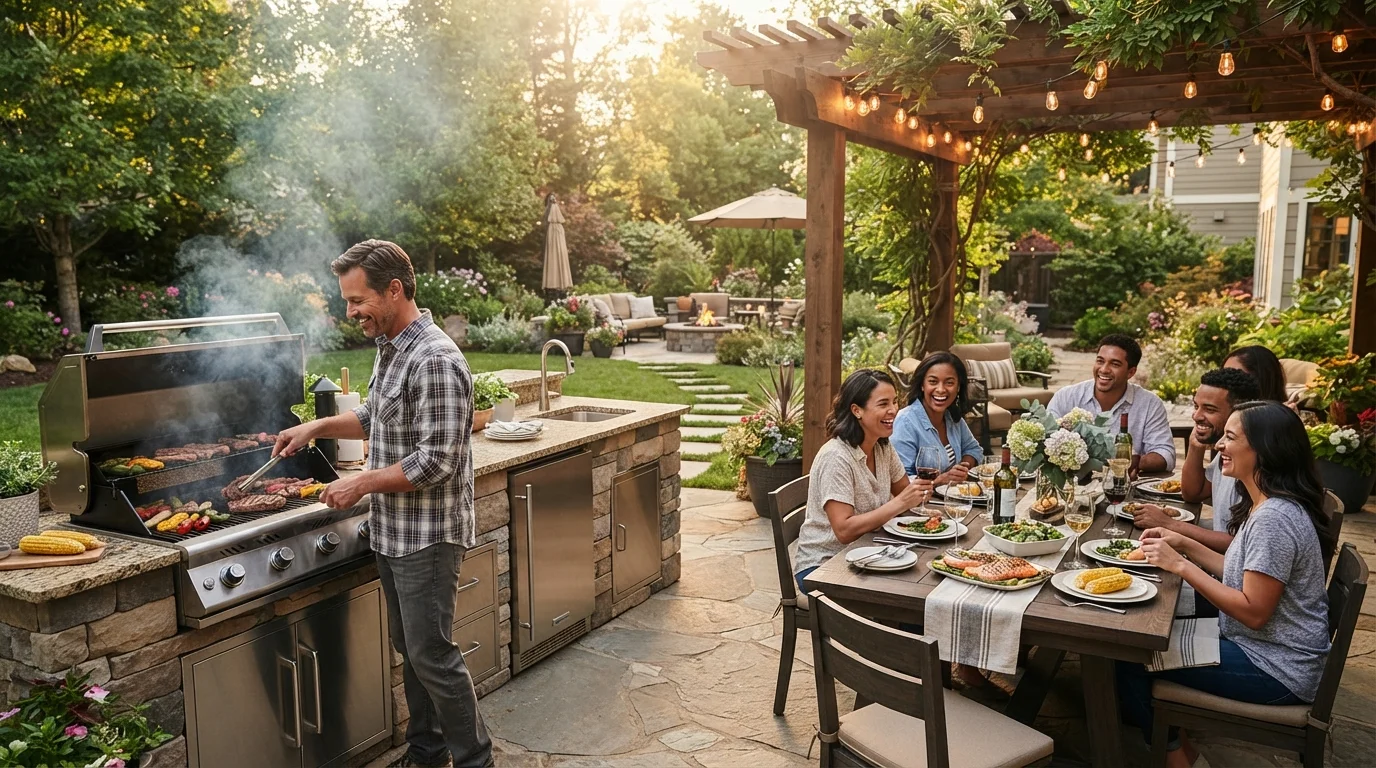
There’s nothing quite like the smell of charcoal hitting the coals on a warm summer evening. If you’ve been dreaming of hosting friends and family without being stuck indoors, building the ultimate backyard BBQ and dining area is the best home upgrade you can make this season. It’s more than just a grill on the patio — it’s about creating a seamless flow between cooking, eating, and relaxing.
Whether you’re starting from scratch or giving your current space a refresh, the key is to focus on function, comfort, and durability. Let’s walk through every step to design an outdoor dining space that’s built to last and perfect for entertaining.
Define Your Zone: Cooking, Dining, and Lounging
Before you order a single brick or buy a new grill, take a hard look at your yard. The best layouts divide the area into three distinct zones: cooking, dining, and lounging. You don’t need a mansion-sized yard to pull this off — even a small patio can feel spacious with proper space planning.
The cooking zone is the anchor. Place the grill and prep surfaces away from high-traffic walkways and at least 10 feet from any wooden structures for safety. The dining zone should be close enough to pass plates but separated to keep the main conversation area away from smoke and heat. Finally, the lounge zone (think Adirondack chairs or a fire pit) can sit a few steps away for after-dinner drinks or relaxation while the coals cool.
A well-defined layout prevents guests from crowding the grill chef and keeps the party flowing naturally.
Choose the Right Grill and BBQ Station
The heart of any BBQ station design is, obviously, the grill. But the market is full of options, and picking the wrong one can derail your cooking experience. Here’s a quick breakdown of the most popular choices:
| Grill Type | Best For | Fuel Source | Pros |
|---|---|---|---|
| Charcoal | Smoky flavor, low-and-slow cooking | Charcoal briquettes or lump wood | Authentic taste, affordable |
| Gas | Quick weeknight dinners, large parties | Propane or natural gas | Fast ignition, easy temperature control |
| Pellet | Versatility (smoke, grill, bake) | Wood pellets | Set-and-forget precision, great flavor |
| Flat Top | Breakfast, smash burgers, stir-fry | Propane | Huge cooking surface, no flare-ups |
Build your BBQ station around one primary grill and add a side burner or counter space for prepping sauces and sides. A built-in setup with stone or tile cladding looks spectacular and adds resale value to your home. If you’re on a budget, a portable grill on a sturdy cart works just as well — just invest in a quality cover to protect it from the elements.
Select Durable Materials for Your Outdoor Dining Space
Your outdoor dining space needs to handle rain, sun, and the occasional spilled beer without falling apart. Avoid cheap wooden tables that warp after one wet season. Instead, opt for materials that look good and laugh at the weather.
- Teak or eucalyptus: Naturally oiled, rot-resistant hardwoods that age to a beautiful silver-gray patina.
- Powder-coated aluminum: Lightweight, rust-proof, and available in tons of colors and styles.
- Concrete or stone: Heavy, ultra-durable, and gives a modern, industrial look. Perfect for tabletops and built-in seating.
- All-weather wicker (resin): Classic look without the maintenance — just rinse it off with a hose.
Don’t forget the cushions. Invest in Sunbrella or similar solution-dyed acrylic fabrics that resist fading, mildew, and stains. Cushions with quick-dry foam are a lifesaver after an unexpected afternoon thunderstorm.
For more inspiration on choosing plants and hardscaping that complement your dining area, visit our garden design guide for year-round curb appeal.
Lighting, Shade, and Comfort Features
Nobody wants to eat a steak in the dark or squint through a blazing afternoon sun. Layered lighting and smart shade solutions transform a basic setup into a comfortable outdoor kitchen layout you’ll use from noon until midnight.
Start with ambient lighting. String lights (Edison bulbs or LED festoon) draped over the dining table create instant warmth. For task lighting, install dimmable LED strips under countertops or a pendant light directly above the grill. Add a few solar path lights along walkways for safety and a polished look.
Shade is equally important. A retractable awning or a louvered pergola offers flexibility — open it for sunbathing, close it for rain protection. If permanent shade isn’t in the budget, a large cantilever umbrella with a tilt function covers a standard 6-8 person dining table easily.
Consider adding a ceiling fan (if you have a covered patio) or a portable misting fan for those scorching July afternoons. Small comforts make a huge difference in keeping guests seated and happy.
Smart Storage and Prep Surfaces
Cooking outdoors should feel just as convenient as cooking in your kitchen. Wasting time running back into the house for a spatula or a bottle of sauce kills the vibe. Smart storage is your secret weapon.
Include a side table or a rolling cart dedicated to grilling tools, seasonings, and disposable plates. If you’re building a permanent island, add cabinets with weatherproof stainless steel hardware. A small bar area (even just a cooler disguised in a wooden cabinet) keeps drinks cold and accessible.
Prep surfaces must be easy to clean. Stainless steel is classic and hygienic, but granite and quartz are scratch-resistant and can double as a serving counter. Avoid unfinished concrete or porous tiles — they stain easily from grease and tomato sauce.
Organizing your cooking tools before each party is a great habit. Think of your home design philosophy: everything should have a place, even outdoors.
Add Personality with Decor and Greenery
Once the hard infrastructure is in place, it’s time to make the space feel like yours. The best patio dining setup isn’t just functional — it should invite people to sit down and stay a while.
Use outdoor rugs to define the dining area underfoot. Choose patterns that hide dirt but add color — a deep navy or rust orange can anchor a neutral stone patio. Add a centerpiece (a low planter with herbs like rosemary and mint) that smells great and is useful for garnishing cocktails.
Greenery softens the hard lines of a built-in BBQ station. Place large ceramic pots with dwarf citrus trees or ornamental grasses near the corners of the dining zone. Hanging baskets with trailing ivy or petunias add vertical interest without taking up floor space.
Finally, an outdoor sound system is worth the investment. A portable Bluetooth speaker hidden in a cabinet or a flush-mount system in the ceiling sets the mood without competing with conversation.
If you are looking for more curated ideas specifically for your patio, check out the full collection of outdoor living inspiration to see how others have transformed their yards.
Seasonal Maintenance and Care
Building the ultimate backyard BBQ and dining area is just the beginning. Keeping it looking new requires a little routine attention. At the end of each cookout, brush the grates and wipe down surfaces. Once a month, check for rust spots on metal components and touch them up with high-heat paint.
Cover your grill and furniture during harsh winter months. If you live in a snowy climate, store cushions indoors and tilt or cover your umbrella to avoid snow damage. For wooden furniture, apply a protective oil once a year to prevent cracking.
By staying on top of maintenance, you’ll extend the lifespan of your investment and keep your backyard the most popular spot on the block for years to come.
Frequently Asked Questions
What is the best size for a backyard BBQ and dining area?
For comfortable seating, plan for at least 100 square feet for a dining table for six people, plus an additional 50-80 square feet for the cooking zone. If space is tight, combine a 4-person round table with a compact 2-burner grill.
Should I build a permanent BBQ island or use a portable grill?
It depends on your budget and how long you plan to stay in the home. A permanent island adds property value and is great for serious cooks. A portable grill with a wheeled cart is affordable and flexible — perfect for renters or first-time homeowners.
How far should the grill be from the house?
At least 10 feet from any siding, windows, or wooden deck rails. Also, keep it away from overhanging tree branches. Check your local building codes, as some areas require specific clearances for gas grills.
What flooring is best for an outdoor dining area?
Pavers, stone tiles, or stamped concrete are the top choices. They are durable, easy to clean, and handle heavy furniture without sinking. Avoid loose gravel near dining tables — it shifts under chairs and makes a mess.
Do I need a permit to build a BBQ station?
In most areas, a simple grill cart doesn’t need a permit. However, if you’re building a permanent structure with gas, electricity, or plumbing, contact your local zoning office. It’s better to ask than risk a fine or insurance issues later.
How do I keep bugs away from the dining table?
Use citronella candles or tiki torches placed upwind. For a more permanent solution, install a ceiling fan in a covered patio — airflow discourages mosquitoes. You can also use a natural spray on plants around the dining zone.
What is the best lighting for nighttime grilling?
LED task lighting installed under the grill hood or on a nearby counter. Avoid warm-yellow lights over the cooking area — they make it hard to judge doneness. For mood lighting, string Edison bulbs in warm white above the dining table.
Can I use my BBQ area in winter?
Absolutely. Add a propane patio heater or a fire pit nearby. If you have a covered space, install heat lamps or an infrared heater. Keep a set of heavy, washable blankets on hand for guests. A well-designed outdoor space can be enjoyed nearly year-round in most climates.
Conclusion
Creating the ultimate backyard BBQ and dining area is one of the most rewarding home projects you can tackle. It turns a plain yard into the heart of your home — a place where memories are made over sizzling steaks and cold drinks. Start with a solid layout, choose materials that fight the weather, and add comfort features that keep guests lingering long after the last bite is gone.
Whether you DIY it over a weekend or hire a contractor for a full outdoor kitchen, the result is the same: a personal oasis you’ll use every chance you get. For more tips on planning your entire landscape, check out what the experts at HomeGarden recommend for optimizing your outdoor investment. So fire up the grill, call the neighbors, and enjoy the best seat in the house — your own backyard.
Article last updated: October 2025